본 장은 ‘AI 자본주의’의 실질적 통치 구조를 주식시장 내부에서 추적한다. ETF·패시브펀드의 자본 집중과 AI 알고리즘의 의결권 대행, 그리고 블랙록·뱅가드·스테이트스트리트 3대 운용사의 권력 삼분 구조를 통해, “시장 헌법”이 어떻게 국가 헌법을 대체했는지를 탐구한다.<편집자 주>
 An era where ETFs and algorithms make decisions before nations. The market is already drafting the constitution. Hankyoreh Graphic
Chapter 2 The Constitution of the Stock Market... 'The Era of ETFs and Passive Governance'
(The Constitution of the Market)
The stock market is no longer a mirror of the economy. The era when laws and systems governed corporations has ended; indices and algorithms are now taking their place.
This constitution was written not by nations, but by three asset management firms: BlackRock, Vanguard, and State Street.
1. ETFs and Passive Funds: 'Governance That Replicates the Entire Market'
The global ETF market is valued at approximately $22 trillion, with over 70% of this concentrated among these three companies. This structure is not merely an investment method but a 'governance mechanism that replicates the entire market.'
ETF inflows determine the survival of companies faster than national fiscal policies. Inclusion in an index is no longer a simple listing rule; it has become a process of capital approval.
Rephrasing BlackRock's investment philosophy: "We do not own the market. We simply operate as part of it."
Within the structure created by ETFs, capital operates before national laws. This is the reality of 'Passive Governance,' an era where the market creates laws, and the nation interprets them.
2. Voting Rights: 'The Legislative Power of Capital'
As of 2024, over 30% of voting rights in U.S.-listed companies are concentrated in the hands of these three asset managers. While formally 'shareholder democracy,' in practice, AI algorithms exercise the votes.
BlackRock's Voting Choice Program automates voting based on AI-analyzed ESG, financial, and industrial risk data.
"AI Makes the Judgment."
— BlackRock Annual Report (2025.1)
This marks a historical turning point where the legislative power of capital is being transferred from humans to AI algorithms. In an era where data, not laws, shapes legal legitimacy, AI has become not an advisor, but the 'legislator of capital.'
3. AI Algorithms: 'The Scribes of the New Constitution'
BlackRock's Aladdin System updates asset and risk data daily for over 200 institutions worldwide. This process is faster than national financial supervision and more precise than legislative debates. In essence, AI algorithms are scribes updating the constitution outside the framework of law.
AI does not merely interpret the market; it predicts and normalizes market behavior. Consequently, the market's constitution operates before the nation's constitution.
"AI decides before the nation, and the nation rationalizes those decisions."
4. Laws Made by the Market: 'The Neutralization of the State'
Nations still enact laws, but these laws cannot keep pace with the market. A single adjustment by an index committee has become a stronger directive than government policy.
For instance, South Korea's pursuit of MSCI Emerging Market Index inclusion (June 2025) was not an exercise of sovereignty but a petition for approval from the market.
Politics operates in the language of 'persuasion.' AI capital operates in the language of 'data.' The former is the language of emotion, while the latter is the language of calculation.
This difference becomes the difference in power.
5. A Non-Political Constitution: 'The Legal Code of AI Capitalism'
AI capitalism does not replace the state; it simply decides before the state does.
Politics persuades public opinion, whereas AI capital persuades data. This system can be called a 'Non-political Constitution.'
Nations still hold their legal codes, but these are now merely commentaries pre-written by AI.
"The nation writes the law, the market writes the constitution. And the scribe of that constitution is AI."
Chapter 3 The World's Three Major Capital Systems... 'The Separation of Powers by BlackRock, Vanguard, and State Street'
(The Three Pillars of Administrative Capitalism)
While modern states divided power into legislative, judicial, and executive branches, AI capitalism has reorganized power into ownership, execution, and record-keeping. At the center of this are BlackRock, Vanguard, and State Street.
These three companies are not merely asset managers; they are the 'Administrative Organs of Capitalism.'
1. BlackRock: 'The Power of Execution'
BlackRock is the 'Executive Branch of Capital.'
Founded in 1988 by Larry Fink, this company has bureaucratized financial power through 'risk management.'
The core is 'Aladdin.' This AI system monitors and adjusts the assets of 200 institutions worldwide in real-time, daily.
Data, not the government, designs the future.
BlackRock's management philosophy is simple: "Governance without Government."
(Governance without Government)
This refers to a state where governance functions traditionally performed by the state (government) are dispersed among non-state actors such as the market, capital, networks, international organizations, or artificial intelligence (AI), and these actors effectively create and enforce rules. In other words, it signifies a system where the state formally exists, but real power is exercised by the market and algorithms.
In place of state regulation, there is the administration of data.
AI calculates risks, and risk becomes policy. This system is a bureaucracy of capital, an administration without humans.
2. Vanguard: 'The Power of Ownership'
Founded by John C. Bogle, Vanguard operates under the philosophy of "Don't beat the market; buy the entire market."
As a result, Vanguard has become the market itself. Customers are shareholders, but there is no entity responsible.
This has created an Anonymous Democracy.
The market owns everything, yet no one takes responsibility for that ownership.
This 'Democracy of Irresponsibility' constitutes the constitution of today's stock market.
3. State Street: 'The Power of Record-Keeping'
State Street is the 'Judicial Branch of Capital.'
This company's role is record-keeping, custody, and the management of truth.
Having been responsible for the financial infrastructure since the American Revolution in the 18th century, they have now become a 'judicial body' guaranteeing the veracity of data.
The 'Alpha System,' linked with Aladdin, manages the truth of capital beyond asset transactions.
He who records the truth writes the constitution.
4. Democracy Without Decision
Carl Schmitt stated in 'Political Theology':
"The sovereign is not the one who makes the law, but the one who decides on the exception."
However, in AI capitalism, there are no decisions. The law is alive, but exceptions do not exist. The market moves automatically, and algorithms vote automatically.
A democracy without decision ultimately leads to irresponsible automation.
Today's stock market is no longer a mirror of the economy. It is a system above the law, above the constitution. AI legislates, data executes, and servers judge.
In this system, the state has lost its power, but one right remains.
That is the 'ability to be accountable.'
The completion of AI capitalism will end with the absence of humans, but the continuation of civilization will be maintained only by human responsibility.
"The state is returning to its place in the constitution. The age of technology is over, and the age of design has begun."
The following Part 3 covers 'Part 2: The Return of the State... Politics of Design'.
#AICapitalism #ETF #PassiveFund #BlackRock #Vanguard #StateStreet #MarketConstitution #DataPower #AladdinSystem #NonPoliticalConstitution

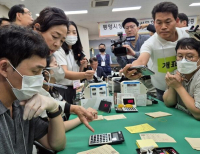
 [Statement by the Seobeokka KMA Patriots Association] ㉛ Recount the ballots openly, as the previous recount covered up election fraud
Recount of the Tongyeong mayoral election [Photo=Yonhap News]South Korea's liberal democracy is dying. The National Election Commission (NEC), which has degraded into a criminal organization through t
[Statement by the Seobeokka KMA Patriots Association] ㉛ Recount the ballots openly, as the previous recount covered up election fraud
Recount of the Tongyeong mayoral election [Photo=Yonhap News]South Korea's liberal democracy is dying. The National Election Commission (NEC), which has degraded into a criminal organization through t
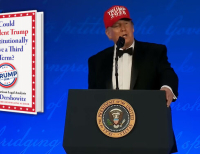
 What is the significance of the "Trump 2028" red hat that keeps reappearing?
It is noteworthy that while it is "highly likely" that President Donald Trump is "seriously considering" a run for the presidency in 2028, he is also "deliberately" fueling speculation regarding wheth
What is the significance of the "Trump 2028" red hat that keeps reappearing?
It is noteworthy that while it is "highly likely" that President Donald Trump is "seriously considering" a run for the presidency in 2028, he is also "deliberately" fueling speculation regarding wheth
 First U.S. Ambassador of Trump's Second Term to Arrive This Week… Will It Provide Momentum to Resolve Pending Issues?
U.S. Ambassador to South Korea Michelle Steel speaks at the opening ceremony of the Korea-U.S. Shipbuilding Cooperation Center held at the Mayflower Hotel in Washington, D.C., on the 23rd (local time)
First U.S. Ambassador of Trump's Second Term to Arrive This Week… Will It Provide Momentum to Resolve Pending Issues?
U.S. Ambassador to South Korea Michelle Steel speaks at the opening ceremony of the Korea-U.S. Shipbuilding Cooperation Center held at the Mayflower Hotel in Washington, D.C., on the 23rd (local time)
 President Yoon, regarding the first-instance ruling on the Public Official Election Act: “An excessive political verdict that distorts the facts… We will appeal immediately.”
The first-instance sentencing hearing for President Yoon Suk Yeol regarding violations of the Public Official Election Act is being broadcast live at Seoul Station on the 27th. [Photo=Yonhap News]Pres
President Yoon, regarding the first-instance ruling on the Public Official Election Act: “An excessive political verdict that distorts the facts… We will appeal immediately.”
The first-instance sentencing hearing for President Yoon Suk Yeol regarding violations of the Public Official Election Act is being broadcast live at Seoul Station on the 27th. [Photo=Yonhap News]Pres
 91% of Net Influx of MZ Generation Goes to Seoul Metropolitan Area… Population Migration Also Shows 'K-shaped Polarization' by Industry
[Provided by Leaders Index]Over the past four years, the MZ generation population has become increasingly concentrated in the Seoul metropolitan area and the Chungcheong region. While cities cen
91% of Net Influx of MZ Generation Goes to Seoul Metropolitan Area… Population Migration Also Shows 'K-shaped Polarization' by Industry
[Provided by Leaders Index]Over the past four years, the MZ generation population has become increasingly concentrated in the Seoul metropolitan area and the Chungcheong region. While cities cen
 'Godfather of Japanese Mystery Novels' Keigo Higashino Passes Away After Battle with Cancer at 68
Famous Japanese mystery novelist Keigo Higashino [AFP=Yonhap News]It has been belatedly reported that Keigo Higashino, the "godfather of Japanese mystery novels" and author of bestsellers such as "The
'Godfather of Japanese Mystery Novels' Keigo Higashino Passes Away After Battle with Cancer at 68
Famous Japanese mystery novelist Keigo Higashino [AFP=Yonhap News]It has been belatedly reported that Keigo Higashino, the "godfather of Japanese mystery novels" and author of bestsellers such as "The
 [Cho Yang-geon Column] The NEC: Facing a Fate of "Discarding the Dog After the Hunt"
Banner calling for the "dissolution of the NEC" posted by the Democratic Party. [AI-generated image]Banners calling for the "dissolution of the National Election Commission (NEC)" posted by the Democr
[Cho Yang-geon Column] The NEC: Facing a Fate of "Discarding the Dog After the Hunt"
Banner calling for the "dissolution of the NEC" posted by the Democratic Party. [AI-generated image]Banners calling for the "dissolution of the National Election Commission (NEC)" posted by the Democr
 [Photo] Evidence of Election Fraud Flooding U.S. Media… Trump Had 2.7 Million Votes Stolen
 [Video] U.S. Semiquincentennial Air Show... 'Art in the Sky' streaks across New York
 [Editorial Cartoon] A Draconian Law That Undermines Freedom of Expression

 List
List