Front view of the Seoul High Court in Seocho-dong, Seoul. The words of Chief Judge Kim Dae-woong set the stalled clock of the Constitution in motion again. Hanmi Ilbo Graphic
The National Assembly audit by the Legislation and Judiciary Committee held at the National Assembly in Yeouido, Seoul.
On October 20, Chief Judge Kim Dae-woong of the Seoul High Court stated, in relation to the retrial of the election law violation case of President Lee Jae-myung, "The trial can theoretically proceed."
It was just one sentence. However, the ripple effect caused by that brief response was by no means small. This is because it signaled that the judiciary was about to return to the timeline of the Constitution.
Judge Kim's remark is not a mere hypothetical. With the words "it is not impossible," he effectively confirmed that the principle of the Constitution, namely the President's immunity from prosecution, is a 'postponement' rather than 'exemption.'
Article 84 of the Constitution has never placed the President above the law. It merely provides a 'temporary pause mechanism' to avoid conflicts with the continuity of state affairs. The majority interpretation in constitutional law circles is that this postponement should not become a permanent shield, and mainstream scholars such as Professors Heo Young, Lee In-ho, and Cha Jin-yi consider 'trialability' to be the majority opinion.
The Seoul High Court had already scheduled a trial date for the retrial on June 18, but it was changed to "to be scheduled later." The stated reason was the application of Article 84 of the Constitution, but beneath the surface lay the judiciary's caution to minimize political conflict.
However, the longer this 'caution' lasts, the more the Constitution stops functioning. When the law is silent, politics takes its place.
Chief Judge Kim Dae-woong's statement, "it is theoretically possible," is the first movement to break that silence. It implies that the trial is not constitutionally prohibited, but merely postponed due to political burden. It shows the judiciary's will to restart its own clock.
Article 103 of the Constitution stipulates, "Judges shall try cases independently in accordance with the Constitution and laws, and according to their conscience." Judicial independence is not a right but a duty, and conscience is not the freedom to judge but loyalty to the Constitution.
The moment the judiciary changes 'postponement' to 'exemption' by looking at political sentiment, Article 103 of the Constitution becomes mere words on paper. What is needed now is not the silence of politics, but a trial where judges' consciences are at work.
Meanwhile, former Acting Chief Justice Moon Hyung-bae of the Constitutional Court stated in a recent interview with the Hankyoreh, "Greatly increasing the number of Supreme Court justices poses a risk to judicial trust." He expressed concern over the ruling party's arguments for reorganizing the Supreme Court's structure, saying, "Public trust comes from fairness, not numbers." He also called some political statements that labeled the People Power Party as a "party colluding in rebellion" as "excessive." Former Acting Chief Justice Moon's views can be read as a self-reflective message that the judicial structure should not be used as a tool of politics.
This statement, along with the remarks of Chief Judge Kim Dae-woong of the Seoul High Court, connects to a trend of self-reflection within the judiciary regarding its own reason for existence.
One is the resolution to "end the silence of the law," and the other is the warning that "judicial restraint is the basis of trust." Ultimately, both messages converge on the same point: the judiciary must be independent and not become a tool of politics.
Article 68, Paragraph 2 of the Constitution stipulates that if the President loses office, the people shall elect a new representative through a by-election without delay. This is also why the Constitution allows for the postponement of trials. It is to simultaneously guarantee the continuity of the rule of law and the circulation of popular sovereignty.
However, the President's trial is not a political event but a procedure for restoring constitutional order, and a self-defense of the Constitution. If the judiciary begins to resemble the language of politics, as former Acting Chief Justice Moon worries, trust will be eroded. At the same time, if the judiciary remains complacent in silence, as Chief Judge Kim Dae-woong's remarks suggest, the Constitution will halt.
The court stands at the threshold of a choice. On the day when 'theoretical possibility' transforms into a real trial date, the constitutional order of the Republic of Korea will regain its time.
The law has never stopped. It has only been waiting. And now, the end of that wait is approaching.
We are a nation that has already decided to impeach a president twice.
Is this an emergency situation where the constitutional order must stop? If not, the law must follow its predetermined path. The trial is not political revenge but the restoration of the Constitution.
When the judiciary returns, the clock of the Constitution will be accurately reset.
#LeeJaeMyungTrial #SeoulHighCourt #ChiefJudgeKimDaeWoong #ActingChiefJusticeMoonHyungBae #ConstitutionArticle84 #JudicialIndependence #ConstitutionalOrder #TimeOfTheConstitution #HanmiIlboAnalysis

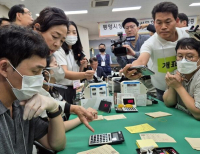
 [Statement by the Seobeokka KMA Patriots Association] ㉛ Recount the ballots openly, as the previous recount covered up election fraud
Recount of the Tongyeong mayoral election [Photo=Yonhap News]South Korea's liberal democracy is dying. The National Election Commission (NEC), which has degraded into a criminal organization through t
[Statement by the Seobeokka KMA Patriots Association] ㉛ Recount the ballots openly, as the previous recount covered up election fraud
Recount of the Tongyeong mayoral election [Photo=Yonhap News]South Korea's liberal democracy is dying. The National Election Commission (NEC), which has degraded into a criminal organization through t
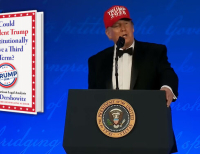
 What is the significance of the "Trump 2028" red hat that keeps reappearing?
It is noteworthy that while it is "highly likely" that President Donald Trump is "seriously considering" a run for the presidency in 2028, he is also "deliberately" fueling speculation regarding wheth
What is the significance of the "Trump 2028" red hat that keeps reappearing?
It is noteworthy that while it is "highly likely" that President Donald Trump is "seriously considering" a run for the presidency in 2028, he is also "deliberately" fueling speculation regarding wheth
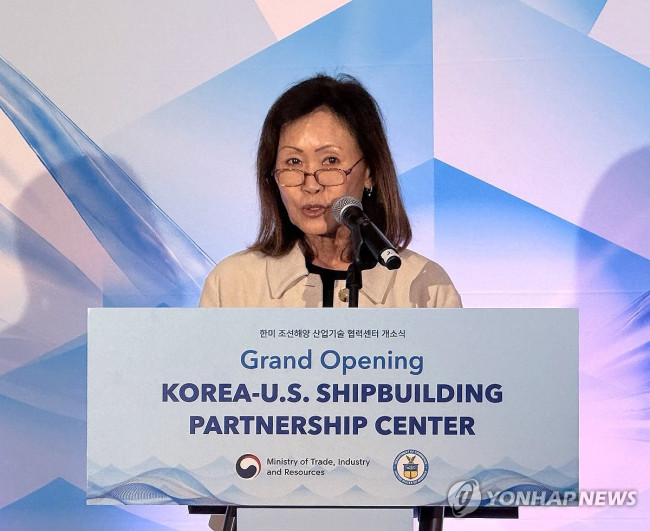 First U.S. Ambassador of Trump's Second Term to Arrive This Week… Will It Provide Momentum to Resolve Pending Issues?
U.S. Ambassador to South Korea Michelle Steel speaks at the opening ceremony of the Korea-U.S. Shipbuilding Cooperation Center held at the Mayflower Hotel in Washington, D.C., on the 23rd (local time)
First U.S. Ambassador of Trump's Second Term to Arrive This Week… Will It Provide Momentum to Resolve Pending Issues?
U.S. Ambassador to South Korea Michelle Steel speaks at the opening ceremony of the Korea-U.S. Shipbuilding Cooperation Center held at the Mayflower Hotel in Washington, D.C., on the 23rd (local time)
 President Yoon, regarding the first-instance ruling on the Public Official Election Act: “An excessive political verdict that distorts the facts… We will appeal immediately.”
The first-instance sentencing hearing for President Yoon Suk Yeol regarding violations of the Public Official Election Act is being broadcast live at Seoul Station on the 27th. [Photo=Yonhap News]Pres
President Yoon, regarding the first-instance ruling on the Public Official Election Act: “An excessive political verdict that distorts the facts… We will appeal immediately.”
The first-instance sentencing hearing for President Yoon Suk Yeol regarding violations of the Public Official Election Act is being broadcast live at Seoul Station on the 27th. [Photo=Yonhap News]Pres
 91% of Net Influx of MZ Generation Goes to Seoul Metropolitan Area… Population Migration Also Shows 'K-shaped Polarization' by Industry
[Provided by Leaders Index]Over the past four years, the MZ generation population has become increasingly concentrated in the Seoul metropolitan area and the Chungcheong region. While cities cen
91% of Net Influx of MZ Generation Goes to Seoul Metropolitan Area… Population Migration Also Shows 'K-shaped Polarization' by Industry
[Provided by Leaders Index]Over the past four years, the MZ generation population has become increasingly concentrated in the Seoul metropolitan area and the Chungcheong region. While cities cen
 'Godfather of Japanese Mystery Novels' Keigo Higashino Passes Away After Battle with Cancer at 68
Famous Japanese mystery novelist Keigo Higashino [AFP=Yonhap News]It has been belatedly reported that Keigo Higashino, the "godfather of Japanese mystery novels" and author of bestsellers such as "The
'Godfather of Japanese Mystery Novels' Keigo Higashino Passes Away After Battle with Cancer at 68
Famous Japanese mystery novelist Keigo Higashino [AFP=Yonhap News]It has been belatedly reported that Keigo Higashino, the "godfather of Japanese mystery novels" and author of bestsellers such as "The
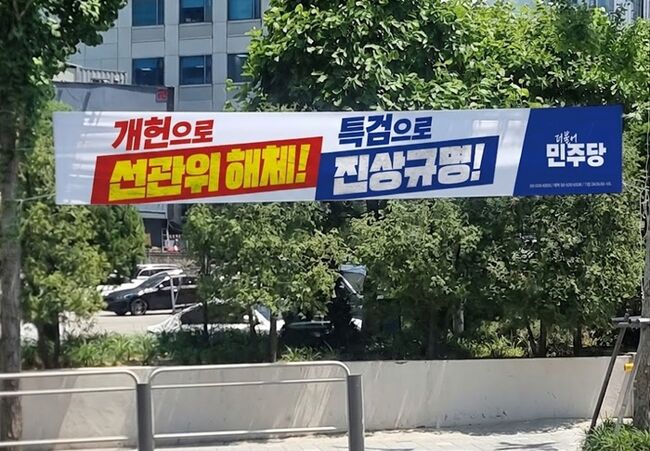 [Cho Yang-geon Column] The NEC: Facing a Fate of "Discarding the Dog After the Hunt"
Banner calling for the "dissolution of the NEC" posted by the Democratic Party. [AI-generated image]Banners calling for the "dissolution of the National Election Commission (NEC)" posted by the Democr
[Cho Yang-geon Column] The NEC: Facing a Fate of "Discarding the Dog After the Hunt"
Banner calling for the "dissolution of the NEC" posted by the Democratic Party. [AI-generated image]Banners calling for the "dissolution of the National Election Commission (NEC)" posted by the Democr
 [Photo] Evidence of Election Fraud Flooding U.S. Media… Trump Had 2.7 Million Votes Stolen
 [Video] U.S. Semiquincentennial Air Show... 'Art in the Sky' streaks across New York
 [Editorial Cartoon] A Draconian Law That Undermines Freedom of Expression

 List
List