자사주 소각 의무화를 담은 상법 개정안이 국회를 통과할 가능성이 높아지고 있다. 헌법상 소급입법 논란, 재산권 침해 소지, 기업의 방어전략 등 실효성에 대한 우려가 이미 제기되고 있음에도 민주당은 이 법안을 정치적 우선과제로 삼았다. 본 기사는 “그들은 왜 알면서도 밀어붙이는가”라는 질문에서 출발해, 개정안의 실질적 효과와 그 이면의 정치적 동기를 분석한다. <편집자 주>
 The plenary hall of the National Assembly is buzzing with discussions on "treasury stock incineration." Despite constitutional constraints and debates over effectiveness, the Democratic Party is pushing this as a symbolic piece of legislation for "Chaebol Reform 2.0." While laws are blocked and markets evade, politics alone leaves its frame. Hanmiilbo Graphics
“Even if there are no effects, the symbol remains.”
The debate over amending the Commercial Act to mandate treasury stock incineration can be summarized by this sentence. The Democratic Party is not unaware of the law's limitations. In fact, they are acutely aware of them. The reason they are pushing it regardless is that it is a "Chaebol Reform 2.0" project that maximizes political effect.
Mandating treasury stock incineration is legally close to impossible. Treasury stocks already acquired are legitimate assets under the Commercial Act, and Article 13, Section 2 of the Constitution prohibits retroactive legislation. The Constitutional Court has previously stated, "Legislation that retrospectively alters existing property relations cannot be permitted." If the mandatory incineration of treasury stocks includes those already held, the same unconstitutional issue arises. Ultimately, the legislator will have no choice but to include a transitional provision for "excluding existing holdings," and the moment this provision is included, the law's effectiveness vanishes. The amendment is blocked by the Constitution, and the market has already prepared its defenses. The Democratic Party is certainly aware of this.
Therefore, this legislation is not reform, but a political act.
Companies are faster than the law. If treasury stock holdings are restricted, indirect holding structures can be created through exchangeable bonds (EB), trusts, or overseas SPVs. Major conglomerates are already operating response scenarios centered on their accounting and legal teams, and some are even considering a "reacquisition loop" after preemptively selling treasury stocks.
In this reality, the amendment to the Commercial Act cannot have effective enforcement power. What remains is not the language of law, but the language of politics. The declaration, "We will control chaebols," the signal, "The government is monitoring the market"—that is all there is.
This is the moment it becomes a political gesture, not legislation.
The Democratic Party is focusing on the "message" of this bill rather than its effectiveness. They frame treasury stocks as a "ploy for management control" and package their incineration as "Chaebol Reform 2.0." While the first generation of chaebol reform in the early 2000s, symbolized by the "resolution of circular shareholding," targeted structures, this second generation deals with image.
In other words, it is resetting the "frame of morality" rather than the market structure. In a situation where the Yoon Suk-yeol administration has been perceived as pro-business since 2022, the image of "the Democratic Party controlling chaebol retained earnings and treasury stocks" operates as political justice. Even if the legislation is not successful, it wins through symbolism alone. The very scene of "attempting reform" becomes a political gain.
The Democratic Party also uses this bill as a "control signal" rather than for direct implementation.
From a corporate perspective, mandatory incineration is a potential risk. If politics holds this risk, it becomes a bargaining chip to demand cooperation in areas such as tax benefits, deregulation, and public tenders. This is similar to the method used during the Moon Jae-in administration, where the Fair Trade Act and the Financial Group Supervisory Act were utilized to effectively bring businesses to the "negotiation table."
The goal is not the legislation itself, but the pursuit itself becomes a tool of pressure. It is a structure where not the law, but the threat, and not the provisions, but the announcement, holds power. What they desire is not passage, but the political science of fear: "It can be passed."
Another purpose of this bill is to engineer political immunity.
If an economic slowdown or stock market decline occurs in the future, the government can shift responsibility to businesses. It will conclude with the logic, "We encouraged shareholder returns, but companies refused." This structure is precisely what political science calls a "delegated failure" strategy.
In other words, it is a mechanism to pre-set the cause of failure and shift the responsibility for deteriorating economic indicators to the market. It doesn't matter if the legislation doesn't work. Only the political language needs to remain. A single sentence, "We tried to check corporate greed," turns even failure into a political achievement.
Ultimately, this amendment to the Commercial Act is a symbolic device of politics, not a law.
Even if it fails to effectively control businesses, the attempt to "control" itself becomes proof of power. This is "symbolic governance," and the language of "Chaebol Reform 2.0" employed by the Democratic Party.
The purpose of that language is not to fix laws, but to restore the ethics of power. As long as the message "We manage the market" is conveyed, they have already won.
Politics wins even if the law fails. That is the irony of the Korean political economy that enables "ineffective reform."
#TreasuryStockIncineration #CommercialActAmendment #ChaebolReform2.0 #DelegatedFailureStrategy #SymbolicGovernance #PoliticalEconomyAnalysis #CorporateControl #ShareholderReturnDebate #Hanmiilbo

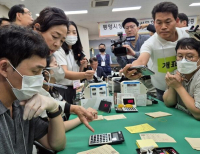
 [Statement by the Seobeokka KMA Patriots Association] ㉛ Recount the ballots openly, as the previous recount covered up election fraud
Recount of the Tongyeong mayoral election [Photo=Yonhap News]South Korea's liberal democracy is dying. The National Election Commission (NEC), which has degraded into a criminal organization through t
[Statement by the Seobeokka KMA Patriots Association] ㉛ Recount the ballots openly, as the previous recount covered up election fraud
Recount of the Tongyeong mayoral election [Photo=Yonhap News]South Korea's liberal democracy is dying. The National Election Commission (NEC), which has degraded into a criminal organization through t
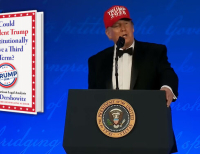
 What is the significance of the "Trump 2028" red hat that keeps reappearing?
It is noteworthy that while it is "highly likely" that President Donald Trump is "seriously considering" a run for the presidency in 2028, he is also "deliberately" fueling speculation regarding wheth
What is the significance of the "Trump 2028" red hat that keeps reappearing?
It is noteworthy that while it is "highly likely" that President Donald Trump is "seriously considering" a run for the presidency in 2028, he is also "deliberately" fueling speculation regarding wheth
 First U.S. Ambassador of Trump's Second Term to Arrive This Week… Will It Provide Momentum to Resolve Pending Issues?
U.S. Ambassador to South Korea Michelle Steel speaks at the opening ceremony of the Korea-U.S. Shipbuilding Cooperation Center held at the Mayflower Hotel in Washington, D.C., on the 23rd (local time)
First U.S. Ambassador of Trump's Second Term to Arrive This Week… Will It Provide Momentum to Resolve Pending Issues?
U.S. Ambassador to South Korea Michelle Steel speaks at the opening ceremony of the Korea-U.S. Shipbuilding Cooperation Center held at the Mayflower Hotel in Washington, D.C., on the 23rd (local time)
 President Yoon, regarding the first-instance ruling on the Public Official Election Act: “An excessive political verdict that distorts the facts… We will appeal immediately.”
The first-instance sentencing hearing for President Yoon Suk Yeol regarding violations of the Public Official Election Act is being broadcast live at Seoul Station on the 27th. [Photo=Yonhap News]Pres
President Yoon, regarding the first-instance ruling on the Public Official Election Act: “An excessive political verdict that distorts the facts… We will appeal immediately.”
The first-instance sentencing hearing for President Yoon Suk Yeol regarding violations of the Public Official Election Act is being broadcast live at Seoul Station on the 27th. [Photo=Yonhap News]Pres
 91% of Net Influx of MZ Generation Goes to Seoul Metropolitan Area… Population Migration Also Shows 'K-shaped Polarization' by Industry
[Provided by Leaders Index]Over the past four years, the MZ generation population has become increasingly concentrated in the Seoul metropolitan area and the Chungcheong region. While cities cen
91% of Net Influx of MZ Generation Goes to Seoul Metropolitan Area… Population Migration Also Shows 'K-shaped Polarization' by Industry
[Provided by Leaders Index]Over the past four years, the MZ generation population has become increasingly concentrated in the Seoul metropolitan area and the Chungcheong region. While cities cen
 'Godfather of Japanese Mystery Novels' Keigo Higashino Passes Away After Battle with Cancer at 68
Famous Japanese mystery novelist Keigo Higashino [AFP=Yonhap News]It has been belatedly reported that Keigo Higashino, the "godfather of Japanese mystery novels" and author of bestsellers such as "The
'Godfather of Japanese Mystery Novels' Keigo Higashino Passes Away After Battle with Cancer at 68
Famous Japanese mystery novelist Keigo Higashino [AFP=Yonhap News]It has been belatedly reported that Keigo Higashino, the "godfather of Japanese mystery novels" and author of bestsellers such as "The
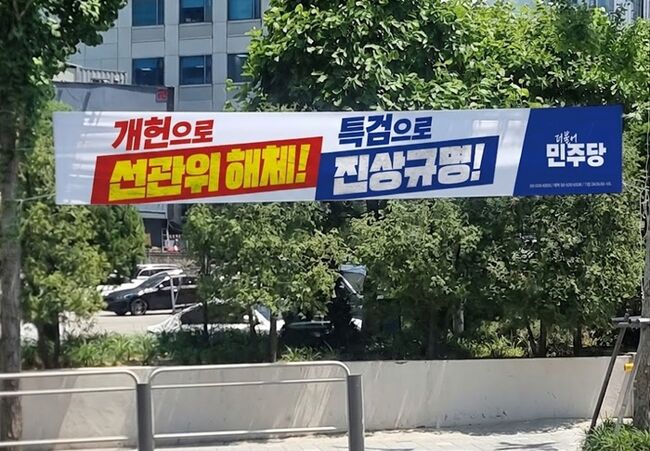 [Cho Yang-geon Column] The NEC: Facing a Fate of "Discarding the Dog After the Hunt"
Banner calling for the "dissolution of the NEC" posted by the Democratic Party. [AI-generated image]Banners calling for the "dissolution of the National Election Commission (NEC)" posted by the Democr
[Cho Yang-geon Column] The NEC: Facing a Fate of "Discarding the Dog After the Hunt"
Banner calling for the "dissolution of the NEC" posted by the Democratic Party. [AI-generated image]Banners calling for the "dissolution of the National Election Commission (NEC)" posted by the Democr
 [Photo] Evidence of Election Fraud Flooding U.S. Media… Trump Had 2.7 Million Votes Stolen
 [Video] U.S. Semiquincentennial Air Show... 'Art in the Sky' streaks across New York
 [Editorial Cartoon] A Draconian Law That Undermines Freedom of Expression

 List
List