AI 자본주의가 자본의 헌법을 다시 쓰고 있다. 그러나 한국의 주요 재계 담론은 여전히 20세기식 성장 공식을 되풀이한다. 최태원 대한상공회의소 회장의 발언은 그 대표적 사례다. 한미일보는 그의 성장론이 DGS 시대의 구조적 현실과 얼마나 괴리돼 있는지를 분석했다. 이 기사는 산업주권과 국가 설계권의 관점에서, 한국 경제 담론의 시간 좌표를 묻는다. <편집자 주>
 Choi Tae-won, Chairman of the Korea Chamber of Commerce and Industry and Chairman of SK Group. Yonhap News
Choi Tae-won, Chairman of the Korea Chamber of Commerce and Industry and Chairman of SK Group, spoke of the "limits of export-oriented growth" and proposed economic cooperation between Korea and Japan and AI investment as solutions. However, his remarks are assessed as repeating the growth logic of the industrial age, overlooking the reality that AI is rewriting the structures of capital and power.
AI capitalism is no longer a matter of technology but a new governance system, DGS (Digital Governance System), where data and algorithms replace the state's design rights. Nevertheless, he continues to explain the future in the language of 'market and investment.'
In an interview with YouTube economic channels SamproTV, Understanding, and Apggwon on the 26th, Chairman Choi said, "Falling behind in AI can be a major risk," and "Investment cannot stop." He compared the AI hegemony competition between the US and China to an arms race, explaining that "investment in semiconductors and infrastructure is inevitable."
However, this approach is criticized for viewing AI solely as a technological competition or investment target. AI has already evolved beyond being just a part of industry; it is becoming the digital governance infrastructure that encompasses finance, administration, and law. This is an era where 'who designs' determines national sovereignty, rather than 'how much is invested.'
The DGS era signifies a realignment of national power structures from the ethical framework of ESG (Environment, Social, Governance) to Digital–Governance–System. Capital now follows code over ethics, and markets follow algorithms over values. A nation's governing power stems not from its ability to collect taxes but from its ability to design data. If this change is not understood, industrial policy can devolve into a structure of dependence rather than a discourse of growth.
Competition in the age of AI capitalism is shifting from investment or production to design. The US and the EU are establishing new regulatory frameworks such as AI ethics, data portability rights, and digital taxes, creating a national 'design constitution.'
However, it is pointed out that Korea's chaebol-centric growth theory still operates around capital input and market expansion. This is because AI is not just a technological issue but the language of national governance and the constitution of economic sovereignty, and Chairman Choi's remarks are perceived as lacking that structural understanding.
In the same interview, he stated, "The export-oriented growth formula that has continued since the 1960s has reached its limit," and "Korea and Japan must create a new growth formula together." He explained that the two countries' cooperation could form a new domestic market amidst strengthening protectionism.
However, this is analyzed as a solution that broadens the scope of the market rather than restructuring the industry. In an era where AI is rewriting the laws of growth, it is pointed out that cooperation alone cannot explain systemic change.
He said, "If Korea and Japan cooperate, they can create a market worth $6 trillion and form the world's fourth-largest economic bloc." The logic is that Korea's strengths in semiconductors and batteries, and Japan's in materials, components, and equipment, allow for mutual complementarity.
However, the proposed 'Korea-Japan cooperation theory' appears to be an extension of the existing division of labor rather than actual technological integration.
In the age of AI capitalism, competition depends on securing design rights for data and algorithms, not on the sum of GDP. Therefore, his plan is evaluated as remaining at the level of expanding market scope without departing from the logic of the industrial age.
Mention of regulatory reform also followed. Chairman Choi stated, "Policies that unconditionally protect small and medium-sized enterprises are outdated," and "We must shift to policies that support growing companies." He also proposed, "We need to create a 'Mega Sandbox (large-scale special economic zone)' that establishes AI experimental grounds and testbeds in regions."
However, his 'deregulation theory' is criticized for being a logic that espouses freedom while neglecting the responsibility of design. This is because in a reality where AI is blurring the lines between public and private sectors, regulation is not merely a constraint but a mechanism for designing the structure of law and administration. There are concerns that this could lead to transferring the state's design responsibility to the market in the name of innovation.
He presented a 'new growth formula,' but its content remained a combination of technological optimism and market expansion theory. In an era where AI has become the 'constitution of capital' and algorithms have become the 'language of administration,' growth is no longer an issue of investment or cooperation.
Given that data sovereignty and industrial design determine national survival, market-centric growth theory leaves the state's design capabilities empty, amounting to an attempt to explain the 21st century in the language of the 20th century. How will he receive this assessment?
In the age of AI capitalism, the state is no longer a market regulator or supervisor. It must be a designer that controls data flows, designs algorithm standards, and determines industrial direction. For his remarks to become a true 'new growth theory,' it is necessary to heed the suggestion that we must move beyond the language of the market to the language of the system, that is, the 'language of design (DGS).'
#ChoiTaewon #KoreaChamberofCommerceandIndustry #SKGroup #AICapitalism #DGSEra #IndustrialSovereignty #DataSovereignty #KoreaJapanEconomicCooperation #TechnologicalOptimism #PoliticalDesign

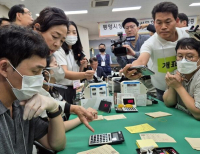
 [Statement by the Seobeokka KMA Patriots Association] ㉛ Recount the ballots openly, as the previous recount covered up election fraud
Recount of the Tongyeong mayoral election [Photo=Yonhap News]South Korea's liberal democracy is dying. The National Election Commission (NEC), which has degraded into a criminal organization through t
[Statement by the Seobeokka KMA Patriots Association] ㉛ Recount the ballots openly, as the previous recount covered up election fraud
Recount of the Tongyeong mayoral election [Photo=Yonhap News]South Korea's liberal democracy is dying. The National Election Commission (NEC), which has degraded into a criminal organization through t
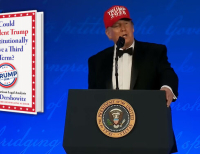
 What is the significance of the "Trump 2028" red hat that keeps reappearing?
It is noteworthy that while it is "highly likely" that President Donald Trump is "seriously considering" a run for the presidency in 2028, he is also "deliberately" fueling speculation regarding wheth
What is the significance of the "Trump 2028" red hat that keeps reappearing?
It is noteworthy that while it is "highly likely" that President Donald Trump is "seriously considering" a run for the presidency in 2028, he is also "deliberately" fueling speculation regarding wheth
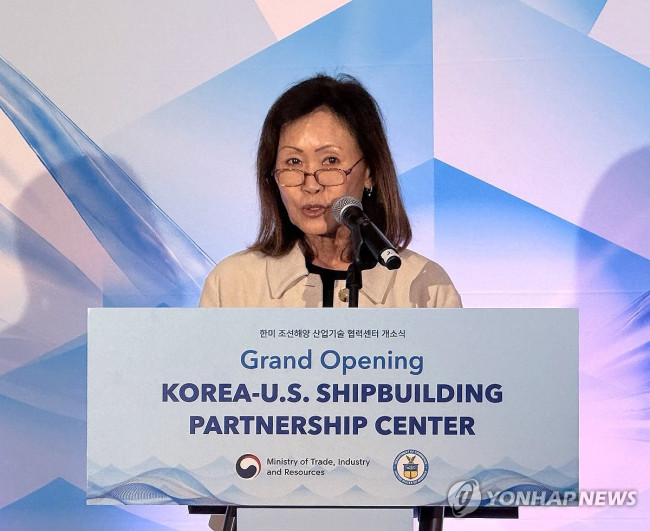 First U.S. Ambassador of Trump's Second Term to Arrive This Week… Will It Provide Momentum to Resolve Pending Issues?
U.S. Ambassador to South Korea Michelle Steel speaks at the opening ceremony of the Korea-U.S. Shipbuilding Cooperation Center held at the Mayflower Hotel in Washington, D.C., on the 23rd (local time)
First U.S. Ambassador of Trump's Second Term to Arrive This Week… Will It Provide Momentum to Resolve Pending Issues?
U.S. Ambassador to South Korea Michelle Steel speaks at the opening ceremony of the Korea-U.S. Shipbuilding Cooperation Center held at the Mayflower Hotel in Washington, D.C., on the 23rd (local time)
 President Yoon, regarding the first-instance ruling on the Public Official Election Act: “An excessive political verdict that distorts the facts… We will appeal immediately.”
The first-instance sentencing hearing for President Yoon Suk Yeol regarding violations of the Public Official Election Act is being broadcast live at Seoul Station on the 27th. [Photo=Yonhap News]Pres
President Yoon, regarding the first-instance ruling on the Public Official Election Act: “An excessive political verdict that distorts the facts… We will appeal immediately.”
The first-instance sentencing hearing for President Yoon Suk Yeol regarding violations of the Public Official Election Act is being broadcast live at Seoul Station on the 27th. [Photo=Yonhap News]Pres
 91% of Net Influx of MZ Generation Goes to Seoul Metropolitan Area… Population Migration Also Shows 'K-shaped Polarization' by Industry
[Provided by Leaders Index]Over the past four years, the MZ generation population has become increasingly concentrated in the Seoul metropolitan area and the Chungcheong region. While cities cen
91% of Net Influx of MZ Generation Goes to Seoul Metropolitan Area… Population Migration Also Shows 'K-shaped Polarization' by Industry
[Provided by Leaders Index]Over the past four years, the MZ generation population has become increasingly concentrated in the Seoul metropolitan area and the Chungcheong region. While cities cen
 'Godfather of Japanese Mystery Novels' Keigo Higashino Passes Away After Battle with Cancer at 68
Famous Japanese mystery novelist Keigo Higashino [AFP=Yonhap News]It has been belatedly reported that Keigo Higashino, the "godfather of Japanese mystery novels" and author of bestsellers such as "The
'Godfather of Japanese Mystery Novels' Keigo Higashino Passes Away After Battle with Cancer at 68
Famous Japanese mystery novelist Keigo Higashino [AFP=Yonhap News]It has been belatedly reported that Keigo Higashino, the "godfather of Japanese mystery novels" and author of bestsellers such as "The
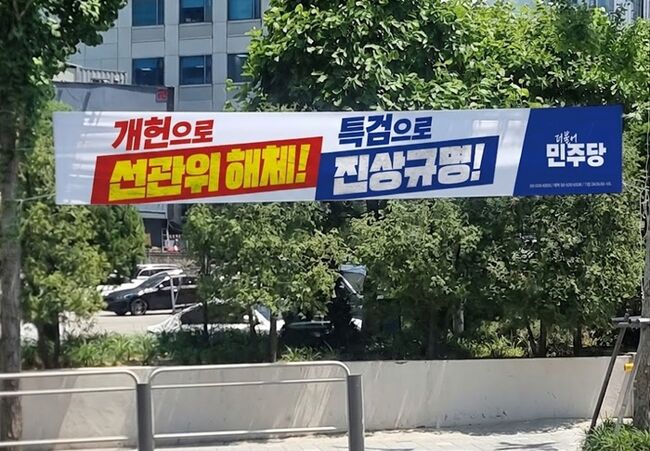 [Cho Yang-geon Column] The NEC: Facing a Fate of "Discarding the Dog After the Hunt"
Banner calling for the "dissolution of the NEC" posted by the Democratic Party. [AI-generated image]Banners calling for the "dissolution of the National Election Commission (NEC)" posted by the Democr
[Cho Yang-geon Column] The NEC: Facing a Fate of "Discarding the Dog After the Hunt"
Banner calling for the "dissolution of the NEC" posted by the Democratic Party. [AI-generated image]Banners calling for the "dissolution of the National Election Commission (NEC)" posted by the Democr
 [Photo] Evidence of Election Fraud Flooding U.S. Media… Trump Had 2.7 Million Votes Stolen
 [Video] U.S. Semiquincentennial Air Show... 'Art in the Sky' streaks across New York
 [Editorial Cartoon] A Draconian Law That Undermines Freedom of Expression

 List
List