- Seoul Public Opinion Shaken by Real Estate, First 'Negative' Outpaces 'Positive'
- National Administration Negative 49% · Positive 47.2%, KSOI Survey
- Real Estate Fails to Regain Policy Trust… Public Sentiment in the Seoul Metropolitan Area Shakes the Government's Heart
10·15 부동산 대책이 서울 민심을 뒤흔들고 있다. 거래 회복을 노린 세제·대출 완화가 실수요자에게 체감되지 않으면서, 오히려 정책 신뢰가 흔들리고 있다. 이번 조사에서 이재명 대통령의 국정운영 부정 평가가 긍정을 처음으로 앞선 것은 단순한 수치 변화가 아니다. 정권의 심장부인 용산의 민심이 흔들리기 시작했다는 신호다. <편집자 주>
 The cracks that began in Seoul's public sentiment after the real estate measures symbolize 'cracks in the government's trust' with the fissure on the exterior wall of the Yongsan Presidential Office. The red line shows the trend of negative evaluations (49%), and the blue line shows the trend of positive evaluations (47.2%). Graphic by Hankyoreh.
Real estate policies are leading to a widening rift in public sentiment.
In a public opinion poll targeting Seoul, negative evaluations of the President's state affairs performance have, for the first time, surpassed positive evaluations. This is analyzed as distrust in policy failures shaking the support base of the Yongsan administration.
According to a public opinion poll conducted by the Korea Society Opinion Institute (KSOI) at the request of CBS Nocut News from October 25-26, among 812 men and women aged 18 and above residing in Seoul, 49.0% responded that "President Lee Jae-myung is not doing a good job in state affairs." Those who responded "doing a good job" accounted for 47.2%, marking the first time negative evaluations have exceeded positive ones.
Seoul is a political barometer where the ruling and opposition parties are in a close contest, and this result is interpreted as a signal to gauge the divisions in public sentiment in the Seoul metropolitan area.
Following the issue of First Deputy Secretary Kim Hyun-ji, which began with controversy over a close associate, and compounded by backlash against the 'October 15 Real Estate Measures,' Seoul's public sentiment appears to be experiencing a series of shocks. If the Kim Hyun-ji risk shook the trust within the administration, the real estate downturn has provoked distrust in people's livelihoods. Although the two incidents are different in nature, they have collectively drawn criticism for 'Yongsan-centric, closed-door state affairs management.' Distrust in public opinion is shifting from personnel issues to policy issues, eroding the overall trust in the administration.
This survey is also noteworthy because it was conducted by KSOI, which is generally considered to have a stronger progressive leaning. While some in political circles evaluate that "KSOI surveys tend to overrepresent supporters of the Democratic Party," the fact that negative evaluations still surpassed positive ones is considered an unusual change.
Party support rates showed a similar trend. The Democratic Party of Korea garnered 38.0%, and the People Power Party received 36.7%, recording a close race within the margin of error. This was followed by the Reform Party at 3.8%, the Progressive Party at 1.3%, and the Cho Kuk Innovation Party at 1.2%.
Political circles diagnosed that "with accumulated government fatigue and declining policy effectiveness, the departure of centrist voters is beginning in earnest."
Real estate policy is considered a key variable in this shift in public sentiment. 54.6% of respondents answered that the government's October 15 real estate measures "do not help normalize the real estate market," while only 35.0% responded that they "do help." Critics argue that the measures, focused on tax and loan easing to boost transaction volume, were not sufficiently felt by actual homebuyers.
Experts believe that the limited perceived effect of these measures on low- and middle-income households stems from their focus on short-term transaction activation. One real estate expert diagnosed that "policy trust has not been restored because the approach focused on short-term remedies, such as tax and loan easing, has not led to alleviating the burden on actual homebuyers." It is analyzed that the gap between the perceived impact on the general public and policy trust has widened as the government has focused on 'transaction recovery' instead of 'market normalization.'
Public opinion in Seoul leads the direction of national sentiment. The results of this survey show that real estate policy failures are not just a matter of livelihood but are extending into a crisis of trust in the administration. Assessments from within and outside the political sphere suggest that it will be difficult to reverse Seoul's public sentiment without a change in policy direction.
#RealEstateMeasures #SeoulPublicSentiment #StateAffairsEvaluation #PresidentLeeJaeMyung #PartySupportRates #YongsanPublicSentiment #KSOI #CBS #PublicOpinionPoll #Hankyoreh
- 관련기사
-
What do you think of this article?

 [Statement by the Seobeokka KMA Patriots Association] ㉛ Recount the ballots openly, as the previous recount covered up election fraud
Recount of the Tongyeong mayoral election [Photo=Yonhap News]South Korea's liberal democracy is dying. The National Election Commission (NEC), which has degraded into a criminal organization through t
[Statement by the Seobeokka KMA Patriots Association] ㉛ Recount the ballots openly, as the previous recount covered up election fraud
Recount of the Tongyeong mayoral election [Photo=Yonhap News]South Korea's liberal democracy is dying. The National Election Commission (NEC), which has degraded into a criminal organization through t
 What is the significance of the "Trump 2028" red hat that keeps reappearing?
It is noteworthy that while it is "highly likely" that President Donald Trump is "seriously considering" a run for the presidency in 2028, he is also "deliberately" fueling speculation regarding wheth
What is the significance of the "Trump 2028" red hat that keeps reappearing?
It is noteworthy that while it is "highly likely" that President Donald Trump is "seriously considering" a run for the presidency in 2028, he is also "deliberately" fueling speculation regarding wheth
 First U.S. Ambassador of Trump's Second Term to Arrive This Week… Will It Provide Momentum to Resolve Pending Issues?
U.S. Ambassador to South Korea Michelle Steel speaks at the opening ceremony of the Korea-U.S. Shipbuilding Cooperation Center held at the Mayflower Hotel in Washington, D.C., on the 23rd (local time)
First U.S. Ambassador of Trump's Second Term to Arrive This Week… Will It Provide Momentum to Resolve Pending Issues?
U.S. Ambassador to South Korea Michelle Steel speaks at the opening ceremony of the Korea-U.S. Shipbuilding Cooperation Center held at the Mayflower Hotel in Washington, D.C., on the 23rd (local time)
 President Yoon, regarding the first-instance ruling on the Public Official Election Act: “An excessive political verdict that distorts the facts… We will appeal immediately.”
The first-instance sentencing hearing for President Yoon Suk Yeol regarding violations of the Public Official Election Act is being broadcast live at Seoul Station on the 27th. [Photo=Yonhap News]Pres
President Yoon, regarding the first-instance ruling on the Public Official Election Act: “An excessive political verdict that distorts the facts… We will appeal immediately.”
The first-instance sentencing hearing for President Yoon Suk Yeol regarding violations of the Public Official Election Act is being broadcast live at Seoul Station on the 27th. [Photo=Yonhap News]Pres
 91% of Net Influx of MZ Generation Goes to Seoul Metropolitan Area… Population Migration Also Shows 'K-shaped Polarization' by Industry
[Provided by Leaders Index]Over the past four years, the MZ generation population has become increasingly concentrated in the Seoul metropolitan area and the Chungcheong region. While cities cen
91% of Net Influx of MZ Generation Goes to Seoul Metropolitan Area… Population Migration Also Shows 'K-shaped Polarization' by Industry
[Provided by Leaders Index]Over the past four years, the MZ generation population has become increasingly concentrated in the Seoul metropolitan area and the Chungcheong region. While cities cen
 'Godfather of Japanese Mystery Novels' Keigo Higashino Passes Away After Battle with Cancer at 68
Famous Japanese mystery novelist Keigo Higashino [AFP=Yonhap News]It has been belatedly reported that Keigo Higashino, the "godfather of Japanese mystery novels" and author of bestsellers such as "The
'Godfather of Japanese Mystery Novels' Keigo Higashino Passes Away After Battle with Cancer at 68
Famous Japanese mystery novelist Keigo Higashino [AFP=Yonhap News]It has been belatedly reported that Keigo Higashino, the "godfather of Japanese mystery novels" and author of bestsellers such as "The
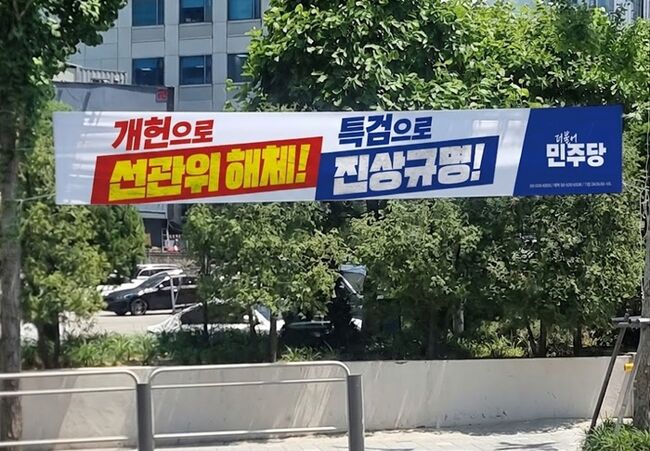 [Cho Yang-geon Column] The NEC: Facing a Fate of "Discarding the Dog After the Hunt"
Banner calling for the "dissolution of the NEC" posted by the Democratic Party. [AI-generated image]Banners calling for the "dissolution of the National Election Commission (NEC)" posted by the Democr
[Cho Yang-geon Column] The NEC: Facing a Fate of "Discarding the Dog After the Hunt"
Banner calling for the "dissolution of the NEC" posted by the Democratic Party. [AI-generated image]Banners calling for the "dissolution of the National Election Commission (NEC)" posted by the Democr
 [Photo] Evidence of Election Fraud Flooding U.S. Media… Trump Had 2.7 Million Votes Stolen
 [Video] U.S. Semiquincentennial Air Show... 'Art in the Sky' streaks across New York
 [Editorial Cartoon] A Draconian Law That Undermines Freedom of Expression

 List
List