Representative of the National Union for Free Unification, Ph.D. in Public Administration, President of the Global Aerospace Industry AssociationThe trip to Jinju last week with 25 classmates was more than just a tour. Centered around Seungseong Village in Jisoo-myeon, Jinju, Gyeongsangnam-do, known for its historical wealth, it became a journey to explore the roots of the Korean economy. In particular, visiting Jisoo Elementary School, founded in 1921, and touring the Entrepreneurship Center, I realized how this place became a "cradle of entrepreneurs," producing founders of major corporations like Samsung, LG, GS, and Hyosung, as well as over 300 global business leaders.
The Confucian values and community spirit of the Jinju and Uiryeong regions are credited with shaping the entrepreneurial DNA. Jisoo Elementary School has been remodeled into the 'K-Entrepreneurship Center' and now operates youth startup programs and VR experiences, serving as a hub for entrepreneurship education. Through this trip, we sought the essence of entrepreneurship and discovered that its roots are deeply embedded in the historical and cultural soil of Jinju.
The Jinju and Uiryeong regions have historically been rich in land and resources, with many "manseok-kkun" (landowners harvesting 10,000 mal of rice annually) and "cheonseok-kkun" (landowners harvesting 1,000 mal of rice annually). A manseok-kkun's harvest was enough to feed about 1,000 households for a year, representing a vast area of approximately 6.6 million square meters. This agricultural surplus formed the foundation for entrepreneurial capital accumulation. Lee Byung-chul's establishment of the first unified rice mill in Masan after studying in Japan was also based on the abundant capital accumulated in this region.
Indeed, Lee Byung-chul (Samsung), Koo In-hwoi (LG), Cho Hong-je (Hyosung), and Huh Man-jeong (GS) all hailed from this region, developing business acumen from childhood and later becoming pillars of the Korean economy. For instance, Koo In-hwoi and Huh Man-jeong were in-laws and partnered for three generations before separating into LG and GS groups in 2004. Their birthplaces still remain in Jisoo-myeon and are being developed as tourist courses.
Regarding entrepreneurship, the Korean Academy of Management defined entrepreneurs in 2018 as "agents who take risks and pursue innovation in the face of uncertainty." This perfectly aligns with the pioneering spirit demonstrated by Lee Byung-chul and others. The roots of this spirit can be traced back to the Confucian teachings of Nam Myeong Jo Sik during the Joseon Dynasty, who emphasized "rectifying the mind with reverence (敬) and straightening the external with righteousness (義)." This teaches the pursuit of a practical life through the clarity of mind (reverence) and the righteousness of action, influencing the frugality and patriotic business spirit of entrepreneurs. Furthermore, the Practical Learning (Silhak) ideology of the Namin faction also played a significant role. Silhak emphasized "seeking truth from facts (實事求是)" and "applying knowledge for practical use (經世致用)," focusing on alleviating the hardships of the people and correcting social inequalities.
Lee Byung-chul founded Samsung based on the Confucian sense of moral responsibility and community spirit, the practical and innovative thinking of Silhak, and the regional solidarity of Seungseong Village. This ideological background served as the driving force behind Samsung's growth into a central axis of the Korean economy, and his vision led to national economic development and enhanced global competitiveness. This spirit of entrepreneurship is now being carried forward by Korea's leading startup companies, which are discovering new businesses through creative ideas.
Local culture also contributed to the formation of entrepreneurial spirit. The Uijangbi (Memorial Stele for Righteous Men) erected at the village entrance symbolizes the spirit of righteous individuals, and Uijangdap (Righteous Men's Fields) refers to the fields of those like Manseok-kkun Huh Man-jin, who showed consideration by having tenant farmers and neighbors bring stones to their yards so as not to hurt their feelings, while sharing their grain.
The spirit of patriotism and loyalty in this region is another source of entrepreneurial spirit. Non Gae held onto a Japanese general and jumped into the Nam River to defend loyalty, and San Hong resisted the temptation of the traitor Lee Ji-yong, demonstrating her righteousness. General Kim Si-min died fighting the Japanese in the Battle of Jinjuseong. The patriotism and loyalty of Gwak Jae-u, the leader of the 의병 (righteous army) in Uiryeong, known as the "General in Red," cannot be overlooked. The spirit of these historical figures shaped the regional atmosphere, leading to frugality, trust, public interest, relief efforts (구휼), and pioneering spirit. Jinju, as a city of history, culture, and education, instilled these values in entrepreneurs, fostering the spirit of "사업보국" (serving the nation through business).
Huh Man-jeong and others contributed to the establishment of Jinju Girls' High School in 1925, creating an environment that valued education. Under Lee Byung-chul's leadership, Samsung grew into a semiconductor powerhouse, leading Korea to become an IT-strong nation, and the division of LG and GS laid the foundation for Korea's economic prosperity. GS contributes to society through quiet scholarship programs and operates scholarships for Koreans at Saint Louis University in the United States.
In addition to the success and social contributions of these early entrepreneurs, the nurturing of talent based on Kim Jang-ha's Namseongdang Oriental Medicine Clinic is noteworthy. This clinic, which began operations in 1963 and ran for 60 years, cultivated regional talent through the 'Kim Jang-ha Scholarship.' Although it closed in 2022, the building has been preserved as the Jinju Namseong Culture Foundation and reborn as a complex cultural space. Myungshin High School also stands as a symbol of Jinju's education and contributes to the continuation of entrepreneurial spirit.
Initially, businesses started with commerce such as rice mills, noodle shops, and Samsung Store, gradually expanding to daily necessities. After liberation and the establishment of the government, the 1950s-60s saw the development of light industries and import substitution industries. The 1970s-80s witnessed the rise of heavy and chemical industries (automobiles, steel, petrochemicals, defense) and the semiconductor industry. Compared to the economic development achieved over centuries in the West starting with the Industrial Revolution in the 19th century, Korea achieved compressed, high-speed growth in a short period.
Companies must not only adapt to the constantly changing environment but also look ahead and invest, or they will inevitably fall behind. In the current era of uncertainty due to ongoing global wars disrupting supply chains, leading to instability in raw material and energy supplies, and trade wars, with the Fourth Industrial Revolution continuing and AI fundamentally driving a new revolution, companies must navigate these challenges with indomitable will and resilience.
As companies are the source of wealth for the national economy, the government should inspire entrepreneurship, support startups and growth, and minimize regulations and interference to create a business-friendly environment. Jinju and Uiryeong are regions where exemplary entrepreneurship was born. It would be beneficial to establish an entrepreneurship training institute here so that young people can embody entrepreneurial spirit, enabling the emergence of second and third Lee Byung-chuls and Koo In-hois.
This trip taught us that entrepreneurship is not merely economic success but a practical virtue forged by history and culture. We must not forget that entrepreneurship has been the foundation for the freedom and prosperity of Korea, and we must ensure that our future generations continue to inherit and develop this entrepreneurial spirit.
Shin Dong-chun, Representative of the National Union for Free Unification, Ph.D. in Public Administration, President of the Global Aerospace Industry Association

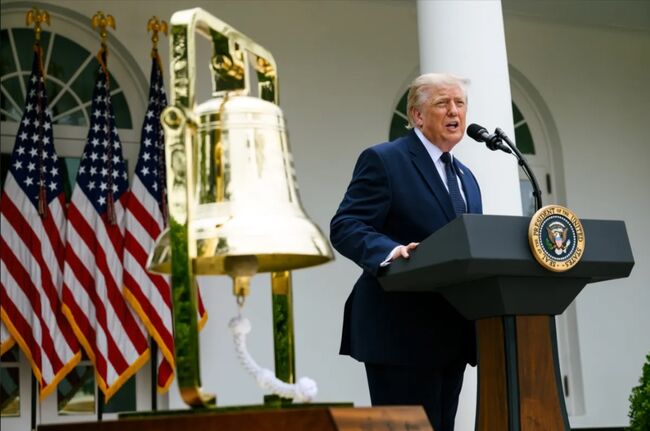 Trump pressures for rate cut again ahead of FOMC... "Should be the lowest in the world"
U.S. President Donald Trump. [Photo = The White House] U.S. President Donald Trump once again pressured the Federal Reserve, the U.S. central bank, to lower interest rates on the 27th (local time
Trump pressures for rate cut again ahead of FOMC... "Should be the lowest in the world"
U.S. President Donald Trump. [Photo = The White House] U.S. President Donald Trump once again pressured the Federal Reserve, the U.S. central bank, to lower interest rates on the 27th (local time
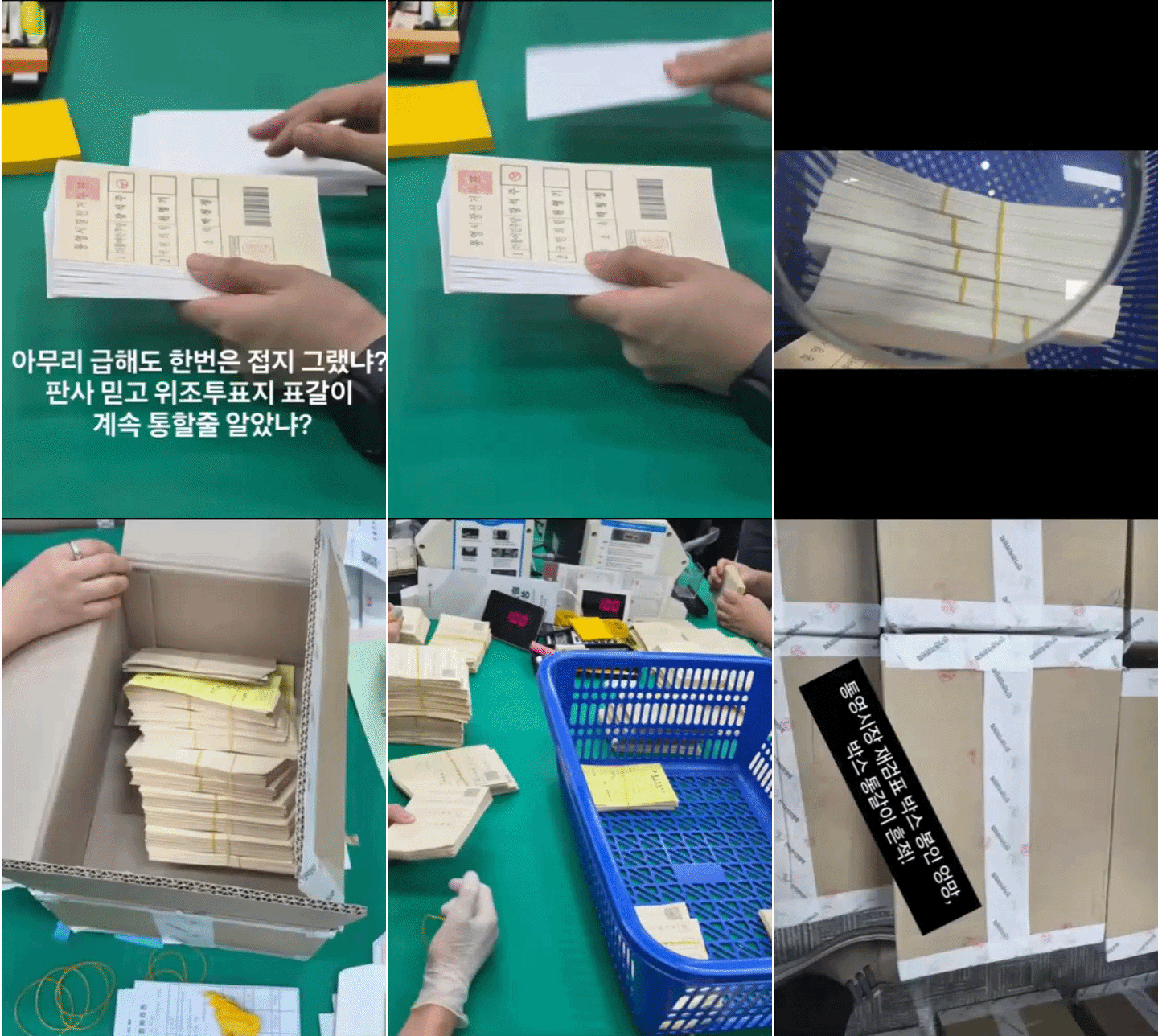 “Ignoring crisp ballots and damaged seals”… Tongyeong mayoral recount concludes with ‘no change in outcome,’ leaving suspicions and public outrage behind
Suspected counterfeit ballots discovered in Tongyeong [GIF from social media of Representative Hwang Kyo-ahn / Attorney Park Joo-hyun]During a recount of the Tongyeong mayoral election in South Gyeong
“Ignoring crisp ballots and damaged seals”… Tongyeong mayoral recount concludes with ‘no change in outcome,’ leaving suspicions and public outrage behind
Suspected counterfeit ballots discovered in Tongyeong [GIF from social media of Representative Hwang Kyo-ahn / Attorney Park Joo-hyun]During a recount of the Tongyeong mayoral election in South Gyeong
 President Yoon, regarding the first-instance ruling on the Public Official Election Act: “An excessive political verdict that distorts the facts… We will appeal immediately.”
The first-instance sentencing hearing for President Yoon Suk Yeol regarding violations of the Public Official Election Act is being broadcast live at Seoul Station on the 27th. [Photo=Yonhap News]Pres
President Yoon, regarding the first-instance ruling on the Public Official Election Act: “An excessive political verdict that distorts the facts… We will appeal immediately.”
The first-instance sentencing hearing for President Yoon Suk Yeol regarding violations of the Public Official Election Act is being broadcast live at Seoul Station on the 27th. [Photo=Yonhap News]Pres
 WSJ: "SK Hynix ADR Premium Is a Sign of AI Trading Overheat"
Advertisement for SK Hynix ADR listing in New York's Times Square [Reuters=Yonhap News file photo]The Wall Street Journal (WSJ) has pointed out that the price of SK Hynix’s American Depositary Recei
WSJ: "SK Hynix ADR Premium Is a Sign of AI Trading Overheat"
Advertisement for SK Hynix ADR listing in New York's Times Square [Reuters=Yonhap News file photo]The Wall Street Journal (WSJ) has pointed out that the price of SK Hynix’s American Depositary Recei
 'Godfather of Japanese Mystery Novels' Keigo Higashino Passes Away After Battle with Cancer at 68
Famous Japanese mystery novelist Keigo Higashino [AFP=Yonhap News]It has been belatedly reported that Keigo Higashino, the "godfather of Japanese mystery novels" and author of bestsellers such as "The
'Godfather of Japanese Mystery Novels' Keigo Higashino Passes Away After Battle with Cancer at 68
Famous Japanese mystery novelist Keigo Higashino [AFP=Yonhap News]It has been belatedly reported that Keigo Higashino, the "godfather of Japanese mystery novels" and author of bestsellers such as "The
 [Park Pil-kyu Security Column] To the Ignorant Trying to Clothe a Beast in Sheep's Clothing
Rep. Kim Byung-joo of the Democratic Party of Korea [Photo=Yonhap News]“The Air Force Academy doesn't teach you how to fly a plane!” “The Army, Navy, and Air Force academies are exactly the
[Park Pil-kyu Security Column] To the Ignorant Trying to Clothe a Beast in Sheep's Clothing
Rep. Kim Byung-joo of the Democratic Party of Korea [Photo=Yonhap News]“The Air Force Academy doesn't teach you how to fly a plane!” “The Army, Navy, and Air Force academies are exactly the
 [Issue Diagnosis] Two Effects of the Election Petition Review
 [Photo] Evidence of Election Fraud Flooding U.S. Media… Trump Had 2.7 Million Votes Stolen
 [Video] U.S. Semiquincentennial Air Show... 'Art in the Sky' streaks across New York
 [Editorial Cartoon] A Draconian Law That Undermines Freedom of Expression

 List
List