Seolran No. 2. Provided by Assembly Member Lee Byeong-jin's office
 Dr. Seo Sang-moon, Historian, President of the Korea Military Review Association, and Director of the Trans-Eurasian Future Research Institute How can we remove the illegal structures such as ‘Seolran (Deep Blue) No. 1 and 2’, which cast a shadow over Korea-China relations and peace in Northeast Asia, and the central management platform ‘Atlantic Amsterdam’? In addition to these three structures illegally installed in 2018 and 2024 within the Korean-Chinese ‘Provisional Measures Zone (PMZ)’, where the exclusive economic zones (EEZs) of both countries in the West Sea overlap, China has installed at least 13 additional lighthouse-shaped solar buoys throughout the West Sea between 2018 and 2023. This amplifies concerns about the expansion of semi-permanent maritime infrastructure across disputed waters and is an act of disregard for our government.
The issue of removing these structures cannot be resolved with a lenient approach alone; the weak methods the South Korean government has employed thus far will not suffice. The reason for this stalemate is not a legal dispute under international law but a political issue. Moreover, it stems from the lack of will from Lee Jae-myung, who holds the highest national position "temporarily," to defend our maritime sovereignty. Instead of merely reiterating basic principles, our government should immediately adopt a tit-for-tat approach, mirroring China's methods by installing equivalent structures in the same maritime areas, based on the principles of proportionality and reciprocity.
In several meetings, such as the 3rd Korea-China Maritime Cooperation Dialogue in April 2025, China maintained that the structures are ‘private aquaculture facilities’ and therefore beyond governmental intervention, thwarting any agreement on South Korea's demands for the removal of Chinese structures and their relocation outside the provisional zone. The only perceived achievement was obtaining a statement (not even a promise) from Chinese representatives that no further structures would be installed. This indicates that the issue is not merely a difference in the application of international law or legal interpretation, but rather a multifaceted dispute with potential implications for the maritime rights and territorial claims of both nations. China argues that the structures in question are purely for civilian use, such as "fishing and aquaculture facilities," not for territorial expansion or maritime boundary delimitation, and that their installation complies with Chinese domestic law and international law. For instance, Seolran No. 2 is a large, smart deep-sea aquaculture cage built by the private company ‘Shandong Ocean Group,’ intended for large-scale farming of cold-water fish species.
Our government views these claims as a unilateral act of maritime occupation by China and a potential basis for maritime boundary disputes. Consequently, based on the Korea-China Fishery Agreement and international law (the UN Convention on the Law of the Sea, UNCLOS), our government demanded that these structures, illegally installed within the provisional measures zone, be completely removed and relocated outside the zone. However, China insists that the structures do not violate the Korea-China Fishery Agreement and do not affect South Korea's maritime interests. While they claim to temporarily halt further installations, they refuse to remove or relocate the existing facilities, citing the difficulty of doing so as they are operated by private companies' investments. In response, South Korea has indicated that if China refuses to relocate or remove the facilities, South Korea may consider proportional countermeasures, such as installing structures of comparable scale.
According to the Korea-China Fishery Agreement enacted in 2001, the provisional measures zone is designated for the joint management of fisheries by both countries. Structures unrelated to fishing, such as maritime scientific research or development activities, are not covered by the agreement. Measures concerning the protection of fisheries and marine life, and environmental conservation, should also be undertaken only with the agreement of both countries based on the principle of joint management. Therefore, China's unilateral installation of structures constitutes a violation of international legal agreements. The installation of artificial islands, facilities, or structures is permissible only within a coastal state's EEZ. If illegal structures are located in a provisional measures zone where both countries' EEZs overlap, their unilateral installation obstructs the sovereign rights of the other nation (such as resource surveys and environmental impact assessments).
Given China's view of the West Sea as a crucial strategic foothold in its confrontation with the United States, this issue will be difficult to resolve through discussions and negotiations between working-level officials. Therefore, it requires intervention from the leaders of both countries to resolve it politically. However, as China is the party that created the problem, President Xi Jinping is unlikely to engage directly. Typically, if working-level talks between national representatives fail to reach an agreement on diplomatic issues, heads of state may meet to resolve them through a top-down approach.
However, Lee Jae-myung, while verbally attacking and showing indignation over anti-China protests by young South Koreans as "disruptive behavior," deliberately feigns ignorance and avoids mentioning China's illegal structures, which represent an infringement on national interests. During the recent Korea-China summit, he failed to get the ban on Korean cultural content (Hallyu ban) lifted, and while the urgent issue of visa-free entry for Chinese citizens into South Korea was discussed, and regarding China's illegal structures in the West Sea, only a general agreement to have working-level officials communicate and resolve the issue was reached, without concrete discussions. It seems the meeting ended with superficial exchanges of gifts with Xi Jinping, just like "trivial talk." China is incrementally encroaching upon our front yard, yet we are seemingly indifferent. The summit, which failed to resolve pressing issues, reveals that the "national interest-centered pragmatic diplomacy" advocated by the Lee Jae-myung administration is merely rhetoric. If the highest national leader does not demonstrate a firm commitment to protecting national interests, it is inevitable to question the government's willingness and sincerity to pursue international legal sanctions, which they are reportedly considering. Does Lee Jae-myung truly understand the implications of these structures?
We must recognize that behind China's official explanations lie complex strategic intentions and objectives. Considering the scale and function of the structures, the sensitivity of their location, China's military and quasi-military activities surrounding them, and the backdrop of the US-China rivalry, the purpose of their installation is far more complex and deliberate. Firstly, we must view the situation within the geopolitical context of intensifying US-China hegemony competition as China pivots towards becoming a maritime power and seeks regional dominance. Then, it becomes clear that the West Sea structures are another branch of the same body as the South China Sea and the East China Sea. In the event of a US-China conflict, China, anticipating South Korea's alignment with the US, is covertly positioning itself to secure a favorable preemptive advantage in the West Sea, which will become a crucial strategic zone in future contingencies. In any contingency involving the US-China, China-Japan, or China versus South Korea-US-Japan, the Korean Peninsula and the entire East China Sea region could become engulfed in war. This is also the context for China's deployment of "unrestricted warfare" (超限戰), a strategy they employ globally, targeting numerous countries. The Chinese Communist Party (CCP) classifies South Korea as a top target country for unrestricted warfare, alongside the US and Japan.
Among its border regions, China desires to maintain the status quo in some areas while attempting to alter it in others. The South China Sea, where China has created and is operating seven artificial islands, falls into the former category. The latter category comprises areas where China is at a disadvantage, such as the disputed border areas with India in the east, the Taiwan Strait, the East China Sea where the Senkaku Islands (China's name: ‘Diaoyu Islands’) are located, and disputes over territorial claims with Japan, as well as South Korea's West Sea coast. Similar to the South China Sea, the West Sea coast was intended for strategic purposes, with China aiming to gradually increase the number of structures to establish grounds for future territorial claims. However, these plans were exposed by initial satellite imagery obtained by Ray Powell of the maritime transparency initiative Sea Light at Stanford University, leading to a stalemate. Since July-August, China has also been covertly undertaking oil and gas exploration activities in the Taiwan Strait's EEZ, installing structures alongside at least 12 oil and gas vessels.
China's installation of structures in the West Sea is a continuation of its actions in the South China Sea and is linked to the Ieodo issue. It could be a long-term strategy to undermine the balance of influence in the waters around Ieodo, which South Korea effectively controls, and shift it in China's favor. By unilaterally installing facilities within the PMZ, where fixed structures are prohibited under the Korea-China Fishery Agreement, and by making this a fait accompli, China aims to gain an advantageous position in future EEZ boundary negotiations or secure a strategic advantage in territorial disputes. In essence, it is equivalent to "stake planting." In the past, when South Korea constructed the Ieodo Marine Science Base, China strongly protested, stating, "Suyan Jiao is about 300 nautical miles from Japan and about 170 nautical miles from South Korea. If any one of China, Japan, or South Korea occupies this island and reef, it can pose a great threat to the other two countries. This is a place our soldiers must fight for."
In this context, the West Sea structures go beyond simple fish farming purposes and strongly exhibit characteristics of multi-purpose maritime platforms that attempt to alter the status quo in the Korea-China provisional measures zone, gradually expand maritime jurisdiction, and can be repurposed for military use in contingencies. Regarding China's gradual expansion of maritime jurisdiction, Japan's 'President Online' described it as a "quiet invasion," pointing out that these structures, the size of a football field, effectively function as small artificial islands. This appears to be an attempt by China to apply its successful "Gray Zone Strategy" in the South China Sea to the West Sea.
There is not just one reason or basis for why I believe the West Sea structures are likely to be utilized for military dual-use. Look at the central platform, 'Atlantic Amsterdam,' immediately. With a helipad, large communication antennas, and living quarters capable of accommodating over 100 people, does it not have excessive facilities for a simple aquaculture management facility? This suggests the possibility of conversion into military facilities in the future, similar to China's precedent in the South China Sea, where it built artificial islands by reclaiming reefs and then converted civilian facilities into military bases. In contingencies, this platform will be repurposed as an outpost for maritime operational support, intelligence gathering, and intelligence, surveillance, and reconnaissance (ISR) activities.
In future legal disputes with China, there are specific points our government should focus on to expose the inconsistencies and falsehoods in the opposing claims from a tactical negotiation standpoint.
Firstly, we should begin by questioning China's intention of territorial claim over the structure installation area, thereby cornering China legally. China claims these structures are mobile commercial fishing support facilities. However, we must interrogate them by pointing out that their construction as large steel and concrete structures, weighing hundreds of tons, makes them fixed rather than mobile, and thus raises questions about China's territorial intentions in the area, given the high possibility of their conversion into military bases during contingencies. Even if China denies any intention of using them as a foothold for maritime sovereignty claims, we should not trust them unless they are completely dismantled. Considering China's violations of its promises, such as its statement in September 2015 with then-US President Barack Obama that it had no intention of militarizing the South China Sea, we cannot be assured even if they codify dismantling in diplomatic documents. Furthermore, in May 2025, after the commencement of Korea-China talks on the structure issue, China declared temporary navigation exclusion zones in several areas within the PMZ for training exercises of its latest aircraft carrier, the Fujian. How can we trust them?
Secondly, we must focus on exposing the falsity of China's assertion that the West Sea structures are purely for civilian economic and technical purposes, unrelated to maritime sovereignty, and that the government cannot interfere because they are facilities of private businesses for commercial use. The CCP-led China employs all means in unrestricted warfare to achieve its objectives. In China, even private companies have CCP organizations; unlike capitalist countries, there are no entirely private enterprises. If a private company has three or more CCP members among its employees, a CCP branch is established, and it is under CCP control. Within this structure, commercial means are also utilized to achieve the party's goals. In recent years, Chinese individuals have purchased islands near Okinawa, Japan. Anyone who believes this was merely for personal need fails to understand China's structural nature. In China, purchasing foreign land or islands is a significant matter related to national security and cannot be done by individuals. The CCP monopolizes these purchases or utilizes individuals' names. They often acquire real estate through individuals and then, after a certain period, the Chinese government buys it back. There are recent cases where the Chinese government has acquired property in the Yongsan area through such means.
Thirdly, we must highlight the falsehood of China's offer to arrange on-site inspections. Although China claimed to open the structure sites for inspection, when the South Korean maritime research vessel ‘Onnuri’ approached the Seolran No. 2 structure and nearby drilling facilities in February and September 2025 to conduct investigations, Chinese Coast Guard vessels and civilian ships blocked access and obstructed the investigation, exercising physical control and intimidation. Despite these actions being legitimate under the rights granted by the Korea-China Fishery Agreement, China's obstruction led to a tense standoff for two hours. This clearly demonstrates China's intention to control the waters around the structures as if they were its own territorial waters. The obstruction of the exercise of scientific research rights guaranteed by UNCLOS is a clear violation of international law. We must strongly question China on this point.
If negotiations between South Korea and China continue, it is possible that in response to South Korea's demand for the removal of the structures, China will maintain its refusal while perhaps conditionally agreeing to dismantle them in the worst-case scenario, stating they will remove them if South Korea removes its Ieodo facilities. To prepare for such a situation, the best response for the South Korean government would be to immediately install maritime research structures similar to China's current structures within the PMZ. Therefore, the Lee Jae-myung administration must commence the installation of these structures without delay.
In this regard, we should draw inspiration from Vietnam's resolve to protect its sovereignty, which has been undertaking large-scale land reclamation projects on islands and reefs it occupies in the Spratly Islands since 2021, expanding its artificial islands to 21 by March 2025, with an area of 9.1 square kilometers, and firmly confronting China. We should also consider their diplomatic strategy towards China (so-called 'Bamboo Diplomacy'). Even with such actions, China does not provoke Vietnam. This is due to the historical memory of the 1979 Chinese invasion of Vietnam, which resulted in a fierce counterattack, leading China to recognize Vietnam as a force that cannot be easily subdued, thus preventing further sanctions. We should learn from Vietnam's approach to protecting its national interests in this manner.
Dr. Seo Sang-moon, Historian, President of the Korea Military Review Association, and Director of the Trans-Eurasian Future Research Institute

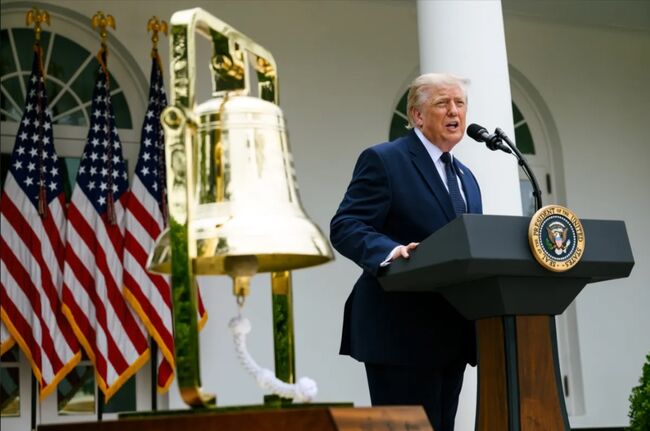 Trump pressures for rate cut again ahead of FOMC... "Should be the lowest in the world"
U.S. President Donald Trump. [Photo = The White House] U.S. President Donald Trump once again pressured the Federal Reserve, the U.S. central bank, to lower interest rates on the 27th (local time
Trump pressures for rate cut again ahead of FOMC... "Should be the lowest in the world"
U.S. President Donald Trump. [Photo = The White House] U.S. President Donald Trump once again pressured the Federal Reserve, the U.S. central bank, to lower interest rates on the 27th (local time
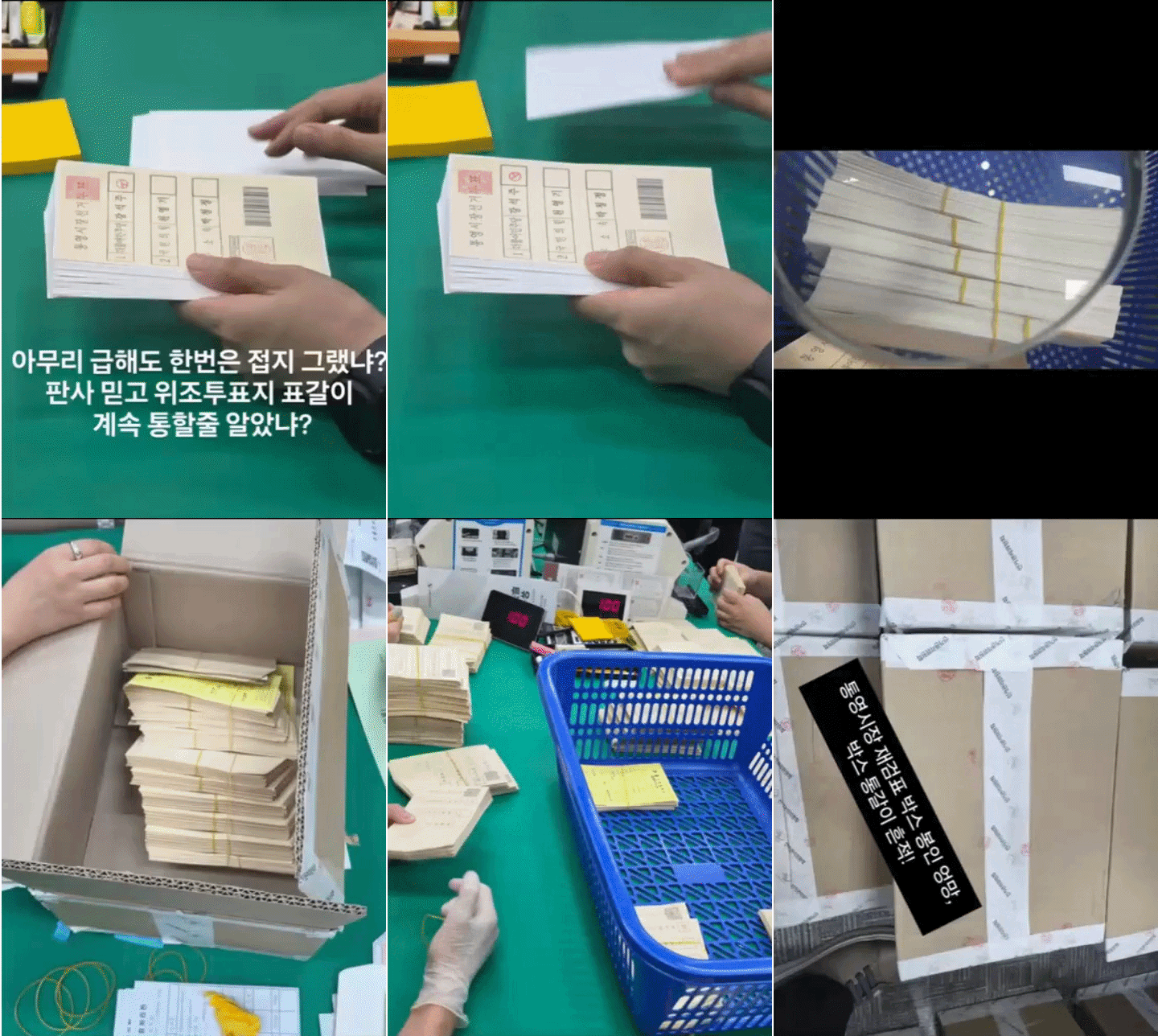 “Ignoring crisp ballots and damaged seals”… Tongyeong mayoral recount concludes with ‘no change in outcome,’ leaving suspicions and public outrage behind
Suspected counterfeit ballots discovered in Tongyeong [GIF from social media of Representative Hwang Kyo-ahn / Attorney Park Joo-hyun]During a recount of the Tongyeong mayoral election in South Gyeong
“Ignoring crisp ballots and damaged seals”… Tongyeong mayoral recount concludes with ‘no change in outcome,’ leaving suspicions and public outrage behind
Suspected counterfeit ballots discovered in Tongyeong [GIF from social media of Representative Hwang Kyo-ahn / Attorney Park Joo-hyun]During a recount of the Tongyeong mayoral election in South Gyeong
 President Yoon, regarding the first-instance ruling on the Public Official Election Act: “An excessive political verdict that distorts the facts… We will appeal immediately.”
The first-instance sentencing hearing for President Yoon Suk Yeol regarding violations of the Public Official Election Act is being broadcast live at Seoul Station on the 27th. [Photo=Yonhap News]Pres
President Yoon, regarding the first-instance ruling on the Public Official Election Act: “An excessive political verdict that distorts the facts… We will appeal immediately.”
The first-instance sentencing hearing for President Yoon Suk Yeol regarding violations of the Public Official Election Act is being broadcast live at Seoul Station on the 27th. [Photo=Yonhap News]Pres
 WSJ: "SK Hynix ADR Premium Is a Sign of AI Trading Overheat"
Advertisement for SK Hynix ADR listing in New York's Times Square [Reuters=Yonhap News file photo]The Wall Street Journal (WSJ) has pointed out that the price of SK Hynix’s American Depositary Recei
WSJ: "SK Hynix ADR Premium Is a Sign of AI Trading Overheat"
Advertisement for SK Hynix ADR listing in New York's Times Square [Reuters=Yonhap News file photo]The Wall Street Journal (WSJ) has pointed out that the price of SK Hynix’s American Depositary Recei
 'Godfather of Japanese Mystery Novels' Keigo Higashino Passes Away After Battle with Cancer at 68
Famous Japanese mystery novelist Keigo Higashino [AFP=Yonhap News]It has been belatedly reported that Keigo Higashino, the "godfather of Japanese mystery novels" and author of bestsellers such as "The
'Godfather of Japanese Mystery Novels' Keigo Higashino Passes Away After Battle with Cancer at 68
Famous Japanese mystery novelist Keigo Higashino [AFP=Yonhap News]It has been belatedly reported that Keigo Higashino, the "godfather of Japanese mystery novels" and author of bestsellers such as "The
 [Park Pil-kyu Security Column] To the Ignorant Trying to Clothe a Beast in Sheep's Clothing
Rep. Kim Byung-joo of the Democratic Party of Korea [Photo=Yonhap News]“The Air Force Academy doesn't teach you how to fly a plane!” “The Army, Navy, and Air Force academies are exactly the
[Park Pil-kyu Security Column] To the Ignorant Trying to Clothe a Beast in Sheep's Clothing
Rep. Kim Byung-joo of the Democratic Party of Korea [Photo=Yonhap News]“The Air Force Academy doesn't teach you how to fly a plane!” “The Army, Navy, and Air Force academies are exactly the
 [Issue Diagnosis] Two Effects of the Election Petition Review
 [Photo] Evidence of Election Fraud Flooding U.S. Media… Trump Had 2.7 Million Votes Stolen
 [Video] U.S. Semiquincentennial Air Show... 'Art in the Sky' streaks across New York
 [Editorial Cartoon] A Draconian Law That Undermines Freedom of Expression

 List
List