이번 원고는 <신동아> 2017년 6월호에 게재된 것이며, 내용이 사드의 한국 배치를 둘러싼 한중간의 마찰 상황 등 일부를 제외하고는 여타 중국과 중국인들의 한국 인식과 관련해선 2025년 11월 현 상황에도 질적으로 변하지 않고 있다는 점에서 유효해서 게재합니다. <편집자 주>

 Dr. Seo Sang-moon, Historian, Chairman of the Korea Military Critics Association, Director of the East Sea Rim Future Research Institute China is currently interfering with THAAD (Terminal High Altitude Area Defense) by breaking Mao Zedong's political will and taboo against interfering in other countries' internal affairs. The problem is that as protests against the deployment of THAAD in Korea spread across China, anti-Korean sentiment among Chinese people is igniting. It's an unthinking hatred of Korea and Koreans. What are the reasons behind the ignition of anti-Korean sentiment in the hearts of Chinese people? Is it the conflict of national interests between the two countries, behind-the-scenes instructions from the Chinese Communist Party (CCP), or propaganda and incitement by state-controlled Chinese media? Are there no fundamental and essential factors?
The igniters of anti-Korean sentiment among Chinese people are diverse. They include perceptions held by traditional Chinese people and newly formed characteristics of communist Chinese people. For example, there is a deep-rooted ethnic superiority complex of "Zhonghua Minzu" (Chinese nation) embedded in the collective consciousness of Chinese people, and a pride in having been the world's largest and strongest first-class nation in the past, but a complex stemming from the reality that China is not so today. This is coupled with disdain and belittlement of Korea and Koreans, misunderstanding and misrepresentation, preconceptions, prejudices, and envy. This is a more fundamental factor than the CCP's planned mobilization of the masses to revoke the decision to deploy THAAD. The "Han-phobia" (fear of Korea) is also a result of the aggregation of this psychological state.
If the clash of national interests and the CCP's mobilization of the masses are the "lighter," then the consciousness of disdain and envy, inherent in Chinese people who view Korea and Koreans as "easy targets," combined, is the "tinder." Whenever a conflict of national interests occurs between South Korea and China, not just over THAAD deployment, this consciousness and sentiment become the fuel. From this perspective, the THAAD deployment is a temporary factor, and the national character and distorted view of Korea held by Chinese people are like the continuous and permanent social and political DNA of the Chinese nation.
Fuel for the Clash of National Interests
How are present-day Chinese people the same as and different from traditional Chinese people of the past? Through the Ming and Qing dynasties, the strength, morality, politeness, and shame that traditional Chinese people possessed disappeared, and new characteristics emerged. The most fundamental reason, paradoxically, is that it was an absolute monarchy.
Before the 16th century, China was referred to in Europe as "the most intelligent and most polite people in the world." Under Confucius's philosophy of benevolence (仁), the state was like a great family, harmonious and affectionate, and the rulers were known to be "full of benevolence and compassion," while the people were known as a sincere and "polite nation." However, this was exaggerated beyond reality and was a distortion due to the fever for all things Chinese as interest in China surged. According to the observations of Englishmen who directly witnessed and experienced China from the early stages of Western expansion, China was a country ruled by violent rulers who governed through abuse, oppression, and injustice.
Rule by Emperor and Officials
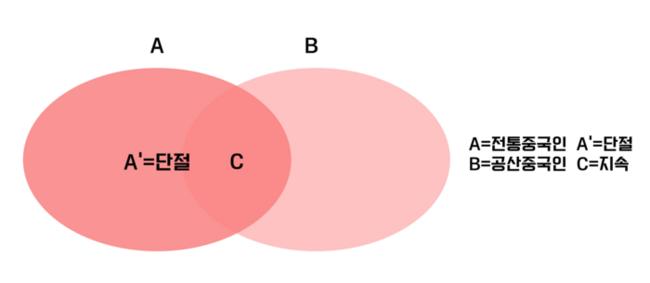 Servility that Explodes Dissatisfaction / Communist Chinese people with these tendencies tend to explode their dissatisfaction onto weaker nations rather than resisting the CCP or the state, exhibiting a mainstream servility. Chart
The source of violence was the system of rule by the emperor and officials. China was a "state prioritizing officials" where officials supporting the emperor exercised state power. As Montesquieu stated in "The Spirit of the Laws," the principle of governance in the absolute monarchy of China was fear, and the purpose of absolutism was the stable continuation of the state. Under violent rule, the national character of the Chinese people was enormously distorted. This was especially true for Chinese people who lived under the oppressive rule of Zhu Yuanzhang (1328-1398), who, after expelling the Mongols and founding the Ming Dynasty, ruled with killing and brutal punishments to eradicate Mongolian customs. Strength, moral judgment and attitude toward life, politeness and shame, and self-esteem disappeared, and they transformed into a type of person who was indifferent, apathetic, cold, detached, cynical, weak, and cowardly towards public affairs. This is evidenced by their passive observation of the atrocities committed by Japanese imperialism without any expression of anger. The anecdote of the great writer Lu Xun, who was so shocked by this scene that he abandoned his dream of becoming a doctor and became a writer to call for the enlightenment and awakening of the Chinese people, is well-known.
The absolute nature of using violence and fear as a means for the stable continuation of the system and state power has persisted to this day, even though the subjects of power, political systems, and aims have changed. Examining present-day communist Chinese people, we can see that they have inherited some characteristics from traditional Chinese people while others have been suppressed or declined. Instead, they possess new characteristics formed by the new political ideologies of Communism and Mao Zedong Thought, and culture. In terms of personal disposition, the strong temperament of traditional Chinese people, that is, being strong against the strong and strong against the weak, has disappeared, and they now exhibit weakness against the strong and strength against the weak. After being domesticated for nearly 70 years under the violence and control of the CCP, individuals have lost their sense of self and their confidence as citizens, and servility has become ingrained due to suppressed anger, apathy towards politics, or conversely, pent-up dissatisfaction. Therefore, ordinary Chinese people are unable to confront or express dissatisfaction to the absolute power of the CCP in their daily lives. In other words, civil consciousness and civil society have not been formed.
Servility that Explodes Dissatisfaction
Communist Chinese people with these tendencies tend to explode their dissatisfaction onto weaker nations rather than resisting the CCP or the state, exhibiting a mainstream servility. As shown in the chart above, while traditional Chinese people had strong elements of A, communist Chinese people have lost these characteristics and instead exhibit strong traits of B. A includes ① strength, ② moral judgment and attitude toward life, ③ politeness and shame, and ④ self-esteem, while B includes ⑤ indifference and apathy toward public affairs, ⑥ coldness and detachment, ⑦ cynicism and selfishness, and ⑧ weakness and cowardice.
Based on this, there are five main reasons why communist Chinese people look down on and dismiss Koreans and Korea. These are not independent but are all closely interconnected.
First, it is an ethnic superiority complex stemming from the fallacy that China is the center of the world. Ethnic superiority complex does not mean being born with superior genes racially. It has nothing to do with ethnic identity. It is merely a political invention of their own making, originating from the historical memory of successive Chinese dynasties traditionally treating all foreign ethnic groups or foreign countries as vassal states.
As late as the Spring and Autumn and Warring States periods, China referred only to the states in the Central Plains region, such as Henan, Shanxi, and Shandong, in the middle and lower reaches of the Yellow River. As the people of this region considered themselves the "center of the world," they treated all surrounding ethnic groups as "barbarians" (Siyi), meaning "four barbarians," and imposed unequal diplomatic relations of tribute and enfeoffment on the Southern Man, Northern Di, Western Rong, and Eastern Yi ethnic groups or states.
Even today, the Chinese academic community acknowledges that their ancestors, traditional Chinese people, were immersed in a sense of superiority while culturally despising other ethnic groups along with their ethnic consciousness. Their view of neighboring peoples was barbaric, backward, crude, and rough, to the extent that they considered them half-human and half-beast, filled with contempt. They even treated neighboring ethnic groups like insects, attaching the character "蟲" (chóng), meaning insect, to "蠻" (mán), meaning barbarian.
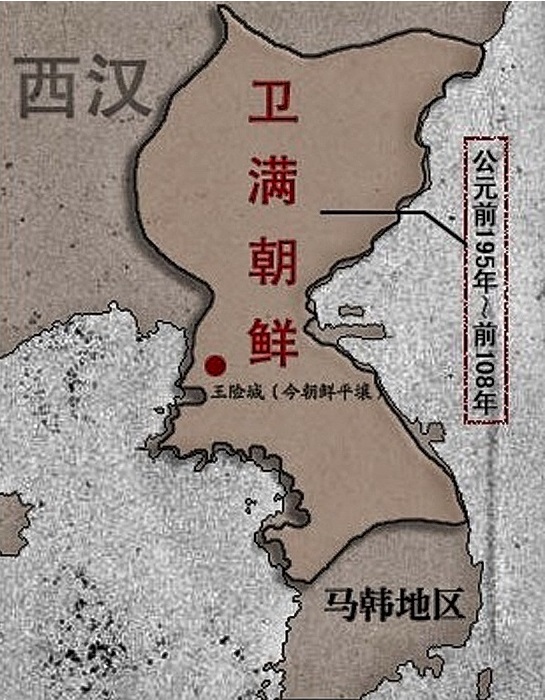 China places great importance on history, but the problem is that in its narration and education, both of its own history and its relations with foreign countries, there is much distortion, fabrication, exaggeration, and intentional omission. This includes Northeast Project, and as shown in the map above, the distortion that Wiman Joseon during China's Han Dynasty occupied and ruled more than three-quarters of the Korean Peninsula up to the central region south of the Han River from 195 to 108 B.C. is an example.
"Both North and South Korea Paid Tribute to Us"
It was during the Tang Dynasty, a period of an open world system, that China acknowledged the existence of states with comparable or superior territorial scope and national strength. This came after extensive contact with various neighboring countries in the Western Regions and the South. However, China did not possess the modern concept of diplomacy based on reciprocity and equality until modern times. Before the Chinese emperor was humiliated by the "strong ships and powerful cannons" (堅船砲利) of Great Britain, they traditionally forced tribute upon neighboring countries with the consciousness of the Son of Heaven bestowing favor, and never treated neighboring countries as equals. Therefore, until March 1861, when the Zongli Yamen (Office for Foreign Affairs) was first established, there was no government organization such as a "Ministry of Foreign Affairs" dedicated to diplomatic affairs.
Second, the perception that Korea was a vassal state that paid tribute and received investiture from China still remains among Chinese people. This idea has not formed overnight but has continuity and historical significance that has existed for a long time, so it can be considered the universal view of Korea held by Chinese people. The perception of Korea as a vassal state is continuously reinforced and has not disappeared through textbooks (especially history textbooks) in schools at all levels, dramas broadcast by the mass media, and comments by intellectuals. A recent report by the CCP's Global Times stating, "Both North Korea and South Korea were countries that paid tribute to us. In the past, they only paid tribute to us, and they merely handed over their leadership to Japan and the United States during World War II," is a good example.
As symbolized by the terms "Mahua" (admiration for China) and "Minor China," it is true that Korea has adopted and diligently followed Chinese thought, political systems, culture, and artifacts from the state ideology and political philosophy of the upper class to the way of life of the common people during the dynastic period. Therefore, this perception transitions into a preconception that Korea was and still is a derivative of China, and thus there is nothing to learn from it, nor anything new. The only difference that Korea has with China, they argue, is that as devout followers of Confucius and Mencius, it has become more Sinicized than China and more conservative than China. For example, Confucianism, which both countries adopted as their political ideology in traditional times, became the dominant philosophy in Joseon. Chinese intellectuals generally recognize that Neo-Confucianism became so dogmatic in Joseon that it completely eliminated any social or intellectual space for the coexistence of other values and thoughts, more so than in China. Therefore, they perceive that both old Joseon and present-day Korea are derivatives of China and can never be in an equal relationship with China.
Third, it is the arrogance of the "great nation" attitude, believing that treating Koreans lightly will have no repercussions. They believe that Koreans have never properly confronted China, thus lacking strong national consciousness and fighting spirit. Of course, this is nothing but intentional distortion and fabrication, but there is some truth to it. That is, the fact that Goguryeo fought equally with China is distorted as a conflict between the Chinese central government and local governments and incorporated into their own history (Northeast Project), thereby diminishing ancient Korean history. At the same time, unlike the Vietnamese people who fought to the bitter end without fear of China, Korea appears to be subservient to the United States.
Rebellion vs. Mandate of Heaven
This perception is a subjective idea of the Chinese people, centered entirely on the logic of power. Until the mid-Qing Dynasty, when a foreign ethnic group invaded China, Chinese people naturally considered it "rebelling against superiors" (犯上). However, when foreign ethnic groups like the Mongols and Manchus became rulers of China, it was recognized as the "Mandate of Heaven" (天命). For example, when the Manchus rose in northeastern China and coveted the Ming Dynasty's borders, the Ming Dynasty, viewing it as "rebelling against superiors" and finding it unacceptable, sent troops to suppress them.
However, the suppression failed, and after the Manchus entered China and became the rulers of all of China, the act of "rebelling against superiors" was recognized as the "Mandate of Heaven." That is, by rationalizing the humiliation of being ruled by barbarians by claiming they "ruled on behalf of Heaven," they legitimized their rule. This political system, where powerful rulers holding state power become the Son of Heaven, can be described as a double standard for self-rationalization.
This is closely related to the attitude of the Chinese people during the Ming and Qing dynasties, who, while not daring to offend the strong for a long time, have been arrogant and domineering towards the weak. This is also a characteristic of communist Chinese people who lack confidence, have been domesticated by nearly 70 years of brainwashing with communist ideology, and are therefore not only powerless but also stripped of their consciousness of resistance, politeness, shame, and self-esteem.
With China's rise to G2 in the 21st century, while it has validated its pride in being the world's greatest power, the reality is that its desire to do as it pleases is limited by the powerful United States. This frustration and irritation are being poured onto Korea, which is seen as subservient to the United States. It is also a momentum of treating Korea lightly because they perceive Koreans as being compliant with China. As clearly shown in the THAAD incident, even though THAAD is a weapon made by the United States and the United States wants to deploy it in Korea, there is no outcry in China for a boycott of American companies or products operating in China. This is proof.
Fourth, it is displeasure or hostility towards the South Korean government for following the United States in a competitive situation between the US and China. Today, Chinese people see only the United States as the entity that can restrain or influence their destiny or national will. It is an undeniable reality that the United States, viewing China as the greatest threat in response to its rise, is pursuing a strategy of containment by mobilizing countries around China. This is known in professional terms as the "Pivot to Asia."
Korea Perceived as a "US Puppet"
In addition, Japan and South Korea, bound by the US-Japan alliance and the ROK-US alliance, respectively, as well as Taiwan, the Philippines, Vietnam, Singapore, and India, are all lined up in the US's anti-China containment line. Although not always consistent, countries that share strategic interests with China in a broad sense are Russia, Pakistan, and North Korea. However, among these, only South Korea is deeply ingrained in the minds of Chinese people as a tool or puppet of the United States that threatens China's interests in Northeast Asia.
Past Chinese leadership has employed strategies such as "coastal defense and attack" (脣亡齒寒) and "using barbarians to control barbarians" (以夷制夷), aiming to create a loose space for South Korea to escape the US containment net. The strategy was to use the division of North and South Korea appropriately, making the two Korean peoples check each other, and thereby checking Japan and the United States as a whole Korean Peninsula, as the collapse of the Korean Peninsula would endanger China. Therefore, China has not exerted more pressure than necessary on North Korea's nuclear armament, and has invested considerable effort over many years, especially during the Park Geun-hye administration, to elevate its foreign relations with South Korea to the level of strategic cooperative partnership in a short period.
Despite this, South Korea is still participating in the containment of China by accepting THAAD, and is therefore considered a country that boasts of its alliance with the US. If South Korea were a small country with negligible national strength like Sri Lanka or Nepal, China would not bother to argue, but despite its small size, it possesses economic and military capabilities that cannot be ignored. This, coupled with a subtle complex, leads to the sentiment that the meddling sister-in-law (South Korea) is more annoying than the fighting mother-in-law (United States).
Fifth, it is the conceit and bluster of believing that they can economically control Korea by leveraging their large market. This idea is self-deception and narcissism, which willfully ignores the fact that China would also incur significant losses if it countered South Korea's economic sanctions. In March, China stated through the Global Times, "Most of China's foreign economic cooperation is a win-win structure, so we cannot vent our anger arbitrarily through economic sanctions." However, it added, "South Korea is a special case. 40% of its export surplus comes from China, and the popularity of Korean products in China is largely a result of the friendly political atmosphere between China and South Korea. If South Korea is so resolute now (due to THAAD deployment), it will have to spit out the results." However, China needs to be aware that South Korea is one of its top five trading partners, that the volume of Chinese agricultural products and manufactured goods that have encroached on South Korea's consumer market is by no means small, and that the number of Korean tourists visiting China is also considerable.
Mountains and Rivers May Change, But Human Nature is Hard to Alter
The above content represents characteristics that distinguish them from other nationalities, which can be called the national character of modern communist Chinese people. It is not easy to define the national character of a country, but if there are distinguishing features that are markedly different from other ethnic groups, it can be called national character. First of all, it is difficult to find a universally common pattern of thought, values, and behavior among the entire population. Moreover, it is not something that exists as fixed and immutable, but rather it can be expressed differently depending on the region and situation on a small scale, and it can be variable depending on historical and social changes on a large scale. At the same time, it is abstract and ambiguous rather than visible, making it difficult to present objectively.
What is clear is that national character is neither something inherited by nature nor something that falls from the sky one day. It is determined postnatally through the complex interplay of the geographical environment in which the ethnic group lives spatially, the historical background temporally, and the added social and political system and its culture. Living in the vast ocean of Chinese culture, society, and politics, they are educated and assimilated unconsciously, forming a unique disposition, orientation, and tendency as Chinese people that distinguishes them from other ethnic groups. These characteristics, which are very uncomfortable for us, are desirable to change for the sake of Sino-Korean relations, but it is doubtful whether these characteristics can be easily changed. If they can be changed, through what process should it happen?
As the Chinese saying goes, "Mountains and rivers may change, but human nature is hard to alter" (江山易改, 本性難移), these characteristics will not change easily in a short period. Furthermore, in present-day China, where socialism and Marxism-Leninism-Mao Zedong Thought exist exclusively as a single absolute value and a single political orientation, the national characteristics of communist Chinese people will not change easily. This is because China is not a society that tolerates individual personality, change, and diversity. All systems and culture are standardized by socialist ideology, a single party controls the state and the people holistically, the state takes precedence over the individual, and the individual is considered a part of the state. In such a communist system, individuals have been brainwashed to exist solely for the party and the state.
Creating Conditions for Democratization and Pluralism
The undemocratic and impersonal situation, where most Chinese people are mobilized for state-sponsored protests, as seen in the recent THAAD incident, without raising any dissenting voices, is the culmination of this brainwashing.
However, although human nature is difficult to change easily, it is not absolutely fixed and immutable. Therefore, we do not need to wait indefinitely for the national character of communist Chinese people to change. We should play a role in accelerating the pace of change and promoting change. It is necessary to create an environment conducive to the improvement and change of the characteristics of communist Chinese people. One of the methodologies for changing the political and social environment of communist Chinese people is to guide a large number of them to think in terms of universal values and to bring them into arenas that pursue those values. This is bound to be a long-term endeavor.
We must constantly engage in dialogue and exchange so that global environmental and ecological issues, human rights, peacekeeping, war prevention, nuclear disarmament, the elimination of dictatorial regimes and the spread of democracy, respect for and institutional protection of the socially weak, respect for diversity of thought and values, and affirmation of cultural relativism and the pursuit of coexistence become the mainstream values and agendas pursued by communist Chinese people.
Through openness, education, and the flow of information, we must continue and expand exchanges with other societies to cultivate universal and global perspectives in the traditional thinking and values of communist Chinese people and thereby elevate their civilization. Only through such communication can we reduce national differences (種差) and connect them as universal global citizens. In short, we must spare no effort in creating conditions for the Chinese society to become democratized and pluralistic.
Dr. Seo Sang-moon, Historian, Chairman of the Korea Military Critics Association, Director of the East Sea Rim Future Research Institute

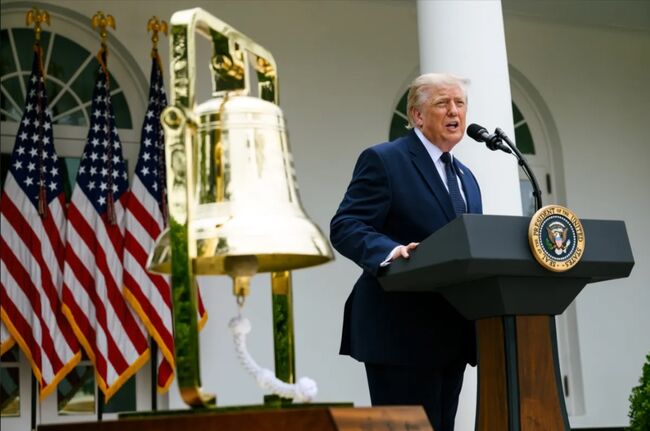 Trump pressures for rate cut again ahead of FOMC... "Should be the lowest in the world"
U.S. President Donald Trump. [Photo = The White House] U.S. President Donald Trump once again pressured the Federal Reserve, the U.S. central bank, to lower interest rates on the 27th (local time
Trump pressures for rate cut again ahead of FOMC... "Should be the lowest in the world"
U.S. President Donald Trump. [Photo = The White House] U.S. President Donald Trump once again pressured the Federal Reserve, the U.S. central bank, to lower interest rates on the 27th (local time
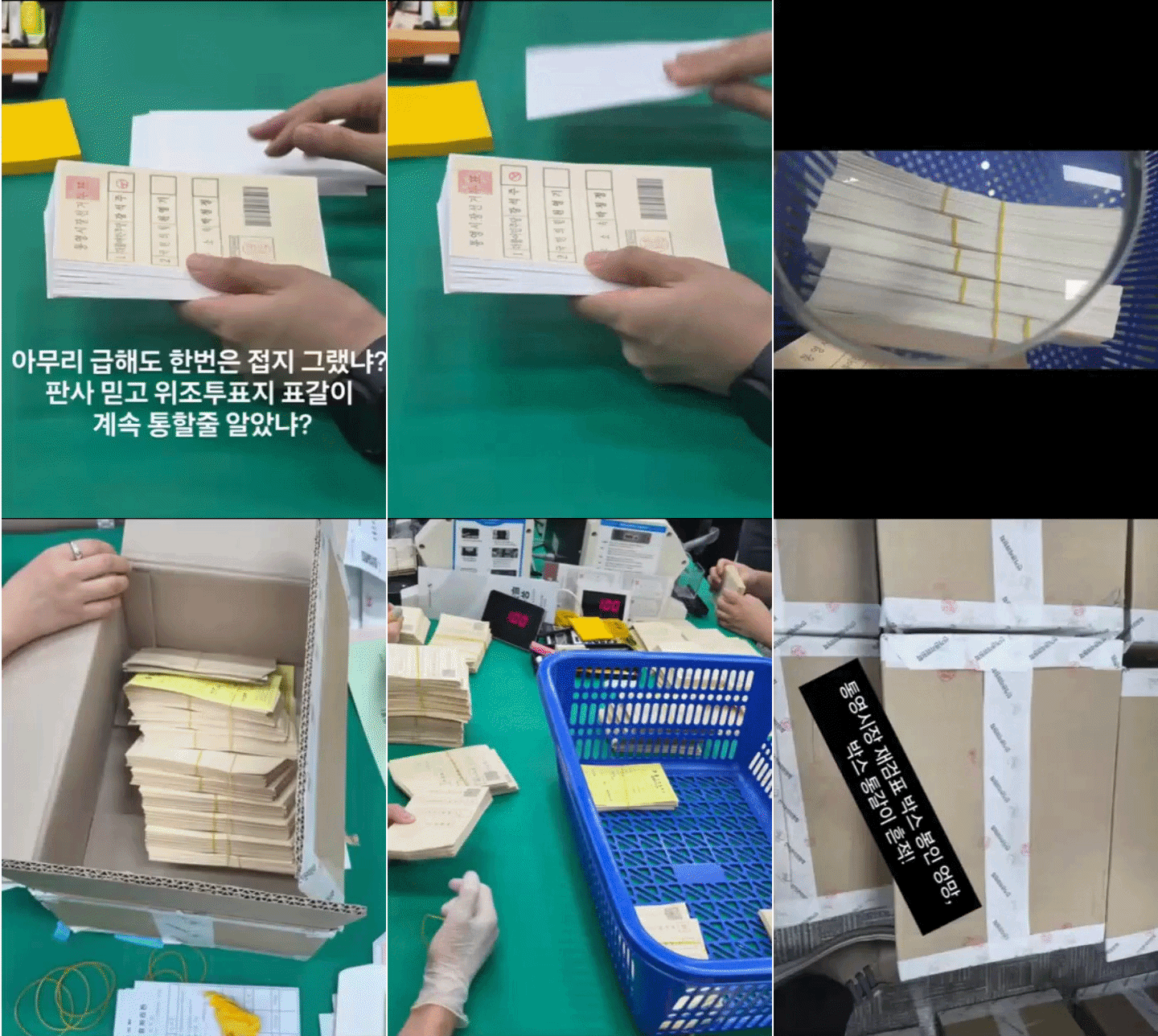 “Ignoring crisp ballots and damaged seals”… Tongyeong mayoral recount concludes with ‘no change in outcome,’ leaving suspicions and public outrage behind
Suspected counterfeit ballots discovered in Tongyeong [GIF from social media of Representative Hwang Kyo-ahn / Attorney Park Joo-hyun]During a recount of the Tongyeong mayoral election in South Gyeong
“Ignoring crisp ballots and damaged seals”… Tongyeong mayoral recount concludes with ‘no change in outcome,’ leaving suspicions and public outrage behind
Suspected counterfeit ballots discovered in Tongyeong [GIF from social media of Representative Hwang Kyo-ahn / Attorney Park Joo-hyun]During a recount of the Tongyeong mayoral election in South Gyeong
 President Yoon, regarding the first-instance ruling on the Public Official Election Act: “An excessive political verdict that distorts the facts… We will appeal immediately.”
The first-instance sentencing hearing for President Yoon Suk Yeol regarding violations of the Public Official Election Act is being broadcast live at Seoul Station on the 27th. [Photo=Yonhap News]Pres
President Yoon, regarding the first-instance ruling on the Public Official Election Act: “An excessive political verdict that distorts the facts… We will appeal immediately.”
The first-instance sentencing hearing for President Yoon Suk Yeol regarding violations of the Public Official Election Act is being broadcast live at Seoul Station on the 27th. [Photo=Yonhap News]Pres
 WSJ: "SK Hynix ADR Premium Is a Sign of AI Trading Overheat"
Advertisement for SK Hynix ADR listing in New York's Times Square [Reuters=Yonhap News file photo]The Wall Street Journal (WSJ) has pointed out that the price of SK Hynix’s American Depositary Recei
WSJ: "SK Hynix ADR Premium Is a Sign of AI Trading Overheat"
Advertisement for SK Hynix ADR listing in New York's Times Square [Reuters=Yonhap News file photo]The Wall Street Journal (WSJ) has pointed out that the price of SK Hynix’s American Depositary Recei
 'Godfather of Japanese Mystery Novels' Keigo Higashino Passes Away After Battle with Cancer at 68
Famous Japanese mystery novelist Keigo Higashino [AFP=Yonhap News]It has been belatedly reported that Keigo Higashino, the "godfather of Japanese mystery novels" and author of bestsellers such as "The
'Godfather of Japanese Mystery Novels' Keigo Higashino Passes Away After Battle with Cancer at 68
Famous Japanese mystery novelist Keigo Higashino [AFP=Yonhap News]It has been belatedly reported that Keigo Higashino, the "godfather of Japanese mystery novels" and author of bestsellers such as "The
 [Park Pil-kyu Security Column] To the Ignorant Trying to Clothe a Beast in Sheep's Clothing
Rep. Kim Byung-joo of the Democratic Party of Korea [Photo=Yonhap News]“The Air Force Academy doesn't teach you how to fly a plane!” “The Army, Navy, and Air Force academies are exactly the
[Park Pil-kyu Security Column] To the Ignorant Trying to Clothe a Beast in Sheep's Clothing
Rep. Kim Byung-joo of the Democratic Party of Korea [Photo=Yonhap News]“The Air Force Academy doesn't teach you how to fly a plane!” “The Army, Navy, and Air Force academies are exactly the
 [Issue Diagnosis] Two Effects of the Election Petition Review
 [Photo] Evidence of Election Fraud Flooding U.S. Media… Trump Had 2.7 Million Votes Stolen
 [Video] U.S. Semiquincentennial Air Show... 'Art in the Sky' streaks across New York
 [Editorial Cartoon] A Draconian Law That Undermines Freedom of Expression

 List
List