 Japanese Prime Minister Sanae Takaichi (left) and Chinese President Xi Jinping attend APEC held in Gyeongju on October 31st. Yonhap News
 Editor-in-Chief of US-Korea Daily, President of the Korea Military Critics Association, President of the Future Research Institute of the Pan-East Sea RegionThe framework surrounding Taiwan, which has been maintained and expanded since the establishment of diplomatic relations between the US and China in 1979, has collapsed. What does this mean? What changes will this bring to the security environment surrounding Taiwan? What choices must Korea make at this critical juncture of historical transition?
There have been two main perspectives on Taiwan from a geopolitical standpoint. One is the view that sees Taiwan within the framework set by China, and the other is the view from the perspective of Taiwan and non-Chinese countries. The former views Taiwan as an inseparable territory of China, belonging to the "One China" principle, while the latter is a view where the desire for unification and independence are intertwined. If the former is an abstract ideology viewed from the past, the latter is an urgent reality viewed from the perspective of survival and present security. According to the "One China" principle defined by China, the issue of Taiwan, an indivisible part of China, is a purely internal Chinese matter in which external forces cannot interfere. China has invariably demanded agreement to this principle as a prerequisite for diplomatic relations from any country wishing to establish them. Faced with China's aggressive incentives, many countries had no choice but to comply. Therefore, the trend until now has been an increasing number of countries acknowledging the "One China" framework. The United States, which agreed to China's framing from the outset of diplomatic relations, bears some responsibility for this. In response to China's unilateral principle, the US has maintained a policy of "Strategic Ambiguity," as the term suggests. This is based on the "Taiwan Relations Act," a domestic law enacted in the United States in 1979.
The core of the Taiwan Relations Act is that the United States "acknowledges" China's claim of "One China" but opposes the use of force by China to reunify Taiwan. In other words, it states that the US does not oppose China attempting to unify with Taiwan through peaceful means and methods, but that if it uses non-peaceful means such as a military attack, the US will intervene. This "strategic ambiguity," while not automatically intervening in the event of a "Taiwan contingency," was a key mechanism for maintaining a precarious status quo by leaving the possibility of intervention open, thereby deterring China's use of force and simultaneously preventing Taiwan's declaration of independence.
As a result, for nearly half a century, the Western world has been unable to escape the rhetorical framework that Beijing has constantly propagated: that Taiwan is a matter of "unification" for the "Huaxia" people who share common ancestors and that no other country or the international community can be involved. During this time, not only the United States and Japan, but also many countries along the South China Sea and in the West, have been trapped within this framework. Beijing's preferred narrative—that other countries should not take an ideological approach to Taiwan, which "belongs to China," and that China's intention to "liberate" Taiwan should be viewed with skepticism by the democratic camp—has long influenced global discourse on Taiwan. It is true that this "framing" has subtly pressured the international community to view Taiwan's security from the perspective of Chinese nationalism rather than from the perspective of geopolitical balance in the Indo-Pacific region.
However, the recent statement by new Japanese Prime Minister Sanae Takaichi, "Japan will intervene in the event of a Taiwan contingency," was a shockwave that broke the existing mainstream framework. It broke the decades-long period of uneasy truce and friction between the US and China. His strong stance, stating that he would exercise collective self-defense as a "crisis of existence" for Japan in the event of a Taiwan contingency, was an event that demolished the solidly constructed wall of the existing Chinese framework. It was also a call for democratic nations to focus on their own national interests and security based on their geopolitical positions in the face of threats from communist authoritarian states.
Takaichi's remarks were not merely an expression of intent to defend Taiwan. While there are multi-layered motives hidden behind these remarks, I will only mention two with the most unambiguous meaning. The first is the domestic political motive of Japan's rearmament and amendment of its peace constitution. The second is the motive of pressuring Washington to change the existing Chinese framework and make it a common security issue for liberal democratic nations, with the US taking the lead. Regarding the former, it means amending Article 9 of the so-called "peace constitution," which fundamentally prohibits Japan's rearmament after World War II. Japan's allocation of a record-breaking defense budget of approximately 11 trillion yen (about $7 billion) for fiscal year 2025 and its plan to double its defense capabilities by 2027 are part of this effort. It is well-known that Takaichi's remarks were a calculated declaration to justify this rearmament and to persuade and appeal to the public for the amendment of Article 9 of the peace constitution. His remarks reflect the will of Japan's far-right, who aim to regain hegemonic status in Asia by leading the encirclement of China with the United States at the forefront.
From the latter perspective, Takaichi's remarks sent a strong signal to the United States: "You must no longer maintain an ambiguous position." This was a diplomatic pressure demanding that Trump clearly express his intention to confront China and take the lead in protecting Taiwan, under the pretext that it is an issue between the US and China, and a global issue that will determine peace or war. Taiwan's security and its survival as a democracy are America's problem, and the defense of Taiwan is, in fact, defending America's future because it directly impacts its security. It was also a strategy to squeeze the United States into abandoning "strategic ambiguity" and explicitly engaging in Taiwan's defense by Japan taking a clear stance first. This intent includes further strengthening the US-Japan alliance and expanding Japan's role in the US "Indo-Pacific Strategy." In fact, the "Indo-Pacific Strategy" that the US has been pursuing does not actually have its intellectual property with the US; it was proposed to the US by Japan during the Obama administration. In other words, it means becoming the de facto behind-the-scenes operator of the Indo-Pacific Strategy that they originally provided to the US.
Takaichi's remarks carry a certain degree of persuasiveness. His statement that a Taiwan contingency is not just Taiwan's problem but a matter of Japan's own security directly linked to its survival is a fact, not an empty boast. Currently, because Taiwan is not under Chinese control and exists independently, it, along with Japan, prevents China's expansion of influence. In the event of a contingency, blocking these narrow straits, which form the shortest route for Chinese forces to advance into the Pacific from Taiwan Island to Yonaguni, Miyako, and the main island of Okinawa, would hinder China's expansion into the Pacific. In this context, General MacArthur's assessment of Taiwan as an "unsinkable aircraft carrier" during the Korean War remains valid today.
Even now, Taiwan is a key link in the First Island Chain, a maritime defense line that prevents China's advance into the Pacific. This island chain is formed by a series of islands extending from Okinawa, the Miyako Strait, Yonaguni Island, and Taiwan. Among the few straits through which China can advance into the Western Pacific, it is the shortest. Currently, with Taiwan and Japan holding firm, China's advance into the Pacific is being checked. However, if China were to seize Taiwan, this defense line would be instantly neutralized, and the Chinese navy would be able to freely advance into the Western Pacific beyond the First Island Chain. This means that Okinawa Main Island and mainland Japan would fall within the direct threat range of the Chinese navy. The collapse of the First Island Chain would also place major US military bases in Japan, such as Yokota, Kadena, and Sasebo, within the direct attack range of the Chinese navy. This could lead to the collapse of the US Indo-Pacific Strategy itself.
Furthermore, Japan is a country that depends on imports for over 90% of its energy, is it not? In particular, oil and natural gas imported from the Middle East largely pass through the Strait of Malacca and the Taiwan Strait to reach Japan. If China controls Taiwan, it will completely control these maritime transport routes, and Japan's energy supply can be cut off at any time. This route is also Japan's main export and import route, meaning that China would hold the lifeline of the Japanese economy in its hands. Therefore, from Japan's perspective, a Taiwan contingency is not simply a diplomatic issue but a "crisis of existence" that concerns its own survival.
If Taiwan, like Japan, falls under Beijing's control, the geopolitical and geographical landscape will dramatically change for the United States as well. If Taiwan's global dominance in semiconductor manufacturing falls into China's hands, the US economy will suffer a major blow. At the same time, it will be difficult to control China's military power, which freely projects its military strength into the Western Pacific. This is why Trump should pay close attention to Takaichi's advice.
Takaichi's declaration of intervention this time has significant strategic value as it may bring about secondary effects in addition to these underlying plans. For example, paradoxically, a clear declaration of "intervention" in the event of a Taiwan contingency could have the effect of deterring China's invasion of Taiwan. This aligns with the concept of "Deterrence" in international relations theory. Under the existing "strategic ambiguity," there is doubt within China: "Will the United States really intervene?" This uncertainty could have encouraged adventurism among the "Taiwan liberation faction" within Xi Jinping and his People's Liberation Army. Indeed, the fact that the "Fujian faction," which was preparing for a Taiwan attack under Xi Jinping's orders, was restrained by the "Vietnam War faction" led by Zhang Youxia, attests to this.
Conversely, if Japan clearly declares, "We will intervene," and strengthens its defense capabilities to support this, China will face the reality of having to risk a war with Japan if it invades Taiwan. This could dramatically increase the cost of Chinese aggression, thereby weakening the factors that lead to the use of force. Takaichi's confident declaration and the ensuing strengthening of Japan's defense capabilities, which will increase the military intervention in the event of a Taiwan contingency, will become a mechanism to prevent Taiwan's attack by making China judge that "the defender will resist, and the cost will be too great." However, even with a current approval rating exceeding 80%, he seems unlikely to serve as prime minister for another term, as he intends to implement his "Sanaeomics" to differentiate himself from "Abenomics." Therefore, it is highly probable that he will step down after playing a role in empowering Japan's far-right, who share his goal of amending Article 9 of the constitution, through this declaration of intervention in the event of a Taiwan contingency.
Meanwhile, the positions of South Korea and Southeast Asian countries are complex. For them, Japan's intervention in the event of a Taiwan contingency is a double-edged sword. It does not merely mean a defensive measure but directly leads to Japan's rearmament. South Korea and various Southeast Asian countries, which have historical traumas from Japan's invasions and colonial rule in the last century, do not view Japan's military buildup solely positively. For these countries, Japan amending Article 9 of its peace constitution, which is built on historical reflection, and pursuing rearmament means "the recurrence of historical nightmares."
From a macro-historical perspective, South Korea and Southeast Asian countries are currently facing the "present threat" of China's expansionism. Simultaneously, the "future threat" of Japan's military strengthening is also rising. This forces us into a very difficult choice. To counter the threat from China, cooperation with Japan is essential. Japan's military buildup can help deter China's expansion. At the same time, cooperation with China is also necessary to prevent Japan's rearmament and resolve the North Korean nuclear issue.
This presents a fundamental dilemma: "Will we sacrifice the future for the present, or be sacrificed by the present threat for the future?" Nations that genuinely desire peace in East Asia need a multi-layered strategy that can simultaneously manage both present and future threats. This requires an approach that resolves the problem itself. The present threat is China. If the issue of China's authoritarianism is resolved, the future threat will diminish or disappear. Conversely, the weaker China's threat to Taiwan becomes, the more the justification for Japan's rearmament will fade.
So, how should South Korea respond? We need to learn from Vietnam's unique "Bamboo Diplomacy," which has protected its national interests between the US and China. Just as bamboo bends in strong winds but does not break, Vietnam has responded flexibly to pressure from great powers while never abandoning its core interests. Vietnam, while engaging in disputes with China over the South China Sea with its flexible diplomatic approach like bamboo, is simultaneously pursuing economic cooperation with China. In the process, Vietnam clearly tells China: "Our sovereignty and territorial integrity are not subject to negotiation!" This clear statement of position, rather, has made China, which remembers being fiercely counterattacked after invading Vietnam in the Sino-Vietnamese War of 1979, respect Vietnam and deter indiscriminate invasion.
South Korea must also establish similar principles. The direction of maintaining economic relations with China while relying on the ROK-US alliance as its foundation is not yet wrong. However, in this process, South Korea must not hide behind "strategic ambiguity" and must clearly state its position and principles to China.
First, clarify the principle that unification of both sides of the Taiwan Strait must be achieved through peaceful means only, not by force, similar to the "Taiwan Relations Act." Second, clarify that in the event of US intervention in Taiwan's defense, South Korea will play a necessary role within the framework of the ROK-US Mutual Defense Treaty. Third, while maintaining communication channels with the Chinese leadership, clearly convey to China: "We oppose the use of force and desire a peaceful resolution, but if force is used, we will act in accordance with international law and alliance principles." This clear statement of position will unexpectedly aid in maintaining peace. The clearer the stance of South Korea's leaders and government, and the more resolute their will to respond, the less China will make unreasonable attempts to pull South Korea to its side through means like "united front tactics" as it does now. History, both ancient and modern, east and west, proves that ambiguity often leads to aggression by great powers.
At the same time, South Korea must also take action within the framework of the ROK-US alliance and ROK-Japan relations. First, in the event of a Taiwan contingency, determine policy in consultation with the US regarding the role that US Forces Korea bases will play, within the scope that does not infringe upon South Korea's sovereignty. Second, clarify the extent to which South Korea will participate in the strategic flexibility of the US Forces Korea. This must be decided considering both domestic political consensus and international legal legitimacy. Third, explore ways to share roles with US allies such as Japan, Australia, and the Philippines, but strictly prohibit foreign troops, other than US forces, from entering the Korean Peninsula in the event of cooperation.
East Asia is currently at a turbulent historical turning point, surpassing the era of Western expansion in the 19th century. Amidst the escalating US-China confrontation over hegemony, South Korea must make a very difficult but wise choice at the crossroads of the "present threat" of China's aggressive expansion and the "future threat" that could arise from Japan's rearmament. At this time, collective wisdom and mechanisms are urgently needed to contribute to clearing the dark clouds accompanied by thunder in East Asia, while also not forgetting the historical memories of suffering under Japan. It is a time when we need collective wisdom and mechanisms that can resolve the immediate threat while also preemptively deterring or controlling future threats.
Editor-in-Chief of US-Korea Daily, President of the Korea Military Critics Association, President of the Future Research Institute of the Pan-East Sea Region

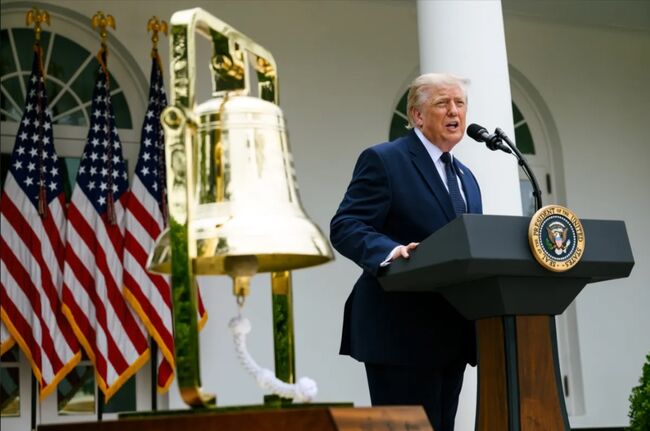 Trump pressures for rate cut again ahead of FOMC... "Should be the lowest in the world"
U.S. President Donald Trump. [Photo = The White House] U.S. President Donald Trump once again pressured the Federal Reserve, the U.S. central bank, to lower interest rates on the 27th (local time
Trump pressures for rate cut again ahead of FOMC... "Should be the lowest in the world"
U.S. President Donald Trump. [Photo = The White House] U.S. President Donald Trump once again pressured the Federal Reserve, the U.S. central bank, to lower interest rates on the 27th (local time
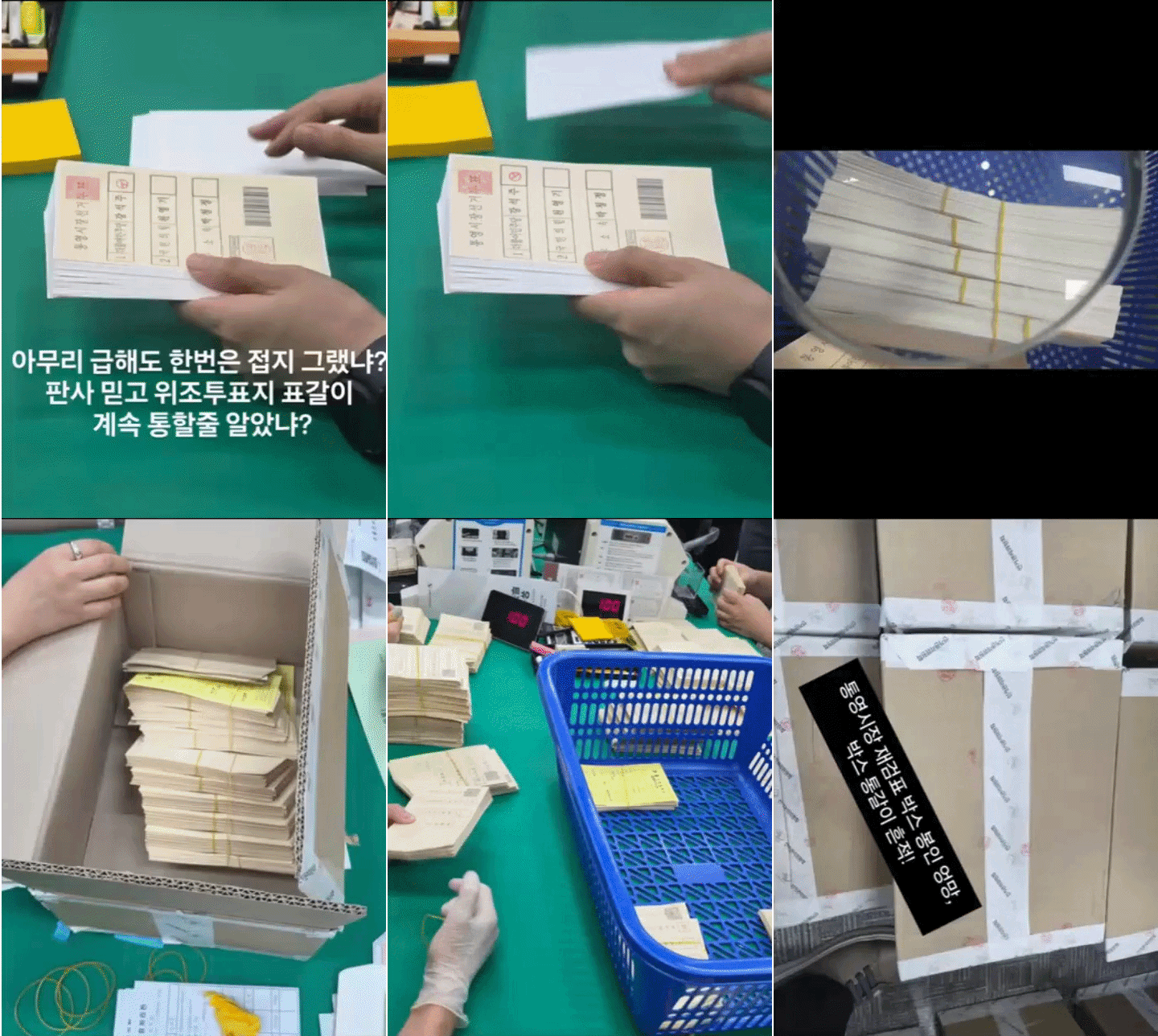 “Ignoring crisp ballots and damaged seals”… Tongyeong mayoral recount concludes with ‘no change in outcome,’ leaving suspicions and public outrage behind
Suspected counterfeit ballots discovered in Tongyeong [GIF from social media of Representative Hwang Kyo-ahn / Attorney Park Joo-hyun]During a recount of the Tongyeong mayoral election in South Gyeong
“Ignoring crisp ballots and damaged seals”… Tongyeong mayoral recount concludes with ‘no change in outcome,’ leaving suspicions and public outrage behind
Suspected counterfeit ballots discovered in Tongyeong [GIF from social media of Representative Hwang Kyo-ahn / Attorney Park Joo-hyun]During a recount of the Tongyeong mayoral election in South Gyeong
 President Yoon, regarding the first-instance ruling on the Public Official Election Act: “An excessive political verdict that distorts the facts… We will appeal immediately.”
The first-instance sentencing hearing for President Yoon Suk Yeol regarding violations of the Public Official Election Act is being broadcast live at Seoul Station on the 27th. [Photo=Yonhap News]Pres
President Yoon, regarding the first-instance ruling on the Public Official Election Act: “An excessive political verdict that distorts the facts… We will appeal immediately.”
The first-instance sentencing hearing for President Yoon Suk Yeol regarding violations of the Public Official Election Act is being broadcast live at Seoul Station on the 27th. [Photo=Yonhap News]Pres
 WSJ: "SK Hynix ADR Premium Is a Sign of AI Trading Overheat"
Advertisement for SK Hynix ADR listing in New York's Times Square [Reuters=Yonhap News file photo]The Wall Street Journal (WSJ) has pointed out that the price of SK Hynix’s American Depositary Recei
WSJ: "SK Hynix ADR Premium Is a Sign of AI Trading Overheat"
Advertisement for SK Hynix ADR listing in New York's Times Square [Reuters=Yonhap News file photo]The Wall Street Journal (WSJ) has pointed out that the price of SK Hynix’s American Depositary Recei
 'Godfather of Japanese Mystery Novels' Keigo Higashino Passes Away After Battle with Cancer at 68
Famous Japanese mystery novelist Keigo Higashino [AFP=Yonhap News]It has been belatedly reported that Keigo Higashino, the "godfather of Japanese mystery novels" and author of bestsellers such as "The
'Godfather of Japanese Mystery Novels' Keigo Higashino Passes Away After Battle with Cancer at 68
Famous Japanese mystery novelist Keigo Higashino [AFP=Yonhap News]It has been belatedly reported that Keigo Higashino, the "godfather of Japanese mystery novels" and author of bestsellers such as "The
 [Park Pil-kyu Security Column] To the Ignorant Trying to Clothe a Beast in Sheep's Clothing
Rep. Kim Byung-joo of the Democratic Party of Korea [Photo=Yonhap News]“The Air Force Academy doesn't teach you how to fly a plane!” “The Army, Navy, and Air Force academies are exactly the
[Park Pil-kyu Security Column] To the Ignorant Trying to Clothe a Beast in Sheep's Clothing
Rep. Kim Byung-joo of the Democratic Party of Korea [Photo=Yonhap News]“The Air Force Academy doesn't teach you how to fly a plane!” “The Army, Navy, and Air Force academies are exactly the
 [Issue Diagnosis] Two Effects of the Election Petition Review
 [Photo] Evidence of Election Fraud Flooding U.S. Media… Trump Had 2.7 Million Votes Stolen
 [Video] U.S. Semiquincentennial Air Show... 'Art in the Sky' streaks across New York
 [Editorial Cartoon] A Draconian Law That Undermines Freedom of Expression

 List
List









