Chinese President Xi Jinping and Japanese Prime Minister Sanae Takaichi. AFP/Yonhap News.
Sino-Japanese relations have rapidly turned frosty after Japanese Prime Minister Sanae Takaichi stated in the Diet that a Taiwan contingency could constitute a "situation threatening the survival of the nation," allowing for the exercise of collective self-defense.
While Japan emphasizes that Prime Minister Takaichi's remarks were hypothetical and that there is no change to the existing government stance, China, viewing Takaichi's comments as interference in its internal affairs, has gone beyond strong criticism and issued a "call for Japanese citizens to refrain from visiting China."
The Yomiuri Shimbun reported on the 16th that the background to China's overwhelmingly hardline stance may be the judgment that Prime Minister Takaichi's remarks damaged the prestige of Chinese President Xi Jinping.
The newspaper analyzed that after President Xi and Prime Minister Takaichi met in Gyeongju on the 31st of last month, China took conciliatory actions toward Japan.
Indeed, China announced on the 3rd of this month that it would extend visa-free measures for South Korea, Japan, and others until the end of next year, and on the 5th, it resumed imports of Japanese seafood, which had been banned since the discharge of contaminated water (termed "treated water" by the Japanese government) from the Fukushima Daiichi Nuclear Power Plant, after more than two years.
However, it is reported that Prime Minister Takaichi's remarks in the Diet on the 7th, hinting at the possibility of "military intervention in the event of a Taiwan contingency" as the first serving Japanese prime minister to do so, tarnished President Xi's image.
Yomiuri noted that the Chinese Ministry of Foreign Affairs summoned Japanese Ambassador to China Kenji Kanasugi on the 14th "under instruction," citing a Chinese government official who stated that the instruction came from the highest leadership of the Communist Party.
Furthermore, Yomiuri explained that China may have reacted more strongly because this year marks the 80th anniversary of the end of Japanese occupation of Taiwan and the victory in the Sino-Japanese War. A sensitive statement regarding Taiwan from the Japanese Prime Minister could have exacerbated the reaction.
Although China is pressuring Prime Minister Takaichi to retract her remarks, Japanese media analyzes that the possibility of her doing so is almost nil, as it would lead to a loss of support from conservatives and could prompt China to make even stronger demands.
For now, the Japanese government is seeking avenues for dialogue to prevent further escalation of the conflict. Chief Cabinet Secretary Hirokazu Matsuno, the government's spokesperson, stated the previous day, "Given the differences in our positions, multilayered communication between the two countries is important."
In relation to this, Yomiuri reported that the Japanese government is considering sending Keiichi Ichikawa, Secretary-General of the National Security Council, to China.
Furthermore, Nihon Keizai Shimbun (Nikkei) predicts that Japan will likely seek a meeting between Prime Minister Takaichi and Chinese Premier Li Qiang on the occasion of the Group of 20 (G20) summit in South Africa on the 22nd.
However, it is difficult to predict whether dialogue between Japan and China will proceed smoothly, as the Takaichi administration lacks influential figures to communicate with China, and the Komeito party, which has strived to improve relations with China, has withdrawn from the coalition government.
Some within the Japanese government speculate that this conflict, intertwined with the Taiwan issue which China holds in high regard, could potentially last for several years in the worst-case scenario, according to the Asahi Shimbun.
The newspaper predicted that just as the Ministry of Foreign Affairs took the measure of discouraging travel to Japan, other government agencies might also announce policies to reduce exchanges with Japan, based on past instances where China clashed with other countries.
"If Japan and China take more severe measures, it could lead to a recurrence of the deterioration of relations surrounding the Senkaku Islands (known as Diaoyu Islands in China) in 2012, which was described as the worst since the normalization of diplomatic relations," it added.
At that time, China experienced fierce anti-Japanese protests and boycotts of Japanese products following Japan's declaration of nationalizing the Senkaku Islands.
Nikkei stated that the confrontation between Japan and China could serve as a litmus test for the effectiveness of "Takaichi diplomacy," and expressed concern about the stagnation of economic exchanges, including a decrease in Chinese tourists visiting Japan.
Yonhap News

 [Statement by the Seobeokka KMA Patriots Association] ㉛ Recount the ballots openly, as the previous recount covered up election fraud
Recount of the Tongyeong mayoral election [Photo=Yonhap News]South Korea's liberal democracy is dying. The National Election Commission (NEC), which has degraded into a criminal organization through t
[Statement by the Seobeokka KMA Patriots Association] ㉛ Recount the ballots openly, as the previous recount covered up election fraud
Recount of the Tongyeong mayoral election [Photo=Yonhap News]South Korea's liberal democracy is dying. The National Election Commission (NEC), which has degraded into a criminal organization through t
 What is the significance of the "Trump 2028" red hat that keeps reappearing?
It is noteworthy that while it is "highly likely" that President Donald Trump is "seriously considering" a run for the presidency in 2028, he is also "deliberately" fueling speculation regarding wheth
What is the significance of the "Trump 2028" red hat that keeps reappearing?
It is noteworthy that while it is "highly likely" that President Donald Trump is "seriously considering" a run for the presidency in 2028, he is also "deliberately" fueling speculation regarding wheth
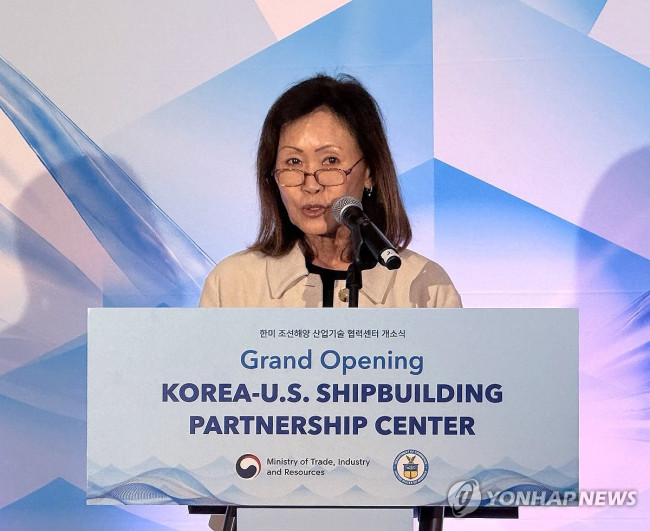 First U.S. Ambassador of Trump's Second Term to Arrive This Week… Will It Provide Momentum to Resolve Pending Issues?
U.S. Ambassador to South Korea Michelle Steel speaks at the opening ceremony of the Korea-U.S. Shipbuilding Cooperation Center held at the Mayflower Hotel in Washington, D.C., on the 23rd (local time)
First U.S. Ambassador of Trump's Second Term to Arrive This Week… Will It Provide Momentum to Resolve Pending Issues?
U.S. Ambassador to South Korea Michelle Steel speaks at the opening ceremony of the Korea-U.S. Shipbuilding Cooperation Center held at the Mayflower Hotel in Washington, D.C., on the 23rd (local time)
 President Yoon, regarding the first-instance ruling on the Public Official Election Act: “An excessive political verdict that distorts the facts… We will appeal immediately.”
The first-instance sentencing hearing for President Yoon Suk Yeol regarding violations of the Public Official Election Act is being broadcast live at Seoul Station on the 27th. [Photo=Yonhap News]Pres
President Yoon, regarding the first-instance ruling on the Public Official Election Act: “An excessive political verdict that distorts the facts… We will appeal immediately.”
The first-instance sentencing hearing for President Yoon Suk Yeol regarding violations of the Public Official Election Act is being broadcast live at Seoul Station on the 27th. [Photo=Yonhap News]Pres
 91% of Net Influx of MZ Generation Goes to Seoul Metropolitan Area… Population Migration Also Shows 'K-shaped Polarization' by Industry
[Provided by Leaders Index]Over the past four years, the MZ generation population has become increasingly concentrated in the Seoul metropolitan area and the Chungcheong region. While cities cen
91% of Net Influx of MZ Generation Goes to Seoul Metropolitan Area… Population Migration Also Shows 'K-shaped Polarization' by Industry
[Provided by Leaders Index]Over the past four years, the MZ generation population has become increasingly concentrated in the Seoul metropolitan area and the Chungcheong region. While cities cen
 'Godfather of Japanese Mystery Novels' Keigo Higashino Passes Away After Battle with Cancer at 68
Famous Japanese mystery novelist Keigo Higashino [AFP=Yonhap News]It has been belatedly reported that Keigo Higashino, the "godfather of Japanese mystery novels" and author of bestsellers such as "The
'Godfather of Japanese Mystery Novels' Keigo Higashino Passes Away After Battle with Cancer at 68
Famous Japanese mystery novelist Keigo Higashino [AFP=Yonhap News]It has been belatedly reported that Keigo Higashino, the "godfather of Japanese mystery novels" and author of bestsellers such as "The
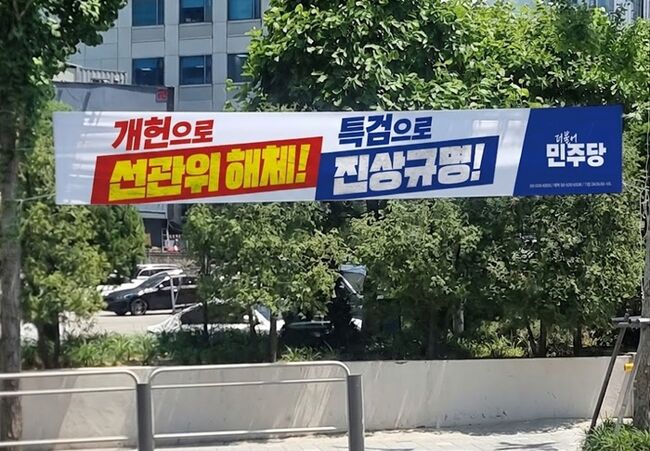 [Cho Yang-geon Column] The NEC: Facing a Fate of "Discarding the Dog After the Hunt"
Banner calling for the "dissolution of the NEC" posted by the Democratic Party. [AI-generated image]Banners calling for the "dissolution of the National Election Commission (NEC)" posted by the Democr
[Cho Yang-geon Column] The NEC: Facing a Fate of "Discarding the Dog After the Hunt"
Banner calling for the "dissolution of the NEC" posted by the Democratic Party. [AI-generated image]Banners calling for the "dissolution of the National Election Commission (NEC)" posted by the Democr
 [Photo] Evidence of Election Fraud Flooding U.S. Media… Trump Had 2.7 Million Votes Stolen
 [Video] U.S. Semiquincentennial Air Show... 'Art in the Sky' streaks across New York
 [Editorial Cartoon] A Draconian Law That Undermines Freedom of Expression

 List
List