
 Representative of the Korean National Union for Freedom and Unification, Doctor of Public Administration, President of the Global Aerospace Industry AssociationFor South Korea, which lacks natural resources, there is no issue more critical to national survival than energy. When supply chains are disrupted or exchange rates rise, energy prices skyrocket, plunging the economy into uncertainty and crisis. This article will examine issues related to nuclear power, renewable energy, climate change, ESG, and COVID-19.
Resumption of Nuclear Power Plant Operations
The Nuclear Safety and Security Commission recently decided to restart Gori Unit 2. This is interpreted as a reflection of the strong will to actively utilize nuclear power as a means to stably supply electricity essential for the operation of AI (Artificial Intelligence) computing infrastructure. Among South Korea's 26 nuclear reactors, applications for continued operation have been submitted for Gori Units 3 and 4, Hanbit Units 1 and 2, and Hanul Units 1 and 2, including Gori Unit 2. This is an excellent decision, especially since Seoul National University's AI Research Center had previously abandoned its research due to power issues.
Recently, Google, a US tech giant, announced a contract with energy company NextEra Energy to receive electricity from a shut-down nuclear power plant for 25 years. Google plans to use this electricity for its cloud and artificial intelligence (AI) infrastructure facilities in Iowa. On November 15, 2025, the US Secretary of Energy announced that the US would restart shut-down nuclear plants and construct new ones in the future.
The recent trade and security negotiations between South Korea and the US have resulted in an agreement that allows South Korea to build nuclear-powered submarines, exciting many. While this is expected to require considerable time and procedures, it demonstrates the importance of submarines powered by nuclear energy.
Advantages of Nuclear Power Plants
Nuclear power is cost-effective, with production costs one-fifth that of renewable energy. One gram of uranium produces the same amount of energy as 300 tons of coal. Nuclear power plants operate safely and in an environmentally friendly manner, with almost no greenhouse gas emissions during operation. They supply approximately one-quarter of the world's low-carbon electricity, making them effective in replacing fossil fuels.
South Korea began developing nuclear power during President Syngman Rhee's era. By 2017, the country operated a total of 24 nuclear power plants nationwide, having developed the Korean-type nuclear reactor. On June 2025, a main contract worth 26 trillion Korean won was signed with the Czech government for the construction of the Dukovany new nuclear power plant. This marks the first nuclear power plant export in 16 years since the Barakah Nuclear Power Plant in the United Arab Emirates (UAE) in 2009, and it is also the first entry into the European market. The plan is to develop and export Small Modular Reactors (SMRs) in the future.
Renewable energy in South Korea faces challenges due to limited solar insolation and wind, resulting in lower conditions and efficiency compared to other countries. Large-scale investments are required for energy storage systems (ESS) and transmission line construction. Vast tracts of land are needed, and soil contamination occurs due to waste panels. Most importantly, electricity generation is supplemental and unstable. Currently, solar panels and wind power generation equipment are almost entirely imported from China.
What about China? Surprisingly, as of 2025, China has 33 nuclear reactors under construction (total capacity approximately 35,355 MWe), the largest number in the world. Furthermore, countries like Sweden, the Netherlands, Japan, Taiwan, and Belgium, which once abandoned nuclear power, are now returning to it. Considering the global situation, a hybrid policy of nuclear and renewable energy is the most realistic approach for South Korea.
Bill Gates's Change in Perspective on Climate Change
Ahead of COP30 (the 30th Conference of the Parties to the UNFCCC, November 10-21, 2025, in Belém, Brazil), Bill Gates noted in his memo that "Climate change could cause serious problems, but it will not lead to the extinction of humanity. People will continue to live and thrive in most parts of the world." He emphasized that "reducing greenhouse gas emissions should not be the only goal; resources should be better distributed for human well-being (poverty reduction, health improvement, etc.)." This can be seen as a reflection and revision of overly ambitious climate change policies.
(https://www.youtube.com/watch?v=q2T0G74C4I8)
Differences in Perspectives and Policies on Climate Change
Although there are many who advocate for climate change, there are also many who express skepticism or denial, including Nobel laureates such as Ivar Giaever (1973 Nobel Prize in Physics) and John Clauser (2022 Nobel Prize in Physics).
Carbon dioxide constitutes only 0.04% of the atmosphere and promotes the green revolution. Solar atmospheric and ocean temperatures, volcanic activity, and cosmic rays all influence climate change. Following the assertion of global warming, centered around the IPCC (Intergovernmental Panel on Climate Change), some regions experienced extreme cold, leading to a change in terminology to "climate change." Throughout Earth's long history, warm periods and ice ages have alternated. Even in the 20th century, the 1930s experienced extreme heat, while the 1970s experienced cold periods, with significant regional and national variations.
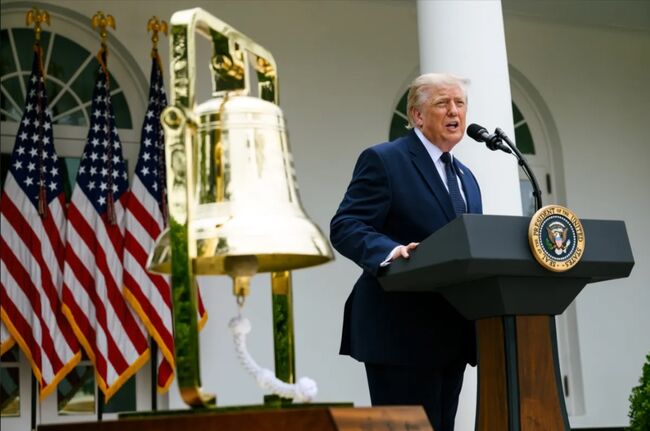
The Trump administration significantly eased climate change policies, prioritizing energy independence and emphasizing economic growth centered on fossil fuels. It withdrew from the Paris Agreement in 2017, criticized international climate policies at the UN General Assembly, stating that "climate change is a hoax," and reduced subsidies for electric vehicles.
The administration is focusing its policies on securing energy hegemony by developing shale gas, Alaskan oil fields, and recently, oil fields off the coast of California. Furthermore, it is taking measures to reduce dependence on China by developing rare earth elements, which are currently sourced from China, through environmentally friendly contracts domestically or with foreign partners.
South Korea imports 93.8% of its energy needs. In 2024, it imported approximately $113.1 billion worth of crude oil, gas, and coal, accounting for 17.9% of the nation's total imports.
Most importantly, amidst an uncertain energy supply and demand environment, demand for industrial production and AI development is rapidly increasing. However, supply chains are being disrupted due to factors like the Russia-Ukraine war. A rise in exchange rates leads to a surge in energy import prices. To ensure a stable energy supply and meet continuously increasing demand, the ongoing construction and operation of nuclear power plants are indispensable.
ESG Management
ESG is a framework that evaluates companies on their environmental (Environmental), social (Social), and governance (Governance) aspects, introduced to promote sustainable management. However, while ESG is an important tool for sustainability, it faces criticism for being unrealistic, particularly for small and medium-sized enterprises (SMEs), due to increased costs resulting from excessive financial and administrative burdens. In particular, carbon neutrality taxes and emissions trading schemes, as part of climate change response measures, will pose a significant burden on businesses. The survival of companies should be prioritized before they can become sustainable.
COVID-19 Pandemic
December 4, 2024. A report released by the US House Select Subcommittee on the Coronavirus Pandemic criticizes the policies of the WHO and the Biden administration. The report concludes that the "most likely scenario" for the COVID-19 virus was a "lab leak" from the Wuhan Institute of Virology. It points out that the WHO concealed and delayed information from China in the early stages of the pandemic, and its "declaration of a pandemic" was late, contributing to global spread. It also condemns the WHO's support for "Zero COVID" policies as a disaster due to a lack of scientific evidence. Furthermore, regarding the Biden administration, the report claims that vaccine mandates, school closures, mask, and lockdown policies were excessive and not data-driven. It highlights wasteful spending (e.g., over $1 billion in ineffective projects) and a lack of transparency, criticizing the distortion of science for "political motives."
(https://oversight.house.gov/release/final-report-covid-select-concludes-2-year-investigation-issues-500-page-final-report-on-lessons-learned-and-the-path-forward/)
Is the Majority Always Right?
The essence of science is evidence-based self-correction. Historically, many theories accepted by the majority of scientists have been disproven by new experiments, observations, or theories. This demonstrates that "majority opinion" is not always the truth. A few historical examples include the geocentric model, where the world unquestioningly accepted that the sun revolved around the Earth until Copernicus and Galileo proposed heliocentrism. The belief that life arises spontaneously from inanimate matter was debunked by Pasteur's sealed experiment, which showed that microorganisms enter from the outside. The theory of electrons orbiting the nucleus was redefined by quantum mechanics as electrons existing in a probability cloud. The theory of a static universe was replaced by the observation of cosmic expansion based on astronomical data. There are countless other instances in science where established theories have been overturned.
The Spirit of Science and Pragmatism
When ideology mixes with science, it not only distorts the truth but also makes problem-solving impossible. It is necessary to move away from extreme ideological orientations and adopt pragmatic thinking and policies based on seeking truth from facts. Throughout Earth's history, humans have developed the environment sustainably, leading to improved living standards and the advancement of civilization. While emphasizing the principle of sustainability, it is important to avoid environmental fundamentalism and, at the same time, adopt problem-solving and flexible thinking that prioritizes cost savings and economic growth.
It is urgently required that the scientific community, the media, politicians, and all citizens respond to the myriad challenges facing South Korea with scientific and practical approaches to resolve these issues.
Shin Dong-chun, Representative of the Korean National Union for Freedom and Unification, Doctor of Public Administration, President of the Global Aerospace Industry Association

 Trump pressures for rate cut again ahead of FOMC... "Should be the lowest in the world"
U.S. President Donald Trump. [Photo = The White House] U.S. President Donald Trump once again pressured the Federal Reserve, the U.S. central bank, to lower interest rates on the 27th (local time
Trump pressures for rate cut again ahead of FOMC... "Should be the lowest in the world"
U.S. President Donald Trump. [Photo = The White House] U.S. President Donald Trump once again pressured the Federal Reserve, the U.S. central bank, to lower interest rates on the 27th (local time
 “Ignoring crisp ballots and damaged seals”… Tongyeong mayoral recount concludes with ‘no change in outcome,’ leaving suspicions and public outrage behind
Suspected counterfeit ballots discovered in Tongyeong [GIF from social media of Representative Hwang Kyo-ahn / Attorney Park Joo-hyun]During a recount of the Tongyeong mayoral election in South Gyeong
“Ignoring crisp ballots and damaged seals”… Tongyeong mayoral recount concludes with ‘no change in outcome,’ leaving suspicions and public outrage behind
Suspected counterfeit ballots discovered in Tongyeong [GIF from social media of Representative Hwang Kyo-ahn / Attorney Park Joo-hyun]During a recount of the Tongyeong mayoral election in South Gyeong
 President Yoon, regarding the first-instance ruling on the Public Official Election Act: “An excessive political verdict that distorts the facts… We will appeal immediately.”
The first-instance sentencing hearing for President Yoon Suk Yeol regarding violations of the Public Official Election Act is being broadcast live at Seoul Station on the 27th. [Photo=Yonhap News]Pres
President Yoon, regarding the first-instance ruling on the Public Official Election Act: “An excessive political verdict that distorts the facts… We will appeal immediately.”
The first-instance sentencing hearing for President Yoon Suk Yeol regarding violations of the Public Official Election Act is being broadcast live at Seoul Station on the 27th. [Photo=Yonhap News]Pres
 WSJ: "SK Hynix ADR Premium Is a Sign of AI Trading Overheat"
Advertisement for SK Hynix ADR listing in New York's Times Square [Reuters=Yonhap News file photo]The Wall Street Journal (WSJ) has pointed out that the price of SK Hynix’s American Depositary Recei
WSJ: "SK Hynix ADR Premium Is a Sign of AI Trading Overheat"
Advertisement for SK Hynix ADR listing in New York's Times Square [Reuters=Yonhap News file photo]The Wall Street Journal (WSJ) has pointed out that the price of SK Hynix’s American Depositary Recei
 'Godfather of Japanese Mystery Novels' Keigo Higashino Passes Away After Battle with Cancer at 68
Famous Japanese mystery novelist Keigo Higashino [AFP=Yonhap News]It has been belatedly reported that Keigo Higashino, the "godfather of Japanese mystery novels" and author of bestsellers such as "The
'Godfather of Japanese Mystery Novels' Keigo Higashino Passes Away After Battle with Cancer at 68
Famous Japanese mystery novelist Keigo Higashino [AFP=Yonhap News]It has been belatedly reported that Keigo Higashino, the "godfather of Japanese mystery novels" and author of bestsellers such as "The
 [Park Pil-kyu Security Column] To the Ignorant Trying to Clothe a Beast in Sheep's Clothing
Rep. Kim Byung-joo of the Democratic Party of Korea [Photo=Yonhap News]“The Air Force Academy doesn't teach you how to fly a plane!” “The Army, Navy, and Air Force academies are exactly the
[Park Pil-kyu Security Column] To the Ignorant Trying to Clothe a Beast in Sheep's Clothing
Rep. Kim Byung-joo of the Democratic Party of Korea [Photo=Yonhap News]“The Air Force Academy doesn't teach you how to fly a plane!” “The Army, Navy, and Air Force academies are exactly the
 [Issue Diagnosis] Two Effects of the Election Petition Review
 [Photo] Evidence of Election Fraud Flooding U.S. Media… Trump Had 2.7 Million Votes Stolen
 [Video] U.S. Semiquincentennial Air Show... 'Art in the Sky' streaks across New York
 [Editorial Cartoon] A Draconian Law That Undermines Freedom of Expression

 List
List