이 시리즈는 ‘내란 프레임’으로 규정된 사건의 실체를 증언·물증·법리의 세 축으로 재검증하는 한미일보의 탐사 프로젝트입니다. 본 기사는 홍장원 전 국정원 제1차장의 증언과 메모의 실체를 집중 분석해, 사건의 출발점이었던 핵심 진술의 신빙성을 검토합니다. <편집자 주>
 Hong Jang-won, former Deputy Director of the National Intelligence Service, clashes with former President Yoon Suk-yeol during his testimony as a witness in the insurrection leader trial on November 20. [Photo=Yonhap News]
[Table of Contents]
① Hong Jang-won… The Truth the 'Earthworm' Couldn't Tell
② Kwak Jong-geun… The Military's Judgment on the Day of Martial Law and the Actual Situation in the National Assembly
③ Arrest Team List… What Changed Before and After the Disclosure
④ The Legal Structure of Insurrection… Why It Doesn't Apply
⑤ Conclusion… What Does the Truth of That Day Tell Us?
The individual who first garnered significant attention in the insurrection leader trial was Hong Jang-won, former Deputy Director of the National Intelligence Service (hereinafter referred to as position omitted). He was the key information executive who oversaw the NIS's counter-espionage and anti-intelligence lines and reported directly to the Director. The information he recorded and reported led to the NIS Director's judgment, and the NIS Director's judgment served as the basis for reporting to the President.
Given that the testimony of an individual in such a position became the central pillar of the prosecution's indictment, the credibility of his testimony was inevitably the decisive standard that would determine the direction of the case's development. However, as the trial progressed, it became evident that the starting point of this case was not based on "clear records" but was constructed from Hong Jang-won's personal memories, assumptions, and interpretations.
The first issue that arose was the so-called "Earthworm Memo" (1st Memo) that he submitted. This document formed the framework of the case and was used as a key basis for framing the insurrection narrative, but as its true nature was revealed, the foundation of the case began to shake.
The facts confirmed in court were shocking. This memo was not Hong Jang-won's handwriting but an image captured from the internet and submitted. The fact that a document emphasized by the prosecution for its "directness" and "immediacy" was not actually created by the individual concerned was a significant problem that shook the very foundation of the prosecution's investigation's credibility.
The second memo, which appeared subsequently, caused even greater confusion. Hong Jang-won claimed he had "destroyed" this memo but could not explain even basic facts such as the form, color, recording method, or timing of its creation.
When the defense lawyer asked in court, "What was the color of the memo pad?" and "What was its approximate size?", Hong Jang-won, with a flustered expression, stammered and hesitated to answer. This went beyond a simple memory error, leading to the collapse of confidence in the very existence and circumstances of the creation of the second memo.
The third memo, which appeared next, completely shook the core structure of the case. This document was not written by Hong Jang-won but was compiled by an aide within the NIS. While this is something that can occur during the process of organizing information, the problem was that the prosecution utilized it in the indictment as if it were Hong Jang-won's direct record.
Ultimately, it was confirmed that the three types of memos presented as key physical evidence in the case were all difficult to support in terms of credibility: the first was an internet image capture, the second's existence was uncertain, and the third was authored by an aide.
Adding to this was the "left-handedness controversy." Hong Jang-won stated at the Constitutional Court that he was "left-handed." However, during a reenactment of the writing process at the Constitutional Court, he was observed writing with his right hand. This raised suspicions that it was an action taken to avoid potential issues in handwriting analysis, and it dealt a fatal blow to the credibility of his testimony as a whole.
In the end, the core issue of the authenticity and handwriting of the memos themselves was undermined.
Amidst this situation, Hong Jang-won's statement that caused the most controversy was the part about "the President ordered to arrest them all."
Hong Jang-won testified that, based on a phone call with then-counter-intelligence commander Yeo In-hyeong, he "realized that the individuals the President ordered arrested were not spies but key figures." However, according to the opinions of many experts obtained through reporting, the memo, which would serve as physical evidence to prove this, is expected to be excluded from evidence due to contamination.
On the other hand, former President Yoon Suk-yeol clearly stated in court, "I never issued an arrest order." Then-counter-intelligence commander Yeo In-hyeong testified in the same vein. In particular, Yeo In-hyeong stated in court that "the order for tracking was received not from the President but from then-Minister of National Defense Kim Yong-hyun." Former Minister Kim Yong-hyun also testified that "the President did not order arrests or tracking." According to their statements, the narrative of a presidential order was structurally flawed from the outset and did not align with the facts.
Even if Hong Jang-won admitted to hearing these words, the individuals to be arrested were not specified, and as he himself testified, the part where he stated, "Initially, I judged them to be related to counter-espionage, but through my conversation with Yeo In-hyeong, I realized it was an order to arrest key figures," is a result of inference and does not prove a presidential arrest order. How the court views this point is expected to be one of the factors determining guilt or innocence.
In this context, a lawyer who is a former high-ranking prosecutor pointed out that the court would have no choice but to view the claims of both sides as a "clash of assumptions," making it difficult to judge them as direct truth. He added, "This case is a matter of national interest and is often discussed in casual conversations and gatherings. From a purely legal standpoint, a guilty verdict for insurrection is considered difficult by most."
This is why the assessment emerging from the trial process is that Hong Jang-won's testimony and the memos he submitted, which were the starting point of the insurrection case, were fundamentally very weak from the outset.
The first memo was an internet capture, the second memo could not be explained, and the third memo was authored by a third party.
Considering the "left-handed, right-handed writing" controversy and the actual chain of command revealed to be a "request for cooperation on tracking" rather than a presidential order, the foundation of the insurrection narrative was in a state where it was difficult to prove the facts from the beginning.
The conclusion of the first installment of this series is clear: the case was flawed from the very first step. A narrative of insurrection constructed with shaky core testimonies and physical evidence was inevitably bound to collapse in its subsequent progression.
In the next installment (Part 2), we will analyze the substantive flow that complements Hong Jang-won's testimony through the detailed account of former Special Warfare Commander Kwak Jong-geun's testimony regarding the situation in the National Assembly and the military's movements on the day of martial law. Examining both statements together will reveal the structural weaknesses of the insurrection narrative more clearly.
#HongJangWon #EarthwormMemo #InsurrectionTrial #MartialLaw #AdmissibilityOfEvidence #HandwritingControversy #PresidentialOrderControversy #NIS1stDeputyDirector #TrialMaterials #HaniHankookilbo

 [Statement by the Seobeokka KMA Patriots Association] ㉛ Recount the ballots openly, as the previous recount covered up election fraud
Recount of the Tongyeong mayoral election [Photo=Yonhap News]South Korea's liberal democracy is dying. The National Election Commission (NEC), which has degraded into a criminal organization through t
[Statement by the Seobeokka KMA Patriots Association] ㉛ Recount the ballots openly, as the previous recount covered up election fraud
Recount of the Tongyeong mayoral election [Photo=Yonhap News]South Korea's liberal democracy is dying. The National Election Commission (NEC), which has degraded into a criminal organization through t
 What is the significance of the "Trump 2028" red hat that keeps reappearing?
It is noteworthy that while it is "highly likely" that President Donald Trump is "seriously considering" a run for the presidency in 2028, he is also "deliberately" fueling speculation regarding wheth
What is the significance of the "Trump 2028" red hat that keeps reappearing?
It is noteworthy that while it is "highly likely" that President Donald Trump is "seriously considering" a run for the presidency in 2028, he is also "deliberately" fueling speculation regarding wheth
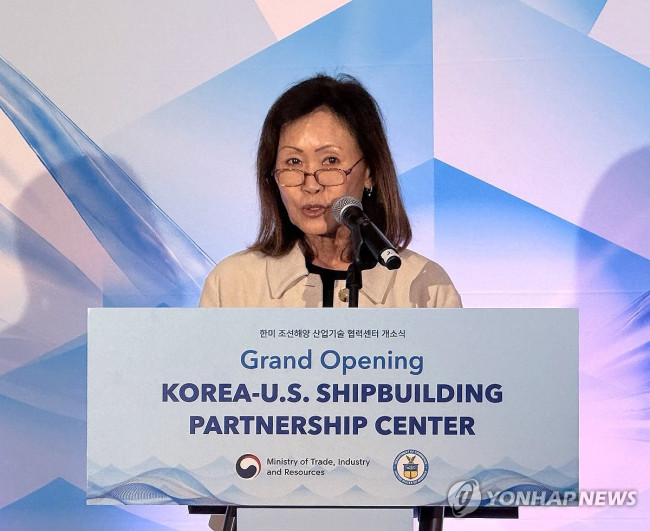 First U.S. Ambassador of Trump's Second Term to Arrive This Week… Will It Provide Momentum to Resolve Pending Issues?
U.S. Ambassador to South Korea Michelle Steel speaks at the opening ceremony of the Korea-U.S. Shipbuilding Cooperation Center held at the Mayflower Hotel in Washington, D.C., on the 23rd (local time)
First U.S. Ambassador of Trump's Second Term to Arrive This Week… Will It Provide Momentum to Resolve Pending Issues?
U.S. Ambassador to South Korea Michelle Steel speaks at the opening ceremony of the Korea-U.S. Shipbuilding Cooperation Center held at the Mayflower Hotel in Washington, D.C., on the 23rd (local time)
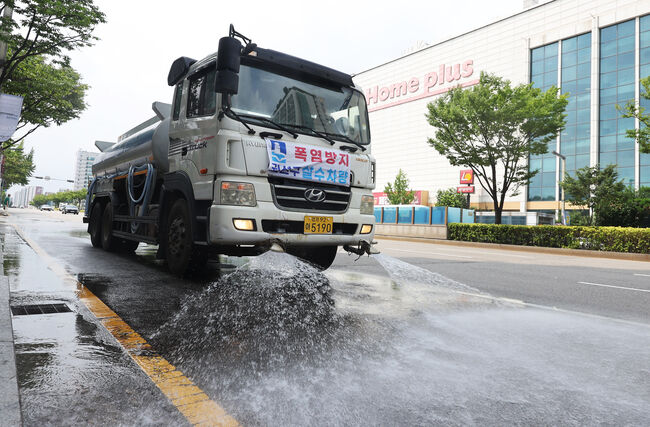 The Korean Peninsula wrapped in a thick blanket of scorching high pressure… Will the 1994 record be broken?
On the 28th, as the heatwave continues, a water sprinkler truck sprays water on Hyowon-ro, Gwonseon-gu, Suwon, Gyeonggi Province. [Photo = Yonhap News]The hottest years on record are considered to be
The Korean Peninsula wrapped in a thick blanket of scorching high pressure… Will the 1994 record be broken?
On the 28th, as the heatwave continues, a water sprinkler truck sprays water on Hyowon-ro, Gwonseon-gu, Suwon, Gyeonggi Province. [Photo = Yonhap News]The hottest years on record are considered to be
 Stock Market Crash 'Black Tuesday'… KOSPI down 10.8%, KOSDAQ down 7.7%
The KOSPI fell by more than 5% in early trading on the 28th, triggering a sell-side sidecar.On the 28th, the KOSPI plunged by more than 10%.Due to the sharp decline, a sell-side sidecar—a temporary
Stock Market Crash 'Black Tuesday'… KOSPI down 10.8%, KOSDAQ down 7.7%
The KOSPI fell by more than 5% in early trading on the 28th, triggering a sell-side sidecar.On the 28th, the KOSPI plunged by more than 10%.Due to the sharp decline, a sell-side sidecar—a temporary
 [World Heritage Committee] 25 New World Heritage Sites Inscribed in Busan… South Korea Successfully Expands 'Getbol' Listing
The Chairperson of the World Heritage Committee speaks at the plenary session of the 48th session of the World Heritage Committee, held at BEXCO in Busan on the 20th. [Photo: Yonhap News]A total of 25
[World Heritage Committee] 25 New World Heritage Sites Inscribed in Busan… South Korea Successfully Expands 'Getbol' Listing
The Chairperson of the World Heritage Committee speaks at the plenary session of the 48th session of the World Heritage Committee, held at BEXCO in Busan on the 20th. [Photo: Yonhap News]A total of 25
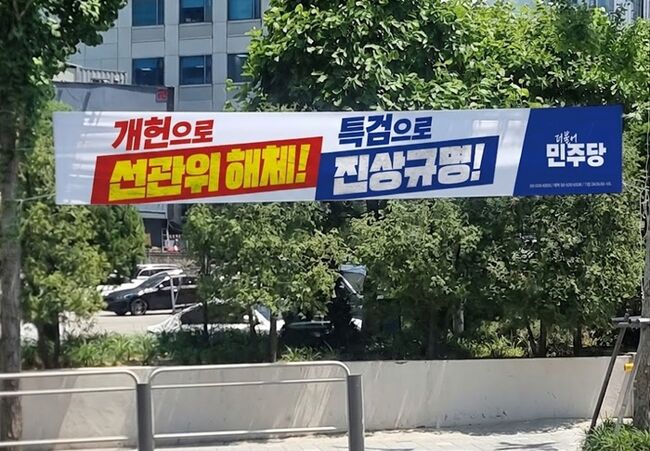 [Cho Yang-geon Column] The NEC: Facing a Fate of "Discarding the Dog After the Hunt"
Banner calling for the "dissolution of the NEC" posted by the Democratic Party. [AI-generated image]Banners calling for the "dissolution of the National Election Commission (NEC)" posted by the Democr
[Cho Yang-geon Column] The NEC: Facing a Fate of "Discarding the Dog After the Hunt"
Banner calling for the "dissolution of the NEC" posted by the Democratic Party. [AI-generated image]Banners calling for the "dissolution of the National Election Commission (NEC)" posted by the Democr
 [Photo] Evidence of Election Fraud Flooding U.S. Media… Trump Had 2.7 Million Votes Stolen
 [Video] U.S. Semiquincentennial Air Show... 'Art in the Sky' streaks across New York
 [Editorial Cartoon] A Draconian Law That Undermines Freedom of Expression

 List
List