The choice that protected 400 billion won and the choice that abandoned 800 billion won, the point where the understanding of 'national sovereignty' diverged between the two administrations. [Graphic=The Hankyoreh]
The Republic of Korea successfully averted a loss of approximately 400 billion won in the Lone Star International Investment Dispute Settlement (ISDS). After an 11-year legal battle, the Appeals Committee at the International Centre for Settlement of Investment Disputes (ICSID), under the World Bank, entirely canceled the previous arbitration tribunal's compensation ruling. This is not merely a victory of legal technicality, but holds greater significance in that the state, in the name of the nation, saw through its responsibilities to the end.
At the time, the Democratic Party, then the opposition, criticized the lawsuit as having "no chance of winning" and being a "waste of taxpayer money." This evaluation was made based on the interests of the administration, not from the perspective of national interest. However, the outcome was clear. The decision to fight to the end based on national interest ultimately protected the national treasury, proving that not following the advice of the left-wing political establishment was the right judgment.
However, in the Daejang-dong case, this common sense was completely reversed. The estimated criminal proceeds from development corruption amount to approximately 800 billion won, public assets that the people must reclaim. Given that the forfeiture amount was abnormally reduced in the first trial, it was a natural step to correct it in a higher court. Despite this, the Ministry of Justice under the Lee Jae-myung administration allowed the appeal to be abandoned, and the prosecution followed the Ministry's decision.
The abandonment of an appeal is not an emotional declaration but a decision that solidifies legal reality. At that moment, the reduced forfeiture amount becomes permanently irrecoverable. The nation could have recovered it, but the Lee Jae-myung administration gave it up.
The recovery of criminal proceeds is a matter of maintaining minimal legitimacy within the judicial system. If this function is neutralized, it creates a structure where 'criminals take everything,' leading to public interest being subjugated to the interests of specific groups. This is why the abandonment of the Daejang-dong appeal is pointed out as an event that has undermined national justice, beyond financial loss.
Placing Lone Star and Daejang-dong side by side reveals a single conclusion: the judgment criteria of the left-wing Lee Jae-myung administration were never based on national interest from the outset. When the nation had to fight, they obstructed by calling it a "waste of taxpayer money," and in a matter involving 800 billion won of the people's money, the administration itself abandoned the fight. The standard for their choices consistently revolved around the administration's advantage or disadvantage, and those calculations took precedence over national interest. The opposing attitudes shown in these two cases, while appearing to have different directions, ultimately pointed to the same issue.
Lee Jae-myung's 'national sovereignty' was revealed in the choice to abandon the Daejang-dong appeal. It was a choice to protect the administration's defense rather than the people's interests. In contrast, Yoon Suk-yeol's 'national sovereignty' was proven in the decision to protect the people from financial burden by enduring criticism of the Lone Star lawsuit. Although they used the same language, their attitude towards the people was diametrically opposed.
The Lee Jae-myung administration, which had called the nation's fight in the Lone Star lawsuit a "waste of taxpayer money," committed an act of shameless behavior by attempting to package the victory as their own achievement upon winning. This is hardly something those who closed the nation's recovery channels by abandoning the opportunity to reclaim 800 billion won of the people's money should be saying. Thus, the judgment criteria of the left-wing administration consistently remain focused on the administration's advantage or disadvantage.
For any power responsible for a nation, national interest must be at the center of its choices, under all circumstances. What has been confirmed in the Lone Star and Daejang-dong cases is that the left-wing administration's criteria for decision-making are not national interest, but the preservation of power. The administration's profit-and-loss calculations took precedence over the nation's, and national interest became subservient to political calculations. If this judgment structure continues, the Republic of Korea will face greater costs in the future.
Power that prioritizes its own benefits over national interest invariably leaves costs for the entire nation. Lone Star and Daejang-dong are two mirrors proving that fact.
#LoneStar #Daejangdong #NationalInterest #RegimeAdvantage #Editorial #TheHankyoreh #ForfeitureRecovery #MinistryOfJustice #LeftWingRegime #NationalInterest

 [Statement by the Seobeokka KMA Patriots Association] ㉛ Recount the ballots openly, as the previous recount covered up election fraud
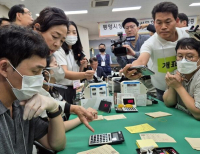
Recount of the Tongyeong mayoral election [Photo=Yonhap News]South Korea's liberal democracy is dying. The National Election Commission (NEC), which has degraded into a criminal organization through t
[Statement by the Seobeokka KMA Patriots Association] ㉛ Recount the ballots openly, as the previous recount covered up election fraud
Recount of the Tongyeong mayoral election [Photo=Yonhap News]South Korea's liberal democracy is dying. The National Election Commission (NEC), which has degraded into a criminal organization through t
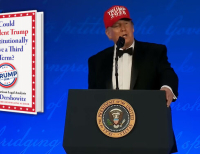
 What is the significance of the "Trump 2028" red hat that keeps reappearing?
It is noteworthy that while it is "highly likely" that President Donald Trump is "seriously considering" a run for the presidency in 2028, he is also "deliberately" fueling speculation regarding wheth
What is the significance of the "Trump 2028" red hat that keeps reappearing?
It is noteworthy that while it is "highly likely" that President Donald Trump is "seriously considering" a run for the presidency in 2028, he is also "deliberately" fueling speculation regarding wheth
 First U.S. Ambassador of Trump's Second Term to Arrive This Week… Will It Provide Momentum to Resolve Pending Issues?
U.S. Ambassador to South Korea Michelle Steel speaks at the opening ceremony of the Korea-U.S. Shipbuilding Cooperation Center held at the Mayflower Hotel in Washington, D.C., on the 23rd (local time)
First U.S. Ambassador of Trump's Second Term to Arrive This Week… Will It Provide Momentum to Resolve Pending Issues?
U.S. Ambassador to South Korea Michelle Steel speaks at the opening ceremony of the Korea-U.S. Shipbuilding Cooperation Center held at the Mayflower Hotel in Washington, D.C., on the 23rd (local time)
 The Korean Peninsula wrapped in a thick blanket of scorching high pressure… Will the 1994 record be broken?
On the 28th, as the heatwave continues, a water sprinkler truck sprays water on Hyowon-ro, Gwonseon-gu, Suwon, Gyeonggi Province. [Photo = Yonhap News]The hottest years on record are considered to be
The Korean Peninsula wrapped in a thick blanket of scorching high pressure… Will the 1994 record be broken?
On the 28th, as the heatwave continues, a water sprinkler truck sprays water on Hyowon-ro, Gwonseon-gu, Suwon, Gyeonggi Province. [Photo = Yonhap News]The hottest years on record are considered to be
 Stock Market Crash 'Black Tuesday'… KOSPI down 10.8%, KOSDAQ down 7.7%
The KOSPI fell by more than 5% in early trading on the 28th, triggering a sell-side sidecar.On the 28th, the KOSPI plunged by more than 10%.Due to the sharp decline, a sell-side sidecar—a temporary
Stock Market Crash 'Black Tuesday'… KOSPI down 10.8%, KOSDAQ down 7.7%
The KOSPI fell by more than 5% in early trading on the 28th, triggering a sell-side sidecar.On the 28th, the KOSPI plunged by more than 10%.Due to the sharp decline, a sell-side sidecar—a temporary
 [World Heritage Committee] 25 New World Heritage Sites Inscribed in Busan… South Korea Successfully Expands 'Getbol' Listing
The Chairperson of the World Heritage Committee speaks at the plenary session of the 48th session of the World Heritage Committee, held at BEXCO in Busan on the 20th. [Photo: Yonhap News]A total of 25
[World Heritage Committee] 25 New World Heritage Sites Inscribed in Busan… South Korea Successfully Expands 'Getbol' Listing
The Chairperson of the World Heritage Committee speaks at the plenary session of the 48th session of the World Heritage Committee, held at BEXCO in Busan on the 20th. [Photo: Yonhap News]A total of 25
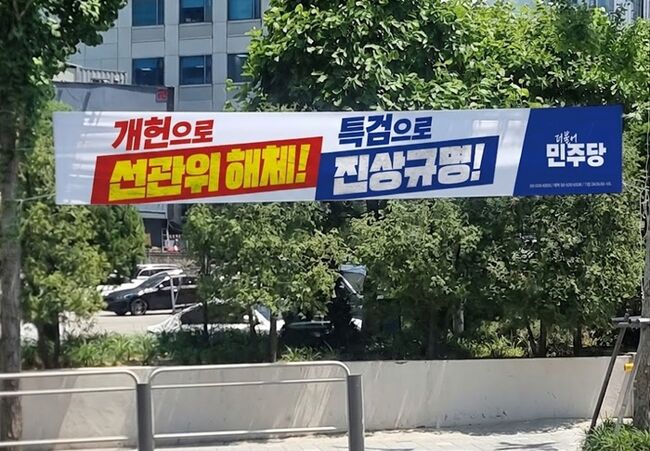 [Cho Yang-geon Column] The NEC: Facing a Fate of "Discarding the Dog After the Hunt"
Banner calling for the "dissolution of the NEC" posted by the Democratic Party. [AI-generated image]Banners calling for the "dissolution of the National Election Commission (NEC)" posted by the Democr
[Cho Yang-geon Column] The NEC: Facing a Fate of "Discarding the Dog After the Hunt"
Banner calling for the "dissolution of the NEC" posted by the Democratic Party. [AI-generated image]Banners calling for the "dissolution of the National Election Commission (NEC)" posted by the Democr
 [Photo] Evidence of Election Fraud Flooding U.S. Media… Trump Had 2.7 Million Votes Stolen
 [Video] U.S. Semiquincentennial Air Show... 'Art in the Sky' streaks across New York
 [Editorial Cartoon] A Draconian Law That Undermines Freedom of Expression

 List
List