국내외 언론은 코리아미션센터가 2021년 차이나미션센터 창설과 더불어 상위기관에 흡수되며 사실상 폐지됐다고 보도한 바 있습니다. 차이나미션센터 창설을 강조한 존 브렌넌 전 CIA 국장은 2025년 현재 트럼프 행정부로부터 국제 부정선거 카르텔 활동을 도운 혐의로 용의선상에 올라 있습니다. <편집자 주>
 U.S. Central Intelligence Agency (CIA). Yonhap News
 Professor Emeritus at Pukyong National University, Director of the UN Research InstituteThe author's recent encounter with a former U.S. Central Intelligence Agency (CIA) operative who had just entered the United States was shocking. This individual, of Korean descent, served as the CIA's chief in China for 15 years and has been operating from the U.S. for the past two years. The carefully shared information hinted at a concentration of U.S. government and intelligence community capabilities on South Korea.
Significantly, the role and capabilities of the U.S. intelligence community have expanded since 9/11, as evidenced by the Federal Bureau of Investigation (FBI), traditionally responsible for counterintelligence within the U.S., now operating five overseas-focused centers.
More directly related to South Korea, two mission centers, the Korea Mission Center (KMC) and the China Mission Center (CMC), are currently active there. This suggests the possibility of collaboration among the 17 intelligence agencies, including the CIA and the National Security Agency (NSA), alongside the three pillars of the U.S. government: the Department of State, the Department of Defense, and the Department of Justice (FBI).
South Korea has become a testing ground for U.S. government capabilities for three reasons. Firstly, South Korea is a so-called blood ally, having been defended with the sacrifice of 35,000 U.S. soldiers killed and nearly 100,000 wounded during the Korean War.
Secondly, South Korea is now not only a major industrial nation but also an indispensable entity for the United States in defending the free world in sectors such as semiconductors, shipbuilding, and defense industries. Notably, its geopolitical location, along with Japan and Taiwan, positions it as a crucial hub in Northeast Asia and a strategically vital area concerning the rising power of China.
Thirdly, there is a sense of crisis that although South Korea is a strong nation, it has been adrift since its democratization, and under administrations like those of Moon Jae-in and Lee Jae-myung, it has become adversarial. Above all, a primary task for the Trump administration is addressing the international election fraud cartel, which originated in China and spread to countries like South Korea and Venezuela. The recent military operation against the Maduro government in Venezuela has been repeatedly clarified as a judgment on election fraud, not on drug trafficking.
As a political scientist, the author has previously analyzed the past 35 years of democratization as, in the words of Karl Marx, "a road to communism," and has asserted for the past decade that communization (pro-North Korea/pro-China sentiment) has become a trend.
The conclusion is that the seeds sown by the corrupt and traitorous Yang-Kim (Kim Young-sam and Kim Dae-jung) are finally shaking South Korea to its core. Indeed, this leads to the conclusion that institutions such as successive conservative governments (Park Geun-hye and Yoon Suk-yeol administrations), labor unions, as well as media, universities, military and police, government agencies, and even religious and civic organizations have become ideologized.
Despite a wave of citizens erupting in numerous squares over the past year to defend freedom following the 12.3 emergency martial law, the media, police, and judiciary have not changed. Peaceful methods and domestic variables have already vanished. The present moment is one where "history is the tribunal of a nation, and simultaneously a challenge and response brought about by globalization." The author wishes to question the ultimate outcome in the absence of the intellect and reason required for liberal democracy.
Professor Emeritus at Pukyong National University, Director of the UN Research Institute

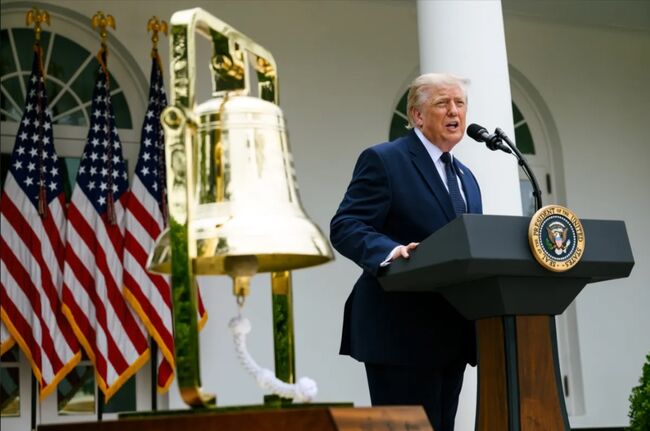 Trump pressures for rate cut again ahead of FOMC... "Should be the lowest in the world"
U.S. President Donald Trump. [Photo = The White House] U.S. President Donald Trump once again pressured the Federal Reserve, the U.S. central bank, to lower interest rates on the 27th (local time
Trump pressures for rate cut again ahead of FOMC... "Should be the lowest in the world"
U.S. President Donald Trump. [Photo = The White House] U.S. President Donald Trump once again pressured the Federal Reserve, the U.S. central bank, to lower interest rates on the 27th (local time
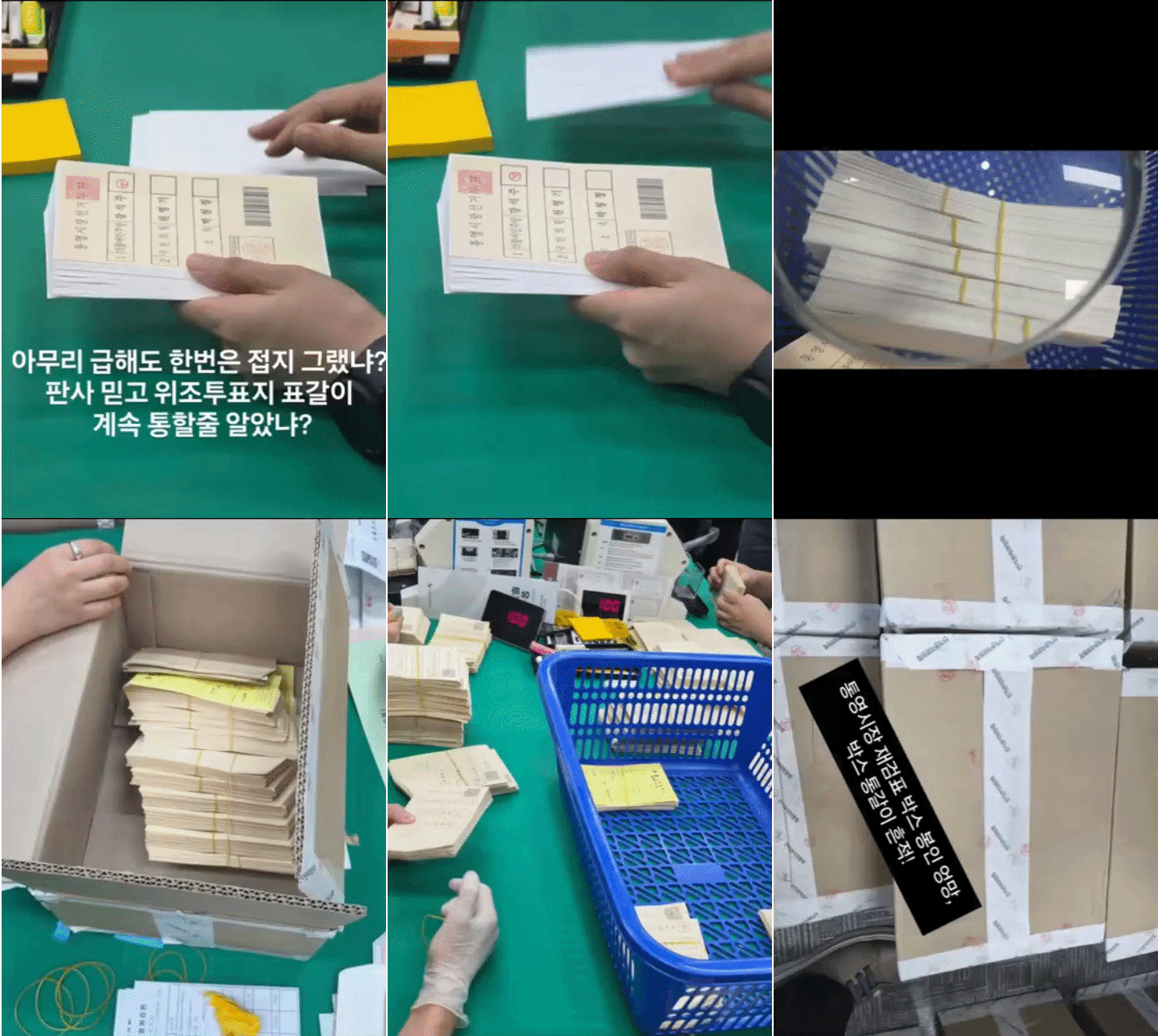 “Ignoring crisp ballots and damaged seals”… Tongyeong mayoral recount concludes with ‘no change in outcome,’ leaving suspicions and public outrage behind
Suspected counterfeit ballots discovered in Tongyeong [GIF from social media of Representative Hwang Kyo-ahn / Attorney Park Joo-hyun]During a recount of the Tongyeong mayoral election in South Gyeong
“Ignoring crisp ballots and damaged seals”… Tongyeong mayoral recount concludes with ‘no change in outcome,’ leaving suspicions and public outrage behind
Suspected counterfeit ballots discovered in Tongyeong [GIF from social media of Representative Hwang Kyo-ahn / Attorney Park Joo-hyun]During a recount of the Tongyeong mayoral election in South Gyeong
 President Yoon, regarding the first-instance ruling on the Public Official Election Act: “An excessive political verdict that distorts the facts… We will appeal immediately.”
The first-instance sentencing hearing for President Yoon Suk Yeol regarding violations of the Public Official Election Act is being broadcast live at Seoul Station on the 27th. [Photo=Yonhap News]Pres
President Yoon, regarding the first-instance ruling on the Public Official Election Act: “An excessive political verdict that distorts the facts… We will appeal immediately.”
The first-instance sentencing hearing for President Yoon Suk Yeol regarding violations of the Public Official Election Act is being broadcast live at Seoul Station on the 27th. [Photo=Yonhap News]Pres
 WSJ: "SK Hynix ADR Premium Is a Sign of AI Trading Overheat"
Advertisement for SK Hynix ADR listing in New York's Times Square [Reuters=Yonhap News file photo]The Wall Street Journal (WSJ) has pointed out that the price of SK Hynix’s American Depositary Recei
WSJ: "SK Hynix ADR Premium Is a Sign of AI Trading Overheat"
Advertisement for SK Hynix ADR listing in New York's Times Square [Reuters=Yonhap News file photo]The Wall Street Journal (WSJ) has pointed out that the price of SK Hynix’s American Depositary Recei
 'Godfather of Japanese Mystery Novels' Keigo Higashino Passes Away After Battle with Cancer at 68
Famous Japanese mystery novelist Keigo Higashino [AFP=Yonhap News]It has been belatedly reported that Keigo Higashino, the "godfather of Japanese mystery novels" and author of bestsellers such as "The
'Godfather of Japanese Mystery Novels' Keigo Higashino Passes Away After Battle with Cancer at 68
Famous Japanese mystery novelist Keigo Higashino [AFP=Yonhap News]It has been belatedly reported that Keigo Higashino, the "godfather of Japanese mystery novels" and author of bestsellers such as "The
 [Park Pil-kyu Security Column] To the Ignorant Trying to Clothe a Beast in Sheep's Clothing
Rep. Kim Byung-joo of the Democratic Party of Korea [Photo=Yonhap News]“The Air Force Academy doesn't teach you how to fly a plane!” “The Army, Navy, and Air Force academies are exactly the
[Park Pil-kyu Security Column] To the Ignorant Trying to Clothe a Beast in Sheep's Clothing
Rep. Kim Byung-joo of the Democratic Party of Korea [Photo=Yonhap News]“The Air Force Academy doesn't teach you how to fly a plane!” “The Army, Navy, and Air Force academies are exactly the
 [Issue Diagnosis] Two Effects of the Election Petition Review
 [Photo] Evidence of Election Fraud Flooding U.S. Media… Trump Had 2.7 Million Votes Stolen
 [Video] U.S. Semiquincentennial Air Show... 'Art in the Sky' streaks across New York
 [Editorial Cartoon] A Draconian Law That Undermines Freedom of Expression

 List
List