U.S. President Trump. Yonhap News Agency
The 2nd Trump administration's National Security Strategy (NSS), released on the 5th (local time), notably focused on deterring China's alteration of the status quo in the Indo-Pacific region, particularly an invasion of Taiwan.
The core of this NSS was to prioritize securing U.S. border security by stabilizing the Western Hemisphere, centering on the Americas, and to clearly articulate a "new isolationist" stance based on "America First," emphasizing a Trump-version of the Monroe Doctrine. In terms of technology related to Asia, a selective focus on Taiwan was evident.
The new NSS stated in its Asia section, "Deterring conflict in Taiwan by maintaining military superiority is our highest priority. We will build forces capable of deterring aggression anywhere along the first island chain," referring to the chain stretching from Okinawa through Taiwan and the Philippines to the Strait of Malacca.
However, the NSS also stated, "The United States cannot and should not do this alone. Allies must increase defense spending and, more importantly, do much more for collective defense."
It further emphasized, "U.S. diplomatic efforts must focus on urging allies and partner nations within the first island chain to expand access to U.S. ports and other facilities, increase their own defense spending, and, above all, invest in strengthening capabilities to deter aggression."
Given that South Korea and Japan are included within the first island chain, this was interpreted as an indication that the Trump administration would demand increased defense investment from South Korea and Japan, and enhanced military capabilities and roles from these countries to deter China's invasion of Taiwan.
This NSS completely omitted any mention of North Korea, another threat to the U.S. and its allies in the Indo-Pacific region. The goal of denuclearization of North Korea (denuclearization of the Korean Peninsula), which was included in past NSS documents, was also absent.
Ultimately, the Trump administration's intention, as implied in this NSS, is to maintain its commitment to providing a nuclear umbrella to South Korea and Japan while largely shifting the responsibility for defense against North Korea to South Korea, focusing instead on containing China, particularly on deterring the outbreak of a crisis in the Taiwan Strait.
The NSS cited Taiwan's semiconductor production, its provision of direct access to the second island chain (stretching from Japan's Izu Peninsula through Guam, Saipan, to Indonesia), and its geographical position defining Northeast Asia and Southeast Asia as two distinct theaters of operation as background for its emphasis on Taiwan.
It also made clear that it would demand roles from allies within the first island chain, such as South Korea and Japan, in preparing for contingencies involving Taiwan. This was emphasized in the NSS's statement that "As President Trump strongly demands increased cost-sharing from Japan and South Korea, we must urge these countries to increase defense spending focused on the capabilities needed to deter adversaries and defend the first island chain."
This emphasis on Taiwan could be a "double-edged sword" for South Korean security.
The attention to Taiwan itself could lead to the U.S. military being more strongly tied to the Indo-Pacific region.
The NSS stated, "We will strengthen our military presence in the Western Pacific," emphasizing the importance of U.S. military presence in Indo-Pacific allies like South Korea and Japan. While this does not completely rule out the possibility of reducing the current 28,500 U.S. Forces Korea (USFK) troops, it suggests that U.S. forces will not easily withdraw from regional allies such as South Korea, Japan, and the Philippines.
It appears that President Trump also recognizes the effectiveness of U.S. forces stationed in Indo-Pacific allied nations in deterring China.
Furthermore, even considering the focus on deterring China, the U.S. encouragement of South Korea's military buildup could also contribute to strengthening South Korea's independent defense capabilities, including the transfer of wartime operational control (OPCON).
However, the implication that the U.S. desires South Korea's role in deterring a Chinese invasion of Taiwan could also present a "dilemma" for South Korea.
This is particularly true given that President Trump has expressed support for South Korea's construction of nuclear-powered submarines, potentially leading to a situation where South Korea seeks to enhance its deterrence against North Korea through nuclear submarines, while the U.S. seeks to utilize South Korea's strengthened military capabilities for deterrence against China, creating a situation of "different dreams in the same bed."
There is also a possibility that China could exert pressure on South Korea to make it clear that its various military buildup efforts within South Korea are not aimed at deterring China.
South Korea will need to navigate the "big picture" of U.S.-China strategic competition, striving to achieve three goals simultaneously: strengthening deterrence against North Korea through the enhancement of the ROK-U.S. alliance, fulfilling the U.S. demand for the alliance's role in deterring China, and managing ROK-China relations.
Especially at a time when the U.S. and China have recently opted for a "truce" on the trade front and are considering up to four summit meetings next year, suggesting a "breather" in their conflict and competition, there are voices suggesting that South Korea should consider a security strategy encompassing its policies towards both the U.S. and China.
Furthermore, given that North Korea-related issues, including the goal of denuclearization of North Korea, have been entirely omitted from this NSS, South Korea's diplomatic efforts towards the U.S. must focus on ensuring that the Trump administration does not neglect the security situation on the Korean Peninsula and does not lose focus on resolving the North Korean nuclear issue.
While many observers predict that the Trump administration will not officially recognize North Korea as a nuclear-weapon state, it is possible that they are acknowledging the "fact" of North Korea's possession of nuclear weapons while also recognizing the practical difficulty of "denuclearization of North Korea." Therefore, coordination of policy towards North Korea will become even more crucial.

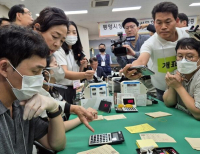
 [Statement by the Seobeokka KMA Patriots Association] ㉛ Recount the ballots openly, as the previous recount covered up election fraud
Recount of the Tongyeong mayoral election [Photo=Yonhap News]South Korea's liberal democracy is dying. The National Election Commission (NEC), which has degraded into a criminal organization through t
[Statement by the Seobeokka KMA Patriots Association] ㉛ Recount the ballots openly, as the previous recount covered up election fraud
Recount of the Tongyeong mayoral election [Photo=Yonhap News]South Korea's liberal democracy is dying. The National Election Commission (NEC), which has degraded into a criminal organization through t
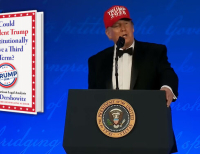
 What is the significance of the "Trump 2028" red hat that keeps reappearing?
It is noteworthy that while it is "highly likely" that President Donald Trump is "seriously considering" a run for the presidency in 2028, he is also "deliberately" fueling speculation regarding wheth
What is the significance of the "Trump 2028" red hat that keeps reappearing?
It is noteworthy that while it is "highly likely" that President Donald Trump is "seriously considering" a run for the presidency in 2028, he is also "deliberately" fueling speculation regarding wheth
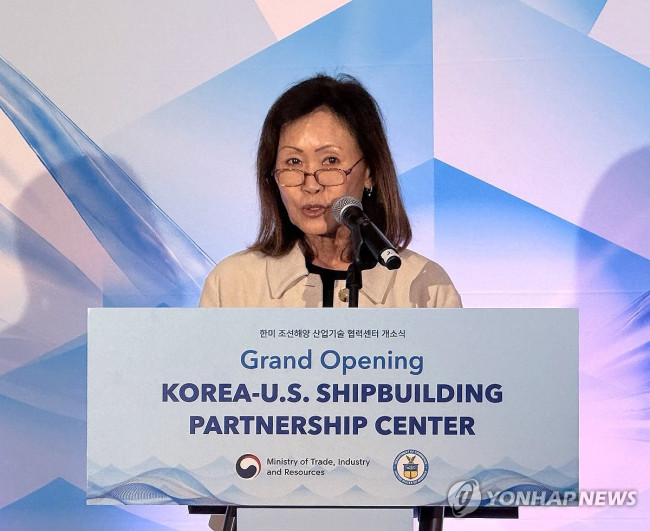 First U.S. Ambassador of Trump's Second Term to Arrive This Week… Will It Provide Momentum to Resolve Pending Issues?
U.S. Ambassador to South Korea Michelle Steel speaks at the opening ceremony of the Korea-U.S. Shipbuilding Cooperation Center held at the Mayflower Hotel in Washington, D.C., on the 23rd (local time)
First U.S. Ambassador of Trump's Second Term to Arrive This Week… Will It Provide Momentum to Resolve Pending Issues?
U.S. Ambassador to South Korea Michelle Steel speaks at the opening ceremony of the Korea-U.S. Shipbuilding Cooperation Center held at the Mayflower Hotel in Washington, D.C., on the 23rd (local time)
 President Yoon, regarding the first-instance ruling on the Public Official Election Act: “An excessive political verdict that distorts the facts… We will appeal immediately.”
The first-instance sentencing hearing for President Yoon Suk Yeol regarding violations of the Public Official Election Act is being broadcast live at Seoul Station on the 27th. [Photo=Yonhap News]Pres
President Yoon, regarding the first-instance ruling on the Public Official Election Act: “An excessive political verdict that distorts the facts… We will appeal immediately.”
The first-instance sentencing hearing for President Yoon Suk Yeol regarding violations of the Public Official Election Act is being broadcast live at Seoul Station on the 27th. [Photo=Yonhap News]Pres
 91% of Net Influx of MZ Generation Goes to Seoul Metropolitan Area… Population Migration Also Shows 'K-shaped Polarization' by Industry
[Provided by Leaders Index]Over the past four years, the MZ generation population has become increasingly concentrated in the Seoul metropolitan area and the Chungcheong region. While cities cen
91% of Net Influx of MZ Generation Goes to Seoul Metropolitan Area… Population Migration Also Shows 'K-shaped Polarization' by Industry
[Provided by Leaders Index]Over the past four years, the MZ generation population has become increasingly concentrated in the Seoul metropolitan area and the Chungcheong region. While cities cen
 'Godfather of Japanese Mystery Novels' Keigo Higashino Passes Away After Battle with Cancer at 68
Famous Japanese mystery novelist Keigo Higashino [AFP=Yonhap News]It has been belatedly reported that Keigo Higashino, the "godfather of Japanese mystery novels" and author of bestsellers such as "The
'Godfather of Japanese Mystery Novels' Keigo Higashino Passes Away After Battle with Cancer at 68
Famous Japanese mystery novelist Keigo Higashino [AFP=Yonhap News]It has been belatedly reported that Keigo Higashino, the "godfather of Japanese mystery novels" and author of bestsellers such as "The
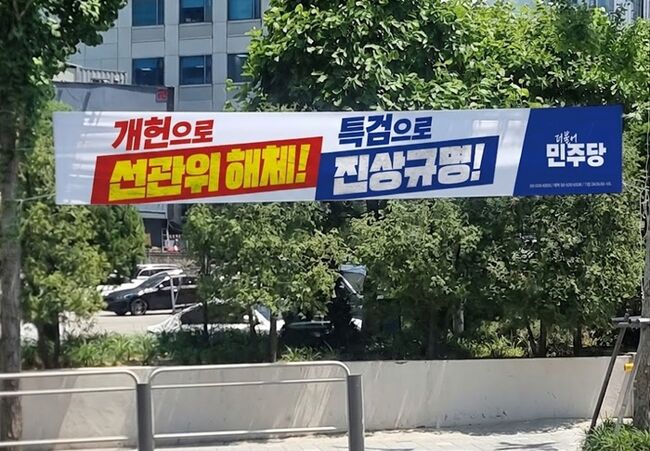 [Cho Yang-geon Column] The NEC: Facing a Fate of "Discarding the Dog After the Hunt"
Banner calling for the "dissolution of the NEC" posted by the Democratic Party. [AI-generated image]Banners calling for the "dissolution of the National Election Commission (NEC)" posted by the Democr
[Cho Yang-geon Column] The NEC: Facing a Fate of "Discarding the Dog After the Hunt"
Banner calling for the "dissolution of the NEC" posted by the Democratic Party. [AI-generated image]Banners calling for the "dissolution of the National Election Commission (NEC)" posted by the Democr
 [Photo] Evidence of Election Fraud Flooding U.S. Media… Trump Had 2.7 Million Votes Stolen
 [Video] U.S. Semiquincentennial Air Show... 'Art in the Sky' streaks across New York
 [Editorial Cartoon] A Draconian Law That Undermines Freedom of Expression

 List
List