
 Professor Emeritus of Pukyong National University, Director of the UN Research InstituteThe United States operates eighteen diverse and extensive national intelligence agencies. This can be understood, in part, as a manifestation of liberal democracy's unique blend of autonomy and discipline, rights and responsibilities, and defense and industry. In other words, it is explained by the logic that "freedom is not free, and if you want peace, you must prepare for war."
The U.S. Intelligence Community was launched in the immediate post-war period in 1947, reorganized from the U.S. Office of Strategic Services (OSS), with the Central Intelligence Agency (CIA) at its forefront. It expanded significantly with the remarkable advancements in aerospace engineering (science and technology) in the 1970s and is broadly divided into traditional human intelligence (HUMINT) and technical intelligence (TECHINT) agencies.
Technical intelligence is further divided into imagery intelligence (IMINT) and signals intelligence (SIGINT). Imagery intelligence is a broad field encompassing everything from old-fashioned aerial photography to infrared intelligence (IRINT) and today's radar-laser imagery (RADINT-LASINT). Signals intelligence is divided into communications intelligence (COMINT) and electronic intelligence (ELINT). Agencies can also be classified as dedicated intelligence agencies or functional intelligence agencies. The former are independent intelligence organizations, while the latter operate intelligence divisions as part of national bodies.
For example, the Department of Justice, the Department of the Treasury, the Department of Energy, and the Drug Enforcement Administration (DEA) all operate their own intelligence agencies. This is due to their positions as hegemonic powers and the importance of their specialized functions.
Traditional human intelligence (HUMINT) agencies are represented by the CIA and the Defense Intelligence Agency (DIA), which are also major consumers of technical intelligence (TECHINT). Of course, the CIA operates military and paramilitary organizations and also employs personnel in its technical divisions for specific purposes.
Technical intelligence agencies, spearheaded by the National Security Agency (NSA), the National Reconnaissance Office (NRO), the Defense Aerial Reconnaissance Office (DARO), and the National Geospatial-Intelligence Agency (NGA), oversee various sub-organizations involved in integrated military programs (JMIP) and tactical intelligence-related activities (TIARA).
The operation of the U.S. Intelligence Community, which consumes approximately 10% of the defense budget, has undergone changes and adaptations through the post-Cold War era (1989-1991) and 9/11 (2001). For instance, the post-Cold War period saw an increased emphasis on economic intelligence alongside military intelligence, while 9/11 brought renewed attention to the importance of traditional human intelligence (HUMINT).
The origins of intelligence studies are traced back to the dispatch of representatives from the twelve tribes in the Old Testament's Book of Joshua to scout Jericho. The CIA, with its motto "The Truth Shall Set You Free," also emphasizes its Christian heritage.
Recent events, such as the Venezuelan military operations and the Director of the FBI's visit to Korea, coupled with the secret intelligence that KMC (Korea Mission Center) and CMC (China Mission Center) are operating within the CIA in South Korea, are of particular interest beyond mere curiosity.
Professor Emeritus of Pukyong National University, Director of the UN Research Institute
- 관련기사
-
What do you think of this article?

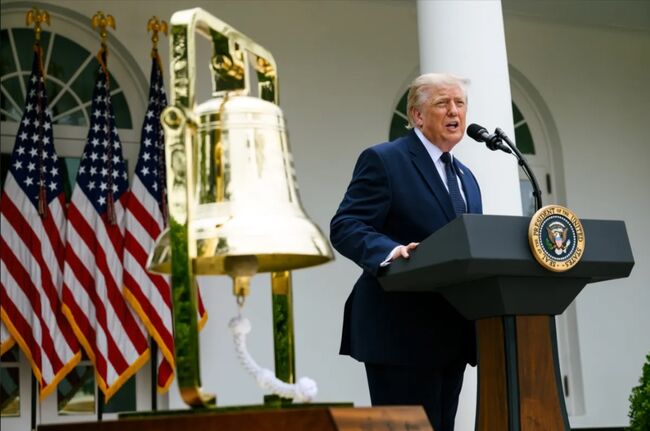 Trump pressures for rate cut again ahead of FOMC... "Should be the lowest in the world"
U.S. President Donald Trump. [Photo = The White House] U.S. President Donald Trump once again pressured the Federal Reserve, the U.S. central bank, to lower interest rates on the 27th (local time
Trump pressures for rate cut again ahead of FOMC... "Should be the lowest in the world"
U.S. President Donald Trump. [Photo = The White House] U.S. President Donald Trump once again pressured the Federal Reserve, the U.S. central bank, to lower interest rates on the 27th (local time
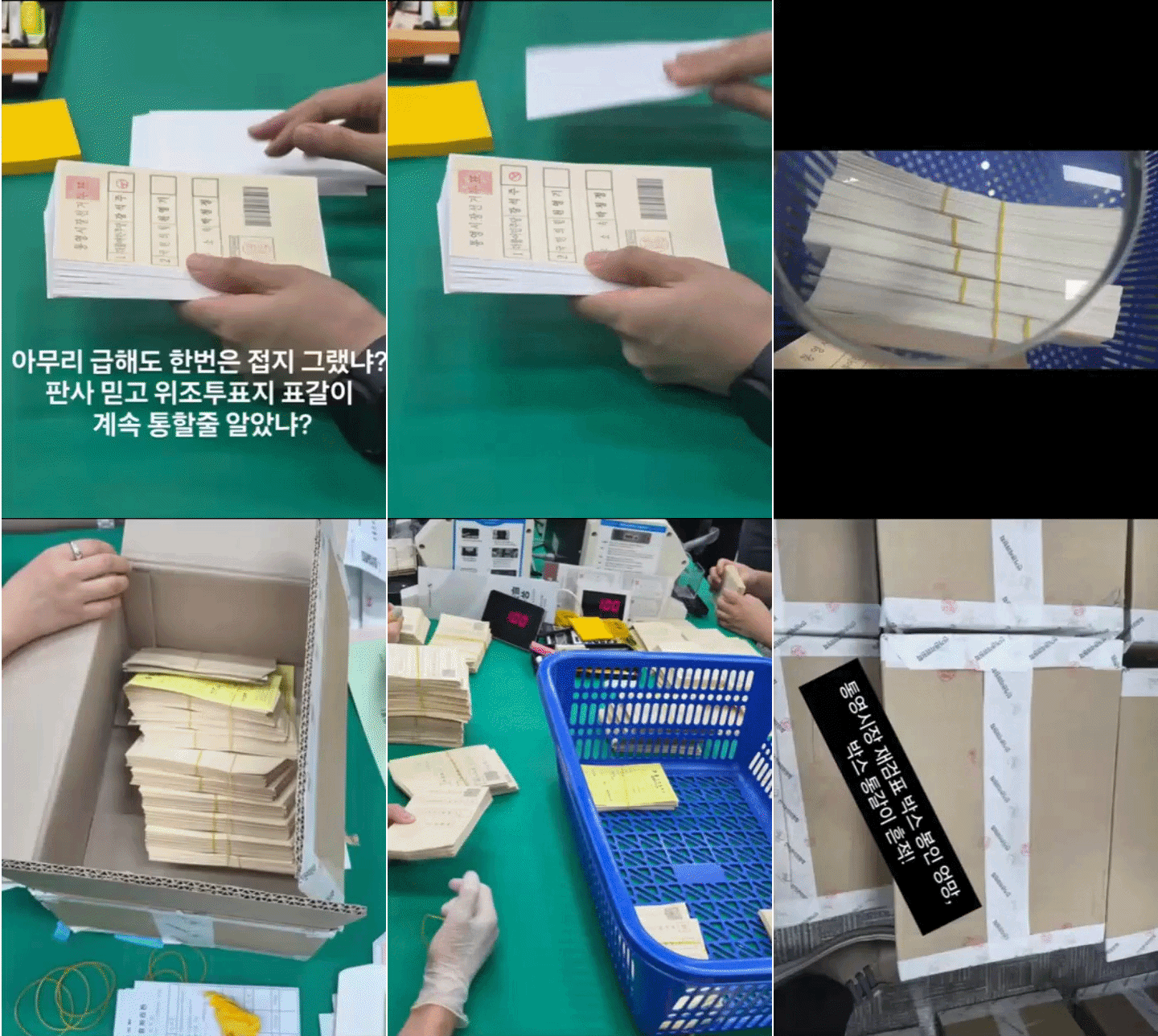 “Ignoring crisp ballots and damaged seals”… Tongyeong mayoral recount concludes with ‘no change in outcome,’ leaving suspicions and public outrage behind
Suspected counterfeit ballots discovered in Tongyeong [GIF from social media of Representative Hwang Kyo-ahn / Attorney Park Joo-hyun]During a recount of the Tongyeong mayoral election in South Gyeong
“Ignoring crisp ballots and damaged seals”… Tongyeong mayoral recount concludes with ‘no change in outcome,’ leaving suspicions and public outrage behind
Suspected counterfeit ballots discovered in Tongyeong [GIF from social media of Representative Hwang Kyo-ahn / Attorney Park Joo-hyun]During a recount of the Tongyeong mayoral election in South Gyeong
 President Yoon, regarding the first-instance ruling on the Public Official Election Act: “An excessive political verdict that distorts the facts… We will appeal immediately.”
The first-instance sentencing hearing for President Yoon Suk Yeol regarding violations of the Public Official Election Act is being broadcast live at Seoul Station on the 27th. [Photo=Yonhap News]Pres
President Yoon, regarding the first-instance ruling on the Public Official Election Act: “An excessive political verdict that distorts the facts… We will appeal immediately.”
The first-instance sentencing hearing for President Yoon Suk Yeol regarding violations of the Public Official Election Act is being broadcast live at Seoul Station on the 27th. [Photo=Yonhap News]Pres
 WSJ: "SK Hynix ADR Premium Is a Sign of AI Trading Overheat"
Advertisement for SK Hynix ADR listing in New York's Times Square [Reuters=Yonhap News file photo]The Wall Street Journal (WSJ) has pointed out that the price of SK Hynix’s American Depositary Recei
WSJ: "SK Hynix ADR Premium Is a Sign of AI Trading Overheat"
Advertisement for SK Hynix ADR listing in New York's Times Square [Reuters=Yonhap News file photo]The Wall Street Journal (WSJ) has pointed out that the price of SK Hynix’s American Depositary Recei
 'Godfather of Japanese Mystery Novels' Keigo Higashino Passes Away After Battle with Cancer at 68
Famous Japanese mystery novelist Keigo Higashino [AFP=Yonhap News]It has been belatedly reported that Keigo Higashino, the "godfather of Japanese mystery novels" and author of bestsellers such as "The
'Godfather of Japanese Mystery Novels' Keigo Higashino Passes Away After Battle with Cancer at 68
Famous Japanese mystery novelist Keigo Higashino [AFP=Yonhap News]It has been belatedly reported that Keigo Higashino, the "godfather of Japanese mystery novels" and author of bestsellers such as "The
 [Park Pil-kyu Security Column] To the Ignorant Trying to Clothe a Beast in Sheep's Clothing
Rep. Kim Byung-joo of the Democratic Party of Korea [Photo=Yonhap News]“The Air Force Academy doesn't teach you how to fly a plane!” “The Army, Navy, and Air Force academies are exactly the
[Park Pil-kyu Security Column] To the Ignorant Trying to Clothe a Beast in Sheep's Clothing
Rep. Kim Byung-joo of the Democratic Party of Korea [Photo=Yonhap News]“The Air Force Academy doesn't teach you how to fly a plane!” “The Army, Navy, and Air Force academies are exactly the
 [Issue Diagnosis] Two Effects of the Election Petition Review
 [Photo] Evidence of Election Fraud Flooding U.S. Media… Trump Had 2.7 Million Votes Stolen
 [Video] U.S. Semiquincentennial Air Show... 'Art in the Sky' streaks across New York
 [Editorial Cartoon] A Draconian Law That Undermines Freedom of Expression

 List
List









