U.S. President Donald Trump (left) and Japanese Prime Minister Sanae Takaichi. AFP Yonhap News
 Vijay Jayaraj, a researcher at the CO2 Coalition in the U.S. The United States and Japan are emerging from the paralysis brought on by irrational climate policies through strategic agreements involving rare earth minerals, critical semiconductor components, and next-generation nuclear reactors.
The agreement between the two nations on October 28th, spearheaded by the pragmatic U.S. President Donald Trump and Japanese Prime Minister Sanae Takaichi, marks an end to over a decade of energy uncertainty dominated by unpredictable supply chains, unrealistic carbon neutrality pledges, and an over-reliance on unreliable wind and solar power. This is a move to ensure that energy and industrial strategies are central to safeguarding national sovereignty.
As the Chinese government, which controls over 90% of processed rare earths, employs a strategy of weaponizing its supply chain, the U.S. is countering this through cooperation with Japan. The U.S. and Japan are advancing their collaboration based on prioritizing access to raw materials and technology, strategic resilience, and economic growth, building upon an existing $550 billion investment package between the two countries.
According to a White House document, the Japanese government and corporations will invest up to $332 billion in U.S. energy infrastructure, including nuclear reactors, and up to $50 billion in the power equipment sector. This will be concretely realized through contracts between U.S. and Japanese companies. The U.S. will secure practical and reliable power generation capacity, rather than focusing on wind turbines or solar panels covering deserts, through Japan's investment. In return, Japan will expand its technology sales and tariff benefits in the U.S. market.
The U.S. plans to spend $75 billion from the investment funds of three Japanese companies—Mitsubishi Electric (supplying power plant systems and equipment), TDK (advanced power electronic components), and Fujikura (fiber optic cables)—on building data center infrastructure.
The U.S.-Japan agreement also includes a multi-year contract worth $100 million for the supply of U.S.-made thermal coal between Global Coal Sales Group and Tohoku Electric Power. This is a reasonable decision for an industrialized nation to provide affordable and stable electricity to its citizens. Coal remains an essential energy source for countries that do not wish to sacrifice economic growth on the dogma of "decarbonization."
The agreement also includes two major Japanese investment plans in the U.S. Specifically, there is an investment of up to $3 billion for the construction of ammonia and urea fertilizer plants in the U.S. and an investment of $2 billion for the construction of copper smelting and refining facilities in the western U.S.
Japan will import 66 million tons (t) of U.S.-produced LNG annually in the future, becoming the world's second-largest LNG importer after China. This is a wise decision as it includes provisions to replace Japan's strategic reliance on Russian LNG, which accounts for 9% of its domestic gas demand. Specific efforts are underway, such as JERA's $1.5 billion investment in the Haynesville shale in Louisiana, USA, and Tokyo Gas's efforts to secure Alaska LNG.
In the field of nuclear energy, Japan has shown a politically passive stance since the Fukushima Daiichi nuclear disaster in 2011. As a result, only 14 of its 54 existing nuclear reactors are currently back in operation. Japan must move beyond the "ghost of Fukushima" that has paralyzed policy decisions for the past 14 years. This means Japan must regain its former leadership in the global nuclear power market, which is currently dominated by China, France, South Korea, and Russia.
Meanwhile, the Trump administration laid the groundwork for resource development by withdrawing from the Paris Agreement and halting financial support for global climate policies that lead to energy poverty.
This U.S.-Japan cooperation framework aims to strengthen the strategic resilience of both countries and create jobs and boost trade by deeply involving major Japanese companies like Mitsubishi and Toshiba in U.S. energy projects, countering the "green" fantasies of environmental extremists.
The two nations now possess energy security that is not shaken by external environmental changes and are pursuing economic prosperity based on fossil fuels and nuclear power. This demonstrates that true economic strength comes from utilizing practically effective energy sources, rather than succumbing to a fabricated climate crisis narrative.
What Washington and Tokyo have achieved is not simply a trade agreement. It is a declaration of independence from the fabricated climate crisis narrative that has paralyzed rational energy policy decisions for a generation. Other countries will follow suit. The tide is turning. Energy realism is on the rise.
Researcher at the CO2 Coalition in the U.S.
 Seok-soon Park, Professor Emeritus at Ewha Womans University and former Director of the National Institute of Environmental ResearchThis column was first published on November 17, 2025, on Real Clear Markets (www.realclearmarkets.com) and was translated and edited by Seok-soon Park, Professor Emeritus at Ewha Womans University and a member of the CO2 Coalition (www.co2coalition.org), in collaboration with researcher Vijay Jayaraj. Professor Park is currently active as the Korean ambassador for the Council for Global Thought Leaders (Clintel), the president of the Free Environment Forum, and through his YouTube channel, Park Seok-soon's Environment TV.

 Trump pressures for rate cut again ahead of FOMC... "Should be the lowest in the world"
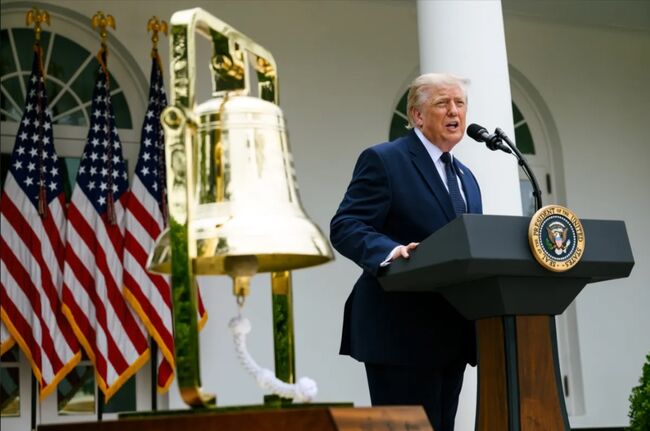
U.S. President Donald Trump. [Photo = The White House] U.S. President Donald Trump once again pressured the Federal Reserve, the U.S. central bank, to lower interest rates on the 27th (local time
Trump pressures for rate cut again ahead of FOMC... "Should be the lowest in the world"
U.S. President Donald Trump. [Photo = The White House] U.S. President Donald Trump once again pressured the Federal Reserve, the U.S. central bank, to lower interest rates on the 27th (local time
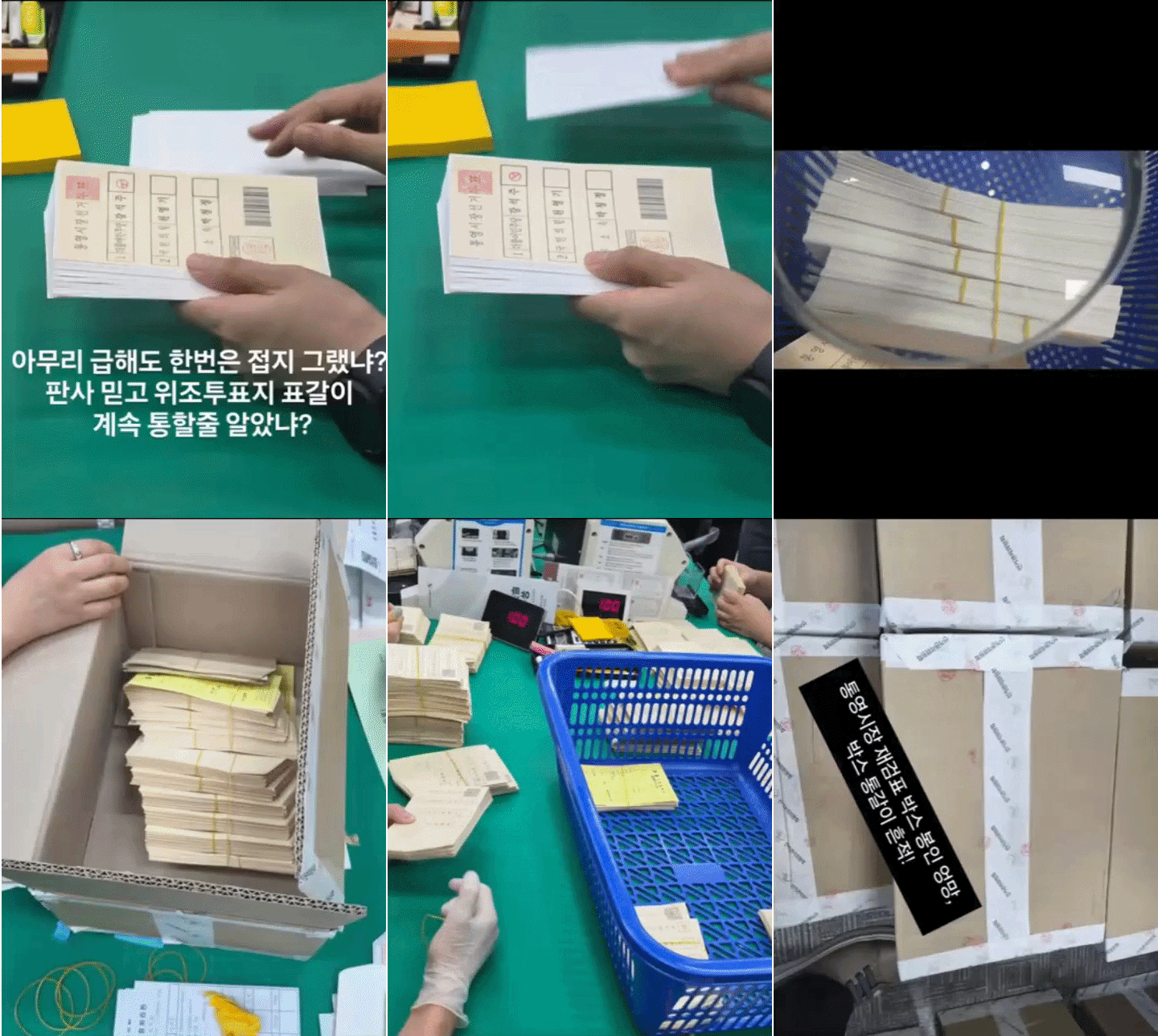 “Ignoring crisp ballots and damaged seals”… Tongyeong mayoral recount concludes with ‘no change in outcome,’ leaving suspicions and public outrage behind
Suspected counterfeit ballots discovered in Tongyeong [GIF from social media of Representative Hwang Kyo-ahn / Attorney Park Joo-hyun]During a recount of the Tongyeong mayoral election in South Gyeong
“Ignoring crisp ballots and damaged seals”… Tongyeong mayoral recount concludes with ‘no change in outcome,’ leaving suspicions and public outrage behind
Suspected counterfeit ballots discovered in Tongyeong [GIF from social media of Representative Hwang Kyo-ahn / Attorney Park Joo-hyun]During a recount of the Tongyeong mayoral election in South Gyeong
 President Yoon, regarding the first-instance ruling on the Public Official Election Act: “An excessive political verdict that distorts the facts… We will appeal immediately.”
The first-instance sentencing hearing for President Yoon Suk Yeol regarding violations of the Public Official Election Act is being broadcast live at Seoul Station on the 27th. [Photo=Yonhap News]Pres
President Yoon, regarding the first-instance ruling on the Public Official Election Act: “An excessive political verdict that distorts the facts… We will appeal immediately.”
The first-instance sentencing hearing for President Yoon Suk Yeol regarding violations of the Public Official Election Act is being broadcast live at Seoul Station on the 27th. [Photo=Yonhap News]Pres
 WSJ: "SK Hynix ADR Premium Is a Sign of AI Trading Overheat"
Advertisement for SK Hynix ADR listing in New York's Times Square [Reuters=Yonhap News file photo]The Wall Street Journal (WSJ) has pointed out that the price of SK Hynix’s American Depositary Recei
WSJ: "SK Hynix ADR Premium Is a Sign of AI Trading Overheat"
Advertisement for SK Hynix ADR listing in New York's Times Square [Reuters=Yonhap News file photo]The Wall Street Journal (WSJ) has pointed out that the price of SK Hynix’s American Depositary Recei
 'Godfather of Japanese Mystery Novels' Keigo Higashino Passes Away After Battle with Cancer at 68
Famous Japanese mystery novelist Keigo Higashino [AFP=Yonhap News]It has been belatedly reported that Keigo Higashino, the "godfather of Japanese mystery novels" and author of bestsellers such as "The
'Godfather of Japanese Mystery Novels' Keigo Higashino Passes Away After Battle with Cancer at 68
Famous Japanese mystery novelist Keigo Higashino [AFP=Yonhap News]It has been belatedly reported that Keigo Higashino, the "godfather of Japanese mystery novels" and author of bestsellers such as "The
 [Park Pil-kyu Security Column] To the Ignorant Trying to Clothe a Beast in Sheep's Clothing
Rep. Kim Byung-joo of the Democratic Party of Korea [Photo=Yonhap News]“The Air Force Academy doesn't teach you how to fly a plane!” “The Army, Navy, and Air Force academies are exactly the
[Park Pil-kyu Security Column] To the Ignorant Trying to Clothe a Beast in Sheep's Clothing
Rep. Kim Byung-joo of the Democratic Party of Korea [Photo=Yonhap News]“The Air Force Academy doesn't teach you how to fly a plane!” “The Army, Navy, and Air Force academies are exactly the
 [Issue Diagnosis] Two Effects of the Election Petition Review
 [Photo] Evidence of Election Fraud Flooding U.S. Media… Trump Had 2.7 Million Votes Stolen
 [Video] U.S. Semiquincentennial Air Show... 'Art in the Sky' streaks across New York
 [Editorial Cartoon] A Draconian Law That Undermines Freedom of Expression

 List
List