Streets of Tokyo, Japan. Yonhap News
 Representative of the National Association for Free Unification, Doctor of Public Administration, Chairman of the Global Aerospace Industry AssociationOn November 7th, during a session of the Japanese House of Representatives Budget Committee, Prime Minister Takaichi responded to a question from an opposition party member, stating, "China's blockade of Taiwan or military intervention could lead to a 'situation threatening Japan's survival,' and we must prepare for the worst-case scenario." This statement alluded to Japan's 2015 collective self-defense legislation, implying the possibility of Japan's Self-Defense Forces intervening in a Taiwan conflict.
Chinese Foreign Ministry spokesperson Lin Jian (林剑) characterized this as "interference in China's internal affairs" and criticized Takaichi's remarks for encouraging Taiwanese independence forces. (Wolf Warrior Diplomacy) The two countries formalized their diplomatic clash by recalling their ambassadors. China unleashed a series of restrictions, including limiting tourism to Japan by its citizens, dubbed the "Limit Japan Order" (限日令). In response, Japan is reportedly planning to deploy medium-range missiles on Yonaguni Island, just 110 km from Taiwan, and is restricting exports of photoresist, a key semiconductor material, to China.
China's hardline stance has provoked anti-China sentiment within Japan, paradoxically leading to a rise in Takaichi's approval ratings (strengthening the domestic right-wing support base). Japan has clarified its intention to implement a 'Taiwan-linked security' strategy by strengthening cooperation with allies such as the United States and South Korea.
In essence, the conflict between Japan and China symbolizes Japan's shift from 'strategic ambiguity' to 'clarity' and appears to be a process of testing China's resolve for Taiwan's unification.
Meanwhile, on December 3rd, U.S. President Trump signed the Taiwan Assurance Implementation Act, which aims to strengthen U.S.-Taiwan relations, recognize Taiwan's democratic values, and counter China's threat of invading Taiwan.
Japan: Now a "De Facto Normal Country"
This incident can be seen as Japan declaring itself a "de facto normal country" both domestically and internationally. A normal country in this context means a nation capable of waging war, which effectively alters the effect of Japan's pacifist constitution imposed after its defeat in World War II.
Japan had already amended its constitutional interpretation in 2015 through the "Peace and Security Legislation," allowing it to exercise collective self-defense rights and significantly expanding the scope of activities for its Self-Defense Forces. This was considered a historical turning point in Japan's post-war security policy.
Japan has never amended Article 9 of its pacifist constitution. Instead, over the past 70 years, it has repeatedly employed a three-step approach: "constitutional interpretation amendment → enactment/revision of laws → expansion of budget and equipment," thereby completing a substantive transition from the "Self-Defense Forces under the pacifist constitution" to a "normal military under the pacifist constitution." As of 2025, Japan has become a "de facto normal country" with the world's 4th or 5th largest military, without amending its constitution.
Changes in Japan's Post-War Foreign and Security Policy
Following its defeat in World War II, Japan has not only adapted to changes in the international landscape with flexible and resilient foreign and security policies but is now evaluated as being at a stage where it can actively pursue its national interests.
During the Cold War era (1945-1991), amidst threats from the Soviet Union and China, Japan established the Self-Defense Forces (1954) and pursued the easing of anti-Japanese sentiment among its Asian neighbors and alignment with the Western bloc through the Yoshida Doctrine (economic priority, reliance on U.S. forces). After the Gulf War (1991), Japan began dispatching troops for overseas peacekeeping operations (PKO), marking the first step away from pacifism.
After surrendering to the United States in World War II and adopting the pacifist constitution, Japan experienced a boom due to the Korean War and achieved the world's second-largest GDP through significant trade surpluses with the U.S. However, following the Plaza Accord with the U.S. in 1985, Japan entered a period of "lost decades" for over 30 years. Ultimately, Japan recognized that cooperation with the United States was the most crucial path for its national survival.
After the end of the Cold War (1990s-early 2010s), in response to China's economic rise and North Korea's nuclear development, Shinzo Abe (2012~) allowed the exercise of collective self-defense under "proactive pacifism" and, internationally, established a network to counter China with the "Free and Open Indo-Pacific" vision (2016), forming the QUAD (U.S., Japan, Australia, India).
Entering the 2020s, Japan diagnosed the "worst security environment" due to Russia's invasion of Ukraine (2022) and China's pressure on Taiwan and the Senkakus. It revised its National Security Strategy (2022), formalized counter-strike capabilities (introduction of Tomahawk missiles), set a goal of doubling defense spending to 2% of GDP by 2027, and recently agreed to strengthen joint deterrence capabilities in a U.S.-Japan summit (2025).
Japan's Unofficial Diplomacy: Lobbying
To implement its foreign and security policies, Japan has dedicated significant effort to lobbying the U.S., employing numerous former high-ranking U.S. officials and lawmakers as consultants (in the order of tens of billions of yen annually). It has also utilized Japanese-American politicians (like Inoue and Mineta) as its proxies. Through multifaceted efforts, including sponsoring research funds for Japanese chairs at conservative think tanks (CSIS, AEI, Heritage, etc.), Japan has influenced U.S. public opinion and Congress.
Japan has directly offered tangible benefits to the U.S. political establishment – "money, jobs, and reduced burden of U.S. military presence" – benefits that official diplomats might find difficult to articulate. This has enabled Japan to become the world's 4th or 5th largest military power without amending its constitution. Former Prime Minister Abe strived to advance Japan's interests by playing golf with Trump, and even in 2025, a hidden network is actively operating across various fronts, playing a crucial role particularly in negotiations with a potential second Trump administration.
Japan's Defense White Paper 2025
The annual report, approved by the Japanese Cabinet on July 15, 2025, is a document published by the Ministry of Defense. This white paper emphasizes the most severe crisis situation the international community has faced since World War II, diagnosing it as an entry into a "new era of crisis." The white paper points out that the global peace order is under severe challenge and that Japan is in the most complex and grave security environment since the end of the war.
It defines China as an "unprecedented and the greatest strategic challenge," noting its continuous increase in defense budget for over 30 years and its rapid qualitative and quantitative enhancement of military capabilities. North Korea is categorized as the "most serious and imminent threat," strengthening its offensive capabilities with nuclear-armed ballistic missiles and diversifying its intelligence, surveillance, and reconnaissance systems while focusing on nuclear and missile development.
Furthermore, it newly emphasizes the threat of hybrid warfare, highlighting the importance of comprehensive security beyond traditional border and deterrence-centric concepts, including non-military and information warfare attacks that threaten democratic systems (elections, information, civil society).
The white paper calls for a "fundamental strengthening of defense capabilities" as its core objective, urging the achievement of 61% of the 43 trillion yen scale over five years from 2022. It emphasizes expanding the budget to the 2% target by 2027 and continuing to pursue seven key areas of reinforcement (stand-off and integrated air and missile defense, unmanned defense capabilities, cross-domain operations, command and control, and intelligence functions).
Japan reaffirms the U.S.-Japan alliance as the "pillar of its national security policy," expanding joint presence in the southwestern region, discussing defense equipment and technology cooperation including joint production, development, and maintenance, and emphasizing strengthened cooperation with countries like Australia and the United Kingdom.
China's Ministry of National Defense criticized Japan's defense white paper as an "exaggeration of the China threat," strongly protesting that Japan's military expansion (increased defense spending, relaxed arms export restrictions, formation of small military blocs) violates its pacifist constitution and the post-war international order. It has also protested Japan's remarks on the Taiwan issue as "interference in internal affairs" and a threat to peace and stability in the Asia-Pacific region.
In conclusion, the 2025 Defense White Paper symbolizes a shift in Japan's security paradigm, moving away from traditional pacifism to adopt offensive capabilities, respond to hybrid threats, recognize the Chinese threat, and accelerate defense buildup. It emphasizes Japan's "proactive security contribution" to promote peace and stability in the Indo-Pacific.
China's Threat of Invading Taiwan and the Response of South Korea, the U.S., and Japan
Japan's Prime Minister Takaichi defined China's invasion of Taiwan as a "situation threatening survival." This is based on the recognition that Japan's trade and energy transportation rely on sea lanes connecting the Strait of Malacca, the South China Sea, and the Taiwan Strait. If these routes are threatened, Japan's economy, and thus its security and very existence, could be shaken. This assessment is equally applicable to South Korea, which faces a similar situation.
Conversely, China's stance that Taiwan is part of its territory is bound to clash with Japan's assessment, which has become the reason for the sharp conflict and confrontation between the two countries. Given that Japan was once the world's second-largest economy and currently possesses the 4th or 5th largest military power, a conflict over Taiwan involving multiple countries such as the United States, Japan, Australia, the United Kingdom, and France would by no means be an easy situation for China.
The recently published ROK-U.S. fact sheet on trade and security stated the following regarding the Taiwan issue and trilateral cooperation among South Korea, the U.S., and Japan: "Both Presidents encourage the peaceful resolution of issues in the Taiwan Strait and oppose any unilateral change to the status quo." "Both Presidents pledged to strengthen trilateral partnership with Japan." We believe that upholding the commitment to ROK-U.S.-Japan cooperation can contribute to the realization of shared national interests and world peace.
Representative of the National Association for Free Unification, Doctor of Public Administration, Chairman of the Global Aerospace Industry Association

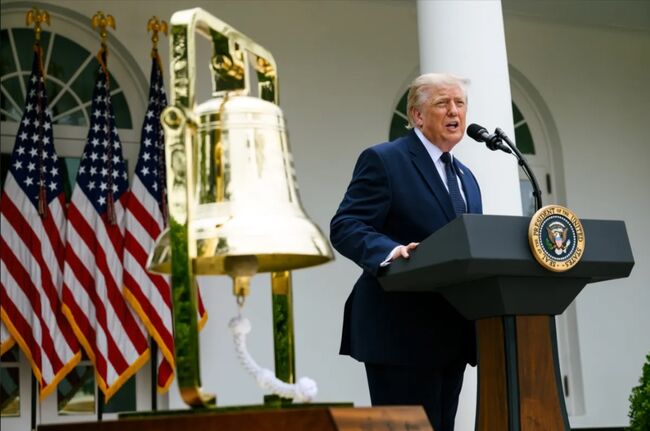 Trump pressures for rate cut again ahead of FOMC... "Should be the lowest in the world"
U.S. President Donald Trump. [Photo = The White House] U.S. President Donald Trump once again pressured the Federal Reserve, the U.S. central bank, to lower interest rates on the 27th (local time
Trump pressures for rate cut again ahead of FOMC... "Should be the lowest in the world"
U.S. President Donald Trump. [Photo = The White House] U.S. President Donald Trump once again pressured the Federal Reserve, the U.S. central bank, to lower interest rates on the 27th (local time
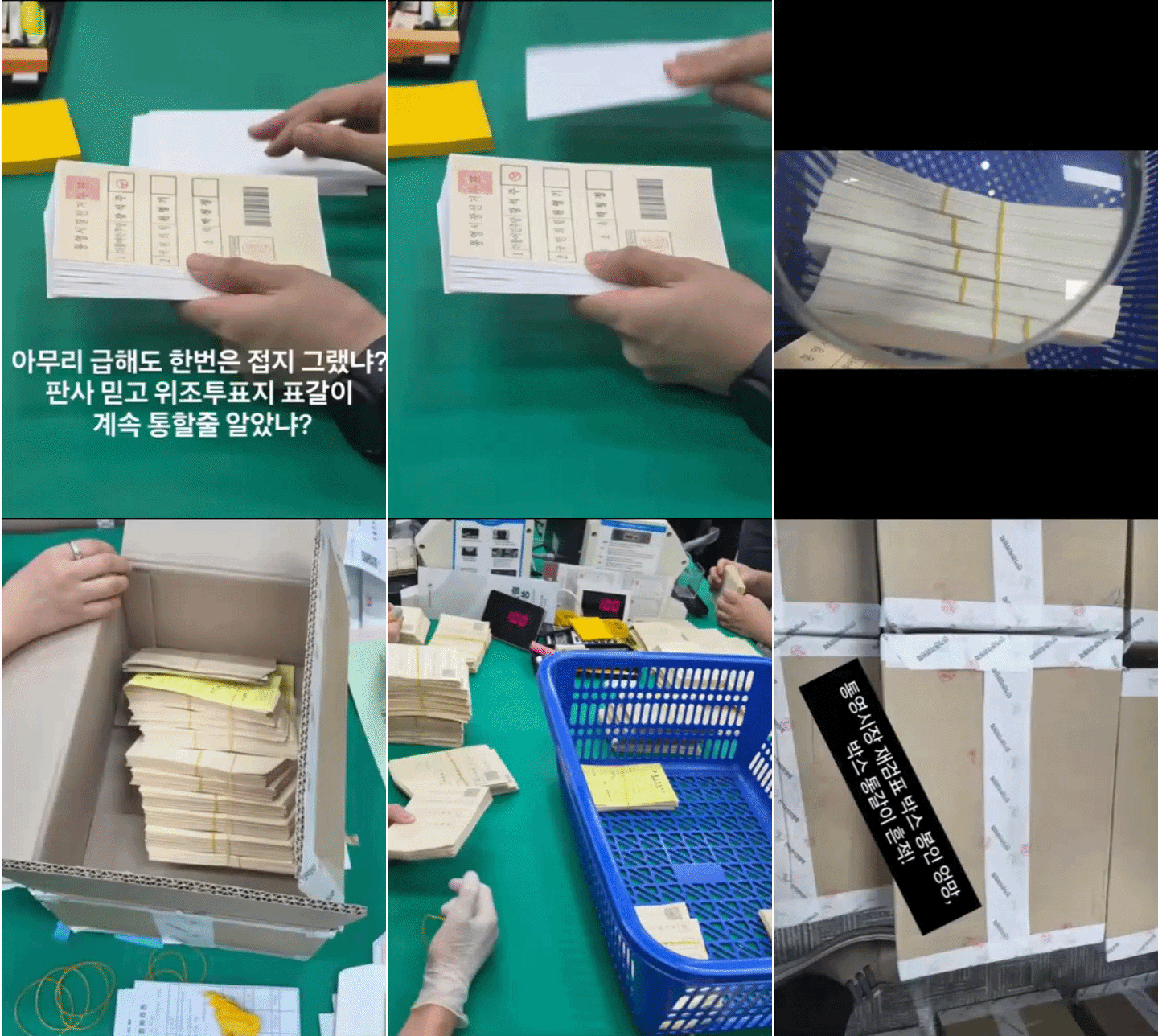 “Ignoring crisp ballots and damaged seals”… Tongyeong mayoral recount concludes with ‘no change in outcome,’ leaving suspicions and public outrage behind
Suspected counterfeit ballots discovered in Tongyeong [GIF from social media of Representative Hwang Kyo-ahn / Attorney Park Joo-hyun]During a recount of the Tongyeong mayoral election in South Gyeong
“Ignoring crisp ballots and damaged seals”… Tongyeong mayoral recount concludes with ‘no change in outcome,’ leaving suspicions and public outrage behind
Suspected counterfeit ballots discovered in Tongyeong [GIF from social media of Representative Hwang Kyo-ahn / Attorney Park Joo-hyun]During a recount of the Tongyeong mayoral election in South Gyeong
 President Yoon, regarding the first-instance ruling on the Public Official Election Act: “An excessive political verdict that distorts the facts… We will appeal immediately.”
The first-instance sentencing hearing for President Yoon Suk Yeol regarding violations of the Public Official Election Act is being broadcast live at Seoul Station on the 27th. [Photo=Yonhap News]Pres
President Yoon, regarding the first-instance ruling on the Public Official Election Act: “An excessive political verdict that distorts the facts… We will appeal immediately.”
The first-instance sentencing hearing for President Yoon Suk Yeol regarding violations of the Public Official Election Act is being broadcast live at Seoul Station on the 27th. [Photo=Yonhap News]Pres
 WSJ: "SK Hynix ADR Premium Is a Sign of AI Trading Overheat"
Advertisement for SK Hynix ADR listing in New York's Times Square [Reuters=Yonhap News file photo]The Wall Street Journal (WSJ) has pointed out that the price of SK Hynix’s American Depositary Recei
WSJ: "SK Hynix ADR Premium Is a Sign of AI Trading Overheat"
Advertisement for SK Hynix ADR listing in New York's Times Square [Reuters=Yonhap News file photo]The Wall Street Journal (WSJ) has pointed out that the price of SK Hynix’s American Depositary Recei
 'Godfather of Japanese Mystery Novels' Keigo Higashino Passes Away After Battle with Cancer at 68
Famous Japanese mystery novelist Keigo Higashino [AFP=Yonhap News]It has been belatedly reported that Keigo Higashino, the "godfather of Japanese mystery novels" and author of bestsellers such as "The
'Godfather of Japanese Mystery Novels' Keigo Higashino Passes Away After Battle with Cancer at 68
Famous Japanese mystery novelist Keigo Higashino [AFP=Yonhap News]It has been belatedly reported that Keigo Higashino, the "godfather of Japanese mystery novels" and author of bestsellers such as "The
 [Park Pil-kyu Security Column] To the Ignorant Trying to Clothe a Beast in Sheep's Clothing
Rep. Kim Byung-joo of the Democratic Party of Korea [Photo=Yonhap News]“The Air Force Academy doesn't teach you how to fly a plane!” “The Army, Navy, and Air Force academies are exactly the
[Park Pil-kyu Security Column] To the Ignorant Trying to Clothe a Beast in Sheep's Clothing
Rep. Kim Byung-joo of the Democratic Party of Korea [Photo=Yonhap News]“The Air Force Academy doesn't teach you how to fly a plane!” “The Army, Navy, and Air Force academies are exactly the
 [Issue Diagnosis] Two Effects of the Election Petition Review
 [Photo] Evidence of Election Fraud Flooding U.S. Media… Trump Had 2.7 Million Votes Stolen
 [Video] U.S. Semiquincentennial Air Show... 'Art in the Sky' streaks across New York
 [Editorial Cartoon] A Draconian Law That Undermines Freedom of Expression

 List
List