 Counterintelligence is an offensive defense and requires a high degree of professionalism, making accumulated experience and expertise essential for responding to threats within the military. Defense Counterintelligence Command.
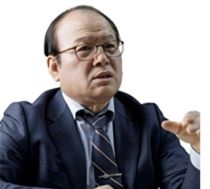 Joo Eun-sik, Editorial Writer and Director of the Korea Strategy InstituteThe military has yet to fully recover from the shock of the December 3rd emergency martial law last year. Promotions of generals and colonels have been significantly delayed, shaking command stability, and the political sphere is even considering reorganizing the core functions of the military.
Amidst this situation, the government's announcement to transfer the counterintelligence functions, a core task of the Defense Counterintelligence Command, to the Intelligence Headquarters has sparked serious concerns even within the military. Critics argue that this is not merely an organizational reform but a significant experiment that could undermine the fundamental principles and security framework of the military.
Security and counterintelligence are distinct concepts, yet they are functions that must never be separated.
Security is a preventive management system encompassing personnel, facilities, communications, cyberspace, and documents, aimed at preemptively blocking organizational vulnerabilities. Counterintelligence, conversely, is an offensive defense activity that detects, tracks, and neutralizes enemy espionage activities. As an offensive defense requiring a high degree of professionalism, counterintelligence necessitates accumulated experience and expertise specifically for responding to internal military threats. Therefore, while distinct in nature, security and counterintelligence have functionally operated as an integrated system.
The Intelligence Headquarters is fundamentally an organization responsible for the intelligence cycle of collection, analysis, evaluation, and dissemination. Its primary function is to analyze external threats to support operational command, not to identify and neutralize hostile forces infiltrating the military. It is undeniable that officers in the intelligence branch have not systematically accumulated practical experience in counterintelligence and security.
Effective counterintelligence requires the coordinated application of human networks, investigative acumen, interrogation and analytical skills, and an understanding of legal frameworks. These functions cannot be transferred simply by moving an organization overnight. Such a transfer of functions is highly likely to lead to the disintegration of that organization.
The Defense Counterintelligence Command exists to maintain internal military security. If its counterintelligence function is removed, the command would effectively become a nominal organization. This is why realistic analyses suggest that the separation of counterintelligence functions is linked to a trend to "organizationally shrink" the command following specific incidents.
The consequences are significant. The ability to counter hostile elements, spies, and sabotage within the military will inevitably weaken, and it may become unclear which agency is responsible in the event of a security breach. There will be confusion in reporting channels due to overlapping or avoided responsibilities between the Intelligence Headquarters and the Defense Counterintelligence Command. Commanders' decision-making will be hampered by distrust, and a relaxation of military discipline and combat readiness will be unavoidable.
Undermining the counterintelligence function under the guise of resolving political distrust is not a responsible approach to state governance. If there were shortcomings within the Defense Counterintelligence Command, accountability should be enforced, systems improved, and oversight strengthened. However, an approach that weakens the core functions itself is tantamount to self-inflicted damage to the security framework. It is crucial to remember that flawed decisions in the security domain cannot be retrospectively validated, and the cost will ultimately be borne by the public.
What is even more concerning is that discussions about neutralizing counterintelligence functions and abolishing the National Security Act are progressing simultaneously.
If organizational reforms that weaken counterintelligence functions are pursued concurrently with attempts to reduce legal safeguards against hostile activities, it will inevitably lead to a structural destabilization of the entire national security system. Contrary to simplistic arguments that the National Security Act suppresses freedom of expression, it actually serves as a minimal legal barrier against espionage, state subversion, and collaboration with hostile forces. If the law has flaws, the solution is "amendment," not abolition, which in a state of counterintelligence vacuum directly signifies a weakening of national security.
International standards also show that no democratic nation dismantles its counterintelligence system.
The United Kingdom operates the Official Secrets Act (OSA), strictly punishing the leakage of classified information in military, diplomatic, and intelligence fields, as well as collaboration with foreign intelligence agencies. This is unrelated to freedom of expression and applies to 'state secrets and acts of cooperation with hostile forces.'
France protects national security information and severely punishes espionage through its Penal Code and Defense Code. In particular, counterintelligence within military and intelligence organizations is integrated rather than separated.
The United States is no exception. Based on the Espionage Act and the National Security Act, counterintelligence, security, and classified information protection functions operate as an integrated system within the military and intelligence agencies. Whistleblowing and espionage are clearly distinguished, and the latter is treated with extreme strictness.
These nations are all democracies that guarantee freedom of expression, yet they never entrust national security and the protection of state secrets to political discourse. Democracy is not preserved by dismantling counterintelligence.
The real problem is that this logic rests on a false dichotomy of 'democracy versus security.' The argument that counterintelligence must be weakened to protect democracy has never been justified in the real world. History, rather, tells us this:
The Defense Counterintelligence Command is not merely an administrative organization but an aggregate of accumulated human experience, networks, and expertise. Tampering with it improperly will irreversibly weaken its actual functions, even if it appears to be maintained on the surface. If necessary, functions should be improved through institutional reorganization, such as strengthening integrated control, refining classified information protection legislation, and increasing accountability for counterintelligence failures. A method of systematically separating or dismantling the functions themselves will only result in national security being subordinated to political messaging.
We must operate security legislation at the same level as developed countries by maintaining and refining legal mechanisms for the protection of state secrets, curbing the abuse of counterintelligence authority, and strengthening accountability for failures. Security is not an ideological issue. Security is a matter of systems and functions, and its cost is always paid afterward. The nation is not a laboratory, and the military is not a tool for political purification. A collapsed counterintelligence system takes decades to restore.
"There is one common standard maintained by the military and intelligence systems of developed countries: the principle that security and counterintelligence must operate as an inseparable, integrated system. This principle is not a choice but a matter of national survival."
Joo Eun-sik, Editorial Writer and Director of the Korea Strategy Institute

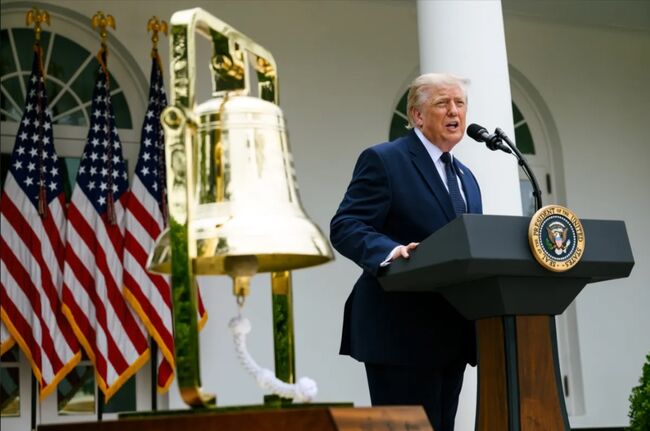 Trump pressures for rate cut again ahead of FOMC... "Should be the lowest in the world"
U.S. President Donald Trump. [Photo = The White House] U.S. President Donald Trump once again pressured the Federal Reserve, the U.S. central bank, to lower interest rates on the 27th (local time
Trump pressures for rate cut again ahead of FOMC... "Should be the lowest in the world"
U.S. President Donald Trump. [Photo = The White House] U.S. President Donald Trump once again pressured the Federal Reserve, the U.S. central bank, to lower interest rates on the 27th (local time
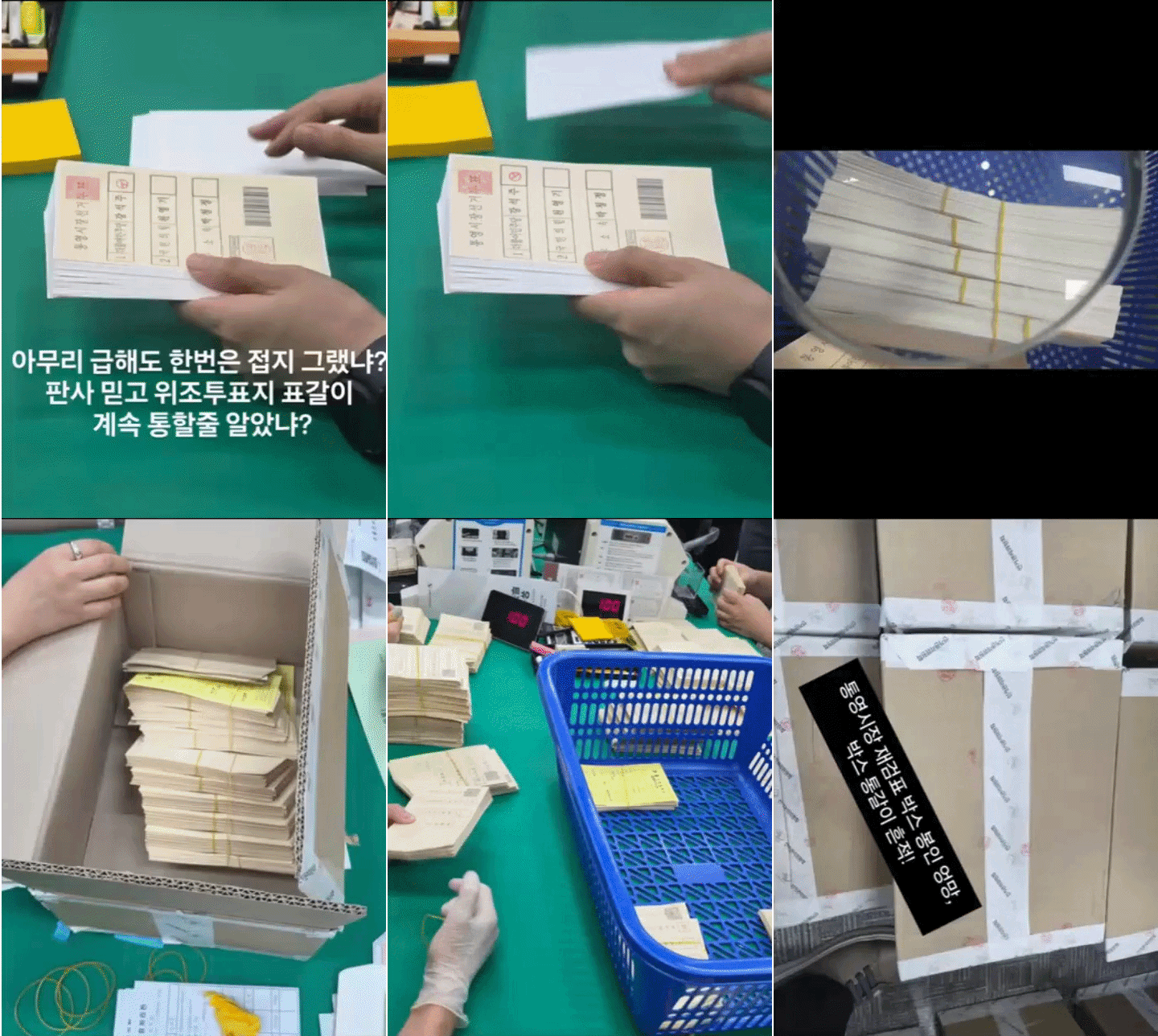 “Ignoring crisp ballots and damaged seals”… Tongyeong mayoral recount concludes with ‘no change in outcome,’ leaving suspicions and public outrage behind
Suspected counterfeit ballots discovered in Tongyeong [GIF from social media of Representative Hwang Kyo-ahn / Attorney Park Joo-hyun]During a recount of the Tongyeong mayoral election in South Gyeong
“Ignoring crisp ballots and damaged seals”… Tongyeong mayoral recount concludes with ‘no change in outcome,’ leaving suspicions and public outrage behind
Suspected counterfeit ballots discovered in Tongyeong [GIF from social media of Representative Hwang Kyo-ahn / Attorney Park Joo-hyun]During a recount of the Tongyeong mayoral election in South Gyeong
 President Yoon, regarding the first-instance ruling on the Public Official Election Act: “An excessive political verdict that distorts the facts… We will appeal immediately.”
The first-instance sentencing hearing for President Yoon Suk Yeol regarding violations of the Public Official Election Act is being broadcast live at Seoul Station on the 27th. [Photo=Yonhap News]Pres
President Yoon, regarding the first-instance ruling on the Public Official Election Act: “An excessive political verdict that distorts the facts… We will appeal immediately.”
The first-instance sentencing hearing for President Yoon Suk Yeol regarding violations of the Public Official Election Act is being broadcast live at Seoul Station on the 27th. [Photo=Yonhap News]Pres
 WSJ: "SK Hynix ADR Premium Is a Sign of AI Trading Overheat"
Advertisement for SK Hynix ADR listing in New York's Times Square [Reuters=Yonhap News file photo]The Wall Street Journal (WSJ) has pointed out that the price of SK Hynix’s American Depositary Recei
WSJ: "SK Hynix ADR Premium Is a Sign of AI Trading Overheat"
Advertisement for SK Hynix ADR listing in New York's Times Square [Reuters=Yonhap News file photo]The Wall Street Journal (WSJ) has pointed out that the price of SK Hynix’s American Depositary Recei
 'Godfather of Japanese Mystery Novels' Keigo Higashino Passes Away After Battle with Cancer at 68
Famous Japanese mystery novelist Keigo Higashino [AFP=Yonhap News]It has been belatedly reported that Keigo Higashino, the "godfather of Japanese mystery novels" and author of bestsellers such as "The
'Godfather of Japanese Mystery Novels' Keigo Higashino Passes Away After Battle with Cancer at 68
Famous Japanese mystery novelist Keigo Higashino [AFP=Yonhap News]It has been belatedly reported that Keigo Higashino, the "godfather of Japanese mystery novels" and author of bestsellers such as "The
 [Park Pil-kyu Security Column] To the Ignorant Trying to Clothe a Beast in Sheep's Clothing
Rep. Kim Byung-joo of the Democratic Party of Korea [Photo=Yonhap News]“The Air Force Academy doesn't teach you how to fly a plane!” “The Army, Navy, and Air Force academies are exactly the
[Park Pil-kyu Security Column] To the Ignorant Trying to Clothe a Beast in Sheep's Clothing
Rep. Kim Byung-joo of the Democratic Party of Korea [Photo=Yonhap News]“The Air Force Academy doesn't teach you how to fly a plane!” “The Army, Navy, and Air Force academies are exactly the
 [Issue Diagnosis] Two Effects of the Election Petition Review
 [Photo] Evidence of Election Fraud Flooding U.S. Media… Trump Had 2.7 Million Votes Stolen
 [Video] U.S. Semiquincentennial Air Show... 'Art in the Sky' streaks across New York
 [Editorial Cartoon] A Draconian Law That Undermines Freedom of Expression

 List
List










