One Japanese photosensitive material (photoresist) is turning China's 130 trillion won into the world's most expensive toilet paper. [Graphics = Yonhap News Agency/Reuters]
Today, semiconductors have evolved beyond mere components to become strategic assets that determine a nation's destiny. Amidst this trend, China's semiconductor ambitions stemmed from a desperate need for survival.
In the early 2010s, China had to spend more money importing semiconductors than it did on oil each year. With a self-sufficiency rate of only around 10% in semiconductors, the nation was entirely reliant on foreign countries for chips used in key industries like smartphones and communication equipment.
The Xi Jinping government viewed this not just as an economic problem but as a critical vulnerability that could threaten its energy, food, and military systems. Feeling the crisis of being held back by adversaries at any moment, China elevated semiconductors to a national security asset crucial for its survival and declared an all-out war.
The Chinese Government's All-Out War… "Buying Time with Money"
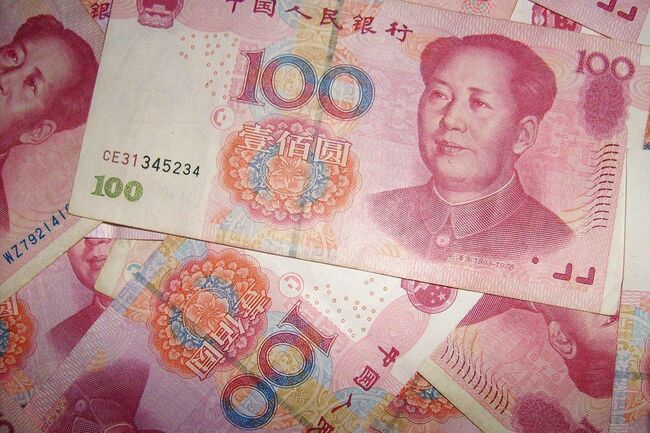
Under the philosophy of "buying time with money," China poured unprecedented amounts of capital into the sector over the past decade. The establishment of the "Big Fund" (National Integrated Circuit Industry Investment Fund) in 2014, alongside the "Guideline for Promoting the Development of the National Semiconductor Industry," marked the starting point.
The combined investment from the first to the third phases of the fund alone amounts to approximately 128 trillion won. When combined with investments from local governments and bank loans, the total investment easily surpasses 130 trillion won. In 2015, China announced "Made in China 2025," setting an ambitious goal to increase its self-sufficiency rate to 70% and aggressively pursued overseas company acquisitions and technology absorption.
US Sanctions and Untransferred Technology
However, the process was far from smooth. As stringent US sanctions began, Huawei's semiconductor supply was cut off, and the import of lithography equipment from ASML, a Dutch company and a necessity for advanced processes, was blocked.
To make matters worse, internal failures followed, such as the collapse of Wuhan Hongxin Semiconductor (HSMC), which failed to even complete its factory despite massive capital investment.
Tsinghua Unigroup (Tzuguang Group) also faced ruin due to reckless acquisitions, expansion, and excessive debt, leading to a death sentence with a two-year reprieve for its former chairman, Zhao Weiguo.
Companies like Chengdu Gaoxin (GlobalFoundries China), Nanjing CEC Panda, and Shanghai IC R&D Center also went bankrupt after receiving substantial policy funding without any significant achievements.
Furthermore, the investigations into key figures within the Big Fund for disciplinary violations and corruption between 2022 and 2023 served as a symbolic indication of the structural weaknesses in China's "speed-focused industrial development" model.
The semiconductor industry is not an area where results can be achieved in a short period solely through capital investment; it requires decades of accumulated technology, from design to materials.
Pursuing "Technological Independence" Against US Sanctions
Despite these challenges, China did not stop. In August 2023, it showcased a symbolic achievement. When it was revealed that the Huawei smartphone "Mate 60" was equipped with a 7nm chip produced by China's foundry SMIC, China heavily promoted it as proof of "breaking through US sanctions."
The message that advanced processes were possible despite US export controls on cutting-edge equipment served as a tool to demonstrate the regime's confidence domestically and a political card to undermine the effectiveness of sanctions internationally.
The Chinese government has leveraged US pressure as an opportunity for "technological independence," accelerating the localization of everything from older manufacturing processes to equipment and materials. The slogan from a decade ago has now evolved into a desperate "security war" to build a self-reliant ecosystem against US containment.
The Key Variable: "Photoresist"

However, a clear-eyed assessment of the achievements behind this success is necessary. The process is known to be a multi-patterning technique using DUV (Deep Ultraviolet) lithography equipment, without EUV (Extreme Ultraviolet) lithography.
While technically feasible, this process is extremely disadvantageous in terms of cost and yield. Whereas EUV lithography can draw circuits on a wafer in a single step, DUV lithography requires repeated patterns at least five times.
As the number of process steps increases, the probability of failure grows exponentially, and consequently, material consumption and process costs skyrocket.
Industry insiders state that while Taiwan's TSMC boasts a 90% yield for its 7nm process, SMIC's yield in China is said to be less than 50%. In other words, while SMIC's 7nm process has proven its "possibility" in the short term, mass production and stable supply remain unfeasible.
Here, photoresist has emerged as a key variable. Photoresist is a photosensitive liquid used to form semiconductor circuits on a wafer and is an essential material that dictates nano-level semiconductor processes.
Without this material, the process itself halts. More importantly, photoresist has a shelf life of up to one year, making large-scale stockpiling virtually impossible.
If it is not supplied stably at regular intervals for each process, the production line will immediately encounter disruptions. While equipment can last for years, materials must be secured monthly and weekly.
Hitting a Wall in an Unexpected Place
Despite all the effort invested, China has once again been hindered by an unforeseen factor.
As of 2025, this massive national project is unexpectedly stalled due to a single material produced in Japan. The protagonist was not advanced equipment or immense capital, but photoresist (photosensitive liquid), a fundamental core material for semiconductor manufacturing.
Japanese companies dominate approximately 70% of the global photoresist market, and for advanced EUV products below 7nm, their market share exceeds 95%. This is the result of 50 years of accumulated technological barriers.
In particular, companies like JSR, Tokyo Ohka Kogyo, Shin-Etsu Chemical, and Fujifilm have established positions from which it is difficult to find alternative suppliers.
JSR, in particular, was acquired by JIC, an investment institution under the Japanese government, in 2023, effectively nationalizing it. This is not merely a corporate transaction; it is rationally interpreted as a measure to incorporate a core semiconductor material as a national strategic asset.
As speculation spread in the latter half of 2025 that Japan was unofficially adjusting its photoresist exports to China, the Chinese stock market showed noticeable volatility.
The Japanese government has not announced any official export ban, and the relevant companies have maintained that there are no contractual issues.
"Fine-tuning" is a More Powerful Tool Than "Total Ban"
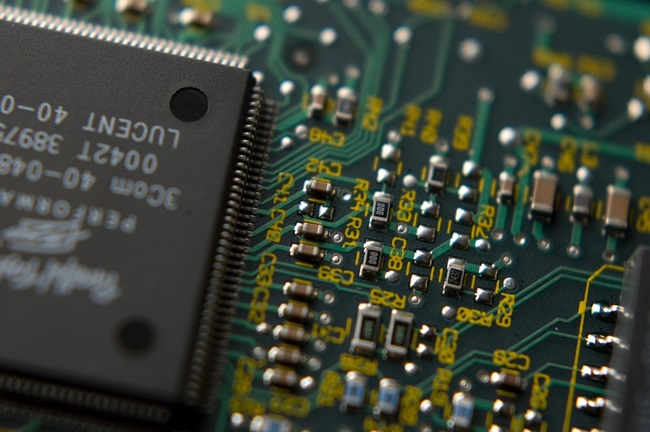
However, semiconductor material supply can be a much more potent tool through "fine-tuning" than a "total ban." Delays in permit procedures, adjustments in volume allocation, or detailed item classifications can immediately impact advanced processes.
Korea's experience provides a significant contrast here. In July 2019, when the Japanese government imposed export restrictions on key semiconductor materials, South Korea faced severe import disruptions for photoresist, hydrogen fluoride, and fluorinated polyimide.
However, South Korea embarked on supply chain restructuring based on its diplomatic status as an ally, its world-class process competitiveness, and market trust.
Japanese companies such as JSR and Tokyo Ohka Kogyo are establishing production facilities in Korea, while Korean companies are reducing structural vulnerabilities by pursuing both domestic production and diversification of import sources. The crisis was managed within controllable limits and ultimately served as an opportunity to strengthen the industry's resilience in the long term.
However, China's situation is fundamentally different. At the heart of the US-China strategic competition, China is within the US sanctions network, and it is unlikely that Japanese companies will build new advanced material plants or transfer core technologies within China.
The Semiconductor Industry is a Strategic Industry Reliant on Allied Supply Chains
The semiconductor industry is no longer a realm of pure market competition. It has transformed into a strategic industry deeply intertwined with value, alliances, trust, and norms. In this structure, the assumption that capital alone can replace all links is increasingly losing its persuasiveness.
The lesson from this incident is clear. Semiconductor hegemony is not a matter of investment scale but is determined by irreplaceable technology and the allied supply chains where that technology is rooted.
China attempted to buy time with money, but in the semiconductor industry, time cannot be entirely replaced by money. The fact that a small material can bring China's 130 trillion won national project to a halt is not an exaggeration but a structural reality.
The semiconductor war of 2025 is no longer a competition of "who builds more factories." It is a question of who has accumulated trust and who holds the materials and high-performance equipment.
China's 130 trillion won, disregarding Japan's material industry and the US sanctions network, is turning into the world's most expensive toilet paper.
Editorial Department, Hankyoreh-Japan Daily

 Trump pressures for rate cut again ahead of FOMC... "Should be the lowest in the world"
U.S. President Donald Trump. [Photo = The White House] U.S. President Donald Trump once again pressured the Federal Reserve, the U.S. central bank, to lower interest rates on the 27th (local time
Trump pressures for rate cut again ahead of FOMC... "Should be the lowest in the world"
U.S. President Donald Trump. [Photo = The White House] U.S. President Donald Trump once again pressured the Federal Reserve, the U.S. central bank, to lower interest rates on the 27th (local time
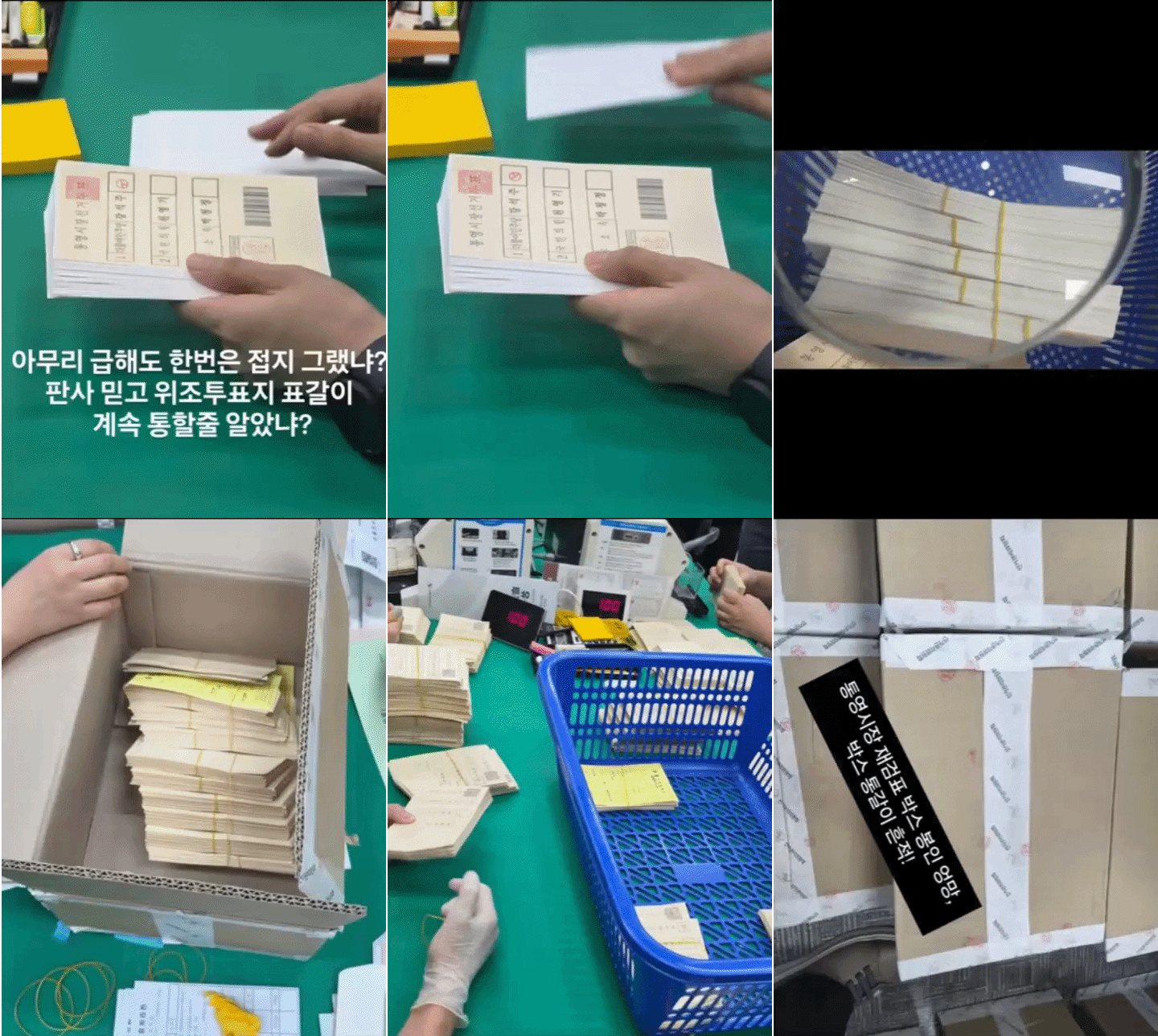 “Ignoring crisp ballots and damaged seals”… Tongyeong mayoral recount concludes with ‘no change in outcome,’ leaving suspicions and public outrage behind
Suspected counterfeit ballots discovered in Tongyeong [GIF from social media of Representative Hwang Kyo-ahn / Attorney Park Joo-hyun]During a recount of the Tongyeong mayoral election in South Gyeong
“Ignoring crisp ballots and damaged seals”… Tongyeong mayoral recount concludes with ‘no change in outcome,’ leaving suspicions and public outrage behind
Suspected counterfeit ballots discovered in Tongyeong [GIF from social media of Representative Hwang Kyo-ahn / Attorney Park Joo-hyun]During a recount of the Tongyeong mayoral election in South Gyeong
 President Yoon, regarding the first-instance ruling on the Public Official Election Act: “An excessive political verdict that distorts the facts… We will appeal immediately.”
The first-instance sentencing hearing for President Yoon Suk Yeol regarding violations of the Public Official Election Act is being broadcast live at Seoul Station on the 27th. [Photo=Yonhap News]Pres
President Yoon, regarding the first-instance ruling on the Public Official Election Act: “An excessive political verdict that distorts the facts… We will appeal immediately.”
The first-instance sentencing hearing for President Yoon Suk Yeol regarding violations of the Public Official Election Act is being broadcast live at Seoul Station on the 27th. [Photo=Yonhap News]Pres
 WSJ: "SK Hynix ADR Premium Is a Sign of AI Trading Overheat"
Advertisement for SK Hynix ADR listing in New York's Times Square [Reuters=Yonhap News file photo]The Wall Street Journal (WSJ) has pointed out that the price of SK Hynix’s American Depositary Recei
WSJ: "SK Hynix ADR Premium Is a Sign of AI Trading Overheat"
Advertisement for SK Hynix ADR listing in New York's Times Square [Reuters=Yonhap News file photo]The Wall Street Journal (WSJ) has pointed out that the price of SK Hynix’s American Depositary Recei
 'Godfather of Japanese Mystery Novels' Keigo Higashino Passes Away After Battle with Cancer at 68
Famous Japanese mystery novelist Keigo Higashino [AFP=Yonhap News]It has been belatedly reported that Keigo Higashino, the "godfather of Japanese mystery novels" and author of bestsellers such as "The
'Godfather of Japanese Mystery Novels' Keigo Higashino Passes Away After Battle with Cancer at 68
Famous Japanese mystery novelist Keigo Higashino [AFP=Yonhap News]It has been belatedly reported that Keigo Higashino, the "godfather of Japanese mystery novels" and author of bestsellers such as "The
 [Park Pil-kyu Security Column] To the Ignorant Trying to Clothe a Beast in Sheep's Clothing
Rep. Kim Byung-joo of the Democratic Party of Korea [Photo=Yonhap News]“The Air Force Academy doesn't teach you how to fly a plane!” “The Army, Navy, and Air Force academies are exactly the
[Park Pil-kyu Security Column] To the Ignorant Trying to Clothe a Beast in Sheep's Clothing
Rep. Kim Byung-joo of the Democratic Party of Korea [Photo=Yonhap News]“The Air Force Academy doesn't teach you how to fly a plane!” “The Army, Navy, and Air Force academies are exactly the
 [Issue Diagnosis] Two Effects of the Election Petition Review
 [Photo] Evidence of Election Fraud Flooding U.S. Media… Trump Had 2.7 Million Votes Stolen
 [Video] U.S. Semiquincentennial Air Show... 'Art in the Sky' streaks across New York
 [Editorial Cartoon] A Draconian Law That Undermines Freedom of Expression

 List
List