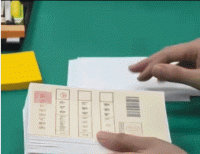
The "Great Journey" event celebrating the 100th anniversary of Chinese totalitarian rule (2021). [AFP=Yonhap News]
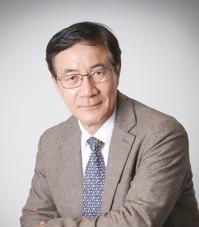 Shin Dong-chun, President of the National Unification Alliance for Freedom & Doctorate in Public AdministrationThe operation of a state inevitably involves power struggles. And depending on who holds that power, the nation's citizens live vastly different lives.
The world's current political systems can be broadly divided into liberal democracy and totalitarian dictatorship based on the separation and limitation of power.
Several years ago, a friend in a high public office remarked, "When did we ever try communism?" as if communism were a system worth trying. I responded, "Hasn't world history already proven the outcome sufficiently?"
This writing is a record of what I couldn't fully convey at the time.
China and North Korea Maintain Totalitarian Dictatorial Regimes
Totalitarian states can be broadly categorized into three types. First is the 'one-party communist dictatorship.' Constitutionally, the Communist Party is defined as the sole ruling force, and other political parties either do not exist or operate only formally and dependently. China, Cuba, Laos, North Korea, and Vietnam fall into this category.
Second are states where one party or political force effectively monopolizes power, even if they do not adhere to communist ideology.
While other parties may formally exist, effective competition is absent or suppressed. Iran, Eritrea, and Syria belong to this group. These are 'de facto dictatorships' where the law and reality diverge, effectively maintaining a one-party dictatorial system.
Third are states that formally adopt a multi-party system but are dominated by a single party for extended periods due to reasons like election fraud. Russia, Turkey, Rwanda, and Venezuela nominally adopt multi-party systems but are close to dictatorships where one party dominates for extended periods through practices like △election fraud △media control △suppression of opposition parties △gerrymandering.
A characteristic of dictatorial political systems is that a single party (or religious authority) exists above the state, controlling all domains—politics, administration, military, judiciary, economy, education, media, culture, and ideology—as an integrated party-state structure.
Furthermore, there is no separation of powers, and constitutions and laws are subordinate to the ruler's will, with real supreme power concentrated in the hands of the party leader (or supreme cleric).
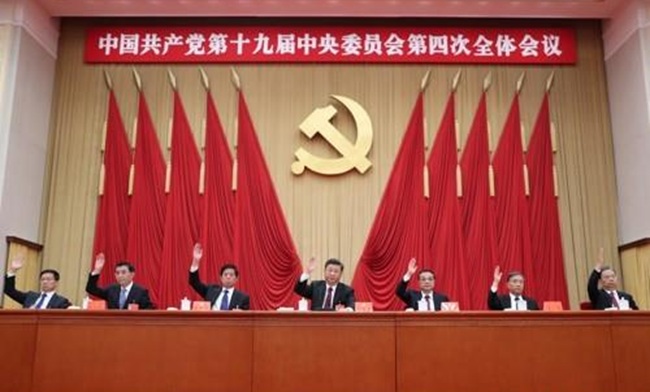 The Fourth Plenary Session of the 19th Central Committee of the Communist Party of China held in 2019. [Xinhua=Yonhap News]
Power succession occurs not through elections but through internal party factional struggles, and power is maintained through purges and claims of revolutionary legitimacy or religious orthodoxy. Ultimately, competition for loyalty inevitably functions as the core mechanism for regime stability.
The perspective on the populace is that of a ruling target rather than sovereign citizens. Individual rights are subordinate to the purposes of the state, party, or deity, and political disobedience is considered an act of subverting the state.
Economically, these states have restricted or denied private property rights, and the means of production and key resources are controlled by the state or party. The distribution of personnel, resources, interests, and wealth is determined by the discretion of those in power, not by law, and economic activities are permitted or restricted based on loyalty.
Regarding freedom of thought, religion, and expression, any ideology other than the official ideology (party ideology or religious doctrine) is prohibited. Media, art, and academia function as propaganda tools, and religion is permitted if it is subordinate to the regime, but it is thoroughly suppressed if it is independent.
Means of control include secret police and intelligence agencies employing a system of informants, creating a society of constant surveillance that induces compliance through fear and punishment.
Human rights are not recognized as universal rights and can be restricted or suspended to achieve state objectives. The possibility of torture, political prisoner camps, and collective punishment also exists.
Liberal Democracy Acknowledges Human Imperfection
Liberal democracy stands in contrast to these systems. Countries belonging to this category, to varying degrees, include most nations except for the dictatorial states mentioned above. Representative examples include the United States, the United Kingdom, France, Germany, the Nordic countries, Japan, Canada, and Australia.
The origins of liberal democracy can be found in the development of systems that empower citizens to limit the arbitrary exercise of power.
Characteristics of this system include △multi-party systems where various parties compete △distribution of power through free and fair elections △separation of powers into legislative, executive, and judicial branches △media freedom acting as a check on the three branches △and the state's power being based on popular sovereignty.
The economic system is based on market economy principles, where free market principles prevail, with the protection of private property and competition being core. The government imposes only necessary regulations, and wealth is distributed through market mechanisms, taxation, and welfare policies. This promotes innovation and growth but requires policies to mitigate inequality issues.
Basic rights (freedom of speech, religion, and movement) are guaranteed, and citizens, as sovereigns, have the right to criticize and replace the government. This fosters creativity and social stability but can lead to slower decision-making.
Liberal democracy maintains legitimacy through achievements in economic growth and welfare, with public support being crucial. While multi-party systems offer policy diversity, they also carry the potential for division and conflict.
One-party dictatorships can achieve rapid growth in developing countries through unified decision-making, but they are inherently unstable due to the sacrifice of freedom and human rights. In contrast, multi-party liberal democracies and market economies prioritize sustainability and human dignity, fostering long-term prosperity.
Liberal democracy acknowledges human imperfection. Therefore, it assumes that any leader can become corrupt and establishes layered checks and balances through the constitution, opposition parties, an independent judiciary, and a free press.
Conversely, one-party dictatorships assume and claim infallibility for the party or its leaders. Lacking checks and balances, they inevitably descend into corruption. The suffering of this process is borne entirely by the citizens (taxpayers and sovereigns).
In conclusion, liberal democracy is a system where citizens are the masters of the state, choosing and judging their leaders, while one-party dictatorship is a system where the state (party) acts as the master of the people, monopolizing all values.
Totalitarian Dictatorial Regimes Inevitably Corrupt
China, a prime example of a one-party state, operates with a 'party-state' system where the Chinese Communist Party (CCP) dominates all aspects of the nation.
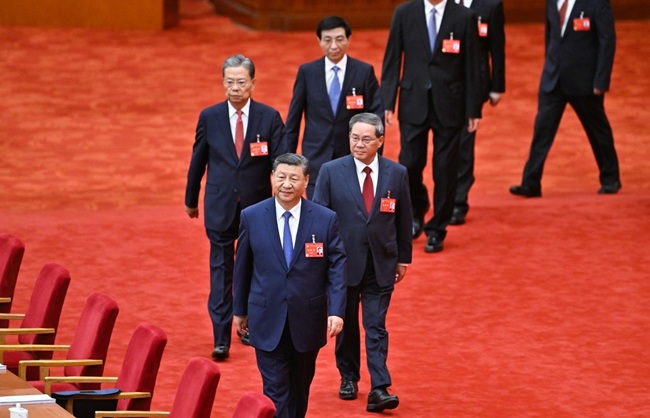 Chinese Communist Party leaders, including Xi Jinping, enter the venue for the Third Plenary Session of the 20th Central Committee in 2024. [Xinhua=Yonhap News]
Since joining the WTO in 2001, China has become the world's largest trade surplus nation through low-cost exports. As of 2025, the trade surplus is estimated to be at an all-time high (approximately $1 trillion).
This surplus is primarily accumulated as foreign exchange reserves (currently over $3 trillion), managed by the People's Bank of China (PBOC). However, the PBOC itself is under CCP leadership, meaning it ultimately falls under the party's control.
Through these funds, the CCP supports projects like the Belt and Road Initiative (BRI), overseas investments, and lobbying activities, which are used to expand China's geopolitical influence.
In terms of corporations, while Chinese companies may appear private externally, they are under the influence of the CCP. State-owned enterprises (SOEs) are central to the economy, accounting for 23-28% of GDP in 2017 and about 25% in 2020.
SOEs account for over 60% of the capitalisation of the domestic stock market. Of the 135 Chinese companies listed on the Fortune Global 500 in 2023, 85 (approximately 63%) were SOEs.
These SOEs are under the direct control of the CCP, and since 2020, major decisions of SOEs have been discussed in party committees. This means party organizations lead the corporate ideology and operations.
Party Organizations Lead Corporate Ideology and Operations
Currently, approximately 7% of China's total population (about 1.4 billion) are CCP members. Including their families, the number is estimated to be between 300 and 400 million, meaning 25-30% of China's total population falls within the sphere of party member families.
These form a vast vested interest network holding decision-making power across society. Having a family member who is a party member provides a powerful source of guanxi (connections) for employment, education, and business, as well as strong political protection.
While the lifestyles of high-ranking CCP officials and their families officially emphasize austerity and communist ideology, they are known to engage in extravagant consumption and the accumulation of overseas assets.
According to a 2025 report by the U.S. Director of National Intelligence (DNI), over 65% of officials in the CCP leadership engage in bribery or illicit income due to centralized power and lack of oversight.
Since 2012, President Xi Jinping has investigated over 5 million party members through his anti-corruption campaign, but this is primarily being used as a tool to strengthen loyalty.
China's rural-to-urban migrants (nongmingong) began to increase significantly after the reform and opening-up period in the 1980s. Peaking around 2020 with approximately 286 million, their numbers are now declining due to COVID-19 and economic slowdown.
The main reasons for their inability to sustain themselves in cities and return to rural areas appear to be the difficulty in accessing social welfare benefits such as education, healthcare, and housing due to the household registration (hukou) system, high urban living costs, low wages, and unstable employment, as well as increased opportunities for return due to economic development in rural areas and smaller cities.
China's Migrant Workers Suffer from Low Wages and Long Working Hours
Migrant workers endure long hours of low-wage labor in construction, factories, and service industries in cities, living in substandard temporary housing on the outskirts of cities (basements, containers, overcrowded dormitories).
They experience loneliness separated from their families, face poor sanitary and safety conditions, and are often discriminated against by urban residents. Despite being a key driver of China's economic growth, the protection of their rights and interests is still considered insufficient.
Human rights issues in China's Xinjiang Uyghur Autonomous Region remain a subject of international controversy. The United Nations, human rights organizations, and Western governments have criticized the mass detention, forced labor, and cultural oppression of Uyghurs and other Turkic Muslim minorities, referring to these as "crimes against humanity."
However, the Chinese government claims these facilities are "vocational training centers" and refutes the criticism, stating they are measures to prevent terrorism and extremism.
The Republic of Korea, in accordance with its constitution, which establishes a free democratic basic order, guarantees fundamental rights to pursue freedom and happiness, and has achieved prosperity through autonomy and competition based on the rule of law and a market economy.
If the current constitution were to be amended, even remotely attempting to instill a totalitarian order would necessitate abandoning prosperity. It is crucial to remember that the identity of the Republic of Korea can only be secured through free and fair elections.
President, National Unification Alliance for Freedom & Doctorate in Public Administration

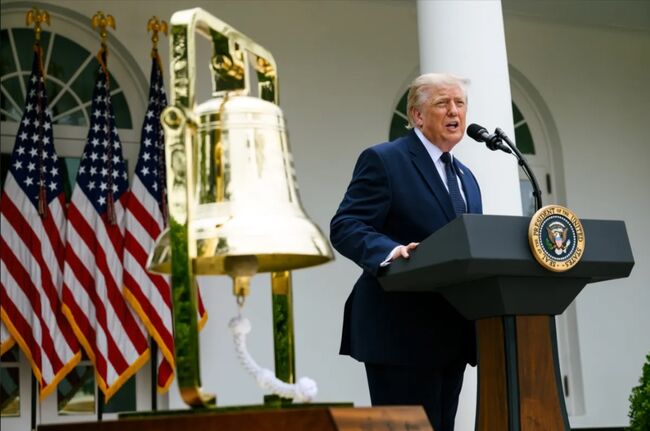 Trump pressures for rate cut again ahead of FOMC... "Should be the lowest in the world"
U.S. President Donald Trump. [Photo = The White House] U.S. President Donald Trump once again pressured the Federal Reserve, the U.S. central bank, to lower interest rates on the 27th (local time
Trump pressures for rate cut again ahead of FOMC... "Should be the lowest in the world"
U.S. President Donald Trump. [Photo = The White House] U.S. President Donald Trump once again pressured the Federal Reserve, the U.S. central bank, to lower interest rates on the 27th (local time
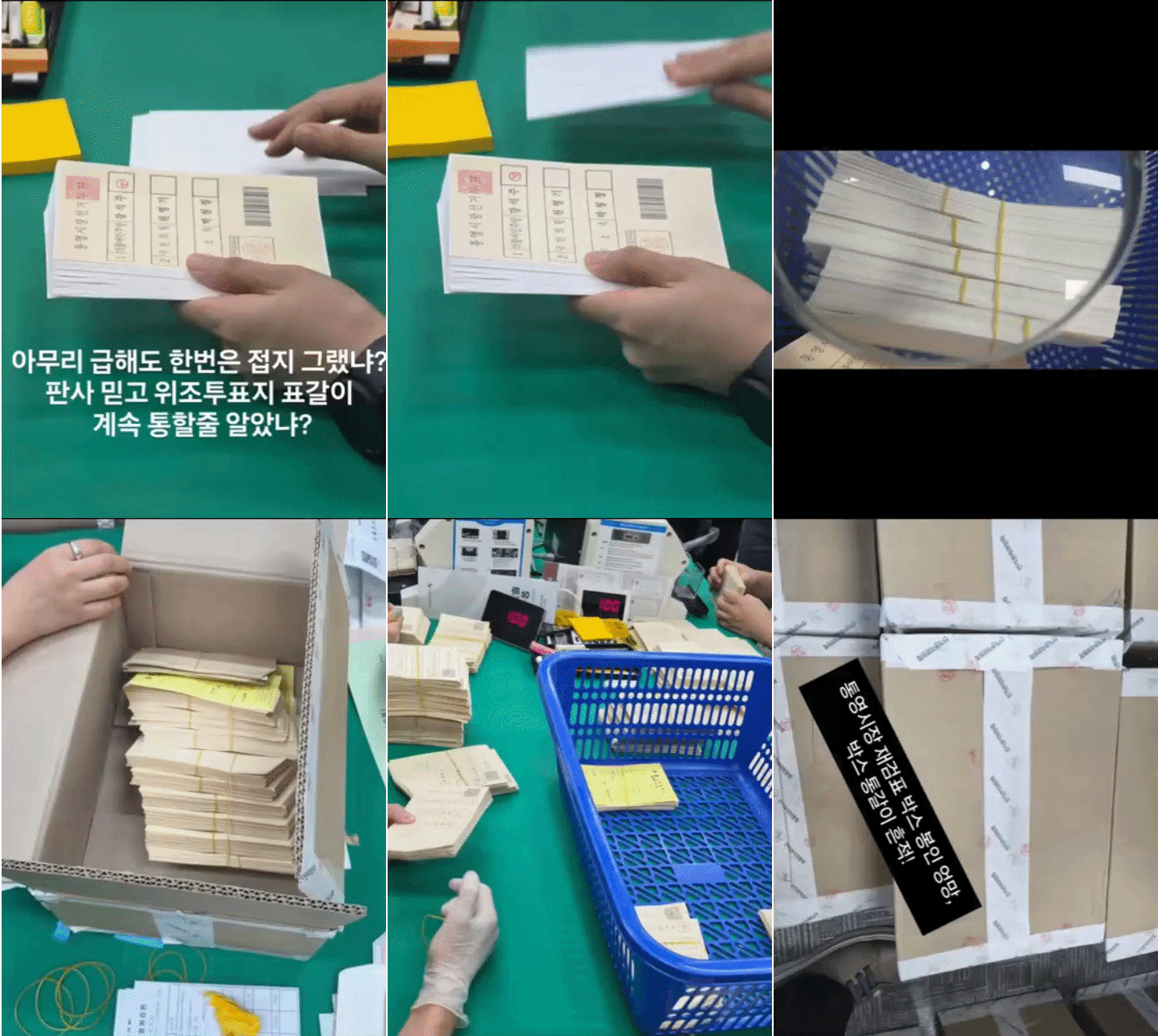 “Ignoring crisp ballots and damaged seals”… Tongyeong mayoral recount concludes with ‘no change in outcome,’ leaving suspicions and public outrage behind
Suspected counterfeit ballots discovered in Tongyeong [GIF from social media of Representative Hwang Kyo-ahn / Attorney Park Joo-hyun]During a recount of the Tongyeong mayoral election in South Gyeong
“Ignoring crisp ballots and damaged seals”… Tongyeong mayoral recount concludes with ‘no change in outcome,’ leaving suspicions and public outrage behind
Suspected counterfeit ballots discovered in Tongyeong [GIF from social media of Representative Hwang Kyo-ahn / Attorney Park Joo-hyun]During a recount of the Tongyeong mayoral election in South Gyeong
 President Yoon, regarding the first-instance ruling on the Public Official Election Act: “An excessive political verdict that distorts the facts… We will appeal immediately.”
The first-instance sentencing hearing for President Yoon Suk Yeol regarding violations of the Public Official Election Act is being broadcast live at Seoul Station on the 27th. [Photo=Yonhap News]Pres
President Yoon, regarding the first-instance ruling on the Public Official Election Act: “An excessive political verdict that distorts the facts… We will appeal immediately.”
The first-instance sentencing hearing for President Yoon Suk Yeol regarding violations of the Public Official Election Act is being broadcast live at Seoul Station on the 27th. [Photo=Yonhap News]Pres
 WSJ: "SK Hynix ADR Premium Is a Sign of AI Trading Overheat"
Advertisement for SK Hynix ADR listing in New York's Times Square [Reuters=Yonhap News file photo]The Wall Street Journal (WSJ) has pointed out that the price of SK Hynix’s American Depositary Recei
WSJ: "SK Hynix ADR Premium Is a Sign of AI Trading Overheat"
Advertisement for SK Hynix ADR listing in New York's Times Square [Reuters=Yonhap News file photo]The Wall Street Journal (WSJ) has pointed out that the price of SK Hynix’s American Depositary Recei
 'Godfather of Japanese Mystery Novels' Keigo Higashino Passes Away After Battle with Cancer at 68
Famous Japanese mystery novelist Keigo Higashino [AFP=Yonhap News]It has been belatedly reported that Keigo Higashino, the "godfather of Japanese mystery novels" and author of bestsellers such as "The
'Godfather of Japanese Mystery Novels' Keigo Higashino Passes Away After Battle with Cancer at 68
Famous Japanese mystery novelist Keigo Higashino [AFP=Yonhap News]It has been belatedly reported that Keigo Higashino, the "godfather of Japanese mystery novels" and author of bestsellers such as "The
 [Park Pil-kyu Security Column] To the Ignorant Trying to Clothe a Beast in Sheep's Clothing
Rep. Kim Byung-joo of the Democratic Party of Korea [Photo=Yonhap News]“The Air Force Academy doesn't teach you how to fly a plane!” “The Army, Navy, and Air Force academies are exactly the
[Park Pil-kyu Security Column] To the Ignorant Trying to Clothe a Beast in Sheep's Clothing
Rep. Kim Byung-joo of the Democratic Party of Korea [Photo=Yonhap News]“The Air Force Academy doesn't teach you how to fly a plane!” “The Army, Navy, and Air Force academies are exactly the
 [Issue Diagnosis] Two Effects of the Election Petition Review
 [Photo] Evidence of Election Fraud Flooding U.S. Media… Trump Had 2.7 Million Votes Stolen
 [Video] U.S. Semiquincentennial Air Show... 'Art in the Sky' streaks across New York
 [Editorial Cartoon] A Draconian Law That Undermines Freedom of Expression

 List
List