세월호 참사 10주기가 지난 지 1년, “기억하라”는 외침은 여전히 우리 곁에 남아 있다. 그러나 그 외침은 어느 순간부터 추모를 넘어 정치적 구호로 변화했다. 이 기사에서는 애도가 어떻게 전략이 되었는지, ‘기억’이 어떻게 동원되고 소비되는지를 묻고자 한다.<편집자 주>
 On April 15th, one day before the 10th anniversary of the Sewol ferry disaster, visitors are paying their respects at Mokpo New Port in Jeollanam-do. 2024.4.15. Yonhap News Table of Contents
1. The Andong Dam Corpse and Conspiracy Theories: The Shadow of Human Psychology
2. The 10th Anniversary of the Sewol Ferry Disaster: Memory Transforms from a Right to Power
3. The Institutionalization of May 18th Memories: Is State-Mandated Truth True Truth?
"Remember" is Consumed as a Command to "Vote"
In April 2024, South Korea faced two monumental events: the 22nd National Assembly general election and the 10th anniversary of the Sewol ferry disaster. Exactly six days apart, following the election on April 10th, the nationwide landscape was once again covered in yellow ribbons as the Sewol anniversary approached on April 16th.
The question is whether these ribbons were purely symbols of remembrance. While politicians, media, and civil society framed this collective memory within the language of mourning, political strategies and framing were clearly at play behind the scenes.
Slogans like "Let's remember" overflowed in Gwanghwamun, Seoul, Ansan Hwarang Park, churches and schools nationwide, and even on the main pages of major portals. Politicians' social media feeds competitively displayed profile pictures with yellow backgrounds.
However, a silent command to "Vote" was embedded within those photos. Phrases like "Without a change in government, there will be no truth," "The general election is a day of judgment," and "If you remain silent, it will happen again" were difficult to interpret as pure commemoration.
Grief was put on display, and anger was mobilized. Politics invoked sorrow, and voters responded with emotion.
This phenomenon can be explained as "emotional politicization." Political scientist Murray Edelman pointed out that "Emotions are the most useful tool for political mass mobilization."
The Sewol ferry disaster, due to its tragic nature and symbolic significance, was an ideal case for emotional mobilization.
Politicians wept, voters became angry, and platforms capitalized on this. YouTube, in particular, quantified this emotion. From just before the general election to the 10th anniversary, videos using the keyword "Sewol" surged, and content with titles like "The truth remains buried after 10 years," "Who is obstructing remembrance?" and "Let's not forget, let's definitely change" dominated the top viewership rankings.
All videos eligible for monetization displayed advertisements, and Super Chat donations followed. It was a structure where sorrow became viewership, and anger became profit.
Politicians did not shy away from this ecosystem.
Left-leaning parties officially released statements for the 10th anniversary, and some party leaders attended memorial ceremonies, vowing to "respond with responsible politics." Right-leaning parties were relatively reserved but some candidates countered with messages urging not to "use the truth for partisan purposes." Ultimately, both sides brought the Sewol ferry into the arena of political maneuvering.
The Sewol ferry also played a role in the general election campaigns.
Some district candidates from the Democratic Party of Korea held informal gatherings with bereaved families and included phrases like "We will be a National Assembly that uncovers the truth" in their campaign materials. There were even instances where some individuals from the bereaved families' side shared endorsements of specific candidates via social media.
It is difficult to distinguish whether all these processes were spontaneous or strategic. However, one thing is clear: the Sewol ferry was functioning as a political asset.
If so, we cannot help but ask: Is the Sewol ferry an object of "remembrance" or a tool for "mobilization"?
Is it fair for parties or candidates lacking political legitimacy to invoke the Sewol ferry to portray themselves as moral agents? Are political debates and partisan agitation undermining the authenticity of the memories surrounding the Sewol ferry disaster?
Memory is not just a right; it is a responsibility. However, current remembrance has become power. The slogan "Remember" functions as a tool to certify political identity and ethical superiority, and those who do not align with this frame are condemned.
Silence is interpreted as avoidance, and cold analysis is dismissed as insensitivity. Those who "do not remember" are categorized as those "who are not with us."
Politics consumes mourning. The media amplifies emotions. Voters are swayed by sorrow. This triangular structure is not unique to the Sewol ferry disaster. It will operate identically in the next election, the next anniversary, and the next tragedy. Platforms will repeat it, politicians will invoke it, and we will either rage or turn away.
Ten years ago, we faced the sea. And ten years later, we are still calling out to that sea. However, what that sea points to may no longer be the truth. It is now strategy, a command, and a commodity.
We remember. But now we must ask:
Why, for whom, and until when should we remember?
Summary and Analysis of Key Concepts
Emotional Politicization: The phenomenon of utilizing emotions such as sorrow and anger as resources for political mobilization.
Political Commodity: A structure where events that should originally be apolitical or universal are incorporated into election strategies.
Platform Diffusion Mechanism: How platforms like YouTube and social media reinforce emotional frames and link them to profits.
The Society That Consumes Death - ❸
Is State-Mandated Truth True Truth? The Institutionalization and Consumption of Memory Surrounding May 18th
#Sewol10thAnniversary #PoliticalCommodity #EmotionalPoliticization #PoliticsOfMemory #VoteFrame #StratificationOfMourning #YouTubePolitics #PartisanMourning #KoreaJapanUSSecurityPlanning #ConsumingDeath

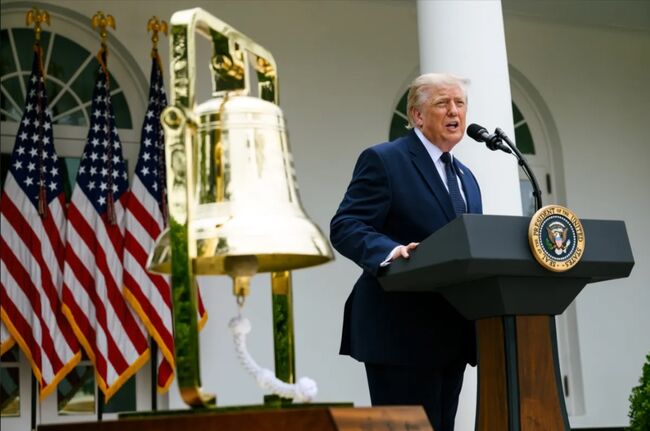 Trump pressures for rate cut again ahead of FOMC... "Should be the lowest in the world"
U.S. President Donald Trump. [Photo = The White House] U.S. President Donald Trump once again pressured the Federal Reserve, the U.S. central bank, to lower interest rates on the 27th (local time
Trump pressures for rate cut again ahead of FOMC... "Should be the lowest in the world"
U.S. President Donald Trump. [Photo = The White House] U.S. President Donald Trump once again pressured the Federal Reserve, the U.S. central bank, to lower interest rates on the 27th (local time
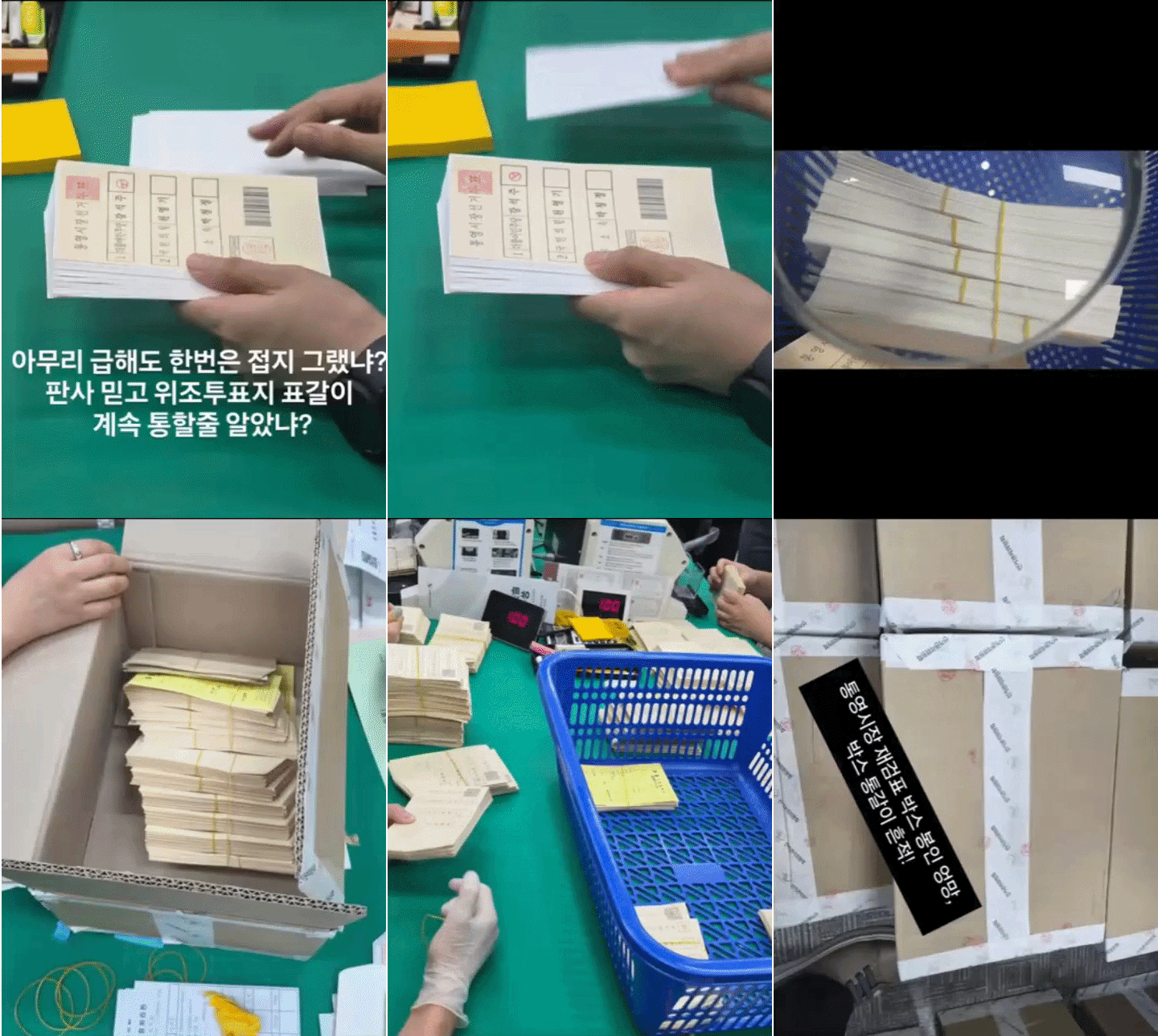 “Ignoring crisp ballots and damaged seals”… Tongyeong mayoral recount concludes with ‘no change in outcome,’ leaving suspicions and public outrage behind
Suspected counterfeit ballots discovered in Tongyeong [GIF from social media of Representative Hwang Kyo-ahn / Attorney Park Joo-hyun]During a recount of the Tongyeong mayoral election in South Gyeong
“Ignoring crisp ballots and damaged seals”… Tongyeong mayoral recount concludes with ‘no change in outcome,’ leaving suspicions and public outrage behind
Suspected counterfeit ballots discovered in Tongyeong [GIF from social media of Representative Hwang Kyo-ahn / Attorney Park Joo-hyun]During a recount of the Tongyeong mayoral election in South Gyeong
 President Yoon, regarding the first-instance ruling on the Public Official Election Act: “An excessive political verdict that distorts the facts… We will appeal immediately.”
The first-instance sentencing hearing for President Yoon Suk Yeol regarding violations of the Public Official Election Act is being broadcast live at Seoul Station on the 27th. [Photo=Yonhap News]Pres
President Yoon, regarding the first-instance ruling on the Public Official Election Act: “An excessive political verdict that distorts the facts… We will appeal immediately.”
The first-instance sentencing hearing for President Yoon Suk Yeol regarding violations of the Public Official Election Act is being broadcast live at Seoul Station on the 27th. [Photo=Yonhap News]Pres
 WSJ: "SK Hynix ADR Premium Is a Sign of AI Trading Overheat"
Advertisement for SK Hynix ADR listing in New York's Times Square [Reuters=Yonhap News file photo]The Wall Street Journal (WSJ) has pointed out that the price of SK Hynix’s American Depositary Recei
WSJ: "SK Hynix ADR Premium Is a Sign of AI Trading Overheat"
Advertisement for SK Hynix ADR listing in New York's Times Square [Reuters=Yonhap News file photo]The Wall Street Journal (WSJ) has pointed out that the price of SK Hynix’s American Depositary Recei
 'Godfather of Japanese Mystery Novels' Keigo Higashino Passes Away After Battle with Cancer at 68
Famous Japanese mystery novelist Keigo Higashino [AFP=Yonhap News]It has been belatedly reported that Keigo Higashino, the "godfather of Japanese mystery novels" and author of bestsellers such as "The
'Godfather of Japanese Mystery Novels' Keigo Higashino Passes Away After Battle with Cancer at 68
Famous Japanese mystery novelist Keigo Higashino [AFP=Yonhap News]It has been belatedly reported that Keigo Higashino, the "godfather of Japanese mystery novels" and author of bestsellers such as "The
 [Park Pil-kyu Security Column] To the Ignorant Trying to Clothe a Beast in Sheep's Clothing
Rep. Kim Byung-joo of the Democratic Party of Korea [Photo=Yonhap News]“The Air Force Academy doesn't teach you how to fly a plane!” “The Army, Navy, and Air Force academies are exactly the
[Park Pil-kyu Security Column] To the Ignorant Trying to Clothe a Beast in Sheep's Clothing
Rep. Kim Byung-joo of the Democratic Party of Korea [Photo=Yonhap News]“The Air Force Academy doesn't teach you how to fly a plane!” “The Army, Navy, and Air Force academies are exactly the
 [Issue Diagnosis] Two Effects of the Election Petition Review
 [Photo] Evidence of Election Fraud Flooding U.S. Media… Trump Had 2.7 Million Votes Stolen
 [Video] U.S. Semiquincentennial Air Show... 'Art in the Sky' streaks across New York
 [Editorial Cartoon] A Draconian Law That Undermines Freedom of Expression

 List
List