일부 국내 좌파 언론은 미국이 ‘확고한 결의 작전(Operation Absolute Resolve)’으로 니콜라스 마두로 베네수엘라 대통령을 체포한 것을 두고 “원유를 약탈하려는 제국주의 침공”이라는 반미주의 선동을 하고 있다. 그러나 이것은 현재 국제 석유 시장의 구조와 미국 에너지 산업의 현실을 외면한 20세기식 반미주의 선동일 뿐이다.
 Venezuelan crude oil is a high-viscosity, high-sulfur heavy crude oil, as sticky as asphalt tar (left). Steam injection is required to extract heavy crude oil, which is heavier and more viscous than conventional crude oil. [Photo=Wikipedia]
Some domestic leftist media outlets are engaging in anti-American propaganda, labeling the U.S. arrest of Venezuelan President Nicolás Maduro as part of "Operation Absolute Resolve" as an "imperialist invasion to plunder oil." However, this is merely 20th-century-style anti-American propaganda that ignores the current structure of the international oil market and the realities of the U.S. energy industry.
First and foremost, the assumption that "the U.S. covets Venezuelan crude oil" is fundamentally inaccurate.
Following the shale gas revolution, the U.S. has established a production and refining structure centered on light crude oil, and its refineries in the Gulf of Mexico are also geared away from high-sulfur heavy crude oil.
Venezuelan crude oil is an ultra-heavy crude with high sulfur and impurity content, requiring costly desulfurization, coking, and residue upgrading facilities for processing. For U.S. refiners, Venezuelan heavy crude is akin to a "chicken bone in the throat" – neither valuable nor easily discarded.
"Invasion for Oil Plunder"... Propaganda Ignoring the Profitability of Heavy Crude Oil
The era when the U.S. was the largest importer of Venezuelan crude oil is long past. Following refinery conversions and stricter environmental regulations, the U.S. has strategically excluded Venezuelan oil. In this context, the claim of an "invasion for oil plunder" is mere propaganda that disregards the profitability of heavy crude oil.
In the international crude oil market, heavy crude is no longer a "cheap alternative oil." Canadian heavy crude (Western Canadian Select, WCS) has traded at a discount of $10-$20 per barrel compared to West Texas Intermediate (WTI) even during periods of stable international oil prices. During times of pipeline bottlenecks, highly viscous heavy crude, which requires diluents for transportation, has been traded at discounts of $30-$40 per barrel.
High-sulfur sour crude oil produced in areas like North Dakota and Wyoming in the U.S. has, at times, traded at negative prices (below $0 per barrel) due to a combination of storage shortages and reduced refining demand. This signifies that the cost of storing and processing heavy crude oil exceeds its revenue. The phrase "they'll pay you to take it" is not an exaggeration.
The high-sulfur, ultra-heavy crude oil from Venezuela's Orinoco Belt, with its high sulfur and metal impurity content, can only be processed by a limited number of refineries in China and India. Coupled with reinforced environmental regulations and sanctions risks, the actual trading price of Venezuelan heavy crude once fell below $10 per barrel, contributing to Venezuela's financial collapse.
China, the Sole Customer for Venezuelan Heavy Crude Oil
The reason China remains virtually the sole customer for Venezuelan heavy crude oil is not due to energy demand or price competitiveness, but rather a confluence of refinery infrastructure, debt repayment between nations, and overlapping geopolitical and strategic interests. This relationship does not constitute a normal international oil trade.
The U.S. and Europe have gradually scaled back or shifted towards light crude oil processing with their desulfurization, coking, and residue upgrading facilities due to stricter environmental regulations and declining profitability. In contrast, China has strategically maintained and expanded its heavy crude processing capabilities.
State-owned refiners such as Sinopec and China National Petroleum Corporation (CNPC) can convert approximately 40% of their processed crude into low-value residue and then further refine it into light crude. However, such facility investments require substantial capital and long-term recovery periods. China possesses facilities capable of processing large quantities of high-sulfur, ultra-heavy crude oil, making it the largest, and indeed the only, customer capable of absorbing Venezuelan heavy crude.
China's Import of Venezuelan Crude Oil is on a Loan Repayment Basis
However, technical capability alone does not guarantee continued Chinese imports of Venezuelan crude oil. The more fundamental reason lies elsewhere. The oil trade between China and Venezuela has been conducted not through cash payments, but on a loan repayment basis.
Since 2007, China has extended approximately $67 billion (about 97 trillion won) in loans to Venezuela for infrastructure construction and other projects, with oil supplies serving as repayment. From China's perspective, this is a minimal channel to recover already disbursed funds, and for Venezuela, it is almost the sole means of acquiring foreign exchange.
The pricing terms are established only within a range that China can tolerate. Venezuelan heavy crude is traded at discounts of tens of dollars per barrel compared to WTI on the international market just to find buyers. There have been instances where it dropped below $10 per barrel. For ordinary commercial refiners, losses are inevitable considering transportation and refining costs. However, China internalizes these costs by mobilizing its state-owned shipping, insurance, and financial systems.
Environmental regulations are also a significant factor. The European Union (EU), Japan, and South Korea have made the refining of high-sulfur, ultra-heavy crude virtually impossible with regulations such as EURO5 and EURO6. China, on the other hand, has varying degrees of regulatory stringency depending on the region and intended use, and some heavy crude can still be utilized as fuel for domestic industries or in non-transportation sectors. This regulatory disparity has provided the last niche for Venezuelan crude oil to find a market.
China's Import of Venezuelan Heavy Crude Oil... An Exchange Structure Entangled with Debt and Strategy
Finally, geopolitical calculations cannot be overlooked. Through its imports of Venezuelan heavy crude, China gains strategic advantages such as maintaining influence in Latin America, providing strategic support to anti-U.S. countries, and securing a symbolic foothold for resource diplomacy, rather than focusing on profit.
This is akin to a political and diplomatic investment maintained at the cost of losses. This relationship is not a transaction maintained by market logic but an exchange structure intertwined with debt and strategy. And this fact itself demonstrates that Venezuela's oil industry has already deviated from the normal international market.
Korean leftist media outlets simplify the situation by portraying Venezuela as an outright victim and the U.S. as an oil plunderer, while failing to adequately address Venezuela's internal factors such as the uneconomical nature of heavy crude and the collapse of its industry.
Following the administration of former President Hugo Chávez, his hasty nationalization of refinery facilities, expulsion of foreign technology and capital, and political management of state-owned oil companies led to a collapse in productivity. Even before U.S. sanctions, Venezuela's oil production had plummeted, and its refining and transportation infrastructure was already in a state of collapse. The situation in Venezuela is not "an event staged by the U.S. to steal oil."
Investigation into Smartmatic's Election Manipulation Possible
The stated reason put forth by the U.S. is the alleged involvement of President Nicolás Maduro and key figures in his administration in using state power to extensively distribute and sell Colombian cocaine and Chinese fentanyl into the U.S. This is not merely a response to complicity in crime but a designation of the state leadership as a criminal organization.
Furthermore, some sources claim that an investigation may also be conducted into whether the election software code (SAES Data Utility Tool) from Smartmatic, a company allegedly operated by Venezuela's "Cartel de los Soles," was incorporated into Dominion systems to manipulate elections in several countries, including the 2020 U.S. presidential election.
Editorial Department, Hanmi Ilbo

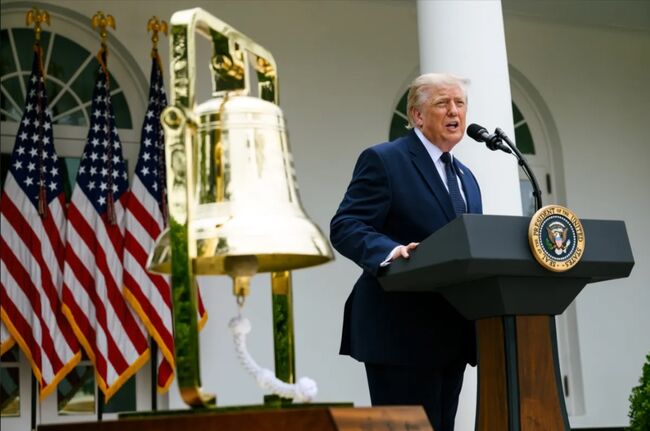 Trump pressures for rate cut again ahead of FOMC... "Should be the lowest in the world"
U.S. President Donald Trump. [Photo = The White House] U.S. President Donald Trump once again pressured the Federal Reserve, the U.S. central bank, to lower interest rates on the 27th (local time
Trump pressures for rate cut again ahead of FOMC... "Should be the lowest in the world"
U.S. President Donald Trump. [Photo = The White House] U.S. President Donald Trump once again pressured the Federal Reserve, the U.S. central bank, to lower interest rates on the 27th (local time
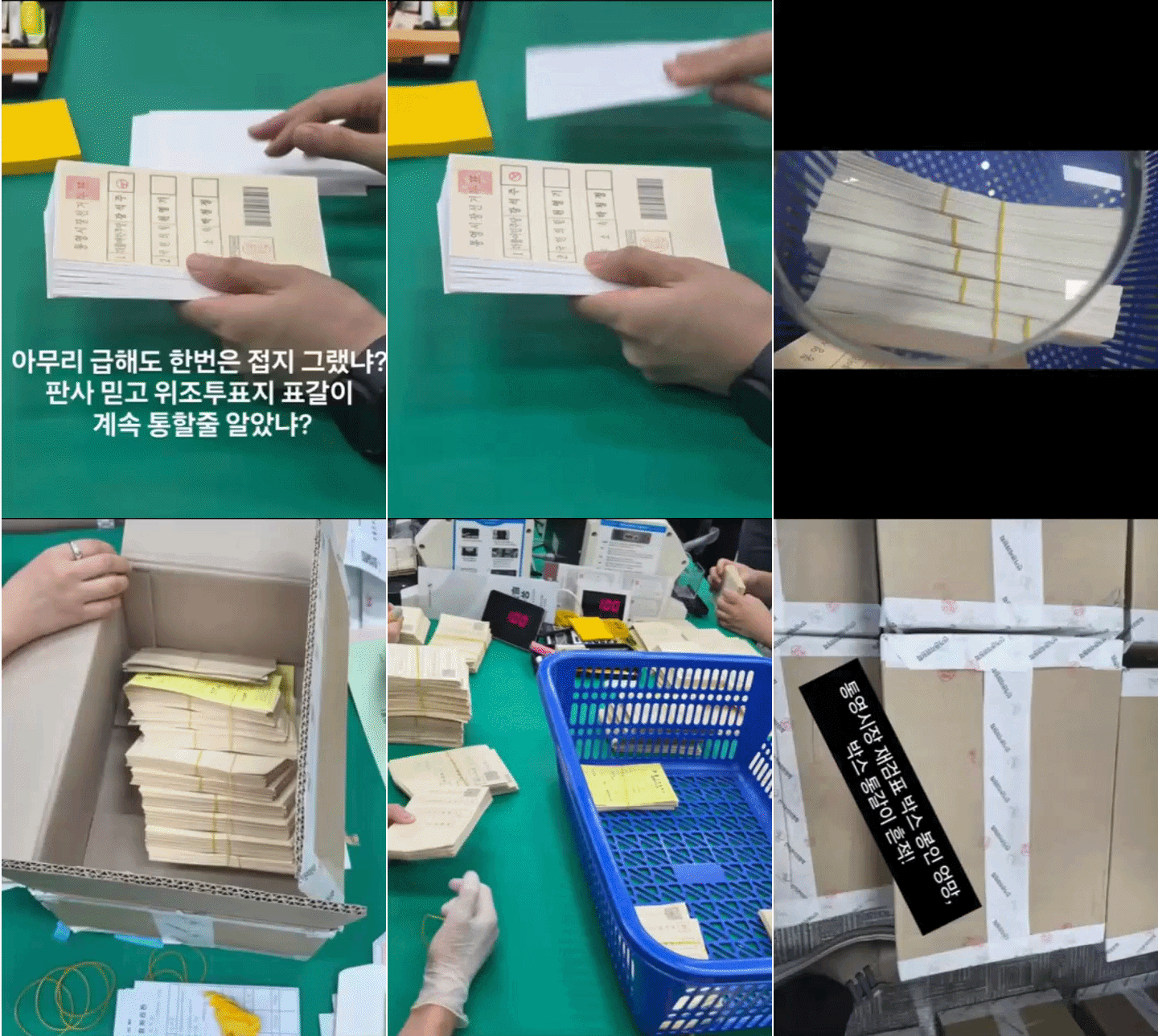 “Ignoring crisp ballots and damaged seals”… Tongyeong mayoral recount concludes with ‘no change in outcome,’ leaving suspicions and public outrage behind
Suspected counterfeit ballots discovered in Tongyeong [GIF from social media of Representative Hwang Kyo-ahn / Attorney Park Joo-hyun]During a recount of the Tongyeong mayoral election in South Gyeong
“Ignoring crisp ballots and damaged seals”… Tongyeong mayoral recount concludes with ‘no change in outcome,’ leaving suspicions and public outrage behind
Suspected counterfeit ballots discovered in Tongyeong [GIF from social media of Representative Hwang Kyo-ahn / Attorney Park Joo-hyun]During a recount of the Tongyeong mayoral election in South Gyeong
 President Yoon, regarding the first-instance ruling on the Public Official Election Act: “An excessive political verdict that distorts the facts… We will appeal immediately.”
The first-instance sentencing hearing for President Yoon Suk Yeol regarding violations of the Public Official Election Act is being broadcast live at Seoul Station on the 27th. [Photo=Yonhap News]Pres
President Yoon, regarding the first-instance ruling on the Public Official Election Act: “An excessive political verdict that distorts the facts… We will appeal immediately.”
The first-instance sentencing hearing for President Yoon Suk Yeol regarding violations of the Public Official Election Act is being broadcast live at Seoul Station on the 27th. [Photo=Yonhap News]Pres
 WSJ: "SK Hynix ADR Premium Is a Sign of AI Trading Overheat"
Advertisement for SK Hynix ADR listing in New York's Times Square [Reuters=Yonhap News file photo]The Wall Street Journal (WSJ) has pointed out that the price of SK Hynix’s American Depositary Recei
WSJ: "SK Hynix ADR Premium Is a Sign of AI Trading Overheat"
Advertisement for SK Hynix ADR listing in New York's Times Square [Reuters=Yonhap News file photo]The Wall Street Journal (WSJ) has pointed out that the price of SK Hynix’s American Depositary Recei
 'Godfather of Japanese Mystery Novels' Keigo Higashino Passes Away After Battle with Cancer at 68
Famous Japanese mystery novelist Keigo Higashino [AFP=Yonhap News]It has been belatedly reported that Keigo Higashino, the "godfather of Japanese mystery novels" and author of bestsellers such as "The
'Godfather of Japanese Mystery Novels' Keigo Higashino Passes Away After Battle with Cancer at 68
Famous Japanese mystery novelist Keigo Higashino [AFP=Yonhap News]It has been belatedly reported that Keigo Higashino, the "godfather of Japanese mystery novels" and author of bestsellers such as "The
 [Park Pil-kyu Security Column] To the Ignorant Trying to Clothe a Beast in Sheep's Clothing
Rep. Kim Byung-joo of the Democratic Party of Korea [Photo=Yonhap News]“The Air Force Academy doesn't teach you how to fly a plane!” “The Army, Navy, and Air Force academies are exactly the
[Park Pil-kyu Security Column] To the Ignorant Trying to Clothe a Beast in Sheep's Clothing
Rep. Kim Byung-joo of the Democratic Party of Korea [Photo=Yonhap News]“The Air Force Academy doesn't teach you how to fly a plane!” “The Army, Navy, and Air Force academies are exactly the
 [Issue Diagnosis] Two Effects of the Election Petition Review
 [Photo] Evidence of Election Fraud Flooding U.S. Media… Trump Had 2.7 Million Votes Stolen
 [Video] U.S. Semiquincentennial Air Show... 'Art in the Sky' streaks across New York
 [Editorial Cartoon] A Draconian Law That Undermines Freedom of Expression

 List
List