A festival-like rally scene of young conservatives. In the future, the Korean right wing must develop a common language that can be shared among themselves. ⒸHanmi Ilbo
Until the early 21st century, American politics defined itself as the "guardian of universal values."
Globalism, centered on free trade, multilateralism, human rights, international norms, and the alliance order, dominated both American foreign policy and domestic political discourse after the end of the Cold War.
This was not mere rhetoric but actual policy. The North American Free Trade Agreement (NAFTA), the strengthening of the World Trade Organization (WTO) system, the approval of China's accession to the WTO (2001), and large-scale immigration policies were all products of globalism.
However, statistics confirm that this system did not yield equitable results within American society.
Tribal politics is a form of group cohesion based on identity.
From 1979 to 2019, the real income of the top 1% in the United States increased by approximately 160%, while the real income increase for the bottom 50% was only around 20% (Study on U.S. Income Distribution by Thomas Piketty, Emmanuel Saez, and Gabriel Zucman).
According to data from the U.S. Bureau of Labor Statistics (BLS), manufacturing employment decreased from approximately 19.5 million in 1979 to about 12.8 million in 2019. This change is analyzed as a result of both automation and trade.
In this process, globalism created both gains and losses, and the strata that suffered losses were geographically and culturally concentrated within specific groups.
In the Midwest regions known as the Rust Belt, such as Ohio, Michigan, and Pennsylvania, the collapse of manufacturing and population outflow were observed. The repeated election results confirmed the difference in political choices between those with higher education (college graduates or more), residents of large cities, and those without college degrees, residing in small and medium-sized cities.
Emerging against this backdrop is tribal politics.
Tribal politics does not refer to anthropological kinship groups but is a term used in political science and sociology to mean a method of group cohesion based on identity, belonging, and loyalty.
This concept has already been repeatedly used by various scholars such as Francis Fukuyama, Amy Chua, and Mark Lilla in their analyses of American politics since the mid-2010s. Tribal politics refers to a tendency to prioritize "who is on our side" over policy preferences.
The fact that this phenomenon has become prominent in American politics is confirmed by opinion polls and election data. The Pew Research Center reported that since 1994, ideological polarization among U.S. voters has continuously deepened, and the proportion of Democrats and Republicans who perceive the opposing party as a "threat" has rapidly increased.
While in 1994, about 20% of respondents viewed supporters of the opposing party as "harmful to the country," a survey shows this figure rose to 40-50% after 2016.
This change cannot be explained by the personality issues of specific politicians. Donald Trump was a catalyst for this trend, but not its sole cause.
Even before Trump, the Tea Party movement (since 2009), anti-immigration protests, and identity-based backlash against the Obama administration already existed in American politics. Trump's victory in 2016 was the result of this dissatisfaction being mobilized for electoral purposes. This is confirmed by analyses of the Electoral College map and county-level voting data.
The Korean left has long monopolized the language of tribal politics.
Under the Trump administration's first term, the United States officially signaled a retreat from globalism in terms of policy.
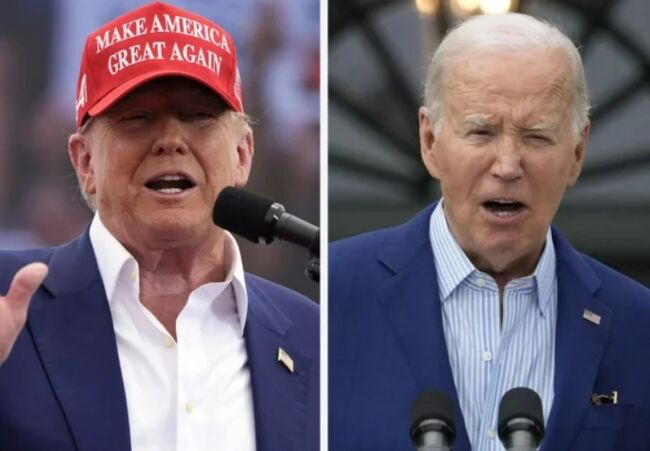 U.S. President Donald Trump (left) and former President Joe Biden are political opposites, but there is no disagreement that they lean towards tribal politics. [Photo=AP]
Withdrawal from the Trans-Pacific Partnership (TPP), declaration of withdrawal from the Paris Climate Agreement, paralysis of the WTO Appellate Body's functions, and increased tariffs on China were all measures that prioritized national interests over multilateral norms.
Even after this administration, this stance has not been fully restored. The Biden administration also strengthened domestic industry protection provisions through the Inflation Reduction Act (IRA) and pursued the "nationalization" of supply chains through the CHIPS Act. These policy directions were close to bipartisan consensus.
This trend signifies that tribal politics is not a temporary phenomenon in the United States but is entering a phase of institutionalization.
The Republican and Democratic parties are functioning as parties representing different tribal blocs, and a strong tendency for political choices to be linked to media consumption, residential areas, religion, education level, and even consumer brands has been confirmed. This is explained as the "culturalization of politics" or the "politicization of culture."
Now, the question is about Korea. The question of whether the Korean right wing properly recognizes this change is unavoidable. Expressions frequently appearing in Korean political discourse are still "rationality," "objectivity," and "universal values."
However, the American experience has proven that in an environment dominated by tribal politics, such language lacks the ability to mobilize support. This is not a matter of right or wrong values but a matter of political technique.
The left has been using the language of tribal politics for a long time. Categories such as workers, the vulnerable, minorities, and victims function not just as sociological classifications but as identity blocs.
Through education, cultural content, and linguistic norms, these blocs have been repeatedly reproduced. This is not unique to Korea; the same pattern is observed across the Western world.
In contrast, the Korean right wing cannot avoid the assessment that it has failed to form its own tribe. While conservative voters exist, shared cultural codes, language, lifestyles, and networks of mutual trust are weak.
They gather temporarily only during elections and remain dispersed individuals in normal times. This is linked to a lack of continuous investment in civic groups, publishing, education, and the cultural industry.
The core of tribal politics is not exclusive hatred. The core is internal cohesion and a mechanism of mutual protection. The conservative circles in the U.S. have maintained this through churches, gun clubs, local communities, and conservative media. The Korean right wing has not sufficiently built such intermediary organizations.
Another misconception is the moral judgment that tribal politics is "barbaric." However, from a political science perspective, tribal politics is a phenomenon that repeatedly emerges in large-scale mass democracies.
Even in ancient Athens, factions were formed around kinship, region, and patronage relationships, and pre-modern parties were not policy parties in today's sense. Some analyses suggest that policy-oriented parties were rather an exceptional product of the mid-20th century.
What is happening in the U.S. now is not the collapse of democracy but a change in how democracy operates. The problem arises when groups that fail to recognize this change continue to attempt to fight using outdated language.
Tribal politics hinges on the language of belonging and shared emotions.
If the Korean right wing merely repeats the assertion "We are right," it will lead to political disempowerment before any factual verification.
Politics does not operate solely on persuasion. Especially in an environment of tribal politics, the language of belonging, the sharing of emotions, and repeated everyday contact are key. U.S. political funding, grassroots organizations, and the culture war are already operating in this domain.
Rather than abandoning the ideals of globalism, the U.S. has entered a phase of attempting to mend the internal rifts created by globalism through tribal politics. This is witnessed simultaneously in policy, institutions, elections, and public opinion.
If the Korean right wing does not understand this change, no matter how factually correct its statements are, its political influence will not expand.
What we need is not a new slogan but a shift in our perception of reality. In a world where tribal politics is already in operation, strategies that deny tribalism have no track record of success. The politics of the United States has sufficiently proven this point.
Poet, Historian, and Philosopher
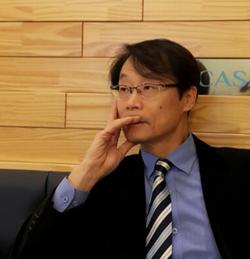
◆ Songsan
A poet and a historian/philosopher, Songsan previously served as a director of the Syngman Rhee Institute and currently works as a research advisor for the Korean Modern and Contemporary History Research Association and the representative of the philosophical forum Lyceum. He has published four poetry collections and co-translated "Heroes of the Hook of Gol." Songsan is a pen name.

 Iranian Foreign Ministry: "Continuing Message Exchanges with the U.S. and Activities of Mediating Countries"
Esmaeil Baghaei, Spokesperson for the Iranian Ministry of Foreign Affairs [Xinhua, Yonhap News file photo]Esmaeil Baghaei, spokesperson for the Iranian Ministry of Foreign Affairs, stated on the 26th
Iranian Foreign Ministry: "Continuing Message Exchanges with the U.S. and Activities of Mediating Countries"
Esmaeil Baghaei, Spokesperson for the Iranian Ministry of Foreign Affairs [Xinhua, Yonhap News file photo]Esmaeil Baghaei, spokesperson for the Iranian Ministry of Foreign Affairs, stated on the 26th
 President Yoon: "Do You Think You Are Safe from the Special Counsel?"... Final Statement Video Released
President Yoon Suk Yeol rebuking the special prosecutor on the 24th. [Court video / @birds_justice X account subtitle GIF] A video of President Yoon Suk Yeol's closing statement at his trial rega
President Yoon: "Do You Think You Are Safe from the Special Counsel?"... Final Statement Video Released
President Yoon Suk Yeol rebuking the special prosecutor on the 24th. [Court video / @birds_justice X account subtitle GIF] A video of President Yoon Suk Yeol's closing statement at his trial rega
 President Yoon, regarding the first-instance ruling on the Public Official Election Act: “An excessive political verdict that distorts the facts… We will appeal immediately.”
The first-instance sentencing hearing for President Yoon Suk Yeol regarding violations of the Public Official Election Act is being broadcast live at Seoul Station on the 27th. [Photo=Yonhap News]Pres
President Yoon, regarding the first-instance ruling on the Public Official Election Act: “An excessive political verdict that distorts the facts… We will appeal immediately.”
The first-instance sentencing hearing for President Yoon Suk Yeol regarding violations of the Public Official Election Act is being broadcast live at Seoul Station on the 27th. [Photo=Yonhap News]Pres
 WSJ: "SK Hynix ADR Premium Is a Sign of AI Trading Overheat"
Advertisement for SK Hynix ADR listing in New York's Times Square [Reuters=Yonhap News file photo]The Wall Street Journal (WSJ) has pointed out that the price of SK Hynix’s American Depositary Recei
WSJ: "SK Hynix ADR Premium Is a Sign of AI Trading Overheat"
Advertisement for SK Hynix ADR listing in New York's Times Square [Reuters=Yonhap News file photo]The Wall Street Journal (WSJ) has pointed out that the price of SK Hynix’s American Depositary Recei
 'Godfather of Japanese Mystery Novels' Keigo Higashino Passes Away After Battle with Cancer at 68
Famous Japanese mystery novelist Keigo Higashino [AFP=Yonhap News]It has been belatedly reported that Keigo Higashino, the "godfather of Japanese mystery novels" and author of bestsellers such as "The
'Godfather of Japanese Mystery Novels' Keigo Higashino Passes Away After Battle with Cancer at 68
Famous Japanese mystery novelist Keigo Higashino [AFP=Yonhap News]It has been belatedly reported that Keigo Higashino, the "godfather of Japanese mystery novels" and author of bestsellers such as "The
 [Park Pil-kyu Security Column] To the Ignorant Trying to Clothe a Beast in Sheep's Clothing
Rep. Kim Byung-joo of the Democratic Party of Korea [Photo=Yonhap News]“The Air Force Academy doesn't teach you how to fly a plane!” “The Army, Navy, and Air Force academies are exactly the
[Park Pil-kyu Security Column] To the Ignorant Trying to Clothe a Beast in Sheep's Clothing
Rep. Kim Byung-joo of the Democratic Party of Korea [Photo=Yonhap News]“The Air Force Academy doesn't teach you how to fly a plane!” “The Army, Navy, and Air Force academies are exactly the
 [Issue Diagnosis] Two Effects of the Election Petition Review
 [Photo] Evidence of Election Fraud Flooding U.S. Media… Trump Had 2.7 Million Votes Stolen
 [Video] U.S. Semiquincentennial Air Show... 'Art in the Sky' streaks across New York
 [Editorial Cartoon] A Draconian Law That Undermines Freedom of Expression

 List
List