지금 한국 사회는 그 문턱에 서 있다. 정부는 결과에 대한 책임을 분명히 하지 않으면서도 통제의 언어는 강화한다. ‘가짜뉴스 방지’라는 명분으로 표현의 자유가 위축되고, 비판은 쉽게 위험한 주장으로 분류된다. 국민은 선택의 주체가 아니라 감정 동원의 대상이 되고, 정치는 정책 경쟁이 아니라 프레임 전쟁으로 전락한다. 이때 시민은 자유를 방어하기보다 “누군가 대신 결정해 주길” 바라게 된다. 이것이 프롬이 말한 자유로부터의 도피다.
 President Lee Jae-myung speaks at a luncheon briefing for the press corps during his state visit to China on the 7th (local time) at a hotel in Shanghai. At the event, Lee Jae-myung said, "Korea-China relations are truly mutually necessary. There is no need to needlessly provoke, exclude, or confront each other." [Photo=Yonhap News]
It is necessary to reflect on the outcomes and remarks of the President's state visit to China from the 4th to the 7th of this month. In a press briefing, a reporter mentioned that a former Chinese national employee was identified as a prime suspect in the recent massive personal data leak incident at Coupang, leading to growing anti-China sentiment in Korea, and asked a question about anti-China sentiment.
In response, the President stated that it is inappropriate to connect the criminal acts of an individual to hatred or resentment towards an entire country.
The statement is not wrong in principle. However, a more appropriate response from a head of state would be to clearly state the principle that those who violate the law, regardless of nationality, will be held strictly accountable according to the law. The more diplomatic considerations are required, the clearer the public message regarding principles and standards becomes. Otherwise, the intended meaning of the remarks can be distorted or lead to unnecessary misunderstandings.
A greater controversy arose from his subsequent remarks. The statement implying that "we have conducted many military attacks against North Korea" caused bewilderment among many citizens. Considering the reality that a considerable number of citizens have lost their lives or been injured due to North Korea's repeated provocations, an explanation is needed regarding the context in which these remarks were made.
Remarks left without explanation leave room for misinterpretation, similar to North Korea's official claims. This is because the words of a head of state extend beyond domestic political messages to influence the entire security environment.
The Fatal Flaw of a Power Evading Responsibility
The most dangerous moment in national governance is not the crisis itself, but when the power responsible for the crisis evades responsibility. The fundamental problem of Korean politics today is not a lack of leadership to manage crises, but a governing style that politically exploits crises. While the President and the ruling party are in positions of responsibility for national affairs, they do not clearly accept accountability for outcomes. This is not merely administrative failure but a failure of governance.
If clear standards and accountability do not descend from above, the field stops making decisions and shifts to evasion. Public organizations, the military, and administrative bodies move to protect themselves, and as a result, the nation fails to make decisions in the face of crises.
When the President's remarks are perceived as emotional rather than strategic, and national messages lose consistency, citizens feel 불안 (unease). This 불안 then transfers into a fatigue with freedom.
The Warning from "Escape from Freedom"
In "Escape from Freedom" (The Fear of Freedom), Erich Fromm warned that freedom is not always a blessing. Freedom comes with the burden of judgment and responsibility, and when society cannot bear this burden, citizens are tempted to relinquish their freedom and rely on strong authority.
Korean society stands on the threshold of this. The government strengthens the language of control while not clarifying responsibility for outcomes. Under the guise of "preventing fake news," freedom of expression is curtailed, and criticism is easily classified as dangerous rhetoric.
Citizens become objects of emotional mobilization rather than subjects of choice, and politics devolves into frame wars rather than policy competition. At this point, citizens wish "someone would decide for them" rather than defend their freedom. This is what Fromm called the escape from freedom.
The problem is that this escape stems not from the citizens' weakness but from the 불안 created by a power that evades responsibility. A governing style that avoids accountability amplifies societal 불안, and this 불안 makes freedom feel like a burden. Thus, freedom is gradually relinquished.
The Politicization of Security Undermines the Foundation of Freedom
Security is not a matter of ideology but a condition for the survival of the people. However, the current administration handles the issue of military command within a political framework. The commander-in-chief's orders are subsequently subject to political judgment, and terms like "martial law" and "insurrection" are used as political weapons before facts are verified.
In such an environment, can the military truly make decisions? Although the recommendation to dismantle the Military Security Command (Counter-Intelligence Corps) was presented under the guise of a joint civilian-military advisory committee, everyone knows whose intention and directive it was. Without internal review, the Ministry of National Defense announced its plan to complete the reorganization within this year as if it had been waiting for it. The Minister of National Defense acts like a figurehead with no independent thoughts.
Is the position of Minister of National Defense a role that strengthens the military, or is it a Trojan horse to ruin the military? No one can stop a group that self-destructs from within. The military is not an organization that debates; it is an organization that executes orders, and the responsibility rests with the one who issues the orders.
If this principle collapses, the military cannot function, and the people cannot be protected. The moment security is politicized, the nation lowers its own shield. This is not a mere security failure but a process of losing the power to defend freedom.
The international environment is becoming more ruthless. Japan is already moving towards becoming a "nation capable of war," and China's pressure on Japan paradoxically serves as a justification for Japan's military buildup.
Amidst these changes, our government is deferring strategic choices and relying on ambiguity. However, a neutral stance without strategy is closer to evading responsibility than pursuing national interests. The President stated that the President's statement regarding China's pressure on Japan providing a pretext for Japan's normalization and becoming a war-capable nation, and in relation to rare earth export control measures, said, "When one should step in, one should. Stepping in when one shouldn't is not very helpful," indicating a very limited role for Korea.
Defending Freedom is About Responsibility, Not Control
Fromm's warning is clear. Freedom is not maintained automatically. It endures only when there is a responsible power. Citizens do not demand a perfect government. However, they demand a responsible government.
If a power that evades responsibility continues, freedom will be replaced by control, security will become a tool of politics, and the nation will drift. Ultimately, the citizens will bear the cost. If the language of governance is not returned from emotion to responsibility immediately, this government will be recorded in history as a power that has forfeited its right to defend freedom.
Regarding international relations, it would be beneficial to use diplomatic language.
Overly direct expressions can lead to constraints on strategy and actions. It is common sense that intelligence and investigation must go hand in hand. This should not be disguised under the pretext of developmental disintegration. We must remember the names of the advisory committee members involved in the dismantling of the Counter-Intelligence Corps and hold them accountable for the results. Power comes with responsibilities commensurate with what is held and enjoyed.
◆ Ju Eun-sik, Editorial Writer
Editorial Writer, Hankyoreh Shinmun
Director, Korea Strategic Research Institute

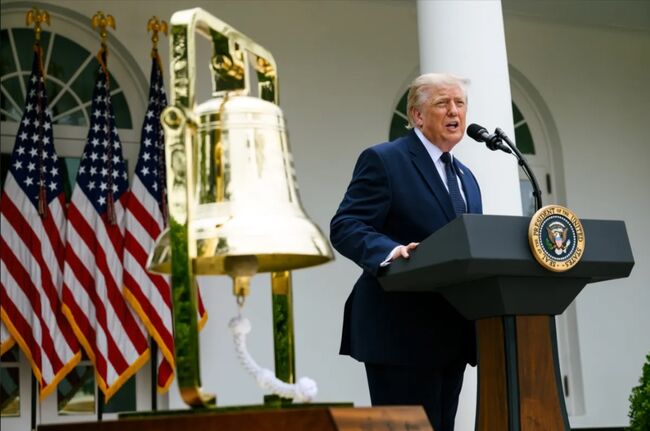 Trump pressures for rate cut again ahead of FOMC... "Should be the lowest in the world"
U.S. President Donald Trump. [Photo = The White House] U.S. President Donald Trump once again pressured the Federal Reserve, the U.S. central bank, to lower interest rates on the 27th (local time
Trump pressures for rate cut again ahead of FOMC... "Should be the lowest in the world"
U.S. President Donald Trump. [Photo = The White House] U.S. President Donald Trump once again pressured the Federal Reserve, the U.S. central bank, to lower interest rates on the 27th (local time
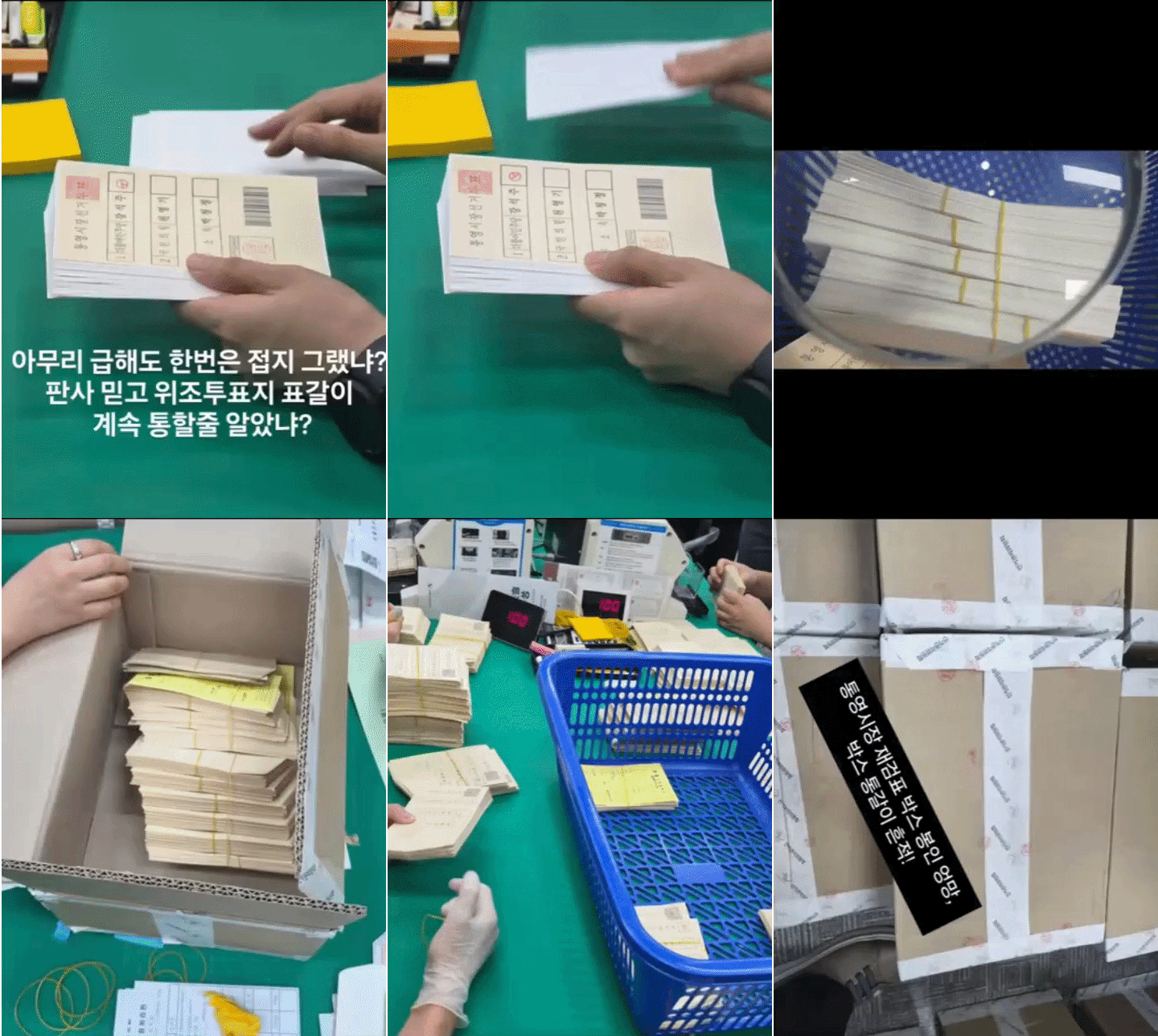 “Ignoring crisp ballots and damaged seals”… Tongyeong mayoral recount concludes with ‘no change in outcome,’ leaving suspicions and public outrage behind
Suspected counterfeit ballots discovered in Tongyeong [GIF from social media of Representative Hwang Kyo-ahn / Attorney Park Joo-hyun]During a recount of the Tongyeong mayoral election in South Gyeong
“Ignoring crisp ballots and damaged seals”… Tongyeong mayoral recount concludes with ‘no change in outcome,’ leaving suspicions and public outrage behind
Suspected counterfeit ballots discovered in Tongyeong [GIF from social media of Representative Hwang Kyo-ahn / Attorney Park Joo-hyun]During a recount of the Tongyeong mayoral election in South Gyeong
 President Yoon, regarding the first-instance ruling on the Public Official Election Act: “An excessive political verdict that distorts the facts… We will appeal immediately.”
The first-instance sentencing hearing for President Yoon Suk Yeol regarding violations of the Public Official Election Act is being broadcast live at Seoul Station on the 27th. [Photo=Yonhap News]Pres
President Yoon, regarding the first-instance ruling on the Public Official Election Act: “An excessive political verdict that distorts the facts… We will appeal immediately.”
The first-instance sentencing hearing for President Yoon Suk Yeol regarding violations of the Public Official Election Act is being broadcast live at Seoul Station on the 27th. [Photo=Yonhap News]Pres
 WSJ: "SK Hynix ADR Premium Is a Sign of AI Trading Overheat"
Advertisement for SK Hynix ADR listing in New York's Times Square [Reuters=Yonhap News file photo]The Wall Street Journal (WSJ) has pointed out that the price of SK Hynix’s American Depositary Recei
WSJ: "SK Hynix ADR Premium Is a Sign of AI Trading Overheat"
Advertisement for SK Hynix ADR listing in New York's Times Square [Reuters=Yonhap News file photo]The Wall Street Journal (WSJ) has pointed out that the price of SK Hynix’s American Depositary Recei
 'Godfather of Japanese Mystery Novels' Keigo Higashino Passes Away After Battle with Cancer at 68
Famous Japanese mystery novelist Keigo Higashino [AFP=Yonhap News]It has been belatedly reported that Keigo Higashino, the "godfather of Japanese mystery novels" and author of bestsellers such as "The
'Godfather of Japanese Mystery Novels' Keigo Higashino Passes Away After Battle with Cancer at 68
Famous Japanese mystery novelist Keigo Higashino [AFP=Yonhap News]It has been belatedly reported that Keigo Higashino, the "godfather of Japanese mystery novels" and author of bestsellers such as "The
 [Park Pil-kyu Security Column] To the Ignorant Trying to Clothe a Beast in Sheep's Clothing
Rep. Kim Byung-joo of the Democratic Party of Korea [Photo=Yonhap News]“The Air Force Academy doesn't teach you how to fly a plane!” “The Army, Navy, and Air Force academies are exactly the
[Park Pil-kyu Security Column] To the Ignorant Trying to Clothe a Beast in Sheep's Clothing
Rep. Kim Byung-joo of the Democratic Party of Korea [Photo=Yonhap News]“The Air Force Academy doesn't teach you how to fly a plane!” “The Army, Navy, and Air Force academies are exactly the
 [Issue Diagnosis] Two Effects of the Election Petition Review
 [Photo] Evidence of Election Fraud Flooding U.S. Media… Trump Had 2.7 Million Votes Stolen
 [Video] U.S. Semiquincentennial Air Show... 'Art in the Sky' streaks across New York
 [Editorial Cartoon] A Draconian Law That Undermines Freedom of Expression

 List
List