외국인 투자자들과 한국에 대출해 준 외국 금융기관들이 한국에서 달러를 빼내 가기 시작하면서 한국은 돌려줄 외환이 부족해 갖은 굴욕적인 요구를 모두 수용하면서 국제통화기금(IMF)에 구제금융을 신청했다. 치욕의 IMF 시대가 시작된 것이다. 지금 한국 경제는 중대 국면에 직면하고 있다. 제대로 된 원인 파악과 대책이 시급하다.
 The KOSPI index is displayed on a status board at a Hana Bank dealing room in Jung-gu, Seoul, on the 16th. As of 9:21 AM that day, it was trading at 4,823.11, up 25.56 points (0.53%) from the previous trading day. [Photo=Yonhap News]
South Korea's financial markets, including its stock and foreign exchange markets, are experiencing unusual anomalies, making it feel like walking on thin ice, with no certainty of when it might break.
Last year, South Korea's economic growth rate was an estimated 1%, a period of unprecedented low growth, except for times of financial crisis. Consequently, per capita national income has stagnated at $30,000 for 12 consecutive years. In contrast, developed countries typically reach the $40,000 mark within about four years of surpassing $30,000. Furthermore, last year, per capita GDP was overtaken by Taiwan for the first time in 22 years.
For the six developed countries in the '30-50 Club'—nations with per capita income exceeding $30,000 and populations over 50 million—it took an average of less than four years to move from $30,000 to $40,000. The UK achieved this in two years, Japan, France, and Italy in three years, and Germany in four years. Taiwan is also projected to surpass $40,000 this year, five years after breaking the $30,000 mark in 2021.
The Deep Mire of Severe Low Growth… Potential Growth Rate Expected to Near Zero by Around 2040
However, concerns are mounting that South Korea alone may struggle to cross the $40,000 threshold, having fallen into a severe structural low growth slump where its potential growth rate has dropped to the 1% range. The "Peak Korea" theory, suggesting that the current era might be the best we will ever experience, is also gaining traction.
South Korea's potential growth rate has been in continuous decline, plummeting to the late 1% range. Most research institutions project a grim outlook, forecasting it to fall to near zero by around 2040 if current trends persist.
If this happens, new jobs will not be created, and young people will become "kangaroo tribes" living off their parents, entering a "lost generation," as Japan's experience has shown. Japan is now falling behind South Korea in per capita national income and is becoming a common nation.
Yet, despite this sustained period of unprecedented low growth, excluding financial crisis periods (1998: -4.9%, 2009: 0.8%) and the COVID-19 pandemic (2020: -0.7%), the stock market is surprisingly buoyant. As of the 15th, the KOSPI is hovering around 4798, nearing the 5000 mark for the first time in history.
What exactly is the background to these unusual phenomena? Of course, the increased global competitiveness and improved profitability of South Korea's leading manufacturing sectors, such as semiconductors, automobiles, shipbuilding, defense industries, and bio-technology, are significant factors. However, it is also widely acknowledged that artificial stock price support policies, including pressure from major shareholders for dividend increases and treasury stock cancellations under regulations like the 3% rule, and enhanced rights for minority shareholders, are playing a role.
Anomalies in the Financial Market… Stock Prices Up, Won Value Down Amidst Severe Low Growth
Currently, the number of stock investors in South Korea is estimated to be around 14 million. Therefore, these artificial stock price support policies are undeniably advantageous to the government and the ruling party as the June local elections approach.
However, unlike in some countries, Korean companies often have limited defense mechanisms for major shareholders due to their relatively low ownership stakes. They are essentially exposed to global merger and acquisition hunters without the protection of staggered voting rights or golden shares, as adopted in countries like the United States. Consequently, prominent companies are focusing heavily on overseas investments rather than domestic ones, leading to sustained low growth and a lack of job creation.
Another anomaly in the financial market is the sharp depreciation of the Korean won despite a surge in stock prices. Typically, during periods of stock market rallies, the won's value would appreciate due to increased foreign investment. However, past logic is no longer applicable.
Amidst the booming sectors of semiconductors, automobiles, shipbuilding, defense, bio, and culture, the KOSPI stood at 4798 as of the 15th, on the cusp of surpassing 5000 for the first time. Meanwhile, the won-dollar exchange rate is at 1472, just 28 won away from the psychological resistance level of 1500. It would be unsurprising if it reaches 1500 within the next day or two.
A psychological resistance level is a point where the fear of "uncontrollable surges if this line is crossed" takes hold. The significance of the 1500 won psychological resistance level lies in the concern that breaching it could lead to a vertical ascent to 1700-1900 won, placing the Korean economy at a critical juncture.
Exchange Rate at Psychological Resistance Level of 1500 Won… The Starting Point of an Exchange Rate Surge
Let's consider the case of the foreign exchange crisis in 1997. On December 11th of that year, the exchange rate surpassed 1500 won. The won-dollar exchange rate, which was 1423.6 won the previous day, soared to 1563.5 won on December 11th and further to 1719.5 won the following day. It broke the 1700 mark within a single day of breaching 1500. After fluctuating for a few days due to government intervention, it reached 1964.8 won on December 24th, just 13 days after the 1500 mark collapsed.
As foreign investors and foreign financial institutions that had lent money to Korea began to withdraw dollars, South Korea faced a shortage of foreign currency for repayment. This led to the acceptance of all sorts of humiliating demands and an application for bailout assistance from the International Monetary Fund (IMF). The humiliating IMF era began. The Korean economy is now facing a critical juncture. Swift identification of the root causes and effective countermeasures are urgently needed.
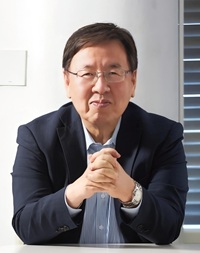
◆ Oh Jung-geun
Director, Free Market Research Institute
President, Korea Financial ICT Convergence Society

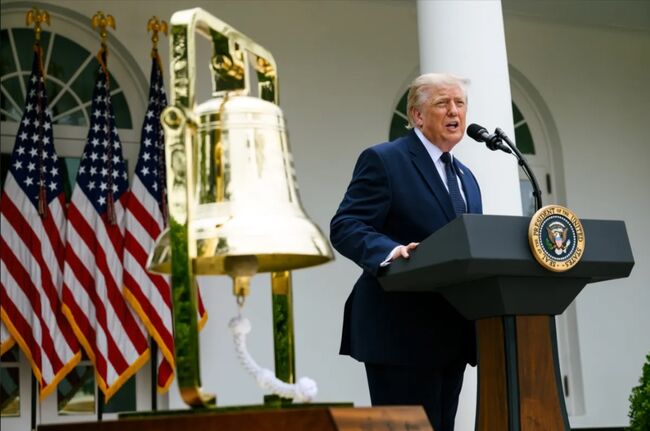 Trump pressures for rate cut again ahead of FOMC... "Should be the lowest in the world"
U.S. President Donald Trump. [Photo = The White House] U.S. President Donald Trump once again pressured the Federal Reserve, the U.S. central bank, to lower interest rates on the 27th (local time
Trump pressures for rate cut again ahead of FOMC... "Should be the lowest in the world"
U.S. President Donald Trump. [Photo = The White House] U.S. President Donald Trump once again pressured the Federal Reserve, the U.S. central bank, to lower interest rates on the 27th (local time
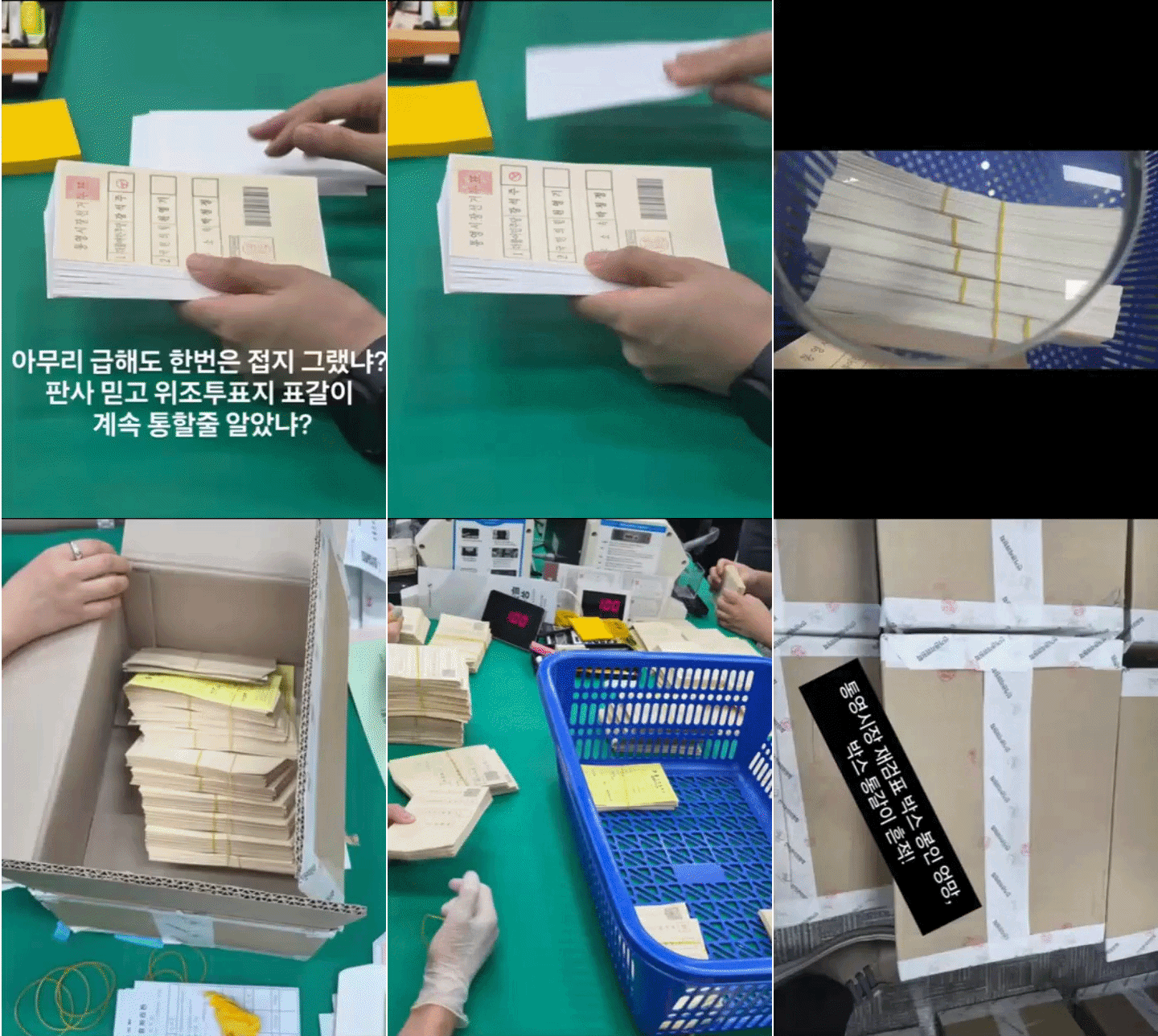 “Ignoring crisp ballots and damaged seals”… Tongyeong mayoral recount concludes with ‘no change in outcome,’ leaving suspicions and public outrage behind
Suspected counterfeit ballots discovered in Tongyeong [GIF from social media of Representative Hwang Kyo-ahn / Attorney Park Joo-hyun]During a recount of the Tongyeong mayoral election in South Gyeong
“Ignoring crisp ballots and damaged seals”… Tongyeong mayoral recount concludes with ‘no change in outcome,’ leaving suspicions and public outrage behind
Suspected counterfeit ballots discovered in Tongyeong [GIF from social media of Representative Hwang Kyo-ahn / Attorney Park Joo-hyun]During a recount of the Tongyeong mayoral election in South Gyeong
 President Yoon, regarding the first-instance ruling on the Public Official Election Act: “An excessive political verdict that distorts the facts… We will appeal immediately.”
The first-instance sentencing hearing for President Yoon Suk Yeol regarding violations of the Public Official Election Act is being broadcast live at Seoul Station on the 27th. [Photo=Yonhap News]Pres
President Yoon, regarding the first-instance ruling on the Public Official Election Act: “An excessive political verdict that distorts the facts… We will appeal immediately.”
The first-instance sentencing hearing for President Yoon Suk Yeol regarding violations of the Public Official Election Act is being broadcast live at Seoul Station on the 27th. [Photo=Yonhap News]Pres
 WSJ: "SK Hynix ADR Premium Is a Sign of AI Trading Overheat"
Advertisement for SK Hynix ADR listing in New York's Times Square [Reuters=Yonhap News file photo]The Wall Street Journal (WSJ) has pointed out that the price of SK Hynix’s American Depositary Recei
WSJ: "SK Hynix ADR Premium Is a Sign of AI Trading Overheat"
Advertisement for SK Hynix ADR listing in New York's Times Square [Reuters=Yonhap News file photo]The Wall Street Journal (WSJ) has pointed out that the price of SK Hynix’s American Depositary Recei
 'Godfather of Japanese Mystery Novels' Keigo Higashino Passes Away After Battle with Cancer at 68
Famous Japanese mystery novelist Keigo Higashino [AFP=Yonhap News]It has been belatedly reported that Keigo Higashino, the "godfather of Japanese mystery novels" and author of bestsellers such as "The
'Godfather of Japanese Mystery Novels' Keigo Higashino Passes Away After Battle with Cancer at 68
Famous Japanese mystery novelist Keigo Higashino [AFP=Yonhap News]It has been belatedly reported that Keigo Higashino, the "godfather of Japanese mystery novels" and author of bestsellers such as "The
 [Park Pil-kyu Security Column] To the Ignorant Trying to Clothe a Beast in Sheep's Clothing
Rep. Kim Byung-joo of the Democratic Party of Korea [Photo=Yonhap News]“The Air Force Academy doesn't teach you how to fly a plane!” “The Army, Navy, and Air Force academies are exactly the
[Park Pil-kyu Security Column] To the Ignorant Trying to Clothe a Beast in Sheep's Clothing
Rep. Kim Byung-joo of the Democratic Party of Korea [Photo=Yonhap News]“The Air Force Academy doesn't teach you how to fly a plane!” “The Army, Navy, and Air Force academies are exactly the
 [Issue Diagnosis] Two Effects of the Election Petition Review
 [Photo] Evidence of Election Fraud Flooding U.S. Media… Trump Had 2.7 Million Votes Stolen
 [Video] U.S. Semiquincentennial Air Show... 'Art in the Sky' streaks across New York
 [Editorial Cartoon] A Draconian Law That Undermines Freedom of Expression

 List
List









