 The Composite Stock Price Index (KOSPI) in Korea has risen by a significant 74.6%, from 2,771 points on June 4, 2025, to 4,840 points as of the morning of January 20 this year, following Lee Jae-myung's administration. [Photo=Yonhap News]
The Composite Stock Price Index (KOSPI) in Korea has risen by a significant 74.6%, from 2,771 points on June 4, 2025, to 4,840 points as of the morning of January 20 this year, following Lee Jae-myung's administration.
This surge is notably higher compared to the 42.9% rise in Japan's Nikkei 225, the 23.9% increase in the UK's FTSE 100, and the 14.7% rise in the US NYSE Composite during the same period.
Most liberal economists, including myself, had predicted that stock price increases would be limited due to the current administration's anti-corporate legislation, leading to an outflow of domestic capital abroad, a significant exodus of foreign direct and portfolio investment, and a subsequent sharp rise in the won-dollar exchange rate. However, these predictions have been proven wrong.
Instead, the nation is now rapidly approaching the era of "five thousand points" in stock prices, a goal publicly declared by the current administration both domestically and internationally. Despite pessimistic forecasts for the Korean economy, why has the Korean stock market seen such a steep rise? Finding the answer to this is crucial for predicting the future.
Causes: Artificial Stock Market Support and Populist Monetary Expansion Policies
The primary reason for the rise in Korean stock prices since the current administration took office can be attributed to a surge in the money supply. This is, in essence, due to an expansion of populist spending, including the 15 trillion won in livelihood recovery support funds of 250,000 to 350,000 won distributed to all citizens upon inauguration, and welfare expenditures such as child allowances and basic income for youth. Debt relief for households and small business owners, with explicit goals of principal write-offs, are also included.
In this context, the household and small business debt relief policies were implemented in a manner that involved purchasing the distressed debts from certain entities that had acquired them at a discount. For instance, entities that acquired 10 billion won worth of non-performing loans for 1 billion won were provided with 10 billion won under the guise of debt relief for households and small businesses. This can be seen less as genuine support and more as an appropriation of public funds.
Consequently, the total money supply, known as M2 (cash, demand deposits, savings deposits), increased by 115 trillion won (a 2.9% increase) from 3,966 trillion won at the end of May 2025 to 4,081 trillion won at the end of November 2025. Broad money (L), which includes beneficiary certificates, government bonds, and corporate bonds, increased by 3.4% during the same period, reaching 7,646 trillion won (an increase of 253 trillion won).
This increase is higher than the 2.3% M2 growth rate in the United States during the same period. By the end of November 2025, Korea's M2 was 159.6% of its GDP, more than double the US figure of 76.2% at the same time.
Even considering that the degree of financialization in the US, which adequately reflects the valuation of financial assets in its GDP calculation, is higher than in Korea, it cannot be denied that Korea's total money supply is at a high level.
Furthermore, while the US has rapidly raised interest rates to curb the liquidity unleashed since COVID-19 and through 2024, Korea still maintains a lower interest rate level compared to the US, which also indicates an aspect of these populist monetary easing policies.
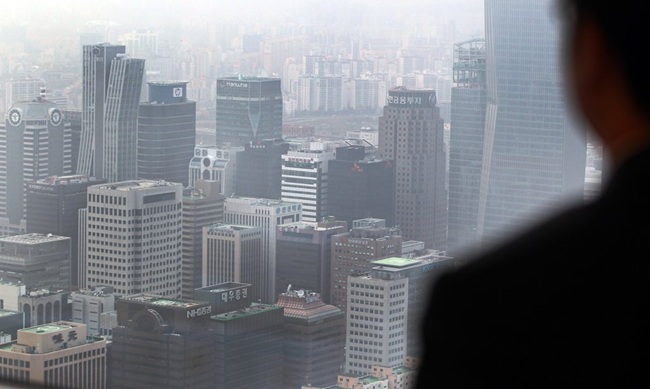 Yeouido's financial district viewed from the 63 Building [Photo=Yonhap News]
A second reason for the stock market's rise can be seen as the result of a forced domestic stock market support policy utilizing the National Pension Service. Since the current administration took office until January 16, 2026, foreign net purchases of Korean stocks have amounted to only 2.8 trillion won.
During the same period, domestic institutional investors, including the National Pension Service, made net purchases of 13.5 trillion won (estimated net purchases of over 6 trillion won by the National Pension Service). This is evidenced by the fact that, as of the end of December 2025, the National Pension Service's investment proportion in domestic stocks reached 18.6%, which is 3.7 percentage points higher than its originally set target.
Excluding 2025, the National Pension Fund's operating performance from 2010 to 2024 resulted in an average annual return of 13.2% for overseas stocks and 5.7% for domestic stocks, indicating a overwhelmingly higher performance for overseas stock investments.
While it is true that increasing the proportion of domestic stock investment in 2025, due to the government's coercive policy directive, has resulted in remarkable performance for that year, the fundamental principle of pension management policy, which is responsible for the retirement of each citizen, should be established considering the long-term risk-return combination.
However, with such arbitrary and coercive guidance, it is questionable how long-term stable pension performance can be secured, given the uncertainty of domestic stock performance for the current year, 2026.
From a financial economics perspective, the basic principle for maximizing risk-adjusted returns is to allocate investments in risky assets in proportion to their global market capitalization. Particularly,
to arbitrarily manipulate public pension funds, which are the retirement assets of the nation and not intended for short-term use, solely to maximize the government's short-term performance, is the epitome of "moral hazard."
The third reason for the stock market rise is relatively common sense: the boom in the HBM (High Bandwidth Memory) semiconductor market, driven by global AI (Artificial Intelligence) investment expansion policies.
Semiconductor stocks, led by Samsung Electronics and SK Hynix, were the target of concentrated foreign and institutional investor purchases. In September 2025 alone, net purchases of these semiconductor stocks exceeded the total net purchase amount.
While the prevailing view is that this semiconductor boom could continue into 2026, my opinion is that as long as the US-China war persists and the individual tariff rates with the US remain undecided, semiconductors, whose trade and investment relations with China are not fully resolved, could face rapid adjustments due to US checks.
This is evident when compared to Taiwan's TSMC, the leading foundry chip manufacturer, which began investing in the US in 2021 and by March 2025, after four years, had invested a total of $165 billion and commenced supplying 4-nanometer chips to Apple and NVIDIA. In contrast, Samsung Electronics began its investment in 2022, investing $63 billion by 2025. Although it secured a customer with an AI chip order from Tesla, the progress of production facility investment is delayed due to a lack of customer requests.
Furthermore, the surge in demand for HBM memory could also lead to a sharp contraction if NVIDIA's graphics chips are replaced by AI chip solutions from other companies.
Accumulated Monetary Expansion Fuels Inflation and Devalues the Won
Meanwhile, Bank of Korea Governor Lee Chang-yong pointed out that the surge in the won-dollar exchange rate, despite the rise in domestic stock prices, is not due to the Bank of Korea's monetary expansion policy leading to a weaker won, but rather to the outflow of portfolio funds overseas by so-called "Seohak Army" (retail investors buying foreign stocks).
However, I intend to refute this by noting that the scale of Seohak Army investments during the current administration's seven-month period amounts to only 30 trillion won, which is merely 26.1% of the total increase in the money supply during the same period.
The impact of money supply increase on prices, though with a time lag, follows a basic economic principle: monetary expansion leads to a decline in the value of the won and inflation, which in turn results in exchange rate increases and further inflation.
Even with support for the left-wing government's populist policies, their claims are logically inconsistent. The assertion that prices have not risen simply because stocks have increased significantly for one year, based solely on core inflation, is difficult to accept.
Unlike the US, we do not reflect increases in housing prices and housing costs in our consumer price index. The fact that both producer and consumer prices are higher than the core inflation rate claimed by the Bank of Korea also supports this.
The recent rise in the exchange rate is only a small part of the Seohak Army's activity. Instead, the more fundamental reasons lie in the outflow of domestic capital and the decline in trust from foreign investors due to "evil laws" aimed at killing businesses, such as the revised Commercial Act, the Yellow Envelope Act, and mandatory treasury stock cancellation, pursued by the government under the pretext of reforming corporate governance.
I have briefly explained the somewhat contradictory phenomena of rising stock prices and a rising exchange rate in Korea. In summary, the recent stock price surge is attributed to artificial market support and populist monetary expansion policies, rather than a rise in corporate value from a fundamental perspective.
Furthermore, the phenomenon of the won-dollar exchange rate rising (the won depreciating) despite the stock market rally is not solely due to the influence of Korean retail investors moving their investments to US stocks, the so-called Seohak Army. Rather, it stems from the inflationary pressure from accumulated monetary expansion and the strong risk-averse attitude of foreign investors due to the interest rate differential.
While foreign investors have indeed made net purchases, albeit small, during the current administration's term, their potential for sudden and rapid net selling at any time cannot be overlooked, given experiences such as net selling of 13.4 trillion won in November 2025 and concentrated selling at the beginning of 2026.
Of course, with the impending implementation of the Yellow Envelope Act and other corporate-targeting "evil laws," the possibility of Korean capital fleeing abroad at any moment remains open.
There is also news that over 200 billion won in investment funds have poured into reverse index funds (funds that profit proportionally when the index falls), with Korean retail investors anticipating a decline in the stock index.
Although I strongly do not recommend short-term stock index predictions due to the excessive risk compared to potential returns, I believe that over a year or more, the risk of a significant decline is considerable as the side effects of populist policies become apparent everywhere, according to my forecast.
This can also be explained by the side effects of expanded populist spending and revenue shortfalls, as seen in the unprecedented situation at the end of 2025 where the Ministry of National Defense faced a budget shortfall. This will be discussed in a future topic.
◆ Professor Kim Byung-jun
Former Professor at Kangnam University, Co-representative of Professors for Practicing Freedom and Justice (Professors' Association for Freedom and Justice). He is actively engaged in writing columns for media outlets on topics such as criticism of the judiciary, countermeasures against economic invasion by Chinese capital, and the investigation of electoral fraud, and holds regular academic seminars.

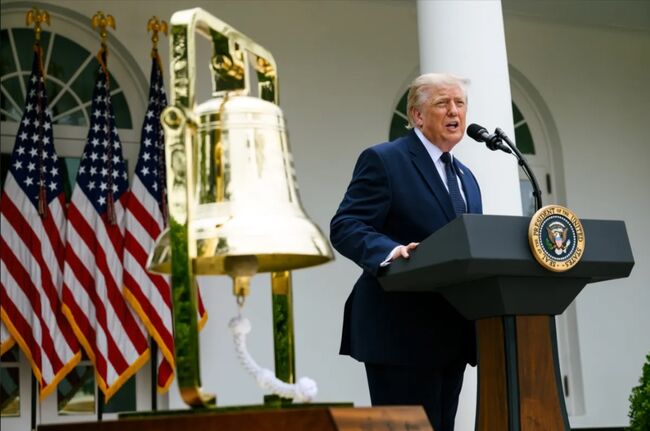 Trump pressures for rate cut again ahead of FOMC... "Should be the lowest in the world"
U.S. President Donald Trump. [Photo = The White House] U.S. President Donald Trump once again pressured the Federal Reserve, the U.S. central bank, to lower interest rates on the 27th (local time
Trump pressures for rate cut again ahead of FOMC... "Should be the lowest in the world"
U.S. President Donald Trump. [Photo = The White House] U.S. President Donald Trump once again pressured the Federal Reserve, the U.S. central bank, to lower interest rates on the 27th (local time
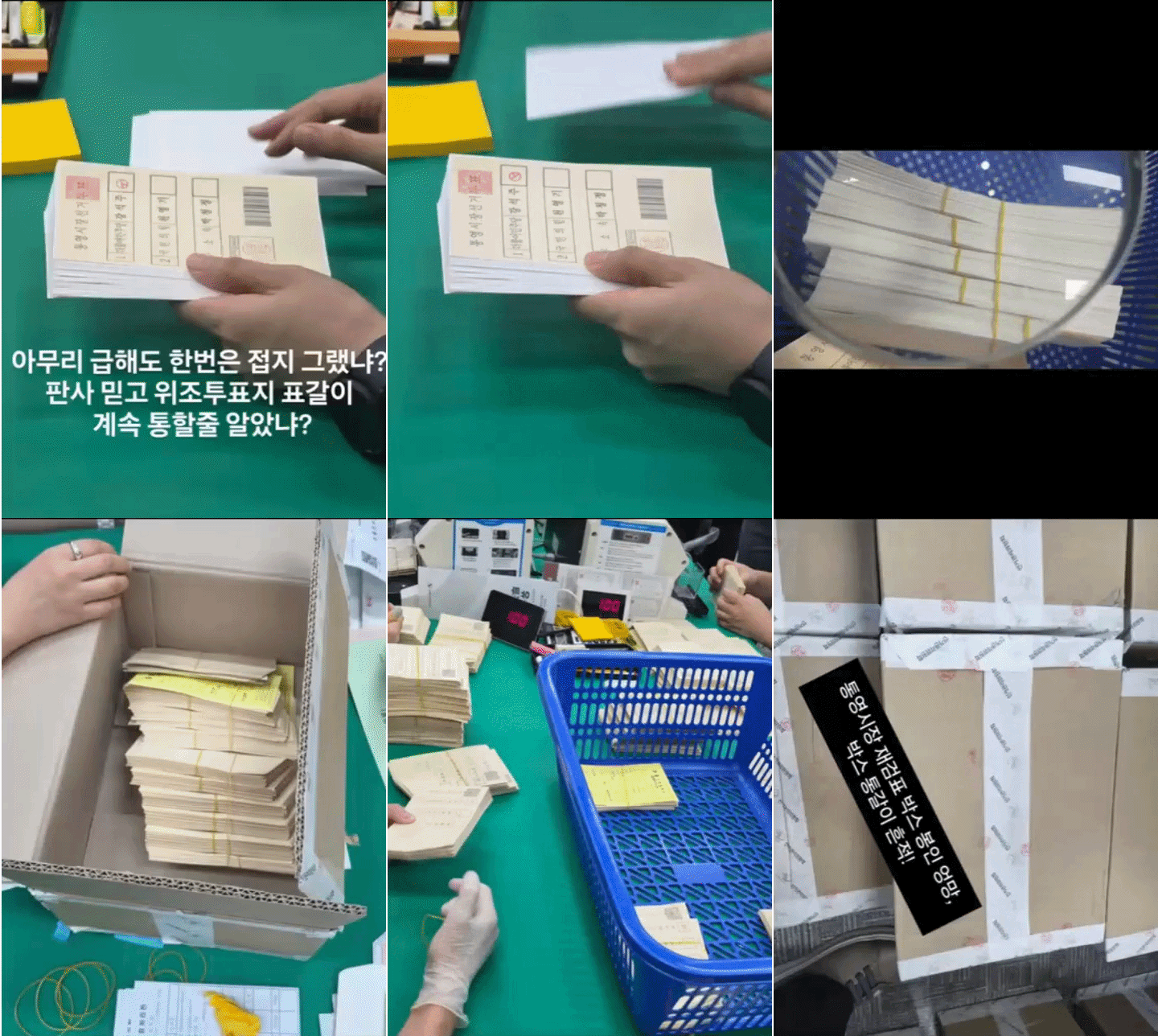 “Ignoring crisp ballots and damaged seals”… Tongyeong mayoral recount concludes with ‘no change in outcome,’ leaving suspicions and public outrage behind
Suspected counterfeit ballots discovered in Tongyeong [GIF from social media of Representative Hwang Kyo-ahn / Attorney Park Joo-hyun]During a recount of the Tongyeong mayoral election in South Gyeong
“Ignoring crisp ballots and damaged seals”… Tongyeong mayoral recount concludes with ‘no change in outcome,’ leaving suspicions and public outrage behind
Suspected counterfeit ballots discovered in Tongyeong [GIF from social media of Representative Hwang Kyo-ahn / Attorney Park Joo-hyun]During a recount of the Tongyeong mayoral election in South Gyeong
 President Yoon, regarding the first-instance ruling on the Public Official Election Act: “An excessive political verdict that distorts the facts… We will appeal immediately.”
The first-instance sentencing hearing for President Yoon Suk Yeol regarding violations of the Public Official Election Act is being broadcast live at Seoul Station on the 27th. [Photo=Yonhap News]Pres
President Yoon, regarding the first-instance ruling on the Public Official Election Act: “An excessive political verdict that distorts the facts… We will appeal immediately.”
The first-instance sentencing hearing for President Yoon Suk Yeol regarding violations of the Public Official Election Act is being broadcast live at Seoul Station on the 27th. [Photo=Yonhap News]Pres
 WSJ: "SK Hynix ADR Premium Is a Sign of AI Trading Overheat"
Advertisement for SK Hynix ADR listing in New York's Times Square [Reuters=Yonhap News file photo]The Wall Street Journal (WSJ) has pointed out that the price of SK Hynix’s American Depositary Recei
WSJ: "SK Hynix ADR Premium Is a Sign of AI Trading Overheat"
Advertisement for SK Hynix ADR listing in New York's Times Square [Reuters=Yonhap News file photo]The Wall Street Journal (WSJ) has pointed out that the price of SK Hynix’s American Depositary Recei
 'Godfather of Japanese Mystery Novels' Keigo Higashino Passes Away After Battle with Cancer at 68
Famous Japanese mystery novelist Keigo Higashino [AFP=Yonhap News]It has been belatedly reported that Keigo Higashino, the "godfather of Japanese mystery novels" and author of bestsellers such as "The
'Godfather of Japanese Mystery Novels' Keigo Higashino Passes Away After Battle with Cancer at 68
Famous Japanese mystery novelist Keigo Higashino [AFP=Yonhap News]It has been belatedly reported that Keigo Higashino, the "godfather of Japanese mystery novels" and author of bestsellers such as "The
 [Park Pil-kyu Security Column] To the Ignorant Trying to Clothe a Beast in Sheep's Clothing
Rep. Kim Byung-joo of the Democratic Party of Korea [Photo=Yonhap News]“The Air Force Academy doesn't teach you how to fly a plane!” “The Army, Navy, and Air Force academies are exactly the
[Park Pil-kyu Security Column] To the Ignorant Trying to Clothe a Beast in Sheep's Clothing
Rep. Kim Byung-joo of the Democratic Party of Korea [Photo=Yonhap News]“The Air Force Academy doesn't teach you how to fly a plane!” “The Army, Navy, and Air Force academies are exactly the
 [Issue Diagnosis] Two Effects of the Election Petition Review
 [Photo] Evidence of Election Fraud Flooding U.S. Media… Trump Had 2.7 Million Votes Stolen
 [Video] U.S. Semiquincentennial Air Show... 'Art in the Sky' streaks across New York
 [Editorial Cartoon] A Draconian Law That Undermines Freedom of Expression

 List
List









