Admiral Yi Sun-sin did not give up even on the brink of death. [Source: Government Standard Portrait]
Sun-sin was filial. He lamented being away from his mother during the Lunar New Year.
Sun-sin had deep brotherly love. He lamented the passing of his elder brother and second brother. He even took leave from work on the anniversaries of his brothers' deaths.
However, Sun-sin was not lazy in his duties. He went to the Dongheon to attend to official matters on clear days, windy days, and rainy days. He was stern in his official duties. He inspected and reviewed soldiers, and punished stone masons when newly built stonework collapsed.
He did what he could within his position and power to defend.
When issues arose in preparation for battle, he severely punished military officials and clerks. He arrested those in charge of military affairs and expelled those who had usurped positions. When the provincial governor recommended a person of the lowest rank for defense preparedness for a royal reward, he dismissed it as ridiculous.
Sun-sin was also strict with himself. His diary shows that he was constantly practicing archery. He practiced archery after attending to his official duties. He practiced archery again after finishing his official duties.
One day, he shot ten rounds of arrows. One round consisted of five arrows, totaling fifty arrows. Another day, after attending to his official duties, he shot eighteen rounds, ninety arrows.
Sun-sin continued to shoot arrows, as if not to forget or grow complacent. He shot arrows. He practiced archery even after inspecting the coastal fortresses.
He shot ten rounds. Then ten more rounds. Then fifteen rounds. He shot ten rounds, hitting the mark with five consecutively and three arrows three times each.
It seemed as though Sun-sin alone was awake. He was filled with apprehension about the impending war, about the coming of battle. Unable to prepare others, he resolved to do what he could within his position and power to defend.
As war broke out, Sun-sin was fearful.
“The naval officer Hwang Ok-cheon, after hearing rumors of the enemy, fled to his home. He was apprehended, beheaded, and his head was displayed.”
“He exhorted various generals, and ordered them to charge together. Arrows rained down. Various cannons fired wildly, like wind and thunder.”
The number of enemies hit by arrows was countless. The heads of Japanese soldiers were also taken in great numbers. The military official Na Dae-yong was hit by an iron ball, and Sun-sin was hit by an iron ball on his left shoulder. Although the iron ball pierced through to his back, it was not a mortal wound, he wrote.
It is dark, but the new day is not far off.
Yu Seong-ryong wrote in 'Jingbirok' (Records of Imprudent Affairs):
“Blood flowed down to his heels, but Yi Sun-sin said nothing.”
“After the battle ended, he cut the flesh with a knife to remove the bullet, which was lodged several inches deep. Those who watched turned pale, but Yi Sun-sin spoke and laughed as if it were an ordinary day.”
His health began to deteriorate significantly when he was unjustly accused. He was often sick and felt very unwell. His pain at night was twice that of the day. He spent his nights groaning in pain.
At night, he would sweat so much that two sets of clothes would be soaked. He couldn't sleep even if he tried. On nights he practiced archery, sweat would pour down and soak his back. He wrote that the sweat continued to flow. What kind of premonition was this? Was it an ominous message from his subconscious sent through his body?
Sun-sin's diary is missing entries from January to March of the Jeongyu year. He was accused of treason and could have been executed, but he was released from prison on April 1st and began his journey south across the Han River to Dongjak-naru on the 3rd.
Tragically, his mother passed away on the 13th. He cried out, "He rushed out, beating his chest and stamping his feet in grief."
Why do misfortunes strike all at once?
“How can I possibly express the pain that tears my heart apart with sorrow? How can I express it?”
“He wailed and wailed.”
“He cried out at the top of his lungs. What shall I do? What shall I do? Is there anyone in heaven and earth who has suffered like me?”
Sun-sin had to leave, even leaving his mother's death behind. How painful it must have been. How unjust. Justice has fallen to the ends of the earth, and those who betray the nation are triumphantly persecuting the righteous.
Those who do not know what a verdict is are violently banging their gavels. They utter nonsense as if it were a spell.
“How can I bear this sorrowful and miserable heart? How can I bear this sorrowful and miserable heart?”
To whom could he speak, weeping tears, about Won Gyun's actions? About the wicked? Why should Sun-sin's past feel so devastating when it is not entirely his?
“In a dream, I met my two deceased elder brothers. We embraced each other and wailed with heartache.”
“The tears that poured down turned into tears of blood.”
Why does heaven not answer?
In the early morning of July 16th, the navy was surprised by a dawn raid and suffered a great defeat. The cowardly Won Gyun could no longer hide and was killed. He was the one who had fled first upon seeing the enemy. Soon after, the king issued a new order, which was not the king's will but the will of heaven.
Two days earlier, news of Maduro's confession had arrived from America. Is this a sign that all things will unfold according to heaven's will?
It is a dark age. An age of encroaching, pitch-black darkness. Yet, in the night sky, there are those like stars. Those who endure with steadfastness through the strength of their perseverance, even when faced with injustice and sorrow that makes one stamp their feet. The new day is indeed not far off.
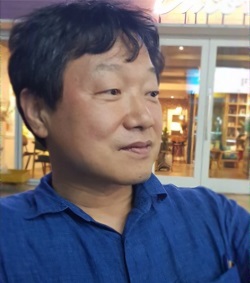
◆ Professor Bang Min-ho
Doctor of Literature, Professor of Korean Language and Literature at Seoul National University. He is currently the chief editor of the quarterly literary magazine 'Mac' (since 2022) and is actively working as a poet, novelist, and literary critic. His published works include 'Lover Simcheong' (2015), 'Language of Pain' (2019), 'Revisiting Korean Criticism' (2021), and 'Seoul Literary Journeys' (2024).

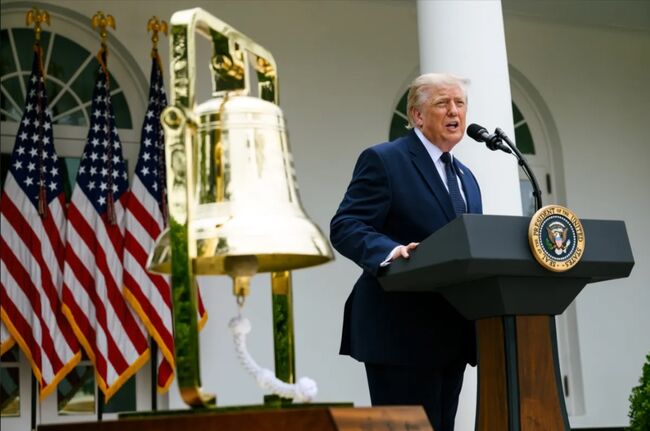 Trump pressures for rate cut again ahead of FOMC... "Should be the lowest in the world"
U.S. President Donald Trump. [Photo = The White House] U.S. President Donald Trump once again pressured the Federal Reserve, the U.S. central bank, to lower interest rates on the 27th (local time
Trump pressures for rate cut again ahead of FOMC... "Should be the lowest in the world"
U.S. President Donald Trump. [Photo = The White House] U.S. President Donald Trump once again pressured the Federal Reserve, the U.S. central bank, to lower interest rates on the 27th (local time
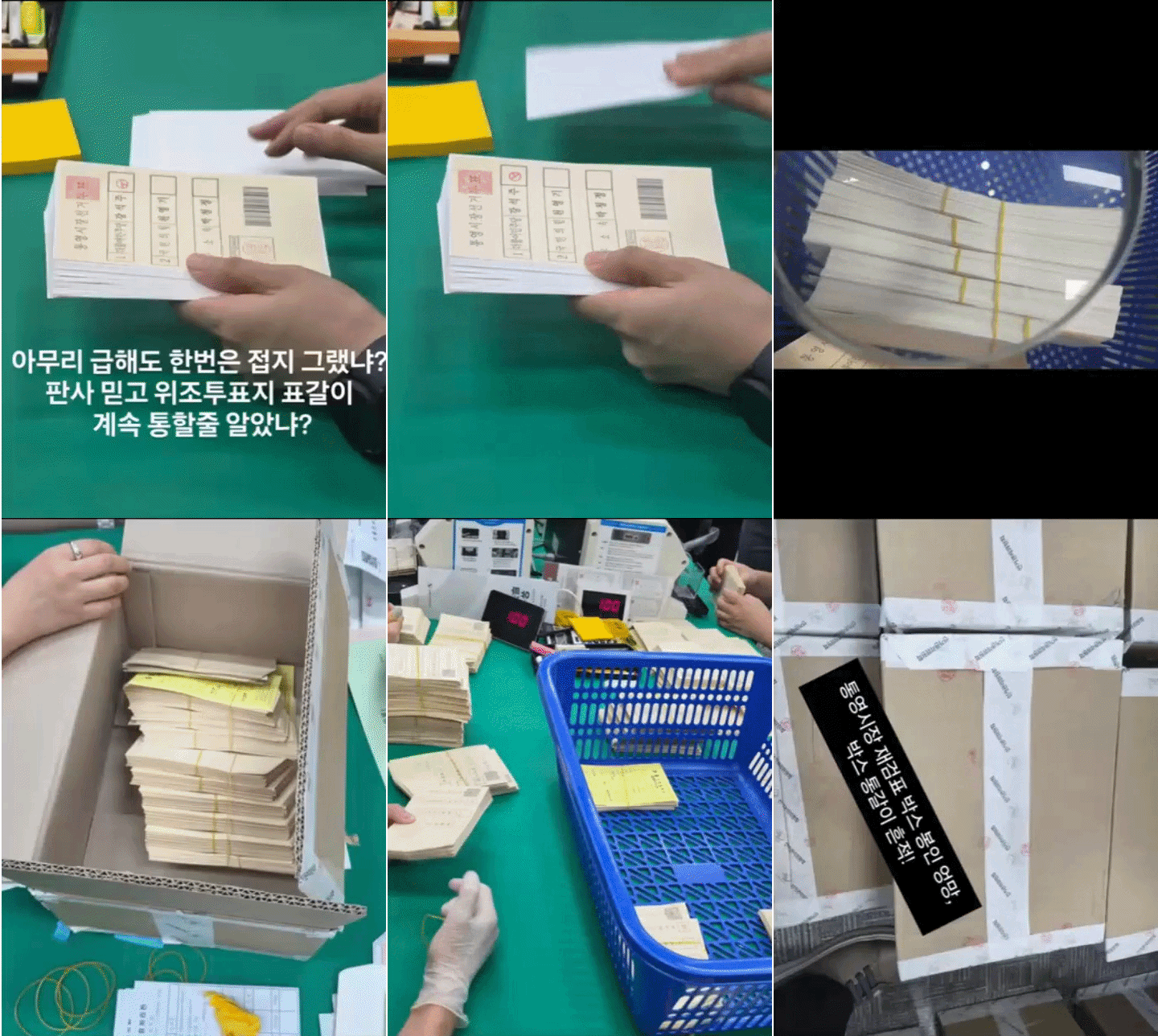 “Ignoring crisp ballots and damaged seals”… Tongyeong mayoral recount concludes with ‘no change in outcome,’ leaving suspicions and public outrage behind
Suspected counterfeit ballots discovered in Tongyeong [GIF from social media of Representative Hwang Kyo-ahn / Attorney Park Joo-hyun]During a recount of the Tongyeong mayoral election in South Gyeong
“Ignoring crisp ballots and damaged seals”… Tongyeong mayoral recount concludes with ‘no change in outcome,’ leaving suspicions and public outrage behind
Suspected counterfeit ballots discovered in Tongyeong [GIF from social media of Representative Hwang Kyo-ahn / Attorney Park Joo-hyun]During a recount of the Tongyeong mayoral election in South Gyeong
 President Yoon, regarding the first-instance ruling on the Public Official Election Act: “An excessive political verdict that distorts the facts… We will appeal immediately.”
The first-instance sentencing hearing for President Yoon Suk Yeol regarding violations of the Public Official Election Act is being broadcast live at Seoul Station on the 27th. [Photo=Yonhap News]Pres
President Yoon, regarding the first-instance ruling on the Public Official Election Act: “An excessive political verdict that distorts the facts… We will appeal immediately.”
The first-instance sentencing hearing for President Yoon Suk Yeol regarding violations of the Public Official Election Act is being broadcast live at Seoul Station on the 27th. [Photo=Yonhap News]Pres
 WSJ: "SK Hynix ADR Premium Is a Sign of AI Trading Overheat"
Advertisement for SK Hynix ADR listing in New York's Times Square [Reuters=Yonhap News file photo]The Wall Street Journal (WSJ) has pointed out that the price of SK Hynix’s American Depositary Recei
WSJ: "SK Hynix ADR Premium Is a Sign of AI Trading Overheat"
Advertisement for SK Hynix ADR listing in New York's Times Square [Reuters=Yonhap News file photo]The Wall Street Journal (WSJ) has pointed out that the price of SK Hynix’s American Depositary Recei
 'Godfather of Japanese Mystery Novels' Keigo Higashino Passes Away After Battle with Cancer at 68
Famous Japanese mystery novelist Keigo Higashino [AFP=Yonhap News]It has been belatedly reported that Keigo Higashino, the "godfather of Japanese mystery novels" and author of bestsellers such as "The
'Godfather of Japanese Mystery Novels' Keigo Higashino Passes Away After Battle with Cancer at 68
Famous Japanese mystery novelist Keigo Higashino [AFP=Yonhap News]It has been belatedly reported that Keigo Higashino, the "godfather of Japanese mystery novels" and author of bestsellers such as "The
 [Park Pil-kyu Security Column] To the Ignorant Trying to Clothe a Beast in Sheep's Clothing
Rep. Kim Byung-joo of the Democratic Party of Korea [Photo=Yonhap News]“The Air Force Academy doesn't teach you how to fly a plane!” “The Army, Navy, and Air Force academies are exactly the
[Park Pil-kyu Security Column] To the Ignorant Trying to Clothe a Beast in Sheep's Clothing
Rep. Kim Byung-joo of the Democratic Party of Korea [Photo=Yonhap News]“The Air Force Academy doesn't teach you how to fly a plane!” “The Army, Navy, and Air Force academies are exactly the
 [Issue Diagnosis] Two Effects of the Election Petition Review
 [Photo] Evidence of Election Fraud Flooding U.S. Media… Trump Had 2.7 Million Votes Stolen
 [Video] U.S. Semiquincentennial Air Show... 'Art in the Sky' streaks across New York
 [Editorial Cartoon] A Draconian Law That Undermines Freedom of Expression

 List
List