Cheongmaek (靑脈), disguised as a mainstream magazine, was centered around figures like Shin Young-bok and Kim Kil-rak. It aimed to spread anti-government ideology to young people and intellectuals, contributing to the establishment of the underground organization of the Tonghyokdang.
Tonghyokdang was characterized by its dual structure: a legal facade and an illegal core.
The representative legal domain was 'Cheongmaek.' This magazine, circulated relatively openly on university campuses, covered discourses on social sciences, literature, and current affairs.
In contrast, the core illegal domain was 'Hyokmyeongsseon' (Revolutionary Front). This newspaper directly presented the organization's identity, line, and operational objectives.
Broadening Reach with 'Cheongmaek' and Spreading Juche Ideology with 'Hyokmyeongsseon'
Shin Young-bok moved between both domains. This was not simply a case of 'overlapping participation' but a result of role division. 'Cheongmaek' served as a window to broaden contact, while 'Hyokmyeongsseon' acted as a compass to set the direction.
The method of sharing a sense of crisis in a legal magazine and then injecting the ideology through an illegal medium is similar to North Korea's propaganda tactics against the South. Indeed, Tonghyokdang expanded its human network by operating study groups such as the Saemoonhwa Research Association and the Cheongmaek Society.
Statistically, in the mid-1960s, the number of university students in South Korea was around 200,000. Although Tonghyokdang directly organized only a minuscule portion of them, the purpose of an vanguard organization was not about sheer numbers but about cohesion.
The calculation was that a small core would lead the majority. Shin Young-bok played the role of a 'connector' in this structure. Cross-verified through court rulings and testimonies, he was involved in gaining trust in the legal domain and facilitating the movement of some individuals to the illegal domain.
The Conflict Between the Claim of "I Didn't Know" and Historical Records
The most widely cited explanation surrounding Shin Young-bok is the claim that he "did not know about Tonghyokdang." This assertion spread through Shin Young-bok's remarks introduced in a 2006 article by Han Hong-gu in 'Hankyoreh 21.'
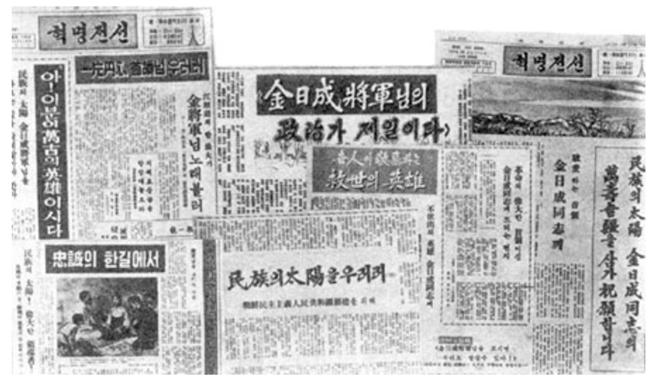 Hyokmyeongsseon (Revolutionary Front) was the clandestine newspaper of the Tongil Hyokmyeongdang (United Revolutionary Party), aiming to establish a communist revolutionary organization as a core anti-South Korean revolutionary apparatus.
The gist of the explanation is that he only became acquainted with related individuals through 'Cheongmaek' in late 1965 or early 1966, and that he had never met key leaders like Kim Jong-tae or Lee Moon-gyu until the incident broke out.
However, this explanation conflicts with historical records. First, the founding manifesto and early articles of 'Hyokmyeongsseon' date back to 1964. The dates, attendees, and flow of discussions are meticulously recorded.
Second, Kim Kil-rak's memoir 'Juamsan' describes the organization's formation and reporting structure from an insider's perspective. It reveals a structure that cannot be explained by personal wanderings or coincidental involvement.
Third, the Supreme Court ruling did not consider Shin Young-bok's actions as 'involvement without knowledge.' The judgment was based on the circumstances of repeated reporting, instructions, and execution.
Furthermore, the claim of "not knowing key cadres" muddles the issue. The essence of organizational activity is functional connection, not personal acquaintance. The criterion is not how many times one met a specific individual, but what role one played.
If participation in writing, approval of the newspaper's line, management of subordinate organizations, and reporting of activities existed, then awareness of names or titles is secondary.
In summary, the explanation presented by Han Hong-gu expands a part to obscure the whole. The historical record does not permit this. The documents from 1964, the activity records from 1966-1967, and the ruling from 1968 all connect into a single narrative.
Shin Young-bok was not someone who merely brushed past the periphery of Tonghyokdang; he was an individual who played a distinct role at the nexus connecting the legal and illegal spheres. The remaining records are more concrete than the words, "I didn't know."
The Name in the Court Ruling and the Basis for Life Imprisonment
The evaluation of Shin Young-bok should begin not with sentiment or reminiscence, but with the court ruling.
The apex of judicial judgment following the 1968 Tongil Hyokmyeongdang case is the Supreme Court of the Republic of Korea's ruling. This judgment is a document constructed by synthesizing investigation records, evidence, and testimonies, not political rhetoric or propaganda slogans.
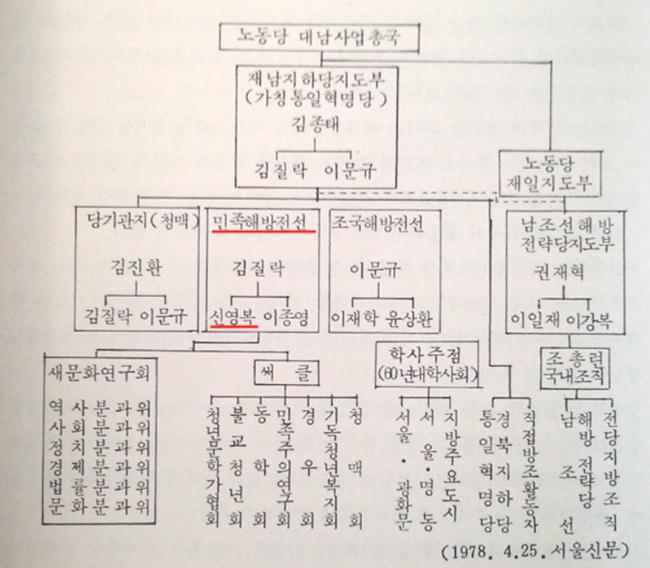 Tonghyokdang organizational chart. [Diagram = Seoul Shinmun]
The ruling does not comment on the disposition of specific individuals. It records what was done, when, where, and how. The accumulation of these records leads to the sentence.
In the ruling, Shin Young-bok's name is not peripheral. His role in defining the organization's nature, managing subordinate organizations, producing and distributing propaganda materials, and participating in the reporting system is specifically detailed. In particular, the ruling's phrase "with the intent to benefit an anti-state organization" refers to the outcome of actions, not an abstract accusation.
When that outcome is repeated, continuous, and organized, the sentence is aggravated. A life sentence is predicated on accumulated roles, not a single act.
Looking at it year by year, the ruling reflects a flow leading to the arrests: △1964, organization formation and decision on propaganda media △1966-67, dissemination through university and intellectual networks △1968, arrests.
The ruling makes its judgment by connecting meetings on specific dates, encounters at specific locations, and the delivery of specific documents. This contradicts explanations of "not knowing" or "light involvement." The court defined Shin Young-bok as a functional participant.
Recruitment-Reporting-Instruction-Execution... Records of Operations Involving Korea Military Academy Cadets and University Students
The recurring keywords in the court ruling and investigation records are recruitment-reporting-instruction-execution. These are the vocabularies of organizational activity, not a self-directed discussion group. Among the areas Shin Young-bok was involved in, the connection between Korea Military Academy cadets and university students is particularly noteworthy.
At the time, he was a professor at the Korea Military Academy, teaching economics. The position of professor provided both access and credibility.
According to records, meetings took place around 1966 in various cafes in the Jung-gu district of Seoul and at residences in Galhyeon-dong, Seodaemun-gu. The purpose of these meetings was not mere social gathering but understanding the disposition of targets and phased contact.
The court ruling specifies the existence of notes recording an individual's ideological disposition and reports on the results of activities. A report is different from a personal diary; it is a deliverable submitted to a superior.
The operations involving university students followed a similar structure. The records indicate assembly at a specific location on a specific date, planned and executed demonstrations using specific slogans, followed by an assessment that was then reported. This implies pre-planning and post-action reporting, not spontaneous action.
Based on this repetition, the court recognized organized activity. This judgment would be difficult to apply to one or two contacts or simple agreement.
The individuals appearing in this process are recorded by their real names. Connections with upper and lower links, such as Kim Kil-rak, Kim Jong-tae, and Lee Moon-gyu, are confirmed by documents.
Locations are also specified, with repeated references to meeting places in Jung-gu and Seodaemun-gu. The court makes its judgment by connecting people, places, and actions in this way. This format is difficult to embellish or downplay retrospectively.
◆ Songsan
Poet and researcher of history and philosophy. He served as a director of the Syngman Rhee Institute and is currently active as a research advisor for the Korean Modern and Contemporary History Research Association and the representative of the Philosophy Forum Lyceion. He has published four poetry collections and co-translated 'The Hero of Hooko Beach.' Songsan is a pen name.

 Trump pressures for rate cut again ahead of FOMC... "Should be the lowest in the world"
U.S. President Donald Trump. [Photo = The White House] U.S. President Donald Trump once again pressured the Federal Reserve, the U.S. central bank, to lower interest rates on the 27th (local time
Trump pressures for rate cut again ahead of FOMC... "Should be the lowest in the world"
U.S. President Donald Trump. [Photo = The White House] U.S. President Donald Trump once again pressured the Federal Reserve, the U.S. central bank, to lower interest rates on the 27th (local time
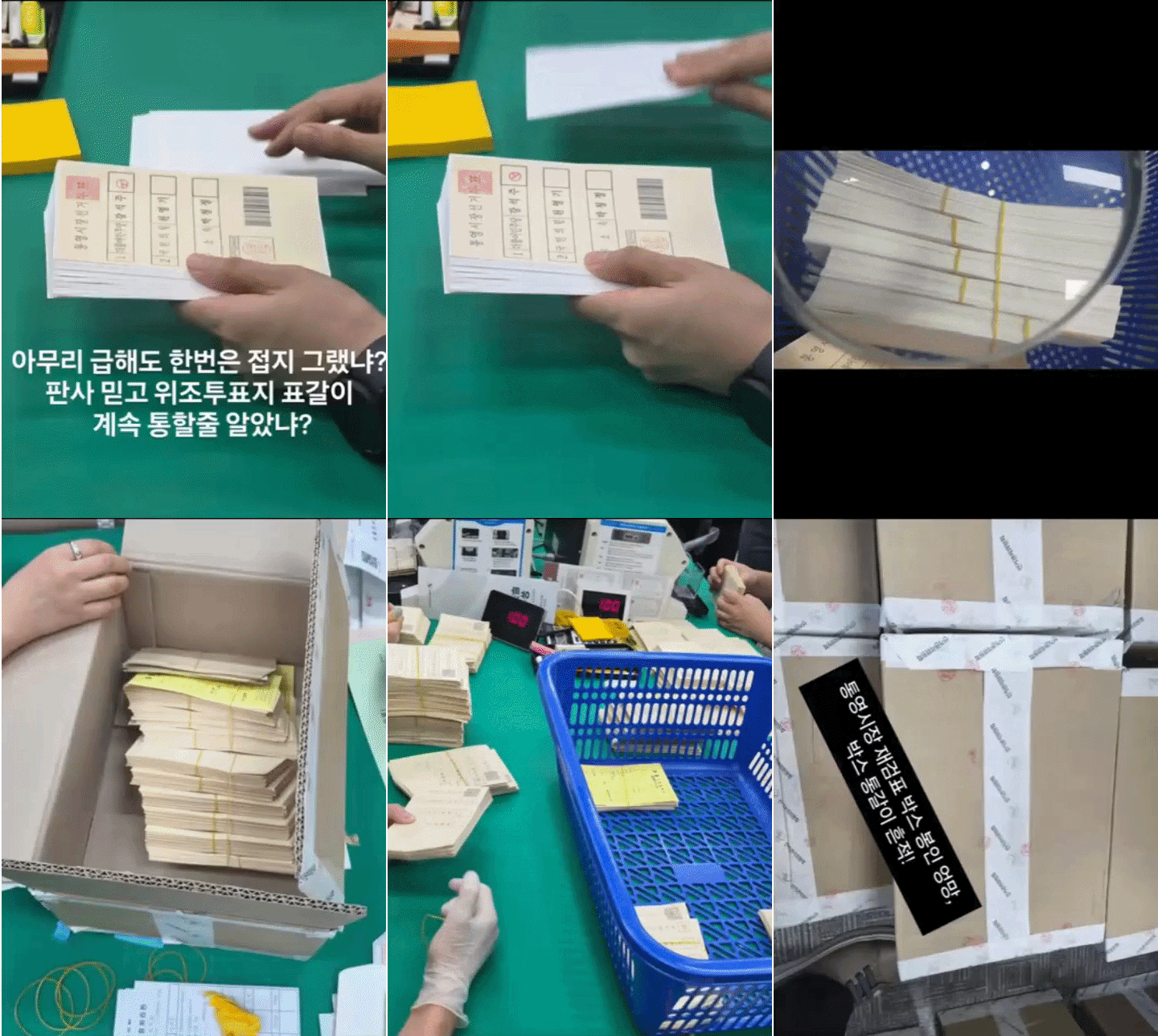 “Ignoring crisp ballots and damaged seals”… Tongyeong mayoral recount concludes with ‘no change in outcome,’ leaving suspicions and public outrage behind
Suspected counterfeit ballots discovered in Tongyeong [GIF from social media of Representative Hwang Kyo-ahn / Attorney Park Joo-hyun]During a recount of the Tongyeong mayoral election in South Gyeong
“Ignoring crisp ballots and damaged seals”… Tongyeong mayoral recount concludes with ‘no change in outcome,’ leaving suspicions and public outrage behind
Suspected counterfeit ballots discovered in Tongyeong [GIF from social media of Representative Hwang Kyo-ahn / Attorney Park Joo-hyun]During a recount of the Tongyeong mayoral election in South Gyeong
 President Yoon, regarding the first-instance ruling on the Public Official Election Act: “An excessive political verdict that distorts the facts… We will appeal immediately.”
The first-instance sentencing hearing for President Yoon Suk Yeol regarding violations of the Public Official Election Act is being broadcast live at Seoul Station on the 27th. [Photo=Yonhap News]Pres
President Yoon, regarding the first-instance ruling on the Public Official Election Act: “An excessive political verdict that distorts the facts… We will appeal immediately.”
The first-instance sentencing hearing for President Yoon Suk Yeol regarding violations of the Public Official Election Act is being broadcast live at Seoul Station on the 27th. [Photo=Yonhap News]Pres
 WSJ: "SK Hynix ADR Premium Is a Sign of AI Trading Overheat"
Advertisement for SK Hynix ADR listing in New York's Times Square [Reuters=Yonhap News file photo]The Wall Street Journal (WSJ) has pointed out that the price of SK Hynix’s American Depositary Recei
WSJ: "SK Hynix ADR Premium Is a Sign of AI Trading Overheat"
Advertisement for SK Hynix ADR listing in New York's Times Square [Reuters=Yonhap News file photo]The Wall Street Journal (WSJ) has pointed out that the price of SK Hynix’s American Depositary Recei
 'Godfather of Japanese Mystery Novels' Keigo Higashino Passes Away After Battle with Cancer at 68
Famous Japanese mystery novelist Keigo Higashino [AFP=Yonhap News]It has been belatedly reported that Keigo Higashino, the "godfather of Japanese mystery novels" and author of bestsellers such as "The
'Godfather of Japanese Mystery Novels' Keigo Higashino Passes Away After Battle with Cancer at 68
Famous Japanese mystery novelist Keigo Higashino [AFP=Yonhap News]It has been belatedly reported that Keigo Higashino, the "godfather of Japanese mystery novels" and author of bestsellers such as "The
 [Park Pil-kyu Security Column] To the Ignorant Trying to Clothe a Beast in Sheep's Clothing
Rep. Kim Byung-joo of the Democratic Party of Korea [Photo=Yonhap News]“The Air Force Academy doesn't teach you how to fly a plane!” “The Army, Navy, and Air Force academies are exactly the
[Park Pil-kyu Security Column] To the Ignorant Trying to Clothe a Beast in Sheep's Clothing
Rep. Kim Byung-joo of the Democratic Party of Korea [Photo=Yonhap News]“The Air Force Academy doesn't teach you how to fly a plane!” “The Army, Navy, and Air Force academies are exactly the
 [Issue Diagnosis] Two Effects of the Election Petition Review
 [Photo] Evidence of Election Fraud Flooding U.S. Media… Trump Had 2.7 Million Votes Stolen
 [Video] U.S. Semiquincentennial Air Show... 'Art in the Sky' streaks across New York
 [Editorial Cartoon] A Draconian Law That Undermines Freedom of Expression

 List
List