Argentine President Javier Milei, often called the “Donald Trump of Argentina.” [Photo=AFP/Yonhap News]
From the moment he appeared on the political stage, Argentine President Javier Milei has been nothing short of unconventional.
During his campaign, he famously brandished a real chainsaw, shouting that he would “cut through the establishment.” That performance drew both mockery and global attention at the same time.
While many dismissed him as a radical demagogue, his actions since taking office have been unexpectedly consistent. He shook the nation not with mere words, but with policy; not with symbols, but with execution.
‘Selection After Verification’ Instead of ‘Mass Layoffs’
The core philosophy of the Milei administration was simple: no part of the public sector would be considered a sanctuary. He introduced aptitude and competency assessments for contract and temporary government employees, using the results as the criteria for contract renewals.
Rather than adopting the provocative approach of mass layoffs, he implemented a structure of “selection after verification.” While this measure was a matter of administrative efficiency, it carried much greater political significance.
It sent a powerful signal to the younger generation and the middle class—who are already accustomed to competition and performance evaluation in the private sector—that the state was finally starting to apply the same standards to itself.
The reason this change was possible is clear: Milei was the leader of the ruling party and held the executive power of the government. He was able to withstand union resistance and translate policy outcomes into immediate political effectiveness.
His supporters felt that things were “truly changing, not just being talked about.” The essence of his radicalism was not the performance itself, but his capacity for execution.
The question is whether this model can be directly applied to Korean politics. This is especially urgent for the Korean right wing, which professes a “meritocracy that stands with the youth,” and for the People Power Party, currently in the position of the main opposition.
To start with the conclusion: it is impossible to apply it as is. The Korean opposition party has neither the power to make personnel decisions nor the power to execute policies. It lacks the fundamental conditions to shake the national system at once like Milei did.
However, what is important here is not the diagnosis that it is “impossible,” but the question of “how to adapt it.” While the opposition cannot be the agent of execution, it can be the setter of standards.
Opposition Party, Become a Setter of Standards
A declaration that “we will change things like this immediately” may sound hollow, but the question, “Why is this standard not being applied?” carries real political weight.
Reform by the opposition begins not with an execution plan, but by setting a standard that society can no longer ignore.
In particular, the language of meritocracy is already a part of daily life for the younger generation. In the process of job hunting, performance evaluations, and the anxiety of restructuring, competition and verification have always been a burden for the individual.
To them, the question, “Why is the public sector an exception?” is not a matter of ideology, but a matter of experience. The moment this question is raised, reform shifts from the realm of a specific political faction to the realm of common sense.
Of course, there are pitfalls to avoid in this process. Treating all public officials as enemies is a sure-fire way to fail. In reality, many public officials are also dissatisfied with a structure that protects them without merit, but they are in a position where they cannot speak out.
What the opposition must do is not “bashing public officials,” but proposing a distinction between hardworking officials and a structure that does not reward them. The message must be clear: verification is a mechanism for protection, not for punishment.
The realistic stage needed to keep all these discussions grounded is local government. Even without holding power in the central government, experiments—albeit limited ones—are possible at the local level. Local elections are rehearsals for massive national reform.
Political trust is accumulated simply by applying standards in small units and showing the results. The experience of the youth and the private sector seeing that things have “actually changed” is more powerful than any declaration.
Argentina’s chainsaw was ultimately just a symbol. What mattered was not what was being cut, but by what standard the nation was being reshaped.
That is exactly what the Korean opposition needs to learn. It is not politics that promises power, but politics that asks about standards at this very moment. When those questions accumulate, power will inevitably follow.

◆ Professor Kyu-Jin Shim
Professor of Digital Media at IE University, Spain. He served as a policy advisor to the Ministry of National Defense and head of the Data Lab at the Yeouido Institute, and has worked as a tenured professor at the University of Melbourne and an assistant professor at Singapore Management University. He is the author of books including "K-Drama Yoon Suk-yeol" and "Hyper-Gender."

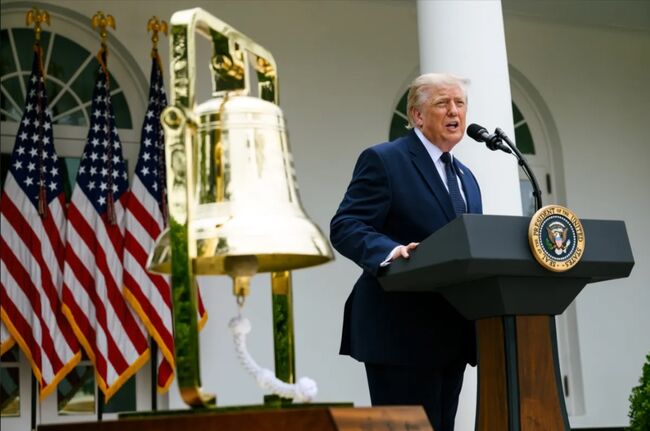 Trump pressures for rate cut again ahead of FOMC... "Should be the lowest in the world"
U.S. President Donald Trump. [Photo = The White House] U.S. President Donald Trump once again pressured the Federal Reserve, the U.S. central bank, to lower interest rates on the 27th (local time
Trump pressures for rate cut again ahead of FOMC... "Should be the lowest in the world"
U.S. President Donald Trump. [Photo = The White House] U.S. President Donald Trump once again pressured the Federal Reserve, the U.S. central bank, to lower interest rates on the 27th (local time
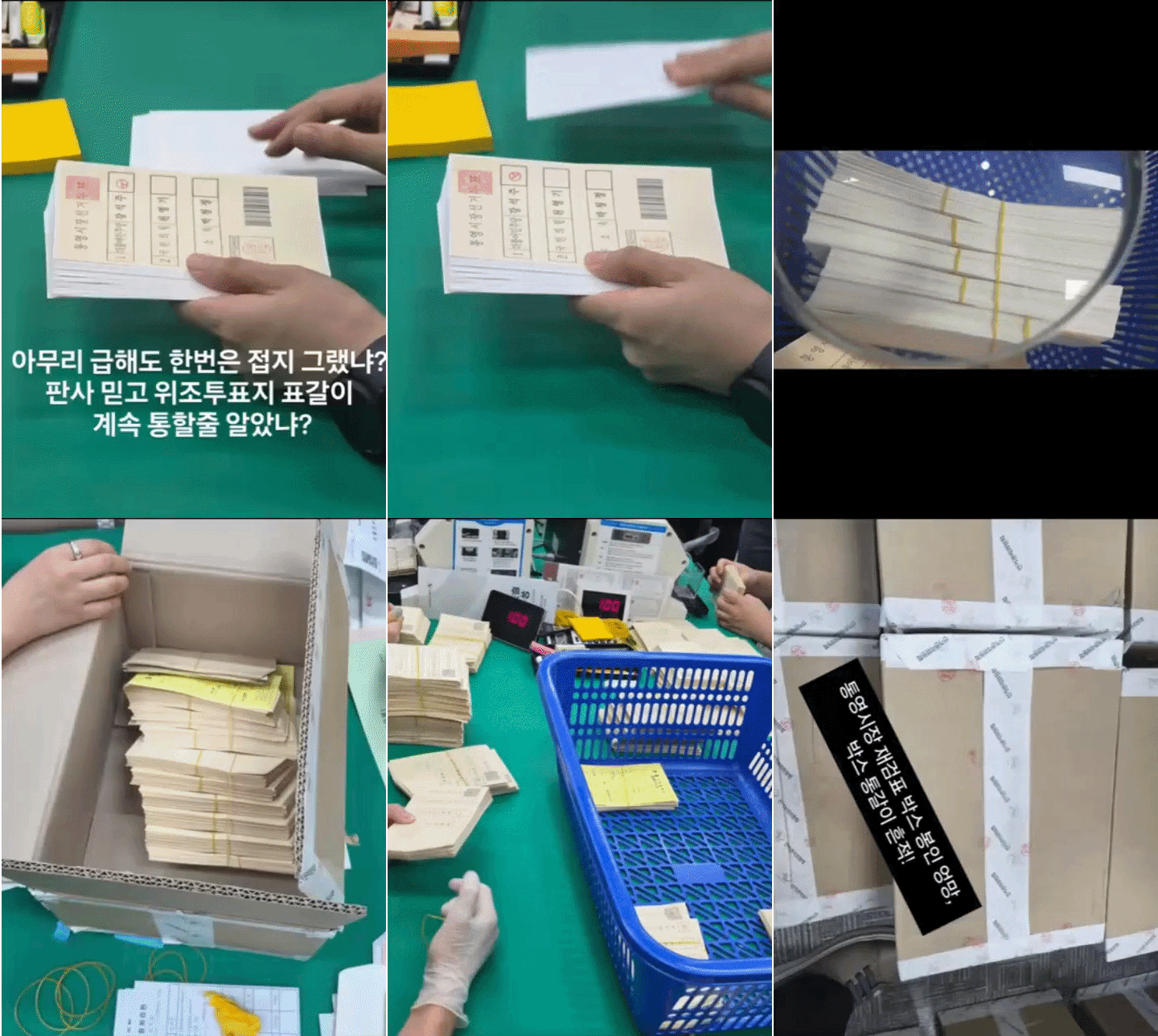 “Ignoring crisp ballots and damaged seals”… Tongyeong mayoral recount concludes with ‘no change in outcome,’ leaving suspicions and public outrage behind
Suspected counterfeit ballots discovered in Tongyeong [GIF from social media of Representative Hwang Kyo-ahn / Attorney Park Joo-hyun]During a recount of the Tongyeong mayoral election in South Gyeong
“Ignoring crisp ballots and damaged seals”… Tongyeong mayoral recount concludes with ‘no change in outcome,’ leaving suspicions and public outrage behind
Suspected counterfeit ballots discovered in Tongyeong [GIF from social media of Representative Hwang Kyo-ahn / Attorney Park Joo-hyun]During a recount of the Tongyeong mayoral election in South Gyeong
 President Yoon, regarding the first-instance ruling on the Public Official Election Act: “An excessive political verdict that distorts the facts… We will appeal immediately.”
The first-instance sentencing hearing for President Yoon Suk Yeol regarding violations of the Public Official Election Act is being broadcast live at Seoul Station on the 27th. [Photo=Yonhap News]Pres
President Yoon, regarding the first-instance ruling on the Public Official Election Act: “An excessive political verdict that distorts the facts… We will appeal immediately.”
The first-instance sentencing hearing for President Yoon Suk Yeol regarding violations of the Public Official Election Act is being broadcast live at Seoul Station on the 27th. [Photo=Yonhap News]Pres
 WSJ: "SK Hynix ADR Premium Is a Sign of AI Trading Overheat"
Advertisement for SK Hynix ADR listing in New York's Times Square [Reuters=Yonhap News file photo]The Wall Street Journal (WSJ) has pointed out that the price of SK Hynix’s American Depositary Recei
WSJ: "SK Hynix ADR Premium Is a Sign of AI Trading Overheat"
Advertisement for SK Hynix ADR listing in New York's Times Square [Reuters=Yonhap News file photo]The Wall Street Journal (WSJ) has pointed out that the price of SK Hynix’s American Depositary Recei
 'Godfather of Japanese Mystery Novels' Keigo Higashino Passes Away After Battle with Cancer at 68
Famous Japanese mystery novelist Keigo Higashino [AFP=Yonhap News]It has been belatedly reported that Keigo Higashino, the "godfather of Japanese mystery novels" and author of bestsellers such as "The
'Godfather of Japanese Mystery Novels' Keigo Higashino Passes Away After Battle with Cancer at 68
Famous Japanese mystery novelist Keigo Higashino [AFP=Yonhap News]It has been belatedly reported that Keigo Higashino, the "godfather of Japanese mystery novels" and author of bestsellers such as "The
 [Park Pil-kyu Security Column] To the Ignorant Trying to Clothe a Beast in Sheep's Clothing
Rep. Kim Byung-joo of the Democratic Party of Korea [Photo=Yonhap News]“The Air Force Academy doesn't teach you how to fly a plane!” “The Army, Navy, and Air Force academies are exactly the
[Park Pil-kyu Security Column] To the Ignorant Trying to Clothe a Beast in Sheep's Clothing
Rep. Kim Byung-joo of the Democratic Party of Korea [Photo=Yonhap News]“The Air Force Academy doesn't teach you how to fly a plane!” “The Army, Navy, and Air Force academies are exactly the
 [Issue Diagnosis] Two Effects of the Election Petition Review
 [Photo] Evidence of Election Fraud Flooding U.S. Media… Trump Had 2.7 Million Votes Stolen
 [Video] U.S. Semiquincentennial Air Show... 'Art in the Sky' streaks across New York
 [Editorial Cartoon] A Draconian Law That Undermines Freedom of Expression

 List
List