 The first meeting to assess the progress of the wartime operational control transfer for 2026 is being held at the Ministry of National Defense conference room on the 28th. [Yonhap News]
On January 28, 2026, the Ministry of National Defense held the first meeting to assess the progress of the wartime operational control transfer, officially declaring this year as the "foundational year" for regaining wartime operational control. Minister of National Defense Ahn Kyu-baek emphasized, "The recovery of operational control signifies the strengthening of the ROK military's independent readiness posture and a new development in the ROK-US alliance." While presenting the verification of Full Operational Capability (FOC) as the top priority for this year, despite these declarative advancements, one questions whether we are sufficiently examining the 'darkness hidden in the light.'
Director Bong Joon-ho's 'Parasite' compresses and reveals the cracks in Korean society through the contrast of light and darkness in its spaces. President Park's family home appears to be an ideal space filled with sunlight, but what destroys that ideal is the basement, which no one looks down upon. The unseen darkness remains unmanaged, ultimately driving the entire house to ruin. This cinematic structure is remarkably similar to the reality that South Korean security faces today.
Today, South Korean security discourse is dominated by the keywords of peace and self-reliance. The transfer of wartime operational control is explained as a symbol of regaining sovereignty and dignity, and military organizational reforms are justified in the language of efficiency. The discussion about a unified military academy advocates for strengthening jointness and nurturing future military talent, while the restoration of the September 19th military agreement has been invoked again in the name of institutionalizing peace. On the surface, all these appear to be choices aligned with ideal values. They resemble President Park's living room, which is impeccable for external viewing.
However, as Bong Joon-ho showed, the stronger the light, the deeper the shadow. The basement of our security is occupied by realities we have intentionally ignored. While we talk about the transfer of operational control, core capabilities to suppress North Korea's air defense network and strike deep into enemy territory during a full-scale war are limited. Strategic reconnaissance assets are insufficient by modern warfare standards, and the logistics and supply chain systems are not prepared for a protracted war of attrition. Wartime command and control capabilities have also never been verified in actual combat.
The question of how policies pursued in the name of self-reliance and peace contribute to actual war prevention and operational capability has always been pushed aside, and military leadership has failed to voice their conscience.
The September 19th military agreement, pursued in the name of peace, aimed to ease tensions but has solidified an asymmetrical structure that only restricts the ROK military's reconnaissance and surveillance capabilities amidst North Korea's repeated violations and military buildup. While the current administration's restoration of the September 19th military agreement sounds good as "institutionalizing peace," an agreement that fails to control reality is closer to an optical illusion than stability. It will function as a curtain obscuring threats rather than a mechanism to reduce them.
The discussion about a unified military academy is an attempt to cover darkness with light. The foundation of a military is not in weapons or equipment, but in the formation and identity of its officer corps. The Army, Navy, and Air Force academies are not just educational institutions but core infrastructures that have accumulated the operational culture, combat philosophy, and command traditions of each service. The idea of consolidating them under the banner of efficiency and jointness, while seemingly rational on the surface, is highly likely to weaken the military's roots. If the foundation shakes, the superstructure, no matter how authoritative or splendid, cannot last long.
Despite emphasizing self-reliant defense, core technologies in the defense industry remain reliant on foreign sources, and power modernization is repeatedly delayed due to export controls and limitations on technology transfer. The analysis systems and independence of intelligence agencies are also being undermined by various pathological issues, leading to structural vulnerabilities in securing information superiority, which is crucial in modern warfare. The logistics and supply chain systems, focused on peacetime cost reduction in the name of efficiency, have resulted in insufficient capacity to prepare for prolonged wars.
All these trends converge on a common point: the language of ideal values such as self-reliance, peace, and efficiency is overwhelming the actual military realities, gradually weakening the core foundations of security, including command and reconnaissance, power and organization, and logistics and alliances. This is not a sudden collapse but a gradual dismantling under the guise of symbols and justifications.
The tragedy of 'Parasite' occurred not because there was a basement, but because its existence was denied. Security is no different. The moment we consume the transfer of operational control merely as a political symbol, treat military reforms and integration solely as matters of numbers and efficiency, and believe that threats will disappear with declarations of peace, we choose to neglect the darkness rather than amplify the light.
Light cannot find and extinguish darkness, and unmanaged darkness ultimately swallows the entire structure. At the end of the movie, the son returns to the semi-basement. His vow to buy a house to save his father is beautiful but a dream that is realistically difficult to achieve. Security is no different. Declarations that cannot be sustained become not hope, but danger. What South Korean security needs now is not rhetoric that amplifies the light, but the ability to acknowledge the existence of the basement and manage that darkness.
Security is not a matter of pride, political justification, or mere efficiency. Security is the highest domain of a nation, understanding and meticulously examining the entire structure of the house, including the basement, and improving it if there are problems. Just as a house that appears grand and perfect on the outside but collapses internally will be the first to fall, so too do security logic and policies operate under the same principle. This is the most sober lesson of security left by the movie 'Parasite,' and one we must not ignore today. With this brief article, I appeal to the conscience of the security leadership.

◆ Park Pil-kyu, Committee Member
Editorial Board Member, The Hankyoreh
40th graduating class, Korea Military Academy

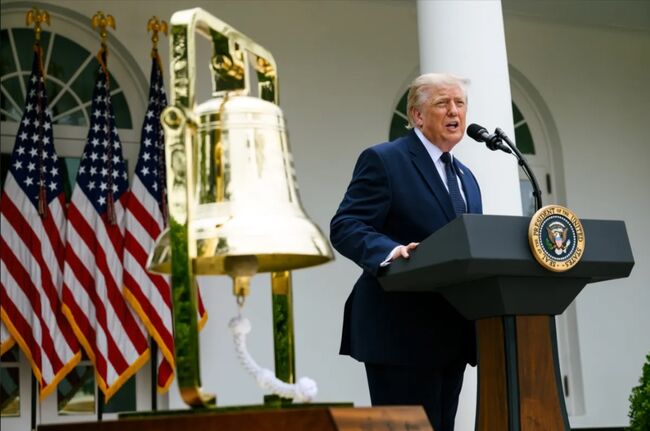 Trump pressures for rate cut again ahead of FOMC... "Should be the lowest in the world"
U.S. President Donald Trump. [Photo = The White House] U.S. President Donald Trump once again pressured the Federal Reserve, the U.S. central bank, to lower interest rates on the 27th (local time
Trump pressures for rate cut again ahead of FOMC... "Should be the lowest in the world"
U.S. President Donald Trump. [Photo = The White House] U.S. President Donald Trump once again pressured the Federal Reserve, the U.S. central bank, to lower interest rates on the 27th (local time
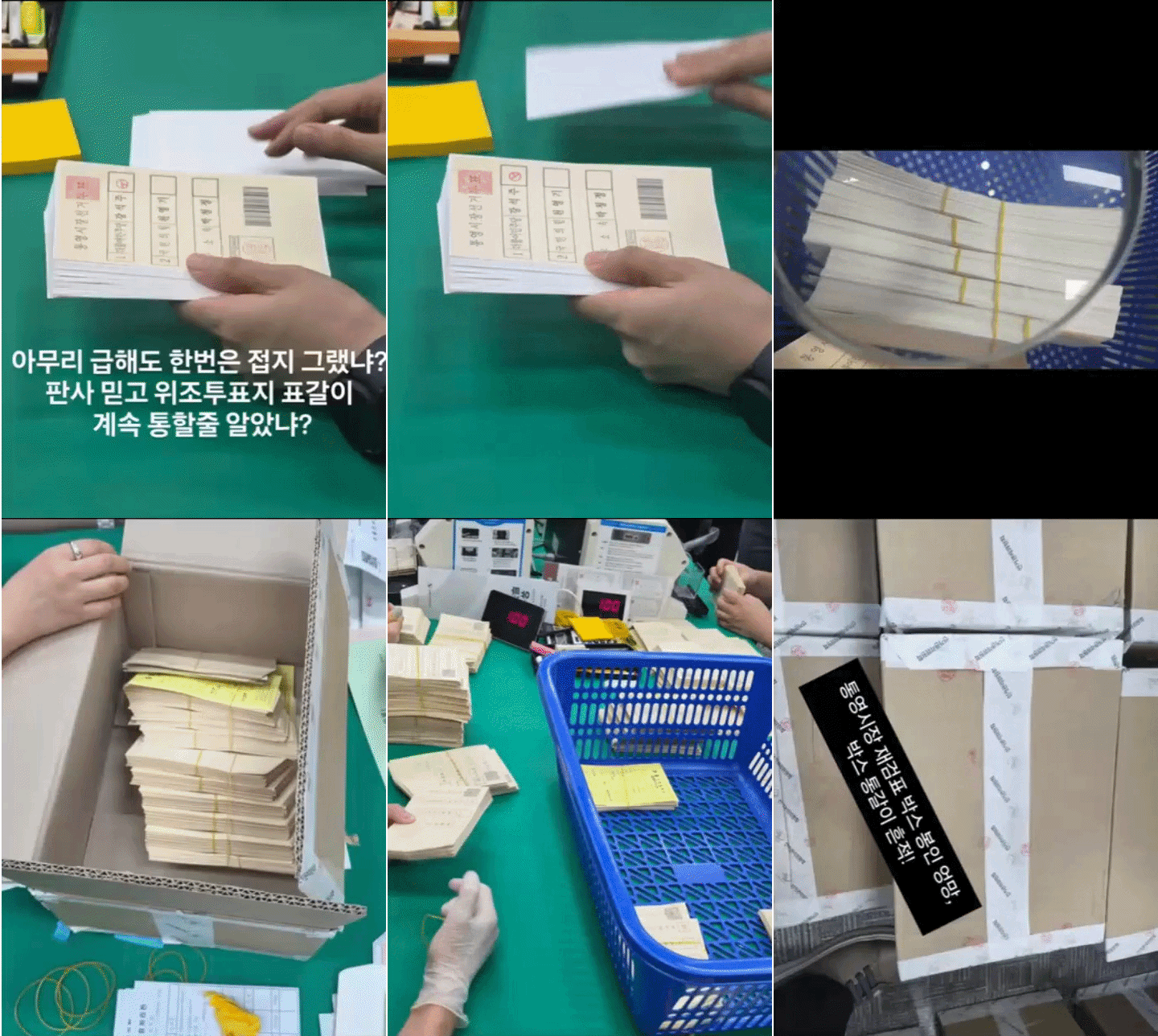 “Ignoring crisp ballots and damaged seals”… Tongyeong mayoral recount concludes with ‘no change in outcome,’ leaving suspicions and public outrage behind
Suspected counterfeit ballots discovered in Tongyeong [GIF from social media of Representative Hwang Kyo-ahn / Attorney Park Joo-hyun]During a recount of the Tongyeong mayoral election in South Gyeong
“Ignoring crisp ballots and damaged seals”… Tongyeong mayoral recount concludes with ‘no change in outcome,’ leaving suspicions and public outrage behind
Suspected counterfeit ballots discovered in Tongyeong [GIF from social media of Representative Hwang Kyo-ahn / Attorney Park Joo-hyun]During a recount of the Tongyeong mayoral election in South Gyeong
 President Yoon, regarding the first-instance ruling on the Public Official Election Act: “An excessive political verdict that distorts the facts… We will appeal immediately.”
The first-instance sentencing hearing for President Yoon Suk Yeol regarding violations of the Public Official Election Act is being broadcast live at Seoul Station on the 27th. [Photo=Yonhap News]Pres
President Yoon, regarding the first-instance ruling on the Public Official Election Act: “An excessive political verdict that distorts the facts… We will appeal immediately.”
The first-instance sentencing hearing for President Yoon Suk Yeol regarding violations of the Public Official Election Act is being broadcast live at Seoul Station on the 27th. [Photo=Yonhap News]Pres
 WSJ: "SK Hynix ADR Premium Is a Sign of AI Trading Overheat"
Advertisement for SK Hynix ADR listing in New York's Times Square [Reuters=Yonhap News file photo]The Wall Street Journal (WSJ) has pointed out that the price of SK Hynix’s American Depositary Recei
WSJ: "SK Hynix ADR Premium Is a Sign of AI Trading Overheat"
Advertisement for SK Hynix ADR listing in New York's Times Square [Reuters=Yonhap News file photo]The Wall Street Journal (WSJ) has pointed out that the price of SK Hynix’s American Depositary Recei
 'Godfather of Japanese Mystery Novels' Keigo Higashino Passes Away After Battle with Cancer at 68
Famous Japanese mystery novelist Keigo Higashino [AFP=Yonhap News]It has been belatedly reported that Keigo Higashino, the "godfather of Japanese mystery novels" and author of bestsellers such as "The
'Godfather of Japanese Mystery Novels' Keigo Higashino Passes Away After Battle with Cancer at 68
Famous Japanese mystery novelist Keigo Higashino [AFP=Yonhap News]It has been belatedly reported that Keigo Higashino, the "godfather of Japanese mystery novels" and author of bestsellers such as "The
 [Park Pil-kyu Security Column] To the Ignorant Trying to Clothe a Beast in Sheep's Clothing
Rep. Kim Byung-joo of the Democratic Party of Korea [Photo=Yonhap News]“The Air Force Academy doesn't teach you how to fly a plane!” “The Army, Navy, and Air Force academies are exactly the
[Park Pil-kyu Security Column] To the Ignorant Trying to Clothe a Beast in Sheep's Clothing
Rep. Kim Byung-joo of the Democratic Party of Korea [Photo=Yonhap News]“The Air Force Academy doesn't teach you how to fly a plane!” “The Army, Navy, and Air Force academies are exactly the
 [Issue Diagnosis] Two Effects of the Election Petition Review
 [Photo] Evidence of Election Fraud Flooding U.S. Media… Trump Had 2.7 Million Votes Stolen
 [Video] U.S. Semiquincentennial Air Show... 'Art in the Sky' streaks across New York
 [Editorial Cartoon] A Draconian Law That Undermines Freedom of Expression

 List
List









