Amid speculation that a U.S. military operation against Iran is imminent, messages prioritizing dialogue from both sides are successively emerging, drawing attention to the possibility of a dramatic negotiation.
Following U.S. President Donald Trump, who had been contemplating military intervention, mentioning plans for dialogue with Iran, Iran's own statement about progress in negotiations with the U.S. has led to analyses suggesting a slight de-escalation of the hair-trigger tension.
However, with both the U.S. and Iran maintaining their military readiness, the possibility of a "strong against strong" confrontation remains.
According to foreign media reports compiled on the 1st, President Trump stated on the 31st local time that the future plan for the Iran situation is "an agreement through dialogue."
In an interview with a Fox News reporter, President Trump said, "The plan is to talk to us. Let's see if we can get something done," as reported by the journalist on X (formerly Twitter).
On the same day, Iran also made statements indicating a focus on dialogue and a willingness to engage in nuclear negotiations with the U.S.
Iranian President Hassan Rouhani stated in a phone call with Egyptian President Abdel Fattah el-Sisi, "Iran has not pursued war, will never pursue war, and I am confident that war would not be in the interest of Iran, the U.S., or the (Middle East) region."
Ali Shamkhani, Secretary of Iran's Supreme National Security Council (SNSC), also stated that "contrary to the war hype fabricated by the media, structural preparations for negotiations (with the U.S.) are progressing," according to AFP.
 Abraham Lincoln transiting the Arabian Sea [AP=Yonhap News]
These messages from both sides, emphasizing dialogue, came immediately after tensions reached an extreme with the U.S. deploying military assets to Iran.
The U.S. deployed an aircraft carrier strike group, led by the USS Abraham Lincoln, to the Middle East, and reportedly added advanced fighter jets and aerial refueling aircraft to the region.
Not only were P-8A Poseidon anti-submarine patrol aircraft, U.S. surveillance planes, spotted over the Persian Gulf and Gulf of Oman near the Iranian border, but reports also emerged of F-35 fighter jets, which participated in the operation to arrest Venezuelan President Nicolás Maduro, recently relocating to a base in Portugal, Europe.
It is known that within the U.S. administration, plans for a "swift and decisive" military operation against Iran are being discussed under President Trump's directive.
President Trump recently instructed his staff to prepare for quick and decisive attack plans that avoid prolonged conflict, and internal discussions have reportedly included a "big plan" involving the elimination of Iranian leadership and strikes on Revolutionary Guard facilities, according to the Wall Street Journal (WSJ).
The spread of "U.S. attack theories" on social media, following a gas explosion incident in an apartment building in a southern Iranian port city on the same day, claiming that the U.S. directly targeted Revolutionary Guard leadership, is not unrelated to this atmosphere.
Countries around the Middle East are also actively engaging in mediation to prevent armed conflict. Turkey, which shares a border with Iran, as well as Egypt, Saudi Arabia, and Qatar, have all voiced messages opposing war.
Sheikh Mohammed bin Abdulrahman Al Thani, Prime Minister and Minister of Foreign Affairs of Qatar, met with Secretary Shamkhani in Iran on the same day to discuss regional issues, including the easing of military tensions.
Following the meeting, Prime Minister Al Thani stated, "The Qatari government reaffirms its support for all efforts aimed at de-escalating regional tensions."
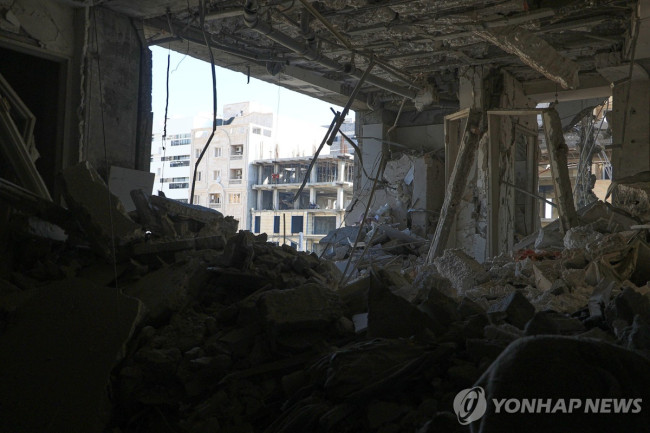 Explosion incident in southern Iran [AP=Yonhap News]
However, analyses suggest that reaching a consensus point will be difficult given the fundamental differences in positions between the U.S. and Iran regarding sensitive issues such as nuclear negotiations.
This is because the U.S. has reportedly demanded that Iran permanently halt uranium enrichment, a core of its nuclear program, limit its ballistic missile program, and cease all support for Iranian proxies in the region, while Iran maintains its stance that it cannot abandon its nuclear capabilities.
According to Iran's state-run IRNA news agency, Major General Amir Hatami, commander of the Iranian Army, delivered a strong message at an event, stating, "Even if the scientists and youth of this nation are martyred, the nuclear science and technology of the Islamic Republic of Iran cannot be destroyed."
Furthermore, concerns are rising that tensions with U.S. forces stationed nearby could increase as Iran plans to proceed with live-fire exercises in the Strait of Hormuz, a vital oil export route, as scheduled.
U.S. Central Command warned in response that "unsafe and unprofessional actions near U.S. forces, regional partners, and commercial shipping will increase the risk of confrontation," but Iran insists on proceeding with the exercises.
President Trump has also left the door open to reverting to military options if dialogue with Iran is not satisfactory.
In his Fox News interview, President Trump alluded to the possibility of military action if negotiations fail, stating, "We have a tremendous fleet heading there. It's bigger than the fleet we had, and still do, in Venezuela."

 [Statement by the Seobeokka KMA Patriots Association] ㉛ Recount the ballots openly, as the previous recount covered up election fraud
Recount of the Tongyeong mayoral election [Photo=Yonhap News]South Korea's liberal democracy is dying. The National Election Commission (NEC), which has degraded into a criminal organization through t
[Statement by the Seobeokka KMA Patriots Association] ㉛ Recount the ballots openly, as the previous recount covered up election fraud
Recount of the Tongyeong mayoral election [Photo=Yonhap News]South Korea's liberal democracy is dying. The National Election Commission (NEC), which has degraded into a criminal organization through t
 What is the significance of the "Trump 2028" red hat that keeps reappearing?
It is noteworthy that while it is "highly likely" that President Donald Trump is "seriously considering" a run for the presidency in 2028, he is also "deliberately" fueling speculation regarding wheth
What is the significance of the "Trump 2028" red hat that keeps reappearing?
It is noteworthy that while it is "highly likely" that President Donald Trump is "seriously considering" a run for the presidency in 2028, he is also "deliberately" fueling speculation regarding wheth
 First U.S. Ambassador of Trump's Second Term to Arrive This Week… Will It Provide Momentum to Resolve Pending Issues?
U.S. Ambassador to South Korea Michelle Steel speaks at the opening ceremony of the Korea-U.S. Shipbuilding Cooperation Center held at the Mayflower Hotel in Washington, D.C., on the 23rd (local time)
First U.S. Ambassador of Trump's Second Term to Arrive This Week… Will It Provide Momentum to Resolve Pending Issues?
U.S. Ambassador to South Korea Michelle Steel speaks at the opening ceremony of the Korea-U.S. Shipbuilding Cooperation Center held at the Mayflower Hotel in Washington, D.C., on the 23rd (local time)
 President Yoon, regarding the first-instance ruling on the Public Official Election Act: “An excessive political verdict that distorts the facts… We will appeal immediately.”
The first-instance sentencing hearing for President Yoon Suk Yeol regarding violations of the Public Official Election Act is being broadcast live at Seoul Station on the 27th. [Photo=Yonhap News]Pres
President Yoon, regarding the first-instance ruling on the Public Official Election Act: “An excessive political verdict that distorts the facts… We will appeal immediately.”
The first-instance sentencing hearing for President Yoon Suk Yeol regarding violations of the Public Official Election Act is being broadcast live at Seoul Station on the 27th. [Photo=Yonhap News]Pres
 91% of Net Influx of MZ Generation Goes to Seoul Metropolitan Area… Population Migration Also Shows 'K-shaped Polarization' by Industry
[Provided by Leaders Index]Over the past four years, the MZ generation population has become increasingly concentrated in the Seoul metropolitan area and the Chungcheong region. While cities cen
91% of Net Influx of MZ Generation Goes to Seoul Metropolitan Area… Population Migration Also Shows 'K-shaped Polarization' by Industry
[Provided by Leaders Index]Over the past four years, the MZ generation population has become increasingly concentrated in the Seoul metropolitan area and the Chungcheong region. While cities cen
 'Godfather of Japanese Mystery Novels' Keigo Higashino Passes Away After Battle with Cancer at 68
Famous Japanese mystery novelist Keigo Higashino [AFP=Yonhap News]It has been belatedly reported that Keigo Higashino, the "godfather of Japanese mystery novels" and author of bestsellers such as "The
'Godfather of Japanese Mystery Novels' Keigo Higashino Passes Away After Battle with Cancer at 68
Famous Japanese mystery novelist Keigo Higashino [AFP=Yonhap News]It has been belatedly reported that Keigo Higashino, the "godfather of Japanese mystery novels" and author of bestsellers such as "The
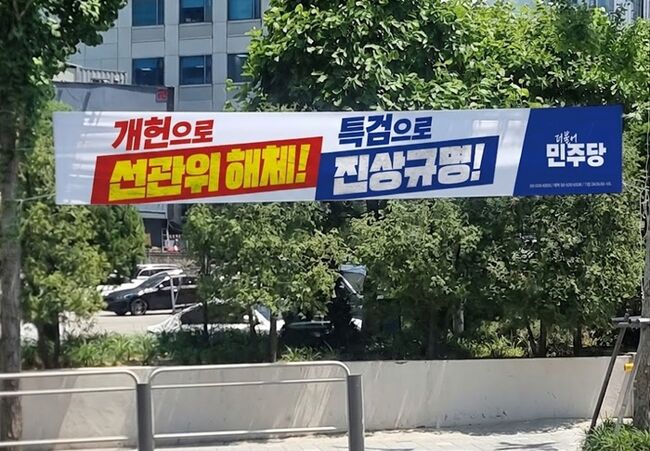 [Cho Yang-geon Column] The NEC: Facing a Fate of "Discarding the Dog After the Hunt"
Banner calling for the "dissolution of the NEC" posted by the Democratic Party. [AI-generated image]Banners calling for the "dissolution of the National Election Commission (NEC)" posted by the Democr
[Cho Yang-geon Column] The NEC: Facing a Fate of "Discarding the Dog After the Hunt"
Banner calling for the "dissolution of the NEC" posted by the Democratic Party. [AI-generated image]Banners calling for the "dissolution of the National Election Commission (NEC)" posted by the Democr
 [Photo] Evidence of Election Fraud Flooding U.S. Media… Trump Had 2.7 Million Votes Stolen
 [Video] U.S. Semiquincentennial Air Show... 'Art in the Sky' streaks across New York
 [Editorial Cartoon] A Draconian Law That Undermines Freedom of Expression

 List
List