Judge Ji Gwi-yeon [Provided by Seoul Central District Court]
Judge Ji Gwi-yeon of the Seoul Central District Court, who presided over the rebellion charges against former President Yoon Suk-yeol, will be transferred to the Seoul Northern District Court following the first-instance sentencing.
The Supreme Court announced the regular personnel appointments for judges below the level of district court chief judge on the 6th. Except for transfers to the newly established Daejeon, Daegu, and Gwangju Rehabilitation Courts (effective March 1st), the appointments are effective from the 23rd of this month.
Judge Ji Gwi-yeon, Chief Judge of the Criminal Division 25 at the Central District Court, who presided over the rebellion charges against former President Yoon, former Minister of National Defense Kim Yong-hyun, and former Commissioner General of the National Police Agency Cho Ji-ho, will be transferred to the Seoul Northern District Court. Judge Ji had served at the Central District Court for three years and was therefore subject to transfer in this personnel reshuffle.
As the first-instance sentencing for the rebellion case is scheduled for the 19th, before the personnel transfer, Judge Ji will deliver the sentence as planned.
Judge Woo In-sung, Chief Judge of Criminal Division 27 at the Central District Court, who sentenced First Lady Kim Keon-hee to one year and eight months in prison in the first instance for stock manipulation allegations related to Deutsch Motors, will remain at the Central District Court.
This division is also hearing cases filed by the three special prosecutors (rebellion, Kim Keon-hee, and Corporal Chae), including the allegation of undue influence in the investigation of Corporal Chae's case by former President Yoon, and allegations of collective party affiliation with the People Power Party for members of the Unification Church by First Lady Kim.
Judge Cho Hyung-woo, who presided over the case involving former Minister of National Defense Lee Jong-sup's appointment as Ambassador to Australia and related charges of harboring a fugitive against former President Yoon Suk-yeol, and Judge Ryu Kyung-jin, who presided over the perjury charges against former President Yoon Suk-yeol, will both remain at the Central District Court.
Judge Lee Jin-kwan, Chief Judge of Criminal Division 33 at the Central District Court, who sentenced former Prime Minister Han Duck-soo to 23 years in prison last month for charges including engagement in important duties related to rebellion, and Judge Baek Dae-hyun, Chief Judge of Criminal Division 35, who sentenced former President Yoon to five years in prison for charges including obstruction of arrest, will also remain at the Central District Court.
However, this personnel appointment only determines the court affiliation, and there is a possibility that the presiding judges for these cases may be changed depending on the adjustments in internal case assignments within their respective courts. Typically, case assignments are determined about two weeks after the regular personnel appointments.
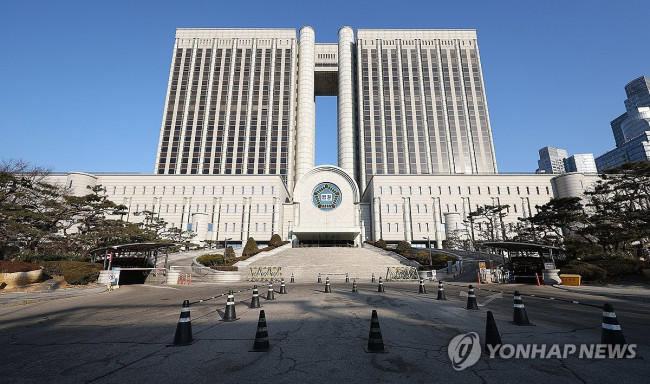 Seoul Central District Court [Yonhap News]
Meanwhile, Judge Lee Hyun-bok, who presided over the bribery charges against former President Moon Jae-in, will retire on the 23rd. This division has also been hearing the case of alleged "selling and buying of positions" involving First Lady Kim, and the case of alleged dissemination of false information by former President Yoon. It is reported that Judge Lee will join a major law firm.
In addition, 45 judges, including Judge Im Hyo-ryang, who served as a planner in the Planning and Coordination Office of the Court Administration Office and later as a first-instance officer, Judge Kim Jung-hoon, who twice served as a research judge at the Supreme Court, and Judge Shin Il-soo, who was selected as an outstanding judge three times by a regional bar association, will retire. Among these, 39 are chief judges.
Considering that the average number of retiring judges annually is around 70, the total number of retirements this year has somewhat decreased.
Analysis from within and outside the courts suggests that various measures to improve working conditions implemented since the inauguration of Chief Justice Cho Hee-dae, such as the introduction of a two-day smart work system and minimizing personnel transfers for appellate court judges, have been effective.
A court official explained, "The recent efforts by the judiciary to improve working conditions for judges seem to have influenced the decrease in retirements." To prevent the departure of mid-career judges, a monthly allowance of 500,000 won will be provided to judges with 15 or more years of legal experience starting in April.
In this regular personnel appointment, the Supreme Court newly appointed 132 judges as district court chief judges. Of these, 60 are female judges, accounting for 45.5%. Among the 22 newly appointed branch court chiefs, 5 are female judges (22.7%).
Furthermore, to enhance flexibility in the timing of Supreme Court research judge assignments and provide more judges with opportunities to work on cassation appeals, the appointment of research judges for district court chief judges has been expanded.
The number of dedicated positions within the Court Administration Office has also increased in conjunction with discussions on judicial reform in the political sphere.
The Supreme Court announced that it has added one planner position to the Planning and Coordination Office of the Court Administration Office to strengthen its operational capabilities in areas such as judicial budget, facilities, and legal review, in response to the increasing external engagements with the National Assembly, the executive branch, etc. This move aims to smoothly advance tasks related to recent judicial system reforms, public disclosure of judgments, trial broadcasting, and the introduction of artificial intelligence (AI) for trial support.
A position for a Judicial AI Commissioner has also been newly established to formulate judicial AI policies, review intelligent information technologies such as AI and big data, and develop AI systems related to trials and judicial administration.
A professor position at the Judicial Research and Training Institute has also been increased by one to enhance the efficiency and expertise in training new judges and supporting law school lectures.

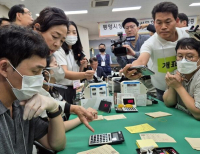
 [Statement by the Seobeokka KMA Patriots Association] ㉛ Recount the ballots openly, as the previous recount covered up election fraud
Recount of the Tongyeong mayoral election [Photo=Yonhap News]South Korea's liberal democracy is dying. The National Election Commission (NEC), which has degraded into a criminal organization through t
[Statement by the Seobeokka KMA Patriots Association] ㉛ Recount the ballots openly, as the previous recount covered up election fraud
Recount of the Tongyeong mayoral election [Photo=Yonhap News]South Korea's liberal democracy is dying. The National Election Commission (NEC), which has degraded into a criminal organization through t
 What is the significance of the "Trump 2028" red hat that keeps reappearing?
It is noteworthy that while it is "highly likely" that President Donald Trump is "seriously considering" a run for the presidency in 2028, he is also "deliberately" fueling speculation regarding wheth
What is the significance of the "Trump 2028" red hat that keeps reappearing?
It is noteworthy that while it is "highly likely" that President Donald Trump is "seriously considering" a run for the presidency in 2028, he is also "deliberately" fueling speculation regarding wheth
 First U.S. Ambassador of Trump's Second Term to Arrive This Week… Will It Provide Momentum to Resolve Pending Issues?
U.S. Ambassador to South Korea Michelle Steel speaks at the opening ceremony of the Korea-U.S. Shipbuilding Cooperation Center held at the Mayflower Hotel in Washington, D.C., on the 23rd (local time)
First U.S. Ambassador of Trump's Second Term to Arrive This Week… Will It Provide Momentum to Resolve Pending Issues?
U.S. Ambassador to South Korea Michelle Steel speaks at the opening ceremony of the Korea-U.S. Shipbuilding Cooperation Center held at the Mayflower Hotel in Washington, D.C., on the 23rd (local time)
 President Yoon, regarding the first-instance ruling on the Public Official Election Act: “An excessive political verdict that distorts the facts… We will appeal immediately.”
The first-instance sentencing hearing for President Yoon Suk Yeol regarding violations of the Public Official Election Act is being broadcast live at Seoul Station on the 27th. [Photo=Yonhap News]Pres
President Yoon, regarding the first-instance ruling on the Public Official Election Act: “An excessive political verdict that distorts the facts… We will appeal immediately.”
The first-instance sentencing hearing for President Yoon Suk Yeol regarding violations of the Public Official Election Act is being broadcast live at Seoul Station on the 27th. [Photo=Yonhap News]Pres
 91% of Net Influx of MZ Generation Goes to Seoul Metropolitan Area… Population Migration Also Shows 'K-shaped Polarization' by Industry
[Provided by Leaders Index]Over the past four years, the MZ generation population has become increasingly concentrated in the Seoul metropolitan area and the Chungcheong region. While cities cen
91% of Net Influx of MZ Generation Goes to Seoul Metropolitan Area… Population Migration Also Shows 'K-shaped Polarization' by Industry
[Provided by Leaders Index]Over the past four years, the MZ generation population has become increasingly concentrated in the Seoul metropolitan area and the Chungcheong region. While cities cen
 'Godfather of Japanese Mystery Novels' Keigo Higashino Passes Away After Battle with Cancer at 68
Famous Japanese mystery novelist Keigo Higashino [AFP=Yonhap News]It has been belatedly reported that Keigo Higashino, the "godfather of Japanese mystery novels" and author of bestsellers such as "The
'Godfather of Japanese Mystery Novels' Keigo Higashino Passes Away After Battle with Cancer at 68
Famous Japanese mystery novelist Keigo Higashino [AFP=Yonhap News]It has been belatedly reported that Keigo Higashino, the "godfather of Japanese mystery novels" and author of bestsellers such as "The
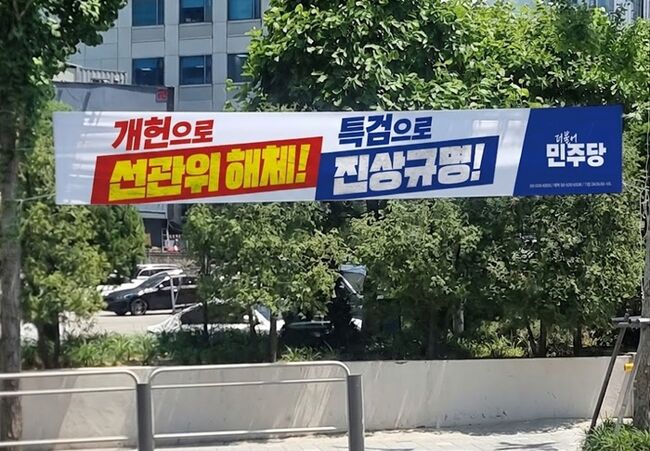 [Cho Yang-geon Column] The NEC: Facing a Fate of "Discarding the Dog After the Hunt"
Banner calling for the "dissolution of the NEC" posted by the Democratic Party. [AI-generated image]Banners calling for the "dissolution of the National Election Commission (NEC)" posted by the Democr
[Cho Yang-geon Column] The NEC: Facing a Fate of "Discarding the Dog After the Hunt"
Banner calling for the "dissolution of the NEC" posted by the Democratic Party. [AI-generated image]Banners calling for the "dissolution of the National Election Commission (NEC)" posted by the Democr
 [Photo] Evidence of Election Fraud Flooding U.S. Media… Trump Had 2.7 Million Votes Stolen
 [Video] U.S. Semiquincentennial Air Show... 'Art in the Sky' streaks across New York
 [Editorial Cartoon] A Draconian Law That Undermines Freedom of Expression

 List
List