August 4, 2025: ROK soldiers dismantling loudspeakers near the border with North Korea. [Photo=Ministry of National Defense]
After being discharged from the military, I experienced premonitions that were difficult to explain even to myself.
In 2008, the allegorical novel 'The Butterfly Prophecy 2020', written based on a dream, received an unexpectedly strong response on my blog and was also published as an e-book in 2017. Although it didn't gain widespread attention, some readers described it as an inexplicable 'book of mystery' and 'a mirror reflecting reality'.
Strangely, however, for the past year, I have been repeatedly dreaming of a war breaking out on the Korean Peninsula. At first, I dismissed it as mere ominous imagination, but the dreams did not disappear with the changing seasons. On the contrary, they seem to be becoming clearer and closer.
I earnestly hope that these dreams are wrong. However, observing the events unfolding in South Korea these days, I feel uneasy, as if reality is following the scenes from my nightmares. This leads me to ask: for what, and for whom, is the current destruction of South Korea's security being carried out?
It is natural for policies to change with a change in administration. However, the changes occurring in South Korea today go beyond simple policy adjustments.
This is because the security system that has supported the nation's existence is being shaken at its foundation. The more serious problem is that these changes clearly do not seem to be for the purpose of preventing war or for the benefit of South Korea.
Security is not a matter of political choice, but a matter of national survival. Nevertheless, recent measures are moving in a direction that weakens South Korea's deterrence, shakes the trust of our allies, and undermines our military's combat capabilities.
The True Face of Appeasement Peace Policy
The current administration emphasizes 'peace.' However, when one examines how this peace is being created, criticisms arise that it is, in reality, closer to 'appeasement.'
Peace is not granted simply because the other party desires it; it is maintained through a balance of power and deterrence. Yet, recent policies are exclusively moving in a direction that weakens deterrence.
The cessation of North Korean broadcasting, the dismantling of loudspeakers, and the review of reducing ROK-US joint military exercises are issues that North Korea has long demanded. North Korea, a closed regime, fears the influx of information and considers joint exercises a threat to its system.
However, the administration is adjusting policies in a way that resolves North Korea's dissatisfaction. Measures such as distributing the Rodong Sinmun officially distribute North Korea's propaganda media within South Korea. This could become a mental Trojan horse.
This trend, while ostensibly promoting 'peace,' appears to be a unilateral concession aimed at not offending North Korea.
Peace must be reciprocal. However, the current policies lack reciprocity, making it appear as if only South Korea is unilaterally disarming. One cannot help but question whether this is truly peace for South Korea, or an illusory, malignant peace that incites North Korean provocations.
A Series of Self-Inflicted Security Measures
The greater problem is that these measures are leading to a weakening of actual combat capabilities, extending beyond mere symbolic gestures.
A directive to refrain from firing even when the Demilitarized Zone is violated is tantamount to abandoning the military's fundamental mission of 'territorial defense.'
The review of abolishing live-fire training for enlisted soldiers and discussions about using batons instead of firearms are measures that fundamentally shake the military's combat readiness. The moment the military lays down its weapons, the nation relinquishes its own survival capability.
Furthermore, the move to preemptively restore the September 19th Military Agreement, considering North Korea's repeated violations, could result in South Korea blinding itself and tying its own hands. While North Korean provocations continue, a structure is being created that only destroys our war deterrence.
The statement, "We made North Korea anxious," also fueled controversy. The mindset that defines South Korea's legitimate defense activities as 'provocation' is a dangerous perception that negates the nation's right to defense.
Such statements give the impression of speaking from North Korea's perspective, leading to a weakening of South Korea's security legitimacy.
Security is an Incomparable Value
Unlike economic or social policies, security, once collapsed, cannot be restored. Therefore, what is needed now is a direction as follows:
First, restoring deterrence: Loudspeaker broadcasts to North Korea, information warfare, and joint exercises are minimum safeguards to prevent war. These must be normalized. Deterrence is not what provokes; it is the power that prevents provocation.
Second, strengthening alliance trust: The ROK-US alliance is not an option but a matter of survival. The moment an alliance is defined as 'appeasement' that inconveniences national pride, trust in the international community crumbles. An alliance is not a matter of pride but the foundation of national security.
Third, maintaining military combat power: The reduction of live-fire training and the review of unarmed duties must be halted immediately. A military that does not train loses its combat capability. A military that loses its combat capability loses its reason for existence.
Fourth, ensuring transparency in security policy: The public has the right to know the objectives behind the administration's security measures. Security is not the property of a particular political faction but is directly linked to the survival of the entire nation.
The series of measures taking place in South Korea today are not mere policy changes. They are moving in a direction that weakens the nation's survival foundation, and the consequences are irreversible.
Security is not a political tool or a subject of debate; it is a matter of survival for all of us. We hope that the final security bulwark that prevents war and protects the nation will no longer be harmed.

◆ Park Pil-gyu
Editorial Writer, Hankook Ilbo
ROK Military Academy, Class of 40

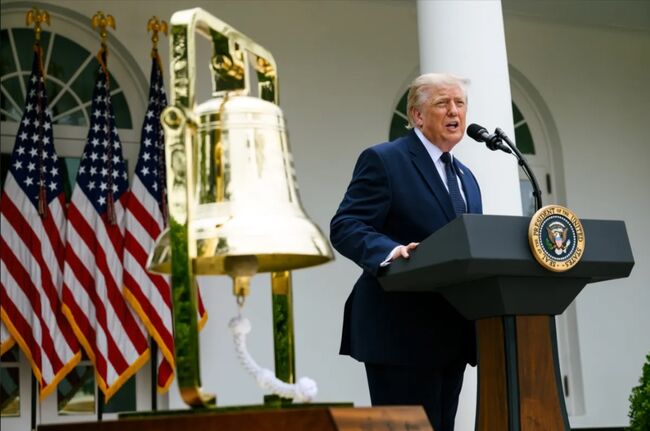 Trump pressures for rate cut again ahead of FOMC... "Should be the lowest in the world"
U.S. President Donald Trump. [Photo = The White House] U.S. President Donald Trump once again pressured the Federal Reserve, the U.S. central bank, to lower interest rates on the 27th (local time
Trump pressures for rate cut again ahead of FOMC... "Should be the lowest in the world"
U.S. President Donald Trump. [Photo = The White House] U.S. President Donald Trump once again pressured the Federal Reserve, the U.S. central bank, to lower interest rates on the 27th (local time
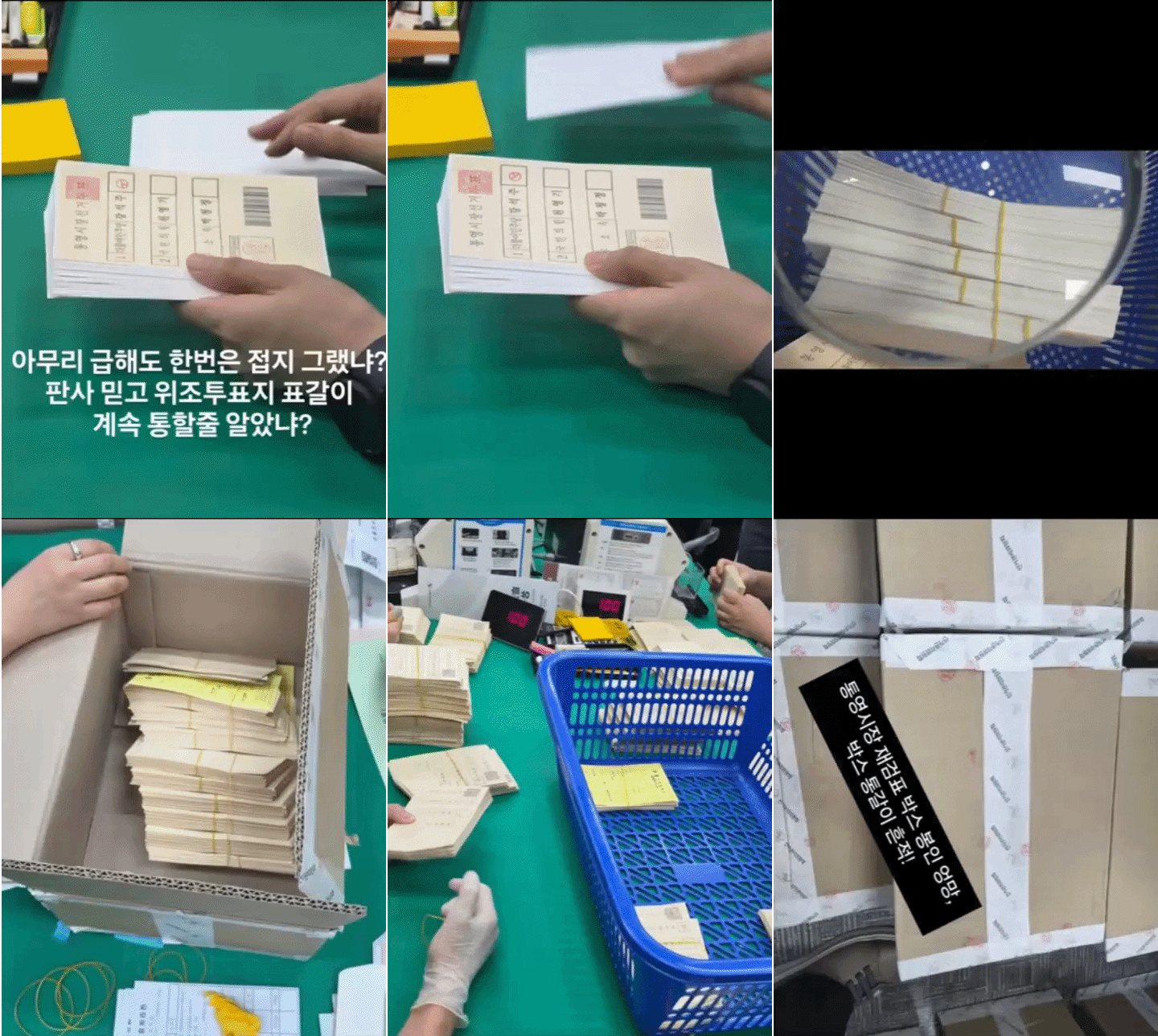 “Ignoring crisp ballots and damaged seals”… Tongyeong mayoral recount concludes with ‘no change in outcome,’ leaving suspicions and public outrage behind
Suspected counterfeit ballots discovered in Tongyeong [GIF from social media of Representative Hwang Kyo-ahn / Attorney Park Joo-hyun]During a recount of the Tongyeong mayoral election in South Gyeong
“Ignoring crisp ballots and damaged seals”… Tongyeong mayoral recount concludes with ‘no change in outcome,’ leaving suspicions and public outrage behind
Suspected counterfeit ballots discovered in Tongyeong [GIF from social media of Representative Hwang Kyo-ahn / Attorney Park Joo-hyun]During a recount of the Tongyeong mayoral election in South Gyeong
 President Yoon, regarding the first-instance ruling on the Public Official Election Act: “An excessive political verdict that distorts the facts… We will appeal immediately.”
The first-instance sentencing hearing for President Yoon Suk Yeol regarding violations of the Public Official Election Act is being broadcast live at Seoul Station on the 27th. [Photo=Yonhap News]Pres
President Yoon, regarding the first-instance ruling on the Public Official Election Act: “An excessive political verdict that distorts the facts… We will appeal immediately.”
The first-instance sentencing hearing for President Yoon Suk Yeol regarding violations of the Public Official Election Act is being broadcast live at Seoul Station on the 27th. [Photo=Yonhap News]Pres
 WSJ: "SK Hynix ADR Premium Is a Sign of AI Trading Overheat"
Advertisement for SK Hynix ADR listing in New York's Times Square [Reuters=Yonhap News file photo]The Wall Street Journal (WSJ) has pointed out that the price of SK Hynix’s American Depositary Recei
WSJ: "SK Hynix ADR Premium Is a Sign of AI Trading Overheat"
Advertisement for SK Hynix ADR listing in New York's Times Square [Reuters=Yonhap News file photo]The Wall Street Journal (WSJ) has pointed out that the price of SK Hynix’s American Depositary Recei
 'Godfather of Japanese Mystery Novels' Keigo Higashino Passes Away After Battle with Cancer at 68
Famous Japanese mystery novelist Keigo Higashino [AFP=Yonhap News]It has been belatedly reported that Keigo Higashino, the "godfather of Japanese mystery novels" and author of bestsellers such as "The
'Godfather of Japanese Mystery Novels' Keigo Higashino Passes Away After Battle with Cancer at 68
Famous Japanese mystery novelist Keigo Higashino [AFP=Yonhap News]It has been belatedly reported that Keigo Higashino, the "godfather of Japanese mystery novels" and author of bestsellers such as "The
 [Park Pil-kyu Security Column] To the Ignorant Trying to Clothe a Beast in Sheep's Clothing
Rep. Kim Byung-joo of the Democratic Party of Korea [Photo=Yonhap News]“The Air Force Academy doesn't teach you how to fly a plane!” “The Army, Navy, and Air Force academies are exactly the
[Park Pil-kyu Security Column] To the Ignorant Trying to Clothe a Beast in Sheep's Clothing
Rep. Kim Byung-joo of the Democratic Party of Korea [Photo=Yonhap News]“The Air Force Academy doesn't teach you how to fly a plane!” “The Army, Navy, and Air Force academies are exactly the
 [Issue Diagnosis] Two Effects of the Election Petition Review
 [Photo] Evidence of Election Fraud Flooding U.S. Media… Trump Had 2.7 Million Votes Stolen
 [Video] U.S. Semiquincentennial Air Show... 'Art in the Sky' streaks across New York
 [Editorial Cartoon] A Draconian Law That Undermines Freedom of Expression

 List
List