Prime Minister Sanae Takaichi's wedding photo fan at a general election rally [Reuters Yonhap News]
An analysis suggests that the reason Prime Minister Sanae Takaichi, who led the ruling Liberal Democratic Party's historic landslide victory in Japan's House of Representatives election (general election), has formed a fandom, particularly among young people, is the perception of her as a "self-help" character who inspires courage.
Professor Masaki Ito of Seikei University, a media sociologist, argued this point in an interview with the Mainichi Shimbun published on the 11th, stating that the fervor around Prime Minister Takaichi's popularity should be viewed as a social phenomenon rather than a political one.
Professor Ito pointed out, "Young people want guidance on 'how to survive' in their 'pre-political' lives rather than in the 'political' realm of how to improve society," and that the current youth face different circumstances than during the period of high economic growth.
He added, "People today have a sense that they won't grow unless they work hard, but they don't know how to grow," and suggested that Prime Minister Takaichi, by emphasizing 'work, work, work' and embodying positive thinking, appeared as a role model to those grappling with such concerns.
Professor Ito stated, "Those who feel that Prime Minister Takaichi gives them strength in their stagnant lives feel supported and want to cheer her on," and that Prime Minister Takaichi has ignited the hearts of young people and those who are not growing.
Furthermore, Ito explained that the fact that Prime Minister Takaichi is nursing her sick husband and is a woman contrasts with the male-dominated leadership of other political parties.
Professor Ito said, "From a security perspective, the simple and clear message of 'I will protect you, so let's do our best' also left a positive impression," and that Prime Minister Takaichi's proposals for policies beneficial to low-to-middle-income individuals, such as protecting small and medium-sized enterprises, were also factors that broadened her support base.
Political scientist Masao Matsumoto, professor emeritus at Saitama University, commented on the emergence of so-called 'Sana-katsu' among the younger generation who idolize Prime Minister Takaichi like a celebrity, saying, "More young people think that voting for the winning side in an election is the 'correct answer.'"
Professor Matsumoto analyzed in the Tokyo Shimbun that in Japan, a kind of 'trend' emerges during every election, with the previous July's Upper House election seeing votes for the right-wing opposition Party for Constitutional Democracy, and this time for the LDP led by Prime Minister Takaichi.
He further stated, "With changes in lifestyles, elections have become like temporary events, similar to choosing a product by looking at a catalog on a smartphone," and that political parties are also treating voters as 'consumers,' developing plans similar to marketing strategies for their election campaigns.
He pointed out, "Organizational voting is weakening, and differences in voting intentions based on region and age are also decreasing," and that while the elderly constitute a large portion of the electorate, it is ultimately the young people who lead trends.
In the general election held on the 8th, the LDP secured over two-thirds of the total 465 seats, winning 316. Notably, in Tokyo metropolitan area constituencies, they achieved an astonishing win rate of 79 wins and 1 loss, and they monopolized seats in 31 out of the 47 prefectures.
A Yomiuri Shimbun poll conducted on the 9th and 10th showed that the proportion of respondents who responded favorably to the general election results was higher among younger age groups. Among those aged 18-39, 63% said they were 'favorable,' while 58% of those aged 40-59 and 48% of those aged 60 and over expressed similar views.

 [Statement by the Seobeokka KMA Patriots Association] ㉛ Recount the ballots openly, as the previous recount covered up election fraud
Recount of the Tongyeong mayoral election [Photo=Yonhap News]South Korea's liberal democracy is dying. The National Election Commission (NEC), which has degraded into a criminal organization through t
[Statement by the Seobeokka KMA Patriots Association] ㉛ Recount the ballots openly, as the previous recount covered up election fraud
Recount of the Tongyeong mayoral election [Photo=Yonhap News]South Korea's liberal democracy is dying. The National Election Commission (NEC), which has degraded into a criminal organization through t
 What is the significance of the "Trump 2028" red hat that keeps reappearing?
It is noteworthy that while it is "highly likely" that President Donald Trump is "seriously considering" a run for the presidency in 2028, he is also "deliberately" fueling speculation regarding wheth
What is the significance of the "Trump 2028" red hat that keeps reappearing?
It is noteworthy that while it is "highly likely" that President Donald Trump is "seriously considering" a run for the presidency in 2028, he is also "deliberately" fueling speculation regarding wheth
 First U.S. Ambassador of Trump's Second Term to Arrive This Week… Will It Provide Momentum to Resolve Pending Issues?
U.S. Ambassador to South Korea Michelle Steel speaks at the opening ceremony of the Korea-U.S. Shipbuilding Cooperation Center held at the Mayflower Hotel in Washington, D.C., on the 23rd (local time)
First U.S. Ambassador of Trump's Second Term to Arrive This Week… Will It Provide Momentum to Resolve Pending Issues?
U.S. Ambassador to South Korea Michelle Steel speaks at the opening ceremony of the Korea-U.S. Shipbuilding Cooperation Center held at the Mayflower Hotel in Washington, D.C., on the 23rd (local time)
 President Yoon, regarding the first-instance ruling on the Public Official Election Act: “An excessive political verdict that distorts the facts… We will appeal immediately.”
The first-instance sentencing hearing for President Yoon Suk Yeol regarding violations of the Public Official Election Act is being broadcast live at Seoul Station on the 27th. [Photo=Yonhap News]Pres
President Yoon, regarding the first-instance ruling on the Public Official Election Act: “An excessive political verdict that distorts the facts… We will appeal immediately.”
The first-instance sentencing hearing for President Yoon Suk Yeol regarding violations of the Public Official Election Act is being broadcast live at Seoul Station on the 27th. [Photo=Yonhap News]Pres
 91% of Net Influx of MZ Generation Goes to Seoul Metropolitan Area… Population Migration Also Shows 'K-shaped Polarization' by Industry
[Provided by Leaders Index]Over the past four years, the MZ generation population has become increasingly concentrated in the Seoul metropolitan area and the Chungcheong region. While cities cen
91% of Net Influx of MZ Generation Goes to Seoul Metropolitan Area… Population Migration Also Shows 'K-shaped Polarization' by Industry
[Provided by Leaders Index]Over the past four years, the MZ generation population has become increasingly concentrated in the Seoul metropolitan area and the Chungcheong region. While cities cen
 'Godfather of Japanese Mystery Novels' Keigo Higashino Passes Away After Battle with Cancer at 68
Famous Japanese mystery novelist Keigo Higashino [AFP=Yonhap News]It has been belatedly reported that Keigo Higashino, the "godfather of Japanese mystery novels" and author of bestsellers such as "The
'Godfather of Japanese Mystery Novels' Keigo Higashino Passes Away After Battle with Cancer at 68
Famous Japanese mystery novelist Keigo Higashino [AFP=Yonhap News]It has been belatedly reported that Keigo Higashino, the "godfather of Japanese mystery novels" and author of bestsellers such as "The
 [Cho Yang-geon Column] The NEC: Facing a Fate of "Discarding the Dog After the Hunt"
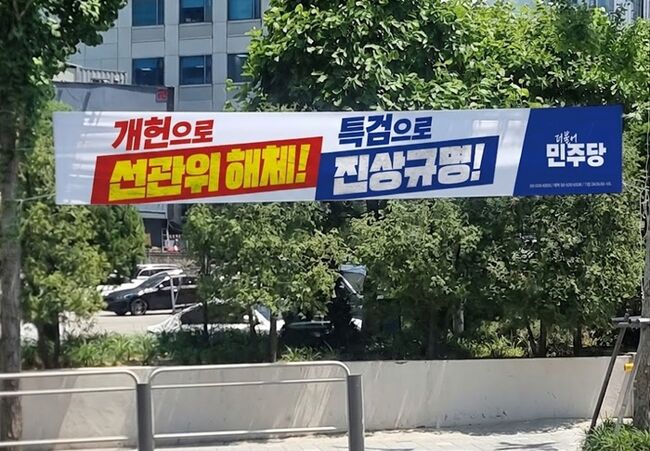
Banner calling for the "dissolution of the NEC" posted by the Democratic Party. [AI-generated image]Banners calling for the "dissolution of the National Election Commission (NEC)" posted by the Democr
[Cho Yang-geon Column] The NEC: Facing a Fate of "Discarding the Dog After the Hunt"
Banner calling for the "dissolution of the NEC" posted by the Democratic Party. [AI-generated image]Banners calling for the "dissolution of the National Election Commission (NEC)" posted by the Democr
 [Photo] Evidence of Election Fraud Flooding U.S. Media… Trump Had 2.7 Million Votes Stolen
 [Video] U.S. Semiquincentennial Air Show... 'Art in the Sky' streaks across New York
 [Editorial Cartoon] A Draconian Law That Undermines Freedom of Expression

 List
List