- IEEPA tariff grounds rejected… 6-to-3 ruling
- “Customs duties are a form of taxation authority”… Reaffirming the principle of Article 1 of the Constitution
- Putting the Brakes on the Broad Interpretation of Emergency Economic Powers Without Clear Delegation
 U.S. Supreme Court [Photo = Yonhap News]
The U.S. Supreme Court ruled on the 20th (local time) that the global tariff measures pursued by U.S. President Donald Trump under the International Emergency Economic Powers Act (IEEPA) were unlawful.
The Court clarified that the constitutional authority over tariffs and taxation rests with Congress, thereby limiting the scope of interpretation for emergency economic powers.
In its ruling released today, the Supreme Court stated in a 6-3 majority opinion that "the IEEPA is a statute intended for financial sanctions and cannot be viewed as a delegation of authority to impose comprehensive tariffs."
Referencing Article I of the Constitution, the Court held that the executive branch's introduction of a new tariff system based on emergency powers infringed upon the legislative domain.
The majority opinion specifically applied the "major questions doctrine," which posits that tariff policies with broad economic impacts require clear congressional authorization.
The ruling emphasized the "clear statement rule," noting that when Congress delegates tariff authority, there must be a clear basis in the statutory language; the court pointed out that the IEEPA contains no language that directly authorizes the setting of tariffs.
The Court also cited existing legislative structures through which Congress has traditionally granted tariff authority as a point of comparison.
It highlighted that, unlike cases where tariff authority is explicitly provided—such as Section 232 of the Trade Expansion Act or Section 301 of the Trade Act—the IEEPA lacks the same level of delegatory language.
This is interpreted not as a judgment on the legality of those specific provisions, but as an additional explanation provided in the process of interpreting the scope of emergency economic powers.
The ruling also noted that tariffs effectively function as taxes.
The Court pointed out that if the executive branch expands into the realm of revenue-raising authority under the pretext of diplomatic or security situations, the constitutional principle of separation of powers could be undermined, stating that "the existence of an economic emergency does not suspend the constitutional structure of the separation of powers."
In contrast, the dissenting justices expressed the view that the President's discretion to respond should be recognized more broadly in abnormal situations, such as shocks to global supply chains.
However, the majority opinion drew a firm line, asserting that emergency economic powers cannot be allowed to transition into a general tool for trade policy.
Legal experts in the U.S. are assessing this ruling as a decision that goes beyond determining the legality of a specific tariff policy, effectively reaffirming the limits on the delegation of authority to the executive branch.
As the Supreme Court applies a strict textual interpretation to emergency economic powers, it is expected that judicial review standards for future executive orders in the economic and trade sectors will be significantly strengthened.
- 관련기사
-
What do you think of this article?

 [Statement by the Seobeokka KMA Patriots Association] ㉛ Recount the ballots openly, as the previous recount covered up election fraud
Recount of the Tongyeong mayoral election [Photo=Yonhap News]South Korea's liberal democracy is dying. The National Election Commission (NEC), which has degraded into a criminal organization through t
[Statement by the Seobeokka KMA Patriots Association] ㉛ Recount the ballots openly, as the previous recount covered up election fraud
Recount of the Tongyeong mayoral election [Photo=Yonhap News]South Korea's liberal democracy is dying. The National Election Commission (NEC), which has degraded into a criminal organization through t
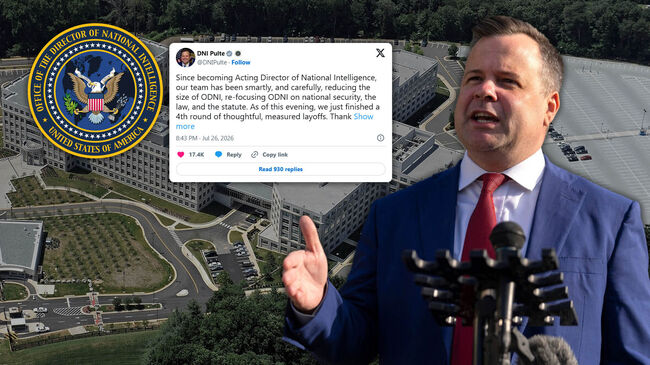 Bill Pulte to Restructure ‘Deep State’… Announces 4th Round of Layoffs at the Office of the Director of National Intelligence
Acting Director of National Intelligence Bill Pulte announced Sunday that he has carried out a fourth "deliberate and measured" reduction in personnel since taking office on June 19, as part of the Tr
Bill Pulte to Restructure ‘Deep State’… Announces 4th Round of Layoffs at the Office of the Director of National Intelligence
Acting Director of National Intelligence Bill Pulte announced Sunday that he has carried out a fourth "deliberate and measured" reduction in personnel since taking office on June 19, as part of the Tr
 First U.S. Ambassador of Trump's Second Term to Arrive This Week… Will It Provide Momentum to Resolve Pending Issues?
U.S. Ambassador to South Korea Michelle Steel speaks at the opening ceremony of the Korea-U.S. Shipbuilding Cooperation Center held at the Mayflower Hotel in Washington, D.C., on the 23rd (local time)
First U.S. Ambassador of Trump's Second Term to Arrive This Week… Will It Provide Momentum to Resolve Pending Issues?
U.S. Ambassador to South Korea Michelle Steel speaks at the opening ceremony of the Korea-U.S. Shipbuilding Cooperation Center held at the Mayflower Hotel in Washington, D.C., on the 23rd (local time)
 President Yoon, regarding the first-instance ruling on the Public Official Election Act: “An excessive political verdict that distorts the facts… We will appeal immediately.”
The first-instance sentencing hearing for President Yoon Suk Yeol regarding violations of the Public Official Election Act is being broadcast live at Seoul Station on the 27th. [Photo=Yonhap News]Pres
President Yoon, regarding the first-instance ruling on the Public Official Election Act: “An excessive political verdict that distorts the facts… We will appeal immediately.”
The first-instance sentencing hearing for President Yoon Suk Yeol regarding violations of the Public Official Election Act is being broadcast live at Seoul Station on the 27th. [Photo=Yonhap News]Pres
 91% of Net Influx of MZ Generation Goes to Seoul Metropolitan Area… Population Migration Also Shows 'K-shaped Polarization' by Industry
[Provided by Leaders Index]Over the past four years, the MZ generation population has become increasingly concentrated in the Seoul metropolitan area and the Chungcheong region. While cities cen
91% of Net Influx of MZ Generation Goes to Seoul Metropolitan Area… Population Migration Also Shows 'K-shaped Polarization' by Industry
[Provided by Leaders Index]Over the past four years, the MZ generation population has become increasingly concentrated in the Seoul metropolitan area and the Chungcheong region. While cities cen
 'Godfather of Japanese Mystery Novels' Keigo Higashino Passes Away After Battle with Cancer at 68
Famous Japanese mystery novelist Keigo Higashino [AFP=Yonhap News]It has been belatedly reported that Keigo Higashino, the "godfather of Japanese mystery novels" and author of bestsellers such as "The
'Godfather of Japanese Mystery Novels' Keigo Higashino Passes Away After Battle with Cancer at 68
Famous Japanese mystery novelist Keigo Higashino [AFP=Yonhap News]It has been belatedly reported that Keigo Higashino, the "godfather of Japanese mystery novels" and author of bestsellers such as "The
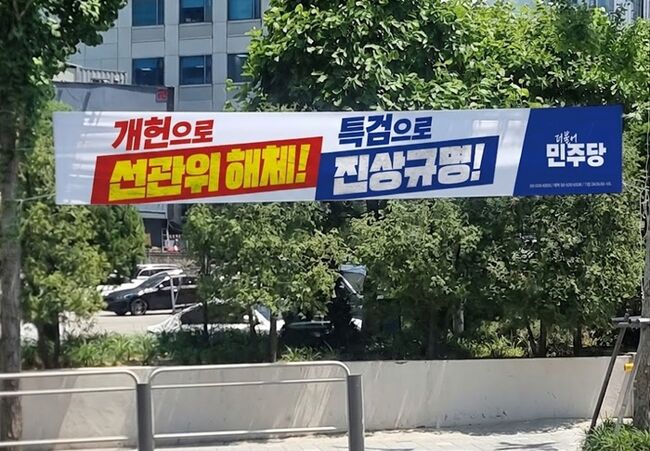 [Cho Yang-geon Column] The NEC: Facing a Fate of "Discarding the Dog After the Hunt"
Banner calling for the "dissolution of the NEC" posted by the Democratic Party. [AI-generated image]Banners calling for the "dissolution of the National Election Commission (NEC)" posted by the Democr
[Cho Yang-geon Column] The NEC: Facing a Fate of "Discarding the Dog After the Hunt"
Banner calling for the "dissolution of the NEC" posted by the Democratic Party. [AI-generated image]Banners calling for the "dissolution of the National Election Commission (NEC)" posted by the Democr
 [Photo] Evidence of Election Fraud Flooding U.S. Media… Trump Had 2.7 Million Votes Stolen
 [Video] U.S. Semiquincentennial Air Show... 'Art in the Sky' streaks across New York
 [Editorial Cartoon] A Draconian Law That Undermines Freedom of Expression

 List
List