U.S. President Donald Trump vowed on the 23rd (local time) to impose retaliatory higher tariffs on countries that exploit the Supreme Court's ruling on reciprocal tariffs as illegal.
In a post on his social media platform Truth Social on the same day, President Trump stated, "If any country wants to play game with the Supreme Court's ridiculous decision, especially those that have been ripping off America for years, even decades, they will face higher tariffs than they recently agreed to, and worse," he said.
This is interpreted to mean that if countries that have existing trade agreements with the U.S., meaning those that promised large-scale U.S. investments or purchases of American products in exchange for lower tariffs, try to reverse them citing the Supreme Court's ruling, "punitive" tariffs will be imposed. Ultimately, it also serves as a context to urge countries to fulfill their trade agreements that include promises of U.S. investment.
President Trump then added the commercial warning "BUYER BEWARE!!!" This is read as an assertion that if a deal (trade agreement) is broken, the responsibility lies with the other party.
On the 20th, after the Supreme Court ruled the tariffs he imposed as illegal based on the International Emergency Economic Powers Act (IEEPA, enacted in 1977), President Trump immediately signed a proclamation imposing a 10% "global tariff" for 150 days under Section 122 of the Trade Act, and the following day announced he would raise it to 15%.
Furthermore, he is prepared to review the imposition of tariffs on specific countries engaging in "unfair and discriminatory trade practices" or on specific items that pose a threat to U.S. security, by mobilizing Section 301 of the Trade Act and Section 232 of the Trade Expansion Act.
In another post, President Trump emphasized that "As President, I don't have to go back to Congress for tariff approval," underscoring that he can unilaterally proceed with imposing tariffs based on the Trade Act and the Trade Expansion Act.
The Trade Act, which allows for global tariffs of up to 15% on countries for a maximum of 150 days due to balance of payments deficits (Section 122), and allows for investigations into specific countries' trade practices to impose tariffs (Section 301), and the Trade Expansion Act, which allows for investigations into threats to U.S. security to impose tariffs on specific items (Section 232), were enacted by the U.S. Congress in 1974 and 1962, respectively.
As the U.S. Congress delegated the authority to impose tariffs to the President through legislation, the intention is that tariffs based on these laws can be imposed at his discretion.
President Trump stated, "That [authority to impose tariffs] was already obtained long ago in various forms," and added, "It was reaffirmed by that ridiculous and poorly written Supreme Court decision."
Even if the Supreme Court ruled that imposing reciprocal tariffs was illegal because the IEEPA does not mention "tariffs," and thus exceeded delegated authority, President Trump's argument is that by overturning the Supreme Court's decision, global tariffs, among others, are already an exercise of delegated authority, so there is no reason for them to be problematic.
 U.S. President Trump [Yonhap News Agency]
What do you think of this article?

 [Statement by the Seobeokka KMA Patriots Association] ㉛ Recount the ballots openly, as the previous recount covered up election fraud
Recount of the Tongyeong mayoral election [Photo=Yonhap News]South Korea's liberal democracy is dying. The National Election Commission (NEC), which has degraded into a criminal organization through t
[Statement by the Seobeokka KMA Patriots Association] ㉛ Recount the ballots openly, as the previous recount covered up election fraud
Recount of the Tongyeong mayoral election [Photo=Yonhap News]South Korea's liberal democracy is dying. The National Election Commission (NEC), which has degraded into a criminal organization through t
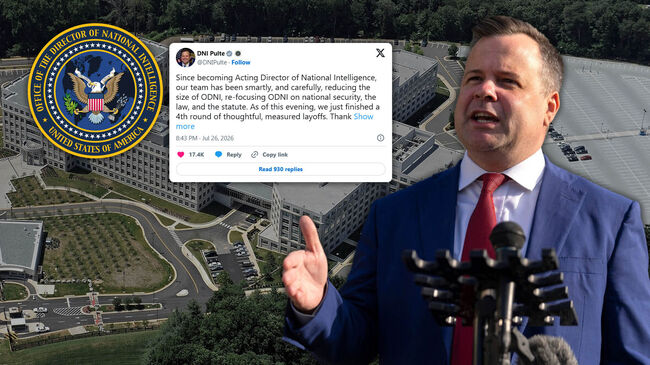 Bill Pulte to Restructure ‘Deep State’… Announces 4th Round of Layoffs at the Office of the Director of National Intelligence
Acting Director of National Intelligence Bill Pulte announced Sunday that he has carried out a fourth "deliberate and measured" reduction in personnel since taking office on June 19, as part of the Tr
Bill Pulte to Restructure ‘Deep State’… Announces 4th Round of Layoffs at the Office of the Director of National Intelligence
Acting Director of National Intelligence Bill Pulte announced Sunday that he has carried out a fourth "deliberate and measured" reduction in personnel since taking office on June 19, as part of the Tr
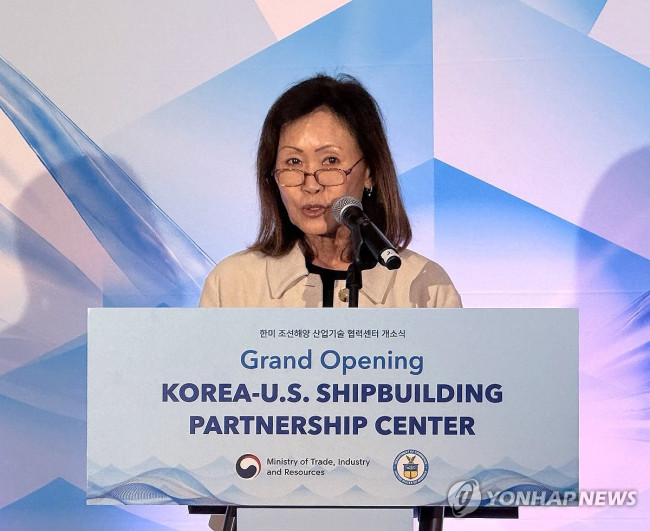 First U.S. Ambassador of Trump's Second Term to Arrive This Week… Will It Provide Momentum to Resolve Pending Issues?
U.S. Ambassador to South Korea Michelle Steel speaks at the opening ceremony of the Korea-U.S. Shipbuilding Cooperation Center held at the Mayflower Hotel in Washington, D.C., on the 23rd (local time)
First U.S. Ambassador of Trump's Second Term to Arrive This Week… Will It Provide Momentum to Resolve Pending Issues?
U.S. Ambassador to South Korea Michelle Steel speaks at the opening ceremony of the Korea-U.S. Shipbuilding Cooperation Center held at the Mayflower Hotel in Washington, D.C., on the 23rd (local time)
 President Yoon, regarding the first-instance ruling on the Public Official Election Act: “An excessive political verdict that distorts the facts… We will appeal immediately.”
The first-instance sentencing hearing for President Yoon Suk Yeol regarding violations of the Public Official Election Act is being broadcast live at Seoul Station on the 27th. [Photo=Yonhap News]Pres
President Yoon, regarding the first-instance ruling on the Public Official Election Act: “An excessive political verdict that distorts the facts… We will appeal immediately.”
The first-instance sentencing hearing for President Yoon Suk Yeol regarding violations of the Public Official Election Act is being broadcast live at Seoul Station on the 27th. [Photo=Yonhap News]Pres
 91% of Net Influx of MZ Generation Goes to Seoul Metropolitan Area… Population Migration Also Shows 'K-shaped Polarization' by Industry
[Provided by Leaders Index]Over the past four years, the MZ generation population has become increasingly concentrated in the Seoul metropolitan area and the Chungcheong region. While cities cen
91% of Net Influx of MZ Generation Goes to Seoul Metropolitan Area… Population Migration Also Shows 'K-shaped Polarization' by Industry
[Provided by Leaders Index]Over the past four years, the MZ generation population has become increasingly concentrated in the Seoul metropolitan area and the Chungcheong region. While cities cen
 'Godfather of Japanese Mystery Novels' Keigo Higashino Passes Away After Battle with Cancer at 68
Famous Japanese mystery novelist Keigo Higashino [AFP=Yonhap News]It has been belatedly reported that Keigo Higashino, the "godfather of Japanese mystery novels" and author of bestsellers such as "The
'Godfather of Japanese Mystery Novels' Keigo Higashino Passes Away After Battle with Cancer at 68
Famous Japanese mystery novelist Keigo Higashino [AFP=Yonhap News]It has been belatedly reported that Keigo Higashino, the "godfather of Japanese mystery novels" and author of bestsellers such as "The
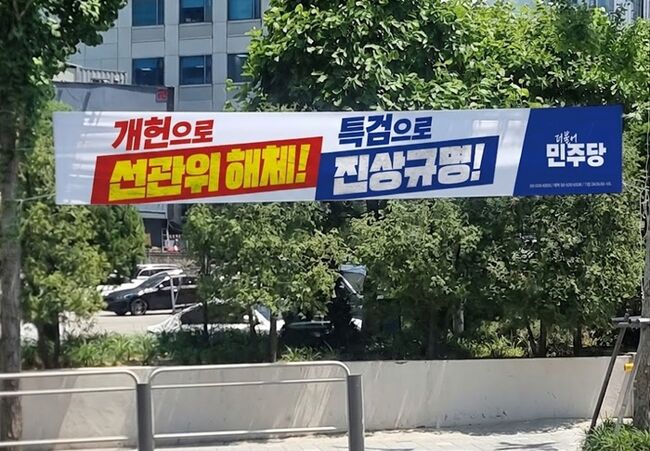 [Cho Yang-geon Column] The NEC: Facing a Fate of "Discarding the Dog After the Hunt"
Banner calling for the "dissolution of the NEC" posted by the Democratic Party. [AI-generated image]Banners calling for the "dissolution of the National Election Commission (NEC)" posted by the Democr
[Cho Yang-geon Column] The NEC: Facing a Fate of "Discarding the Dog After the Hunt"
Banner calling for the "dissolution of the NEC" posted by the Democratic Party. [AI-generated image]Banners calling for the "dissolution of the National Election Commission (NEC)" posted by the Democr
 [Photo] Evidence of Election Fraud Flooding U.S. Media… Trump Had 2.7 Million Votes Stolen
 [Video] U.S. Semiquincentennial Air Show... 'Art in the Sky' streaks across New York
 [Editorial Cartoon] A Draconian Law That Undermines Freedom of Expression

 List
List