 On January 5, 2024, when North Korea conducted artillery fire near the Northern Limit Line (NLL) in the West Sea, the Republic of Korea’s Northwest Islands Defense Command carried out a maritime firing drill with K9 self-propelled howitzers. [Photo = Ministry of National Defense]
While it is easy to view civilian control merely as a mechanism to prevent military coups, its origins and significance are far deeper and broader.
Beginning with the tradition of "civilian control" in ancient Greek poleis, where citizens managed the military, it evolved alongside the formation of modern states into a "democratic device to prevent the armed military from interfering in politics."
The 17th-century Glorious Revolution in England established the institutional foundation for civilian control by shifting military oversight from the monarch to Parliament, while the United States designed a system to thoroughly separate the military from politics from the very inception of the nation.
Civilian control as developed by Western nations was not a device to weaken or neutralize the military, but a system to protect the military from becoming a tool of politics.
Civilian Control: The Key is Respecting Military Expertise and Ensuring Political Neutrality
The essence of modern civilian control lies in respecting the professional expertise of the military while ensuring its political neutrality.
Much like the unspoken principle of justice defined by ancient philosophers as "giving each his own," civilian control should be an institutional mechanism that restores professional expertise and honor to the soldier. When this principle is shaken, civilian control ceases to be a safeguard for democracy and instead becomes a conduit for political intervention that destroys it.
Western civilian control has developed upon this foundation. While the United States appoints a civilian as Secretary of Defense, Congress acts as a check to ensure that professional military judgment is not infringed upon.
In the United Kingdom, although the system is parliament-centered, the practice of respecting military expertise has become established. Germany, reflecting on its militarism during the Nazi era, introduced a "parliamentary army" model with meticulously designed legal mechanisms to ensure that the military's professionalism is not undermined. France, despite its president-led system, ensures political neutrality through the participation of civilian bodies in the military decision-making process.
The commonality of civilian control in these advanced nations is that it acts as a means to guarantee military expertise and ensure political neutrality, rather than serving as a tool for politics to intentionally weaken or incapacitate the military.
However, recent civilian control in South Korea is operating in a direction contrary to its original intent. Measures that undermine the military's expertise, autonomy, and self-esteem are being implemented under the guise of civilian control.
Reorganization of the Defense Security Support Command Weakens Military Expertise
The reorganization of the Defense Security Support Command is a prime example. The functions of defense security—such as internal military security, intelligence, and counter-espionage—require a high level of expertise.
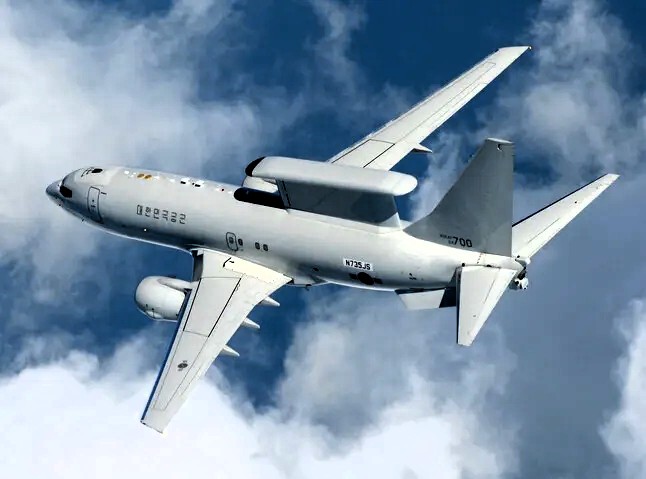 The Republic of Korea Air Force’s E-737 Peace Eye airborne early warning and control aircraft is a "command post in the sky," equipped with high-performance radar to monitor targets in the air and at sea across the Korean Peninsula in real time, providing early warning, fighter command and control, and battlefield management. [Photo = Ministry of National Defense]
Restructuring core functions dealing with internal military discipline and security around civilians without field experience, or creating a structure where personnel without proven expertise are rotated into these roles, is an ignorant approach that ignores the specific characteristics and professionalism of the military. It will inevitably result in weakening the military's autonomy, expertise, and morale.
The greater problem is the emergence of a contradictory structure that weakens the defense security functions—which are directly linked to the essence of civilian control—while simultaneously intervening more deeply in military personnel management.
Military personnel management is the foundation of combat capability, and expertise is its core. We have reached a structure where individuals lacking military experience and expertise hold key personnel positions, and civilian officials oversee the promotion of generals.
Under these conditions, military personnel decisions are increasingly likely to be swayed by political considerations rather than expertise, and military leadership begins to cater to the whims of those in power. This represents a "subjective civilian control"—a method where politics directly controls the military—which Samuel Huntington warned in The Soldier and the State would destroy the internal order of the military.
Civilian control should be a mechanism to protect the military from politics, not a tool or superficial pretext to weaken military expertise.
Refrain from Sham Civilian Control that Hurts and Alienates the Military
The original purpose of civilian control is to prevent the politicization of the military and ensure it can focus on its primary mission. Nevertheless, recent trends show civilian control being utilized as a tool for political intervention.
Instead of strengthening the military's political neutrality, the situation is devolving toward deeper political interference in military personnel matters and organizational operations. This appears to be either ignorance of the essence and purpose of civilian control or a form of security destruction with a different agenda.
What is needed now is to correct the political interference taking place under the name of civilian control and to restore the military's professionalism and neutrality.
Civilian control is a core institution of democracy and the last bastion against the politicization of the military. Only when its original meaning is revived can civilian control be established as a system that simultaneously protects both democracy and national security. It must not become a sham of civilian control that wounds the self-esteem of the military and fosters resentment.
If Samuel Huntington, widely known for The Clash of Civilizations, were to return and offer advice on South Korea’s current civilian control, he would likely state plainly: "Do not weaken the South Korean military any further for political gain. Return the military's inherent personnel authority to the military. As the soldiers punished in relation to martial law were acting without institutional guarantees of political neutrality, all punishments meted out to them should be nullified, and their honor as soldiers should be restored."
This is because doing so is the justice of "giving each his own" and the wisdom to prevent new conflicts.
The public and the military have long recognized that civilian control is a core democratic institution and the final bastion against the politicization of the military. I call for the immediate replacement of those in the security establishment who are helplessly complicit in this system while aware of the contradictions of subjective and political civilian control, and for the officials who are politically abusing this bastion to be held accountable.
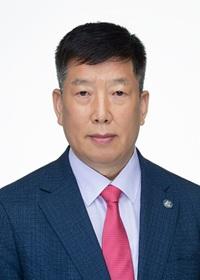
◆ Commissioner Park Pil-kyu
Editorial Writer, Han-Mi Ilbo
Korea Military Academy, Class 40

 Iranian Foreign Ministry: "Continuing Message Exchanges with the U.S. and Activities of Mediating Countries"
Esmaeil Baghaei, Spokesperson for the Iranian Ministry of Foreign Affairs [Xinhua, Yonhap News file photo]Esmaeil Baghaei, spokesperson for the Iranian Ministry of Foreign Affairs, stated on the 26th
Iranian Foreign Ministry: "Continuing Message Exchanges with the U.S. and Activities of Mediating Countries"
Esmaeil Baghaei, Spokesperson for the Iranian Ministry of Foreign Affairs [Xinhua, Yonhap News file photo]Esmaeil Baghaei, spokesperson for the Iranian Ministry of Foreign Affairs, stated on the 26th
 President Yoon: "Do You Think You Are Safe from the Special Counsel?"... Final Statement Video Released
President Yoon Suk Yeol rebuking the special prosecutor on the 24th. [Court video / @birds_justice X account subtitle GIF] A video of President Yoon Suk Yeol's closing statement at his trial rega
President Yoon: "Do You Think You Are Safe from the Special Counsel?"... Final Statement Video Released
President Yoon Suk Yeol rebuking the special prosecutor on the 24th. [Court video / @birds_justice X account subtitle GIF] A video of President Yoon Suk Yeol's closing statement at his trial rega
 President Yoon, regarding the first-instance ruling on the Public Official Election Act: “An excessive political verdict that distorts the facts… We will appeal immediately.”
The first-instance sentencing hearing for President Yoon Suk Yeol regarding violations of the Public Official Election Act is being broadcast live at Seoul Station on the 27th. [Photo=Yonhap News]Pres
President Yoon, regarding the first-instance ruling on the Public Official Election Act: “An excessive political verdict that distorts the facts… We will appeal immediately.”
The first-instance sentencing hearing for President Yoon Suk Yeol regarding violations of the Public Official Election Act is being broadcast live at Seoul Station on the 27th. [Photo=Yonhap News]Pres
 WSJ: "SK Hynix ADR Premium Is a Sign of AI Trading Overheat"
Advertisement for SK Hynix ADR listing in New York's Times Square [Reuters=Yonhap News file photo]The Wall Street Journal (WSJ) has pointed out that the price of SK Hynix’s American Depositary Recei
WSJ: "SK Hynix ADR Premium Is a Sign of AI Trading Overheat"
Advertisement for SK Hynix ADR listing in New York's Times Square [Reuters=Yonhap News file photo]The Wall Street Journal (WSJ) has pointed out that the price of SK Hynix’s American Depositary Recei
 'Godfather of Japanese Mystery Novels' Keigo Higashino Passes Away After Battle with Cancer at 68
Famous Japanese mystery novelist Keigo Higashino [AFP=Yonhap News]It has been belatedly reported that Keigo Higashino, the "godfather of Japanese mystery novels" and author of bestsellers such as "The
'Godfather of Japanese Mystery Novels' Keigo Higashino Passes Away After Battle with Cancer at 68
Famous Japanese mystery novelist Keigo Higashino [AFP=Yonhap News]It has been belatedly reported that Keigo Higashino, the "godfather of Japanese mystery novels" and author of bestsellers such as "The
 [Park Pil-kyu Security Column] To the Ignorant Trying to Clothe a Beast in Sheep's Clothing
Rep. Kim Byung-joo of the Democratic Party of Korea [Photo=Yonhap News]“The Air Force Academy doesn't teach you how to fly a plane!” “The Army, Navy, and Air Force academies are exactly the
[Park Pil-kyu Security Column] To the Ignorant Trying to Clothe a Beast in Sheep's Clothing
Rep. Kim Byung-joo of the Democratic Party of Korea [Photo=Yonhap News]“The Air Force Academy doesn't teach you how to fly a plane!” “The Army, Navy, and Air Force academies are exactly the
 [Issue Diagnosis] Two Effects of the Election Petition Review
 [Photo] Evidence of Election Fraud Flooding U.S. Media… Trump Had 2.7 Million Votes Stolen
 [Video] U.S. Semiquincentennial Air Show... 'Art in the Sky' streaks across New York
 [Editorial Cartoon] A Draconian Law That Undermines Freedom of Expression

 List
List










