
What is the weakest link in South Korean democracy? While many might point to political polarization, security being politicized, and the subservience of some politicians to China and North Korea, the most fundamental vulnerability lies in a corrupted electoral management system that obstructs the public will and sovereignty.
Elections are both the starting point and the endpoint of democracy. If this process is shaken by issues of unfairness, the nation's continuity cannot be maintained. If the electoral structure directly reflects the public will and sovereignty, then laws harmful to the nation cannot be enacted through popular judgment every four to five years, and anti-state forces cannot gain a foothold. However, Korea has operated this core area of electoral management in a way that is unparalleled anywhere else in the world.
Korea's electoral management structure contains inherent contradictions. The system where judges manage elections and simultaneously adjudicate election lawsuits was institutionally solidified with the creation of the National Election Commission as a constitutional body in 1963. Supreme Court justices serve as the Chairperson of the National Election Commission, and chief judges of each court concurrently serve as chairpersons of regional election commissions. In essence, the bodies that manage and oversee elections and the bodies that adjudicate the unfairness and irregularities of those elections are essentially the same professional group.
This was introduced for reasons such as the reflection on the March 15th fraudulent election, the trust in the political neutrality of judges, and the efficiency of non-standing bodies. At the time, there was a strong expectation that judges would protect the people's sovereignty. However, 60 years later, electoral management tasks have exploded, encompassing not only presidential and parliamentary elections but also party primaries, local elections, and the management of public opinion polls.
The trust in judges and the judicial environment of 1963 have long since vanished, yet the system remains unchanged. In the meantime, public trust in election commissions led by judges has plummeted. In the 2020 general election, 141 lawsuits challenging election results and invalidating elections were filed, and approximately 200 were filed in the 2022 local elections. Five lawsuits seeking to invalidate the 2022 presidential election were also filed. However, the courts dismissed or rejected most of these cases, and not a single instance resulted in a reversal of the election outcome itself. This cannot escape criticism that the courts at all levels have failed to conduct fair trials for the allegations of electoral fraud raised over several years.
This is the result of a structural contradiction akin to "a game where the supervisor is also the referee." In any field, long-term monopoly and exclusivity inevitably lead to corruption. Even if actual electoral fraud occurs, it cannot be transparently revealed because it becomes a matter of responsibility for the judges leading the election commission. The structure has become one where fraud cannot be proven through election lawsuits. If 'fraud' cannot be punished, democracy collapses. As suspicions accumulate, the election commission resorts to tactics that disregard the public, such as "absurd transparent stands wrapping ballot boxes for early voting," and enacts unjust laws that impose 10-year prison sentences even for raising suspicions of fraud. A society that silences its citizens in a world that respects diversity is not a democracy.
The world eliminated the risks of combining election management and adjudication long ago. India and South Africa manage the entire electoral process through independent election commissions staffed by full-time experts. In the United States and the United Kingdom, the executive branch executes elections, and the judiciary is strictly separated from election management. Germany and Canada also do not involve the judiciary in election administration. Korea is the only country where judges concurrently serve as chairpersons of election commissions. This fact alone demonstrates how outdated Korea's system is.
The system adopted in 1963 appears to have been based on the belief that judges were the highest conscience of the nation. However, 60 years later, with the public witnessing judges who are part of the "5 billion won group," presiding judges who make political rulings disregarding legal principles, and Constitutional Court justices unable to express minority opinions even in impeachment rulings, many citizens have seen firsthand that judges are not always moral. Despite this, should we continue to maintain this system without any verification, under the guise of tradition?
Election duties have expanded, and while digital data is fast, it carries the risk of manipulation. Globally, the world is returning to manual verification of vote counting, yet Korea clings to judge-led practices as if they were constitutional traditions. Consequently, when issues are raised in the electoral process, fair investigation and verification disappear, and rulings that should be made within six months are delayed for years.
In elections, procedures that the public can directly verify are more important than complex legal interpretations. Why should judges intervene in a simple arithmetic process that even an elementary school student can understand? They are at the apex of election management simply because they passed the bar exam. This also contradicts the principle of the separation of powers. The independence of the election commission should not mean or be suspected of concentrated power and power creation.
A decision must be made now.
Election management and adjudication must be completely separated, and the election commission should be reorganized into an organization centered on experts who can mutually monitor each other. The election lawsuit court should also be designed as a separate structure free from conflicts of interest. The world is already doing so. There is no reason for Korea to be an exception. Democracy is difficult to restore once trust is broken. The electoral management system requires a systemic major surgery, not a piecemeal fix after problems arise.
We must restore the constitutional spirit that power in the Republic of Korea comes not from the authority of judges but from the people. The path to reviving a collapsed democracy and returning electoral sovereignty to the people is clear. We can no longer tolerate the concurrent holding of roles where those who manage elections also adjudicate election deficiencies and fraud. The distrust in electoral administration and the invisible structure of fraudulent elections must be fundamentally corrected.
Electoral sovereignty must reside with the people, and the foundation of democracy must be re-established with an advanced vote counting system that the people can understand and verify at the polling stations. The Historical Court of the Republic of Korea proposes the following reform directions:
First, amend the Public Official Election Act to prevent incumbent judges from concurrently holding electoral management duties.
Second, establish institutional mechanisms that fully return electoral sovereignty to the people.
Third, abolish the early voting system and the use of electronic vote counting machines starting from the June 3rd local elections.
These three are not mere demands or slogans. They are the minimum conditions for the Republic of Korea's democracy to rise again and the starting line for the normalization of South Korea.
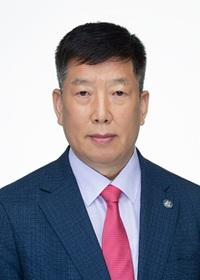
◆ Commissioner Park Pil-kyu
Editorial Board Member, Hankook Ilbo
40th graduating class, Korea Military Academy

 Iranian Foreign Ministry: "Continuing Message Exchanges with the U.S. and Activities of Mediating Countries"
Esmaeil Baghaei, Spokesperson for the Iranian Ministry of Foreign Affairs [Xinhua, Yonhap News file photo]Esmaeil Baghaei, spokesperson for the Iranian Ministry of Foreign Affairs, stated on the 26th
Iranian Foreign Ministry: "Continuing Message Exchanges with the U.S. and Activities of Mediating Countries"
Esmaeil Baghaei, Spokesperson for the Iranian Ministry of Foreign Affairs [Xinhua, Yonhap News file photo]Esmaeil Baghaei, spokesperson for the Iranian Ministry of Foreign Affairs, stated on the 26th
 President Yoon: "Do You Think You Are Safe from the Special Counsel?"... Final Statement Video Released
President Yoon Suk Yeol rebuking the special prosecutor on the 24th. [Court video / @birds_justice X account subtitle GIF] A video of President Yoon Suk Yeol's closing statement at his trial rega
President Yoon: "Do You Think You Are Safe from the Special Counsel?"... Final Statement Video Released
President Yoon Suk Yeol rebuking the special prosecutor on the 24th. [Court video / @birds_justice X account subtitle GIF] A video of President Yoon Suk Yeol's closing statement at his trial rega
 President Yoon, regarding the first-instance ruling on the Public Official Election Act: “An excessive political verdict that distorts the facts… We will appeal immediately.”
The first-instance sentencing hearing for President Yoon Suk Yeol regarding violations of the Public Official Election Act is being broadcast live at Seoul Station on the 27th. [Photo=Yonhap News]Pres
President Yoon, regarding the first-instance ruling on the Public Official Election Act: “An excessive political verdict that distorts the facts… We will appeal immediately.”
The first-instance sentencing hearing for President Yoon Suk Yeol regarding violations of the Public Official Election Act is being broadcast live at Seoul Station on the 27th. [Photo=Yonhap News]Pres
 WSJ: "SK Hynix ADR Premium Is a Sign of AI Trading Overheat"
Advertisement for SK Hynix ADR listing in New York's Times Square [Reuters=Yonhap News file photo]The Wall Street Journal (WSJ) has pointed out that the price of SK Hynix’s American Depositary Recei
WSJ: "SK Hynix ADR Premium Is a Sign of AI Trading Overheat"
Advertisement for SK Hynix ADR listing in New York's Times Square [Reuters=Yonhap News file photo]The Wall Street Journal (WSJ) has pointed out that the price of SK Hynix’s American Depositary Recei
 'Godfather of Japanese Mystery Novels' Keigo Higashino Passes Away After Battle with Cancer at 68
Famous Japanese mystery novelist Keigo Higashino [AFP=Yonhap News]It has been belatedly reported that Keigo Higashino, the "godfather of Japanese mystery novels" and author of bestsellers such as "The
'Godfather of Japanese Mystery Novels' Keigo Higashino Passes Away After Battle with Cancer at 68
Famous Japanese mystery novelist Keigo Higashino [AFP=Yonhap News]It has been belatedly reported that Keigo Higashino, the "godfather of Japanese mystery novels" and author of bestsellers such as "The
 [Park Pil-kyu Security Column] To the Ignorant Trying to Clothe a Beast in Sheep's Clothing
Rep. Kim Byung-joo of the Democratic Party of Korea [Photo=Yonhap News]“The Air Force Academy doesn't teach you how to fly a plane!” “The Army, Navy, and Air Force academies are exactly the
[Park Pil-kyu Security Column] To the Ignorant Trying to Clothe a Beast in Sheep's Clothing
Rep. Kim Byung-joo of the Democratic Party of Korea [Photo=Yonhap News]“The Air Force Academy doesn't teach you how to fly a plane!” “The Army, Navy, and Air Force academies are exactly the
 [Issue Diagnosis] Two Effects of the Election Petition Review
 [Photo] Evidence of Election Fraud Flooding U.S. Media… Trump Had 2.7 Million Votes Stolen
 [Video] U.S. Semiquincentennial Air Show... 'Art in the Sky' streaks across New York
 [Editorial Cartoon] A Draconian Law That Undermines Freedom of Expression

 List
List