이른바 ‘노란봉투법’은 노동조합법·상법 개정안을 묶은 상징적 표현으로, 기업 손해배상 제한과 경영권 규제를 담고 있다. 주한 유럽·미국상공회의소는 “법적 불확실성으로 한국 시장 철수 고려”라며 경고했고, 실제 외국인직접투자는 2024년 4분기 마이너스를 기록했다. 2025년 1분기에도 신규 투자의욕은 감소세다.
 Son Kyung-shik, Chairman of the Korea Employers Federation (KEF), holds an emergency press conference regarding the Trade Union Act at the KEF in Mapo-gu, Seoul, on July 31. 2025.7.31 Yonhap News
Foreign companies are increasingly protesting the so-called 'Yellow Envelope Act,' which the Lee Jae-myung administration is pushing forward aggressively.
This bill, composed of amendments to the Trade Union and Labor Relations Adjustment Act and the Commercial Act, has drawn opposition not only from the business community but also from corporate organizations in major investing countries, including European and American chambers of commerce. Actual investment indicators have shifted to a declining trend, and some multinational corporations are reportedly considering withdrawing from South Korea.
While not an official legal term, 'Yellow Envelope Act' is used as a symbolic expression for these two legislative proposals. The amendment to the Trade Union Act grants direct bargaining rights to indirect employment workers and limits claims for damages incurred during strikes.
The amendment to the Commercial Act mandates the cumulative voting system for listed companies with assets exceeding 2 trillion won, and stipulates the separate election of auditors and restrictions on the incineration of treasury shares. Businesses are concerned that the combination of these bills could destabilize their management rights and overall responsibility structures.
Foreign business organizations are concerned about the increased uncertainty in South Korea's investment environment. In a recent statement, the European Chamber of Commerce in Korea (ECCK) stated that the proposed legislation exposes legitimate management decisions by businesspeople to criminal liability risks, and that some member companies are considering withdrawing from the South Korean market.
"The Yellow Envelope Act blurs the scope of employers' legal liability, and business decisions by executives can lead to civil and criminal risks. This goes beyond a mere change in regulations and threatens the core values of corporate activities. Some member companies are considering withdrawing their business from South Korea."
The American Chamber of Commerce in Korea (AMCHAM) also pointed out around the same time that "the predictability of the legal system is rapidly decreasing," and that global headquarters are considering reducing their investment in South Korea.
"The bills are designed to reduce the stability and predictability of investment in South Korea. Many global headquarters are considering expanding production bases in Southeast Asia and within the United States rather than in South Korea, and the proportion of South Korea in long-term investment plans at the headquarters level is decreasing."
Actual indicators are corroborating these concerns. According to the Bank of Korea, net inflows of foreign direct investment (FDI) in the fourth quarter of 2024 recorded a negative $1.178 billion, marking the first quarterly deficit in 12 years. During the same period, capital outflows exceeded $83.6 billion, a more than fourfold increase compared to the same period last year.
The trend did not reverse in the first quarter of 2025 statistics released by the Ministry of Trade, Industry and Energy. Foreign direct investment on a reported basis decreased by 9.2% year-on-year to $6.41 billion. While investment on a received basis increased by 26.4% to $3.51 billion, this is analyzed to be largely due to the execution of previously planned investments.
Amidst this situation, the Democratic Party of Korea launched a '3 Special Prosecutor Response TF' on July 30. This formalized political and legislative support for ongoing investigations and trials concerning allegations of stock manipulation by First Lady Kim Keon-hee, former President Yoon Suk-yeol's alleged sedition, and the death of Private First Class Chae. The opposition party is strongly protesting this, labeling it as "obstruction of justice through the exercise of legislative power."
A source from the business community stated, "The simultaneous occurrence of labor's political interests and legislative intervention in judicial institutions is enough to make foreign investors perceive South Korea as an unstable country," adding that "the trend of 'de-Korea' is not a warning but a reality."
#YellowEnvelopeAct #CommercialActAmendment #DecreaseInForeignInvestment #DeKorea #ECCK #AMCHAM #FDI #ObstructionOfJustice #LeeJaeMyungAdministration #ManagementUncertainty

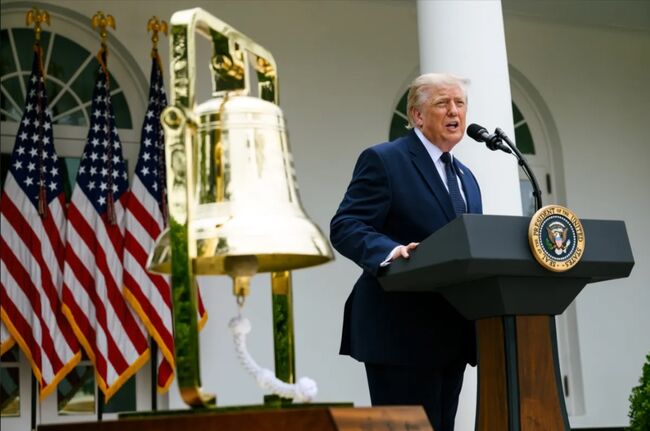 Trump pressures for rate cut again ahead of FOMC... "Should be the lowest in the world"
U.S. President Donald Trump. [Photo = The White House] U.S. President Donald Trump once again pressured the Federal Reserve, the U.S. central bank, to lower interest rates on the 27th (local time
Trump pressures for rate cut again ahead of FOMC... "Should be the lowest in the world"
U.S. President Donald Trump. [Photo = The White House] U.S. President Donald Trump once again pressured the Federal Reserve, the U.S. central bank, to lower interest rates on the 27th (local time
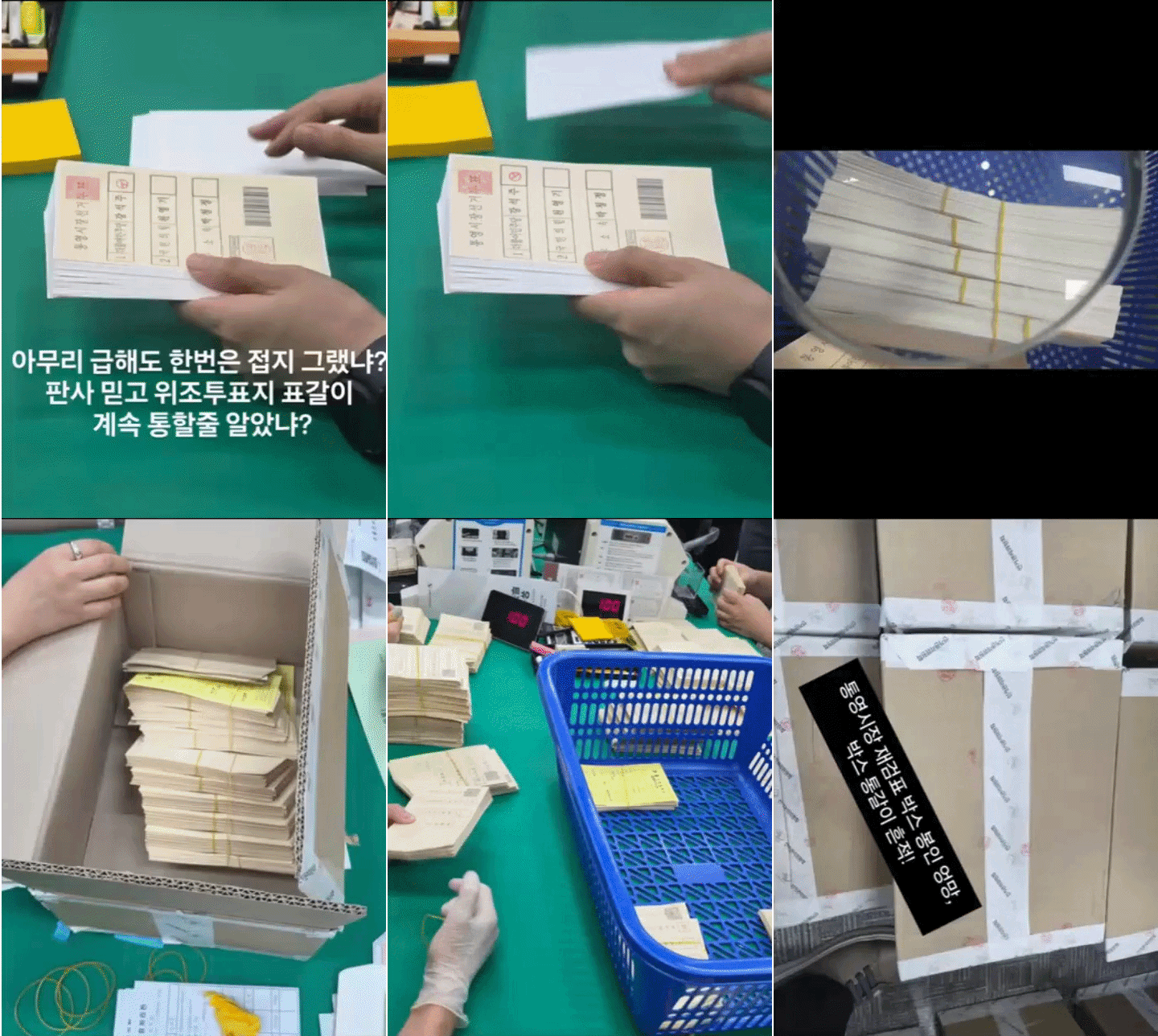 “Ignoring crisp ballots and damaged seals”… Tongyeong mayoral recount concludes with ‘no change in outcome,’ leaving suspicions and public outrage behind
Suspected counterfeit ballots discovered in Tongyeong [GIF from social media of Representative Hwang Kyo-ahn / Attorney Park Joo-hyun]During a recount of the Tongyeong mayoral election in South Gyeong
“Ignoring crisp ballots and damaged seals”… Tongyeong mayoral recount concludes with ‘no change in outcome,’ leaving suspicions and public outrage behind
Suspected counterfeit ballots discovered in Tongyeong [GIF from social media of Representative Hwang Kyo-ahn / Attorney Park Joo-hyun]During a recount of the Tongyeong mayoral election in South Gyeong
 President Yoon, regarding the first-instance ruling on the Public Official Election Act: “An excessive political verdict that distorts the facts… We will appeal immediately.”
The first-instance sentencing hearing for President Yoon Suk Yeol regarding violations of the Public Official Election Act is being broadcast live at Seoul Station on the 27th. [Photo=Yonhap News]Pres
President Yoon, regarding the first-instance ruling on the Public Official Election Act: “An excessive political verdict that distorts the facts… We will appeal immediately.”
The first-instance sentencing hearing for President Yoon Suk Yeol regarding violations of the Public Official Election Act is being broadcast live at Seoul Station on the 27th. [Photo=Yonhap News]Pres
 WSJ: "SK Hynix ADR Premium Is a Sign of AI Trading Overheat"
Advertisement for SK Hynix ADR listing in New York's Times Square [Reuters=Yonhap News file photo]The Wall Street Journal (WSJ) has pointed out that the price of SK Hynix’s American Depositary Recei
WSJ: "SK Hynix ADR Premium Is a Sign of AI Trading Overheat"
Advertisement for SK Hynix ADR listing in New York's Times Square [Reuters=Yonhap News file photo]The Wall Street Journal (WSJ) has pointed out that the price of SK Hynix’s American Depositary Recei
 'Godfather of Japanese Mystery Novels' Keigo Higashino Passes Away After Battle with Cancer at 68
Famous Japanese mystery novelist Keigo Higashino [AFP=Yonhap News]It has been belatedly reported that Keigo Higashino, the "godfather of Japanese mystery novels" and author of bestsellers such as "The
'Godfather of Japanese Mystery Novels' Keigo Higashino Passes Away After Battle with Cancer at 68
Famous Japanese mystery novelist Keigo Higashino [AFP=Yonhap News]It has been belatedly reported that Keigo Higashino, the "godfather of Japanese mystery novels" and author of bestsellers such as "The
 [Park Pil-kyu Security Column] To the Ignorant Trying to Clothe a Beast in Sheep's Clothing
Rep. Kim Byung-joo of the Democratic Party of Korea [Photo=Yonhap News]“The Air Force Academy doesn't teach you how to fly a plane!” “The Army, Navy, and Air Force academies are exactly the
[Park Pil-kyu Security Column] To the Ignorant Trying to Clothe a Beast in Sheep's Clothing
Rep. Kim Byung-joo of the Democratic Party of Korea [Photo=Yonhap News]“The Air Force Academy doesn't teach you how to fly a plane!” “The Army, Navy, and Air Force academies are exactly the
 [Issue Diagnosis] Two Effects of the Election Petition Review
 [Photo] Evidence of Election Fraud Flooding U.S. Media… Trump Had 2.7 Million Votes Stolen
 [Video] U.S. Semiquincentennial Air Show... 'Art in the Sky' streaks across New York
 [Editorial Cartoon] A Draconian Law That Undermines Freedom of Expression

 List
List










