U.S. President Trump and Chinese President Xi Jinping [Xinhua/Yonhap News]
The Taiwan issue, a key sticking point between the U.S. and China, is re-emerging as a variable following U.S. President Donald Trump's request to postpone the summit, effectively delaying his visit to China.
Particular attention is being paid to whether the U.S. schedule for arms sales to Taiwan will be affected.
According to foreign media reports, including Reuters on the 18th, President Trump stated on the 16th (local time) that he requested the postponement of the summit with China due to the war with Iran. The Chinese Ministry of Foreign Affairs also effectively acknowledged the schedule postponement the previous day, stating that both countries are continuing to communicate regarding the timing of the visit.
This summit was initially expected to be an opportunity to coordinate sensitive issues between the two countries, including the Taiwan issue, which was not fully addressed at the Busan summit last year.
In particular, it was anticipated that the Taiwan issue would be a core agenda item, as President Xi Jinping had defined it as "the most important issue in Sino-U.S. relations" in a phone call with President Trump in February and demanded that "arms sales to Taiwan must be handled cautiously."
The U.S. had also adopted a cautious stance on arms sales to Taiwan ahead of the summit.
The New York Times reported last month that the Trump administration, while pursuing arms sales to Taiwan worth approximately $13 billion (about 19.3 trillion won), postponed the announcement due to concerns about China's backlash.
Reuters reported that the U.S. government was preparing to approve arms sales to Taiwan worth up to $14 billion (about 20.8 trillion won), including Patriot (PAC-3) and the National Advanced Surface-to-Air Missile System (NASAMS), following President Trump's visit to China.
Hong Kong's Ming Pao also reported that President Trump may approve a large-scale military package after his visit to China.
With the arms sales card still in play, there are also speculations that the arms sales schedule may also be delayed due to the postponement of the summit.
However, both Taiwan and the U.S. have collectively dismissed the possibility of delays in arms supply.
Gu Li-hsiung, Taiwan's Minister of National Defense, told reporters before attending the Legislative Yuan the previous day, "We are in close communication with the United States."
Stanley Brown, Deputy Assistant Secretary of State for Political-Military Affairs at the U.S. Department of State, also responded "no" when asked at a congressional hearing whether "arms transfers to Taiwan have been delayed."
He emphasized that there has been no change in the policy of supplying arms to Taiwan, despite the war with Iran.
However, Wen Il-hyun, a professor at China University of Political Science and Law, said in a radio interview on the same day that "President Trump's postponed visit to China may narrow the U.S.'s room for negotiation," and "in that process, there is a possibility of some concessions on the Taiwan issue."
Experts suggest that the postponement of this visit to China may be a signal of "speed adjustment" in U.S.-China negotiations, beyond a simple schedule adjustment, and may have unfavorable implications for Taiwan.
Guo Cheng, an international relations expert, analyzed at a seminar that "currently, the U.S.'s tariff policy is not only facing legal challenges domestically but also has the potential to increase inflationary pressures," adding that "in this situation, the negotiation cards that the U.S. can use against China are relatively limited."
He added, "This prolonged state of insufficient bargaining power is not desirable from Taiwan's perspective and could instead be disadvantageous."
Lin Jian, spokesperson for the Chinese Ministry of Foreign Affairs, responded to a question at a regular press briefing on the same day: "Is the timeline (changed by President Trump) one that China can agree to? Will China pursue more substantive discussions as both sides have more time to prepare for the meeting?" He stated, "Summit diplomacy has played an irreplaceable guiding role in Sino-U.S. relations. China and the U.S. will continue to maintain communication on the matter of President Trump's visit to China."

 [Statement by the Seobeokka KMA Patriots Association] ㉛ Recount the ballots openly, as the previous recount covered up election fraud
Recount of the Tongyeong mayoral election [Photo=Yonhap News]South Korea's liberal democracy is dying. The National Election Commission (NEC), which has degraded into a criminal organization through t
[Statement by the Seobeokka KMA Patriots Association] ㉛ Recount the ballots openly, as the previous recount covered up election fraud
Recount of the Tongyeong mayoral election [Photo=Yonhap News]South Korea's liberal democracy is dying. The National Election Commission (NEC), which has degraded into a criminal organization through t
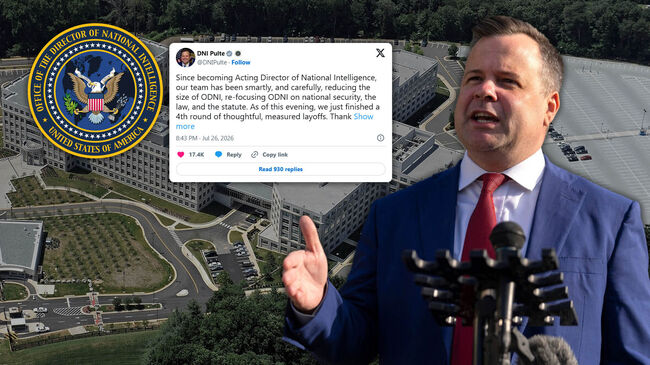 Bill Pulte to Restructure ‘Deep State’… Announces 4th Round of Layoffs at the Office of the Director of National Intelligence
Acting Director of National Intelligence Bill Pulte announced Sunday that he has carried out a fourth "deliberate and measured" reduction in personnel since taking office on June 19, as part of the Tr
Bill Pulte to Restructure ‘Deep State’… Announces 4th Round of Layoffs at the Office of the Director of National Intelligence
Acting Director of National Intelligence Bill Pulte announced Sunday that he has carried out a fourth "deliberate and measured" reduction in personnel since taking office on June 19, as part of the Tr
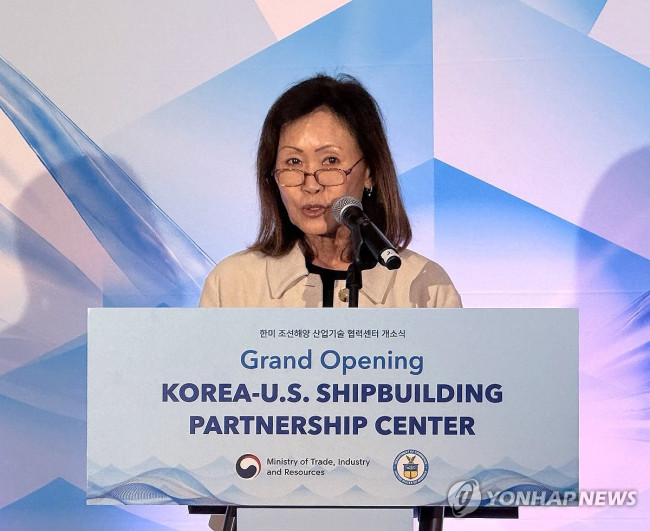 First U.S. Ambassador of Trump's Second Term to Arrive This Week… Will It Provide Momentum to Resolve Pending Issues?
U.S. Ambassador to South Korea Michelle Steel speaks at the opening ceremony of the Korea-U.S. Shipbuilding Cooperation Center held at the Mayflower Hotel in Washington, D.C., on the 23rd (local time)
First U.S. Ambassador of Trump's Second Term to Arrive This Week… Will It Provide Momentum to Resolve Pending Issues?
U.S. Ambassador to South Korea Michelle Steel speaks at the opening ceremony of the Korea-U.S. Shipbuilding Cooperation Center held at the Mayflower Hotel in Washington, D.C., on the 23rd (local time)
 President Yoon, regarding the first-instance ruling on the Public Official Election Act: “An excessive political verdict that distorts the facts… We will appeal immediately.”
The first-instance sentencing hearing for President Yoon Suk Yeol regarding violations of the Public Official Election Act is being broadcast live at Seoul Station on the 27th. [Photo=Yonhap News]Pres
President Yoon, regarding the first-instance ruling on the Public Official Election Act: “An excessive political verdict that distorts the facts… We will appeal immediately.”
The first-instance sentencing hearing for President Yoon Suk Yeol regarding violations of the Public Official Election Act is being broadcast live at Seoul Station on the 27th. [Photo=Yonhap News]Pres
 91% of Net Influx of MZ Generation Goes to Seoul Metropolitan Area… Population Migration Also Shows 'K-shaped Polarization' by Industry
[Provided by Leaders Index]Over the past four years, the MZ generation population has become increasingly concentrated in the Seoul metropolitan area and the Chungcheong region. While cities cen
91% of Net Influx of MZ Generation Goes to Seoul Metropolitan Area… Population Migration Also Shows 'K-shaped Polarization' by Industry
[Provided by Leaders Index]Over the past four years, the MZ generation population has become increasingly concentrated in the Seoul metropolitan area and the Chungcheong region. While cities cen
 'Godfather of Japanese Mystery Novels' Keigo Higashino Passes Away After Battle with Cancer at 68
Famous Japanese mystery novelist Keigo Higashino [AFP=Yonhap News]It has been belatedly reported that Keigo Higashino, the "godfather of Japanese mystery novels" and author of bestsellers such as "The
'Godfather of Japanese Mystery Novels' Keigo Higashino Passes Away After Battle with Cancer at 68
Famous Japanese mystery novelist Keigo Higashino [AFP=Yonhap News]It has been belatedly reported that Keigo Higashino, the "godfather of Japanese mystery novels" and author of bestsellers such as "The
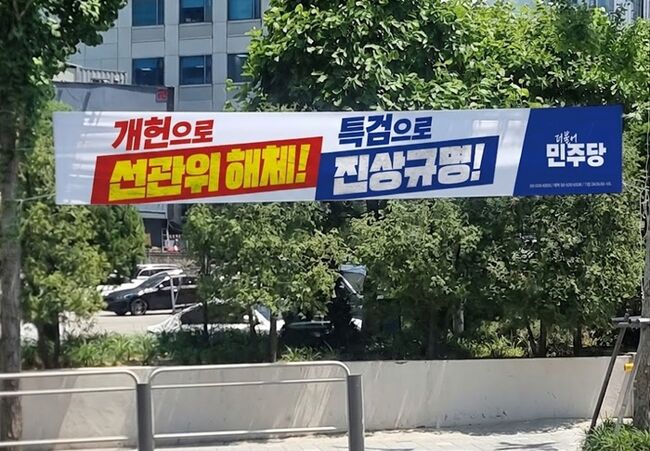 [Cho Yang-geon Column] The NEC: Facing a Fate of "Discarding the Dog After the Hunt"
Banner calling for the "dissolution of the NEC" posted by the Democratic Party. [AI-generated image]Banners calling for the "dissolution of the National Election Commission (NEC)" posted by the Democr
[Cho Yang-geon Column] The NEC: Facing a Fate of "Discarding the Dog After the Hunt"
Banner calling for the "dissolution of the NEC" posted by the Democratic Party. [AI-generated image]Banners calling for the "dissolution of the National Election Commission (NEC)" posted by the Democr
 [Photo] Evidence of Election Fraud Flooding U.S. Media… Trump Had 2.7 Million Votes Stolen
 [Video] U.S. Semiquincentennial Air Show... 'Art in the Sky' streaks across New York
 [Editorial Cartoon] A Draconian Law That Undermines Freedom of Expression

 List
List