2025년 7월 31일, 트럼프 대통령이 발표한 한미 관세협상은 관세 인하라는 겉모습과 달리 한국 측의 거대한 대미 투자와 미국의 전면 통제가 포함된 초유의 협정이었다. 트럼프의 유화 제스처 속에는 이재명 정권을 향한 전략적 압박이 병존하며, 이는 경제는 물론 안보·정치까지 포괄하는 ‘한국 압박설계도’일 가능성이 있다.<편집자 주>
 Joint representative of the Korea-US Trade Agreement
The agreement announced by Trump has been named a "full and complete trade deal." The White House has published this executive order in the Federal Register, and the Secretary of Commerce is expected to publish the revised US tariff schedule within seven days after consulting with bodies such as the US International Trade Commission (ITC) and Customs and Border Protection (CBP).
The Lee Jae-myung administration announced that beef and rice were excluded from the tariff negotiation agreement, but this cannot be definitively known until the results are revealed a week later. While these agreed-upon tariff rates are set at the same level as those with Japan and the EU, they directly contradict the US-Korea Free Trade Agreement (FTA) that went into effect in March 2012 with mutual tariffs of 0%. The US began free trade negotiations with the EU in 2013 under the name TTIP (Transatlantic Trade and Investment Partnership), but no agreement was reached. Negotiations for a free trade agreement with Japan were attempted, but no progress was made.
Prior to President Trump's inauguration, the US's overall effective tariff rate on Korea was as low as 0.2%. Japan and the EU also maintained rates around 1.5% by item, although higher than Korea's. Therefore, looking solely at the agreed-upon tariff rates between Korea and the US, Korea's tariff increase appears to be slightly higher than that of Japan or the EU.
Even setting aside the 15% tariff rate, the mandatory investment of $350 billion, which was a prerequisite for the tariff agreement, is cause for concern. Not only is the scale of this investment 19.8% of GDP, but considering the remaining foreign exchange reserves of only $410 billion, the feasibility of direct investment in the US itself remains questionable.
Japan and the EU, which have pledged $550 billion and $600 billion in investments in the US, respectively, represent only 11.9% and 3.1% of their GDP. Furthermore, Korea is required to additionally purchase energy, such as US liquefied natural gas (LNG), worth $100 billion.
Given that the EU has agreed to prioritize the purchase of LNG and nuclear fuel energy worth $750 billion over three years, it is uncertain whether Korea can actually secure the required LNG supply from the US. This is because Korea is already importing $23 billion worth of energy from the US annually.
Moreover, if we take Trump's words literally, this investment of $350 billion grants the US ownership and control, allows President Trump to personally select the investment targets, and stipulates that 90% of the profits will be preferentially distributed to the US. This differs in nature from a typical memorandum of understanding (MOU) for attracting investment.
Japan's investment of $550 billion also follows the same principle of preferential distribution of 90% of profits to the US, but Japan's investment is known to be in the form of financial support, such as through funds. In contrast, Korea's investment is understood to be direct investment. If the US unilaterally determines ownership, control, and even the investment targets as Trump stated, this could be interpreted not as investment but as compulsory remittance of funds.
However, according to various media reports and YouTuber commentaries, the $350 billion is not a "no-questions-asked investment." It is suggested that $150 billion is allocated to the shipbuilding industry led by Korea, and the remaining $200 billion includes investments already pursued during the Biden administration, such as Samsung Electronics' semiconductor plant, LG Energy Solution's battery plant, and Hyundai Motor's electric vehicle plant. Thus, the actual new investment may not be as burdensome.
From the author's perspective, given that Lee Jae-yong, Chairman of Samsung Electronics, Chung Eui-sun, Chairman of Hyundai Motor, and Koo-hwan Kim, Vice Chairman of Hanwha Group, traveled to the US to assist the negotiation team separately from the government negotiation delegation, the reports regarding the US's strategic industry promotion allocation intentions are highly likely to be true.
This is because the direct investment form proposed by Trump is interpreted as being aimed at the global competitiveness of Korean companies in sectors such as semiconductors, shipbuilding, nuclear power, and batteries, which the US cannot adequately obtain from Japan or the EU.
In fact, Hanwha Group's slogan "Make American Shipbuilding Great Again (MASGA)" presented in this agreement clearly caught Trump's attention.
For instance, reviving the US shipbuilding industry naturally requires a substantial amount of capital, such as $150 billion, to be sourced over several years. Semiconductors are also indispensable, aligning with the US CHIPS Act, and in pursuit of becoming a mega-hub for advanced industries like AI, nuclear power generation and the battery industry are equally essential alongside shipbuilding and semiconductors, and cannot be developed overnight.
Furthermore, for Trump, a large-scale inflow of funds into the US at once is not desirable, considering his efforts to stabilize the country's currency value and encourage economic recovery by inducing interest rate cuts. The statement that the US will have ownership and control over the investment funds implies a desire to hold the reins of US strategic industry development, rather than an intention to seize capital raised from foreign companies.
The mention of a 90% profit repatriation can be understood in conjunction with control over initial capital allocation decisions. Moreover, the large investment of $350 billion may not be an unmanageable sum.
This is because, excluding the years 2022-2023, Korea's trade balance since 2010 has recorded an average surplus of about $50 billion annually. Foreign exchange reserves can also be maintained under the premise of continuing a surplus in the trade balance, as long as this sum is not depleted all at once.
Therefore, the assertion by some online media that Trump is orchestrating an artificial crisis in South Korea to oust the Lee Jae-myung administration is an overstatement, and the author believes the subsequent media reports and commentaries hold credibility.
However, it is difficult to view this tariff negotiation agreement as full recognition of the Lee Jae-myung administration by Trump.
Furthermore, Trump's use of the phrase "electoral success" in English to describe the Lee Jae-myung administration's election victory is interpreted not as a complete congratulation, but rather as a passive acknowledgment of the win, even if there were irregularities in the election process.
The intention to meet with Lee Jae-myung in Washington D.C. within two weeks to finalize negotiations serves a dual purpose: on one hand, to overtly pressure Lee, thereby avoiding providing an excuse for the so-called "gae-ttal" (die-hard Lee Jae-myung supporters) to intensify anti-US slogans; and on the other hand, to prompt Lee himself to publicly display a willingness to comply with these US demands.
In other words, while appearing to offer a conciliatory gesture on the surface, it can be seen as a strategy employing both hard and soft tactics, using Ambassador Mosbacher, who has criticized the realities of South Korea's fraudulent elections and Lee Jae-myung's past during her recent visits to Korea, to pressure Lee and simultaneously bolster the Korean people's will for justice and truth.
Two weeks later, another potential pressure card from Trump awaits Lee Jae-myung: the defense cost-sharing agreement. Regarding the fraudulent elections, as some US officials have repeatedly mentioned, evidence has been gathered suggesting that the Chinese Communist Party and A-web (International Centre for Electoral Studies) led the tabulation irregularities in the 2020 US presidential election, and this was facilitated in Korea.
Significant pressure cards, such as the arrest of Chinese hacker-spies at the Suwon National Election Commission Training Institute, as previously disclosed by Heo Gyeom, a reporter from Sky Daily (currently CEO of Hanmi Ilbo), exist for Trump. Therefore, pressure on Lee is expected to be more effective.
Finally, let's discuss the expected outcome if Lee Jae-myung, instead of refraining from responding to Trump's intentions, continues to pursue a path of destruction of Korean companies and national betrayal from behind the scenes.
The recent "corporate strangulation" policies enacted by the Lee Jae-myung administration, such as amendments to the Commercial Act, mandatory sale of treasury shares, cumulative voting, and the "Yellow Envelope Law," could be interpreted as a reckless response of "do your worst" in awareness of Trump.
In addition, former Chinese Ambassador to Korea Xing Haiming has called for "cracking down on anti-China far-right forces." This statement is motivated by a desire to support the pro-government far-left forces who advocate for the withdrawal of US troops from Korea and the dissolution of the UN Command, and to counter President Trump's strategy of declaring war on China.
The Lee Jae-myung administration's policies to pressure businesses can be seen as aiming to consolidate Chinese dominance in Korea by causing domestic companies to collapse and be replaced by Chinese firms, or by ruining the economy and stifling the livelihoods of the Korean people. In such a scenario, the exodus of key companies in strategic industries with US ambitions, such as Samsung Electronics, Hyundai Motor, Hanwha Ocean, and Doosan Enerbility, could become a reality.
In other words, there would be a wave of leading corporations fleeing the country to escape domestic left-wing oppression, while remaining small and medium-sized enterprises and citizens would face ruin.
We, the Korean people, need to seriously consider this last possibility and do our utmost to resist this fake president who will do anything to cling to power and ensure his resignation with dignity.
If even the closest ally and superpower, the United States, and the most internationally competitive large corporations leave, our citizens are highly likely to be reduced to the status of a Chinese vassal state like Hong Kong in the near future.
The sooner, the better. Trump's hard and soft strategy towards the Lee Jae-myung administration could, and should, be an opportunity to maximize the resistance of the Korean people against an anti-leftist government.
#KoreaUSTariffAgreement #350BillionInvestment #TrumpNegotiation #FTAViolation #LeeJaeMyungRegime #TrumpPressureStrategy #MASGA #AntiUSProChina #SpyCard #KoreaExodus
※ The opinions of external contributors may differ from the editorial direction of this publication.

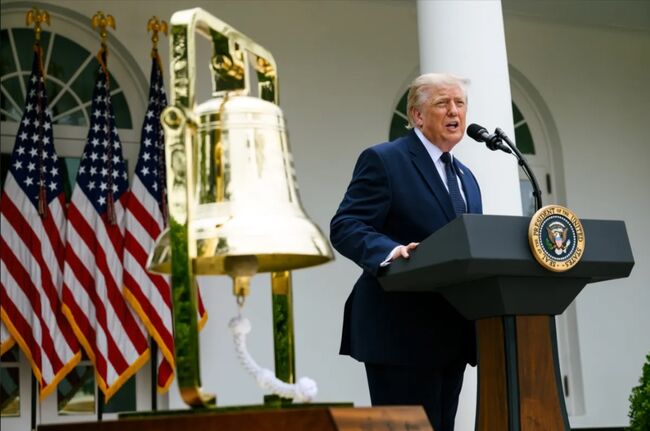 Trump pressures for rate cut again ahead of FOMC... "Should be the lowest in the world"
U.S. President Donald Trump. [Photo = The White House] U.S. President Donald Trump once again pressured the Federal Reserve, the U.S. central bank, to lower interest rates on the 27th (local time
Trump pressures for rate cut again ahead of FOMC... "Should be the lowest in the world"
U.S. President Donald Trump. [Photo = The White House] U.S. President Donald Trump once again pressured the Federal Reserve, the U.S. central bank, to lower interest rates on the 27th (local time
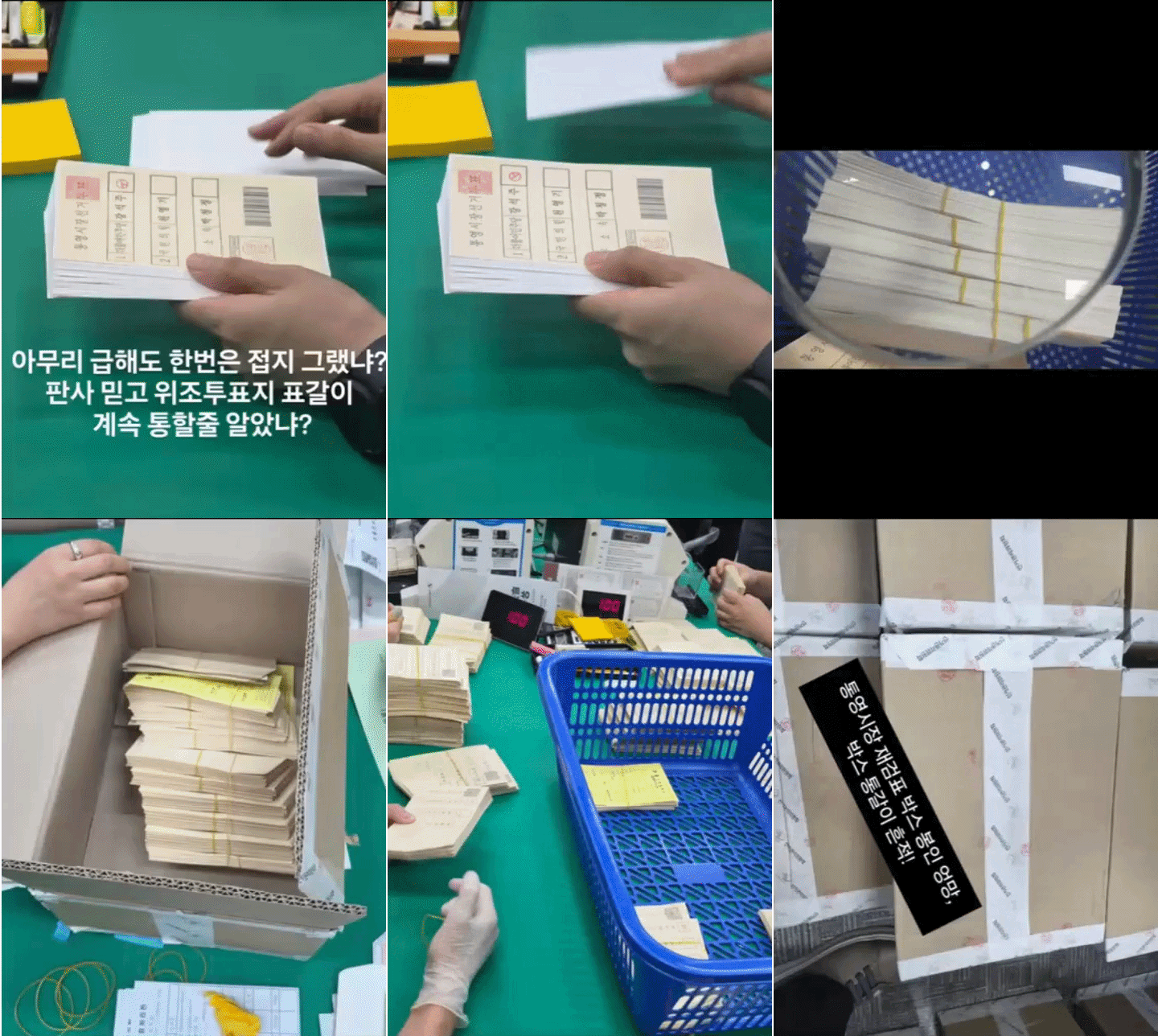 “Ignoring crisp ballots and damaged seals”… Tongyeong mayoral recount concludes with ‘no change in outcome,’ leaving suspicions and public outrage behind
Suspected counterfeit ballots discovered in Tongyeong [GIF from social media of Representative Hwang Kyo-ahn / Attorney Park Joo-hyun]During a recount of the Tongyeong mayoral election in South Gyeong
“Ignoring crisp ballots and damaged seals”… Tongyeong mayoral recount concludes with ‘no change in outcome,’ leaving suspicions and public outrage behind
Suspected counterfeit ballots discovered in Tongyeong [GIF from social media of Representative Hwang Kyo-ahn / Attorney Park Joo-hyun]During a recount of the Tongyeong mayoral election in South Gyeong
 President Yoon, regarding the first-instance ruling on the Public Official Election Act: “An excessive political verdict that distorts the facts… We will appeal immediately.”
The first-instance sentencing hearing for President Yoon Suk Yeol regarding violations of the Public Official Election Act is being broadcast live at Seoul Station on the 27th. [Photo=Yonhap News]Pres
President Yoon, regarding the first-instance ruling on the Public Official Election Act: “An excessive political verdict that distorts the facts… We will appeal immediately.”
The first-instance sentencing hearing for President Yoon Suk Yeol regarding violations of the Public Official Election Act is being broadcast live at Seoul Station on the 27th. [Photo=Yonhap News]Pres
 WSJ: "SK Hynix ADR Premium Is a Sign of AI Trading Overheat"
Advertisement for SK Hynix ADR listing in New York's Times Square [Reuters=Yonhap News file photo]The Wall Street Journal (WSJ) has pointed out that the price of SK Hynix’s American Depositary Recei
WSJ: "SK Hynix ADR Premium Is a Sign of AI Trading Overheat"
Advertisement for SK Hynix ADR listing in New York's Times Square [Reuters=Yonhap News file photo]The Wall Street Journal (WSJ) has pointed out that the price of SK Hynix’s American Depositary Recei
 'Godfather of Japanese Mystery Novels' Keigo Higashino Passes Away After Battle with Cancer at 68
Famous Japanese mystery novelist Keigo Higashino [AFP=Yonhap News]It has been belatedly reported that Keigo Higashino, the "godfather of Japanese mystery novels" and author of bestsellers such as "The
'Godfather of Japanese Mystery Novels' Keigo Higashino Passes Away After Battle with Cancer at 68
Famous Japanese mystery novelist Keigo Higashino [AFP=Yonhap News]It has been belatedly reported that Keigo Higashino, the "godfather of Japanese mystery novels" and author of bestsellers such as "The
 [Park Pil-kyu Security Column] To the Ignorant Trying to Clothe a Beast in Sheep's Clothing
Rep. Kim Byung-joo of the Democratic Party of Korea [Photo=Yonhap News]“The Air Force Academy doesn't teach you how to fly a plane!” “The Army, Navy, and Air Force academies are exactly the
[Park Pil-kyu Security Column] To the Ignorant Trying to Clothe a Beast in Sheep's Clothing
Rep. Kim Byung-joo of the Democratic Party of Korea [Photo=Yonhap News]“The Air Force Academy doesn't teach you how to fly a plane!” “The Army, Navy, and Air Force academies are exactly the
 [Issue Diagnosis] Two Effects of the Election Petition Review
 [Photo] Evidence of Election Fraud Flooding U.S. Media… Trump Had 2.7 Million Votes Stolen
 [Video] U.S. Semiquincentennial Air Show... 'Art in the Sky' streaks across New York
 [Editorial Cartoon] A Draconian Law That Undermines Freedom of Expression

 List
List










