A composite image symbolizing the salmon sushi parliamentary inquiry. "Shall we conduct a parliamentary inquiry while eating sushi?" The essence is North Korean remittances, not sushi. [Photo = Hanmi Ilbo composite]
“If salmon sushi is evidence of fabricated prosecution, is the Blue House dinner a get-out-of-jail-free card?”
This is a criticism leveled against the ad hoc special committee for "Investigating the Truth of Fabricated Prosecution Allegations by the Yoon Suk-yeol Administration's Political Prosecutors," which has officially commenced its work by effectively unilaterally adopting 103 witnesses and 36 referees.
The special committee is composed of 20 members: 11 from the Democratic Party, 7 from the People Power Party, 1 from the New Reform Party, and 1 from the Progressive Party. In effect, it is a 13-seat majority for the pro-government bloc versus 7 seats for the opposition. This disparity in numbers is why it's being pointed out that the outcome is already predetermined.
The Daejang-dong and Wirye development corruption allegations, the alleged illicit fundraising of former Democratic Research Institute Vice President Kim Yong, the Ssangbangul North Korean remittance case, the alleged manipulation of real estate statistics, the shooting of a public official in the West Sea incident, and the alleged false reporting intended to defame former President Yoon Suk-yeol. These are all cases with different natures, timing, targets, and legal issues, yet they are all being bundled under one parliamentary inquiry.
It is argued that the commonality among these cases lies not in their nature but in their political direction.
Critics argue that this forced consolidation is difficult to explain by any intention other than to repackage investigations and prosecutions unfavorable to the Democratic Party and Lee Jae-myung under the umbrella term "fabricated prosecution by political prosecutors."
The reason such a forceful approach is possible is simple.
The Democratic Party already believes it has won in terms of numbers and has an advantage in framing. The special committee is effectively a 13-to-7 setup, and the calculation is that by lumping together disparate cases under the single phrase "fabricated prosecution by political prosecutors," they will lose nothing in terms of consolidating their support base and in public opinion battles.
Moreover, the investigation period extends until May 8th, overlapping with the period leading up to the local elections on June 3rd. Considering the timetable where opposition party attackers begin to disperse their attention towards the election front lines, it is not difficult to understand the background behind the Democratic Party's willingness to undertake such a questionable undertaking.
And the most provocative symbolic scene of that political calculation that has emerged is precisely the 'salmon sushi'.
While scenes of prosecutors' office meals and drinking sessions capture public attention, the questions that the public truly needs to know are pushed aside. Hence, the cynicism of a 'salmon sushi parliamentary inquiry' has already begun.
Scenes are powerful and easy to remember. However, a powerful scene does not immediately become the essence of an incident. Sushi is just an image, and the essence is the North Korean remittance case.
The moment the parliamentary inquiry gets sidetracked by images, the pursuit of truth gives way to staged events.
A more serious problem is that this could be seen as a parliamentary inquiry that shakes the nation's public judgment system, going beyond mere political strife.
If the core of the "fabricated prosecution" that the Democratic Party talks about is merely the salmon sushi scene, how can they explain the Supreme Court's entire judgment confirming the guilt of former Gyeonggi Province Vice Governor Lee Hwa-young for North Korean remittances?
The Supreme Court confirmed Lee Hwa-young's sentence of 7 years and 8 months imprisonment on June 5, 2025, and acknowledged Ssangbangul's conspiracy to remit $8 million to North Korea.
If they intend to use a case with an already finalized court ruling as material for public opinion battles by politically destabilizing it, it is an act that undermines the order of national judgment, beyond mere criticism of judicial decisions.
This is why such a parliamentary inquiry is being criticized as a 'parliamentary inquiry that disrupts national order'.
Even more absurd is the fact that the ruling party is pouring its political energy into such politically charged parliamentary inquiries, despite the challenging economic and livelihood conditions both domestically and internationally.
What the public is curious about is not the menu at the prosecutors' office, but the issue of making a living. What businesses and markets are focused on are not the political realignments of past cases, but the policy signals of today.
Yet, instead of focusing on soothing the anxieties regarding livelihoods and the economy, the ruling party appears to be deeply engrossed in a power struggle to rewrite the meaning of investigations and rulings that were unfavorable to them. The longer such a parliamentary inquiry drags on, the more political aversion it will only breed.
The People Power Party is not exempt either. The more disadvantaged they are in terms of numbers, the more sophisticated their strategy and tactics should be, but their performance so far has not reflected this.
In such a situation, the questions the opposition party should be holding onto are clear: "Why did the money go to North Korea? For whom was the money intended?" Yet, the essential questions confronting symbolic politics are weak, and their response to the framing is not sophisticated.
If they get drawn into sushi and focus solely on personal disputes like Park Sang-yong's, it will be like dancing on the stage designed by the Democratic Party. An opposition party without a strategy loses both in numbers and in imagery.
What the parliamentary inquiry should be investigating is not the menu at the prosecutors' office.
It is the nature and purpose of the money that went to North Korea, the delivery structure, and the political connections.
If this special committee is truly for the good of the nation, it must pursue the money, not the sushi, and return to the essence, not the scene. The Democratic Party must be wary of the temptation of scene politics, and the People Power Party must break free from its apathetic response.
A parliamentary inquiry that is swayed by sushi is not an inquiry that reveals the truth. It is highly likely to be remembered as a 'parliamentary inquiry that disrupts national order,' burying the truth in scenes.

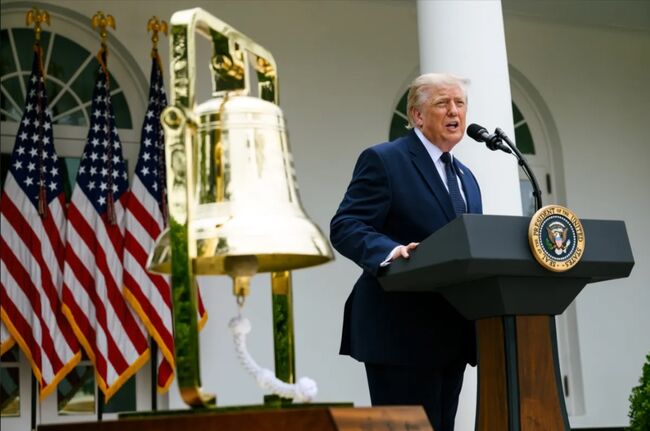 Trump pressures for rate cut again ahead of FOMC... "Should be the lowest in the world"
U.S. President Donald Trump. [Photo = The White House] U.S. President Donald Trump once again pressured the Federal Reserve, the U.S. central bank, to lower interest rates on the 27th (local time
Trump pressures for rate cut again ahead of FOMC... "Should be the lowest in the world"
U.S. President Donald Trump. [Photo = The White House] U.S. President Donald Trump once again pressured the Federal Reserve, the U.S. central bank, to lower interest rates on the 27th (local time
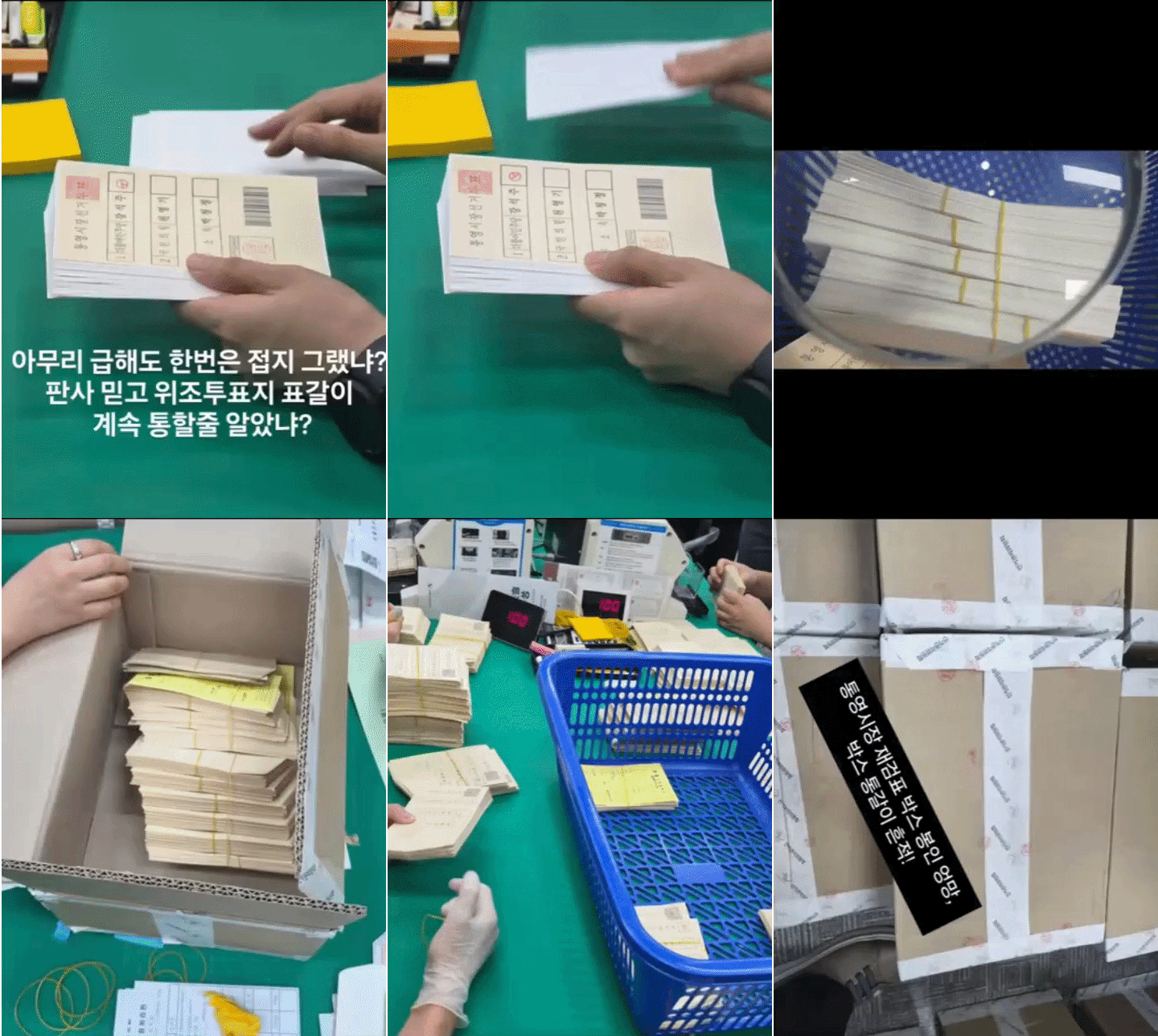 “Ignoring crisp ballots and damaged seals”… Tongyeong mayoral recount concludes with ‘no change in outcome,’ leaving suspicions and public outrage behind
Suspected counterfeit ballots discovered in Tongyeong [GIF from social media of Representative Hwang Kyo-ahn / Attorney Park Joo-hyun]During a recount of the Tongyeong mayoral election in South Gyeong
“Ignoring crisp ballots and damaged seals”… Tongyeong mayoral recount concludes with ‘no change in outcome,’ leaving suspicions and public outrage behind
Suspected counterfeit ballots discovered in Tongyeong [GIF from social media of Representative Hwang Kyo-ahn / Attorney Park Joo-hyun]During a recount of the Tongyeong mayoral election in South Gyeong
 President Yoon, regarding the first-instance ruling on the Public Official Election Act: “An excessive political verdict that distorts the facts… We will appeal immediately.”
The first-instance sentencing hearing for President Yoon Suk Yeol regarding violations of the Public Official Election Act is being broadcast live at Seoul Station on the 27th. [Photo=Yonhap News]Pres
President Yoon, regarding the first-instance ruling on the Public Official Election Act: “An excessive political verdict that distorts the facts… We will appeal immediately.”
The first-instance sentencing hearing for President Yoon Suk Yeol regarding violations of the Public Official Election Act is being broadcast live at Seoul Station on the 27th. [Photo=Yonhap News]Pres
 WSJ: "SK Hynix ADR Premium Is a Sign of AI Trading Overheat"
Advertisement for SK Hynix ADR listing in New York's Times Square [Reuters=Yonhap News file photo]The Wall Street Journal (WSJ) has pointed out that the price of SK Hynix’s American Depositary Recei
WSJ: "SK Hynix ADR Premium Is a Sign of AI Trading Overheat"
Advertisement for SK Hynix ADR listing in New York's Times Square [Reuters=Yonhap News file photo]The Wall Street Journal (WSJ) has pointed out that the price of SK Hynix’s American Depositary Recei
 'Godfather of Japanese Mystery Novels' Keigo Higashino Passes Away After Battle with Cancer at 68
Famous Japanese mystery novelist Keigo Higashino [AFP=Yonhap News]It has been belatedly reported that Keigo Higashino, the "godfather of Japanese mystery novels" and author of bestsellers such as "The
'Godfather of Japanese Mystery Novels' Keigo Higashino Passes Away After Battle with Cancer at 68
Famous Japanese mystery novelist Keigo Higashino [AFP=Yonhap News]It has been belatedly reported that Keigo Higashino, the "godfather of Japanese mystery novels" and author of bestsellers such as "The
 [Park Pil-kyu Security Column] To the Ignorant Trying to Clothe a Beast in Sheep's Clothing
Rep. Kim Byung-joo of the Democratic Party of Korea [Photo=Yonhap News]“The Air Force Academy doesn't teach you how to fly a plane!” “The Army, Navy, and Air Force academies are exactly the
[Park Pil-kyu Security Column] To the Ignorant Trying to Clothe a Beast in Sheep's Clothing
Rep. Kim Byung-joo of the Democratic Party of Korea [Photo=Yonhap News]“The Air Force Academy doesn't teach you how to fly a plane!” “The Army, Navy, and Air Force academies are exactly the
 [Issue Diagnosis] Two Effects of the Election Petition Review
 [Photo] Evidence of Election Fraud Flooding U.S. Media… Trump Had 2.7 Million Votes Stolen
 [Video] U.S. Semiquincentennial Air Show... 'Art in the Sky' streaks across New York
 [Editorial Cartoon] A Draconian Law That Undermines Freedom of Expression

 List
List