Yi Hwang (left) and Yi I, the twin pillars of the Neo-Confucian cartel.
In Part 1, we established that a cartel is a conspiracy system that privatizes a system for the benefit of a few. The most sophisticated and powerful implementation of this principle in Korean history was the Neo-Confucian cartel of Joseon.
While "Confucian morality" was the foundation of Joseon's spiritual civilization, its more potent aspect was its detrimental impact, using the flawless ideal of morality as a shield to monopolize all state resources and ways of thinking. What led to Joseon's downfall, prior to external invasions, was this immense ideological cartel that choked the nation from within.
Entry Barriers in the Name of Moral Superiority
The Sarim faction, which formed in the mid-Joseon period, established a solid yangban (nobility) group based on the single ideology of Neo-Confucianism. The core driving force of this cartel was "moral superiority."
Based on a sense of chosenness, believing they alone possessed the truth, they branded all dissenting forces as "traitors to civilization" (사문난적) and excluded them. The 10% yangban group treated 90% of the populace as slaves, violating their human rights and exploiting them.
This bears an eerie resemblance to how modern cartels build entry barriers using information asymmetry. The abstruse academic texts of Neo-Confucianism served as a "barrier of jargon" that prevented public access, and the civil service examinations were the sole passkey to entering their exclusive league.
While 90% of the people were tied down by illiteracy and daily labor, the 10% yangban group monopolized metaphysical debates and privatized knowledge power. For them, scholarship was not a means of pursuing truth but a sophisticated political weapon to legitimize their vested interests and eliminate competitors.
Seowon and Hyangyak: The Genesis of a Web of Academic Networks
The practical mechanisms that solidified the Neo-Confucian cartel were the regional networks of seowon (Confucian academies) and hyangyak (local self-governance pacts). Seowon lost their original purpose of nurturing talent and degenerated into strongholds for specific political factions and economic loopholes for tax and labor evasion.
This intricately connected human network seized control of central politics and monopolized regional economic interests. This structure, the genesis of what could be called an "academic network cartel," functioned far more powerfully than the state's official administrative channels.
Furthermore, they seized control of the censorate (Saheonbu, Sagwanwon, Hongmungwan), the prototype of the separation of powers, thereby paralyzing its original function of checks and balances. The censors' critiques were not for correcting governmental errors but devolved into mere tools for attacking opposing factions and defending their own power. Innovative proposals or practical reforms crucial for the nation's survival were thoroughly dismissed under the pretext of being "contrary to etiquette" or "not in accordance with the teachings of the sages."
Sterilizing Dynamism and Causing Self-Imposed Isolation from World History
Ultimately, this Neo-Confucian cartel completely sterilized the dynamism of the Joseon nation. The reinforcement of the hierarchical order of scholars, farmers, artisans, and merchants, the disdain for commerce, and the demonization of technological advancement were not mere matters of values. They were survival strategies of a vested-interest cartel intent on preventing the emergence of new powers through change.
As the 10% yangban cartel, cloaked in morality, treated the 90% of the populace as mere objects of indoctrination, the lives of the people of Joseon fell into dire straits, and the nation slowly lost its vitality.
In the process of ideology becoming a tool of power, and that power becoming cartelized to choke the nation, Joseon failed to comprehend the grand currents of world history. While the Industrial Revolution and the Age of Discovery unfolded and Western powers knocked on Asia's doors, Joseon's Confucian cartel gathered in backrooms, squandering national energy on disputes over ceremonial rites. The cartel's inherent tendency to prioritize internal power struggles over external changes turned the entire nation into an isolated island.
The Tragic Consequence of National Ruin
Collusion of vested interests always parades under the guise of "justice" and "principles." However, the moral justifications put forth by Joseon's Neo-Confucians ultimately degenerated into a predatory system that squeezed the lifeblood out of the populace. The consequences were dire: weakening military power, distorting the tax system, and nipping reforms in the bud to protect the cartel's internal interests.
In the late 19th century, the ruling structure, having evolved into the extreme cartel form of Sedo Jeongchi (rule by a few powerful families), completely lost its capacity for self-governance. As the sale of public office became commonplace and the exploitation by local officials reached its peak, the people saw no reason to defend their country.
Ultimately, the humiliating national ruin of the Japan-Korea Annexation in 1910 was not due to the power of an external force but was essentially the inevitable outcome of the Neo-Confucian cartel, firmly built over 500 years, having consumed the nation's core from within.
Joseon's history offers a bloody lesson on the tragic price a community pays when 10% of intellectual power monopolizes information and protects group interests.
Have the ruling genes left by the Neo-Confucian cartel truly disappeared? Regrettably, the grammar of this closed conspiracy has been resurrected in various forms throughout modern history.
In Part 3, we will analyze the cartel structure of North Korea's upper echelons, which bears a striking resemblance to the Neo-Confucian cartel of the Joseon Dynasty.
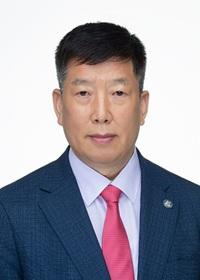
◆ Park Pil-kyu, Commissioner
Editorial Commissioner, Hankmi Ilbo
40th graduating class, Korea Military Academy

 Trump pressures for rate cut again ahead of FOMC... "Should be the lowest in the world"
U.S. President Donald Trump. [Photo = The White House] U.S. President Donald Trump once again pressured the Federal Reserve, the U.S. central bank, to lower interest rates on the 27th (local time
Trump pressures for rate cut again ahead of FOMC... "Should be the lowest in the world"
U.S. President Donald Trump. [Photo = The White House] U.S. President Donald Trump once again pressured the Federal Reserve, the U.S. central bank, to lower interest rates on the 27th (local time
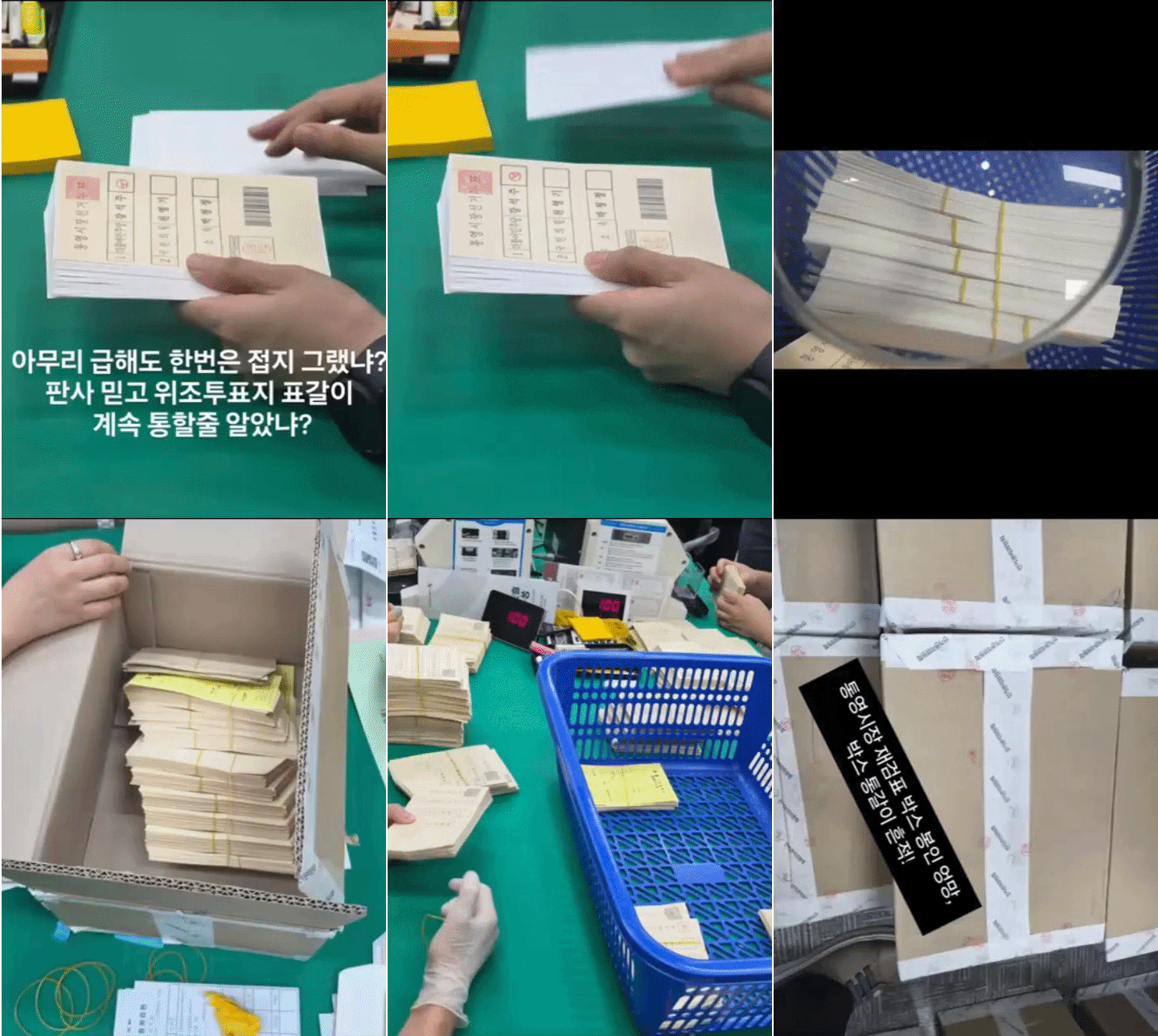 “Ignoring crisp ballots and damaged seals”… Tongyeong mayoral recount concludes with ‘no change in outcome,’ leaving suspicions and public outrage behind
Suspected counterfeit ballots discovered in Tongyeong [GIF from social media of Representative Hwang Kyo-ahn / Attorney Park Joo-hyun]During a recount of the Tongyeong mayoral election in South Gyeong
“Ignoring crisp ballots and damaged seals”… Tongyeong mayoral recount concludes with ‘no change in outcome,’ leaving suspicions and public outrage behind
Suspected counterfeit ballots discovered in Tongyeong [GIF from social media of Representative Hwang Kyo-ahn / Attorney Park Joo-hyun]During a recount of the Tongyeong mayoral election in South Gyeong
 President Yoon, regarding the first-instance ruling on the Public Official Election Act: “An excessive political verdict that distorts the facts… We will appeal immediately.”
The first-instance sentencing hearing for President Yoon Suk Yeol regarding violations of the Public Official Election Act is being broadcast live at Seoul Station on the 27th. [Photo=Yonhap News]Pres
President Yoon, regarding the first-instance ruling on the Public Official Election Act: “An excessive political verdict that distorts the facts… We will appeal immediately.”
The first-instance sentencing hearing for President Yoon Suk Yeol regarding violations of the Public Official Election Act is being broadcast live at Seoul Station on the 27th. [Photo=Yonhap News]Pres
 WSJ: "SK Hynix ADR Premium Is a Sign of AI Trading Overheat"
Advertisement for SK Hynix ADR listing in New York's Times Square [Reuters=Yonhap News file photo]The Wall Street Journal (WSJ) has pointed out that the price of SK Hynix’s American Depositary Recei
WSJ: "SK Hynix ADR Premium Is a Sign of AI Trading Overheat"
Advertisement for SK Hynix ADR listing in New York's Times Square [Reuters=Yonhap News file photo]The Wall Street Journal (WSJ) has pointed out that the price of SK Hynix’s American Depositary Recei
 'Godfather of Japanese Mystery Novels' Keigo Higashino Passes Away After Battle with Cancer at 68
Famous Japanese mystery novelist Keigo Higashino [AFP=Yonhap News]It has been belatedly reported that Keigo Higashino, the "godfather of Japanese mystery novels" and author of bestsellers such as "The
'Godfather of Japanese Mystery Novels' Keigo Higashino Passes Away After Battle with Cancer at 68
Famous Japanese mystery novelist Keigo Higashino [AFP=Yonhap News]It has been belatedly reported that Keigo Higashino, the "godfather of Japanese mystery novels" and author of bestsellers such as "The
 [Park Pil-kyu Security Column] To the Ignorant Trying to Clothe a Beast in Sheep's Clothing
Rep. Kim Byung-joo of the Democratic Party of Korea [Photo=Yonhap News]“The Air Force Academy doesn't teach you how to fly a plane!” “The Army, Navy, and Air Force academies are exactly the
[Park Pil-kyu Security Column] To the Ignorant Trying to Clothe a Beast in Sheep's Clothing
Rep. Kim Byung-joo of the Democratic Party of Korea [Photo=Yonhap News]“The Air Force Academy doesn't teach you how to fly a plane!” “The Army, Navy, and Air Force academies are exactly the
 [Issue Diagnosis] Two Effects of the Election Petition Review
 [Photo] Evidence of Election Fraud Flooding U.S. Media… Trump Had 2.7 Million Votes Stolen
 [Video] U.S. Semiquincentennial Air Show... 'Art in the Sky' streaks across New York
 [Editorial Cartoon] A Draconian Law That Undermines Freedom of Expression

 List
List