The Grand Chamber of the Constitutional Court. The Public Referendum Act was amended in March, 10 years after the Constitutional Court's ruling of unconstitutionality in 2014. The essence of the Constitutional Court's decision was that expanding the suffrage of overseas nationals aligns with the spirit of the Constitution. [Photo=Yonhap News]Amid efforts to push for a constitutional amendment concurrently with the June 3 local elections, the overseas voter registration application process by the National Election Commission under the amended Public Referendum Act has become embroiled in new controversy.
The amended Public Referendum Act has opened the door for overseas nationals without resident registration or domestic residency registration to participate in public referendums. However, in the actual registration process, applications cannot proceed without a passport number. Critics argue that contrary to the legislative intent to include overseas nationals without or with canceled resident registration within the system, the Election Commission has effectively set the first hurdle for application based on the presence or absence of a passport number.
A direct verification of the National Election Commission's overseas voter registration application process by this reporter on April 14 revealed that at the online application stage, it was impossible to proceed to the next step without entering a passport number. The application screen treated the passport number as a mandatory field, and applications were not accepted without it.
In a phone call with The Hankyoreh, the National Election Commission acknowledged, "Passport numbers are required not only for online applications but also for other methods, such as applying in person at an embassy or consulate."
Applications Opened, but the Entrance is Narrow
The starting point for this amendment was clear: the recognition that overseas nationals should not be excluded from exercising their right to vote in public referendums simply because they lack resident registration or domestic residency registration. In other words, the focus of this amendment is on guaranteeing the political rights of overseas nationals based on their nationality, not on their resident registration status.
However, the actual implementation is heading in a completely different direction. While explaining that the system has been broadened, the initial gateway for application has been narrowed down to a passport number. If the intent of the amendment is to expand the guarantee of political rights based on nationality, then requiring overseas nationals without resident registration to face the administrative hurdle of a passport number directly conflicts with that intent.
For overseas nationals who lack both resident registration and a passport, the problem is more direct. The structure requires them to first go through the process of obtaining or reissuing a passport at an overseas mission to participate in a public referendum. While the system's description makes it seem like suffrage has been expanded, in reality, there remains a hurdle of having to re-enter the Korean administrative system to prove one's identity.
Mr. A, a lawyer and former chief judge, stated, "If rights guaranteed by law are narrowed again by administrative procedures, it should be seen not as a mere inconvenience, but as a violation of legislative intent."
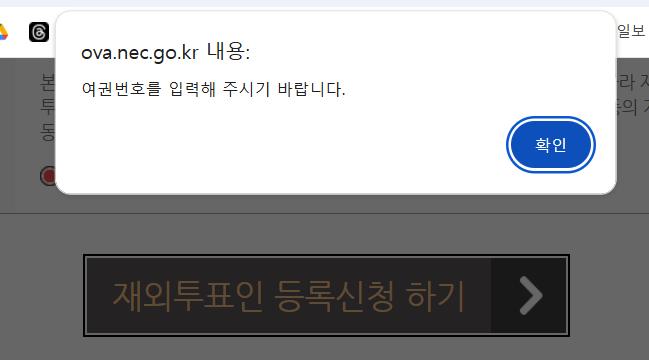 The overseas voter registration application screen of the National Election Commission. Applications are impossible without entering a passport number. [Photo=Screenshot from the Election Commission's website]
Is a Passport the Only Means of Verifying Nationality?
Furthermore, a passport is not the only means of verifying nationality. Nationality and identity can also be confirmed through documents such as the family relation certificate and basic certificate, which are proof documents managed by the Supreme Court's family relations registration system.
The basic certificate records personal identity changes, including birth and nationality, while the family relation certificate shows family ties. This means that even overseas nationals without resident registration can be confirmed as Korean nationals through this public document system. The National Election Commission's application form also includes a consent clause for querying family relations registration information.
Despite this, the Election Commission is effectively making the passport number the common entry point for nationality verification. This is where the problem lies.
The law revision was made in a direction to expand the political rights of overseas nationals who are citizens, but in actual operation, the passport number functions as a prerequisite for registration. This can lead to the system, which opened its doors based on nationality, being narrowed again based on whether one possesses a passport.
There are many who view this as a product of administrative convenience.
If passport numbers are used as the basis, a significant portion of the verification responsibility can be relied upon or transferred to the Ministry of Foreign Affairs' passport administration system. However, if based on family relations registration documents such as the family relation certificate and basic certificate, the practical burden on the Election Commission to cross-reference with Supreme Court records would increase.
This is why criticism arises that the standard for guaranteeing political rights has been set based on administrative convenience and avoidance of responsibility rather than faithful verification of nationality.
A Standard Not in the Law: Who Established It?
The problem is that the legal basis for the Election Commission designating a passport as a means of nationality verification is also unclear. Article 53, Paragraph 2 of the current Public Referendum Act stipulates that individuals who are not resident-registered and are not listed in the overseas voter registry under the Public Official Election Act, and wish to vote from abroad, must apply for overseas voter registration.
It then lists the methods for application: direct visit to an embassy or consulate, written application to officials at a circuit consulate, or application via postal mail, electronic mail, or the National Election Commission's website.
In other words, the article directly stipulates the methods and channels for application. However, nowhere in the article is there any mention that nationality must be proven by a passport or that a passport number is a mandatory requirement for registration applications.
According to The Hankyoreh's investigation, no enforcement decrees or enforcement rules directly linked to this provision within the Public Referendum Act framework were found. While not an enforcement rule, it appears that internal regulations of the Election Commission exist.
This means that the passport number is being operated as if it were mandatory, despite the absence of a direct legal basis and any publicly available subordinate regulations that flesh out the relevant provision.
Therefore, legal disputes surrounding the Election Commission's internal regulations are highly likely to continue.
The National Election Commission's explanations have also been inconsistent.
Based on the phone conversation with an official from the National Election Commission's public relations team, the official initially explained that requiring passport numbers was in accordance with legal provisions, then shifted to saying it was based on regulations. However, upon further verification, the response was along the lines of "we need to hear from the overseas election team."
Ultimately, the Election Commission itself could not provide a direct answer as to whether the passport number requirement is based on law, regulations, or internal operational standards.
Lawyer Park Ju-hyun, an expert in this field, commented on the Election Commission's de facto designation of passport numbers as the method for nationality verification through its regulations, stating, "This could be problematic as it may exceed the scope of the rulemaking authority stipulated in Article 114, Paragraph 6 of the Constitution." She added, "While the National Election Commission is a constitutional body with independent rulemaking authority, that authority can only be exercised within the scope of laws and regulations."
She continued, "The current Public Referendum Act, Article 53, Paragraph 2, only stipulates the methods for overseas voter registration applications and does not directly establish a passport number as a mandatory requirement for nationality verification." She pointed out, "It is difficult to avoid criticism that the Election Commission's operation of passport numbers as a de facto common entry point is an administrative interpretation that adds a standard not stipulated by law, either through practice or regulations."
The Election Commission's Choice, Fueling Distrust in Procedures
Those who suspect the possibility of election fraud also point to this very issue.
They argue that if the nationality verification process at the registration stage is not disclosed and explained, distrust in the accuracy of the voter registry can extend to doubts about the entire process, from ballot dispatch and return to vote counting.
Furthermore, given the separate system of family relation certificates that can confirm nationality, the question arises as to why a passport number must be prioritized. They cite that while passports can be forged, verification through family relation certificates is impossible to forge and has clear lines of responsibility.
Concerns are also raised that if the current method persists, it could lead to issues such as "whether forged passports are checked at polling stations" and an "expansion of voting participation by Zainichi Koreans affiliated with Chongryon or ethnic Koreans in China."
Of course, these concerns do not immediately imply that fraud has occurred.
Regarding this matter, lawyer Park Ju-hyun explained, "If passport numbers are used as the basis, a significant portion of the verification responsibility can be relied upon or transferred to the Ministry of Foreign Affairs. However, if based on family relations registration documents such as the family relation certificate and basic certificate, the practical burden on the Election Commission to cross-reference with Supreme Court records would increase."
She continued, "What is important is that if a problem of inadequate management arises, it can lead to issues of accountability." She emphasized, "The integrity of elections and referendums comes not only from the results but also from the persuasiveness of the procedures."
Ultimately, the core of this controversy is simple.
The intent of the amended Public Referendum Act is to guarantee the political rights of overseas nationals who are citizens. However, the first gateway for actual application, whether online or in person, remains the passport number.
Since nationality can be verified through family relation certificates, if the Election Commission operates passport numbers as the de facto common entry point without clearly presenting a legal basis, it is difficult to avoid criticism that this is an administrative interpretation that narrows the legislative intent of expanding political rights.
This is why voices are growing louder calling for the National Election Commission to provide a clearer explanation of the reasons and background for choosing passports as the criterion for nationality verification.

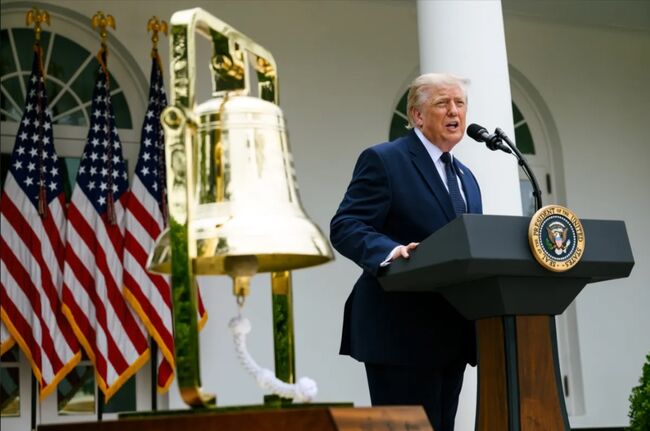 Trump pressures for rate cut again ahead of FOMC... "Should be the lowest in the world"
U.S. President Donald Trump. [Photo = The White House] U.S. President Donald Trump once again pressured the Federal Reserve, the U.S. central bank, to lower interest rates on the 27th (local time
Trump pressures for rate cut again ahead of FOMC... "Should be the lowest in the world"
U.S. President Donald Trump. [Photo = The White House] U.S. President Donald Trump once again pressured the Federal Reserve, the U.S. central bank, to lower interest rates on the 27th (local time
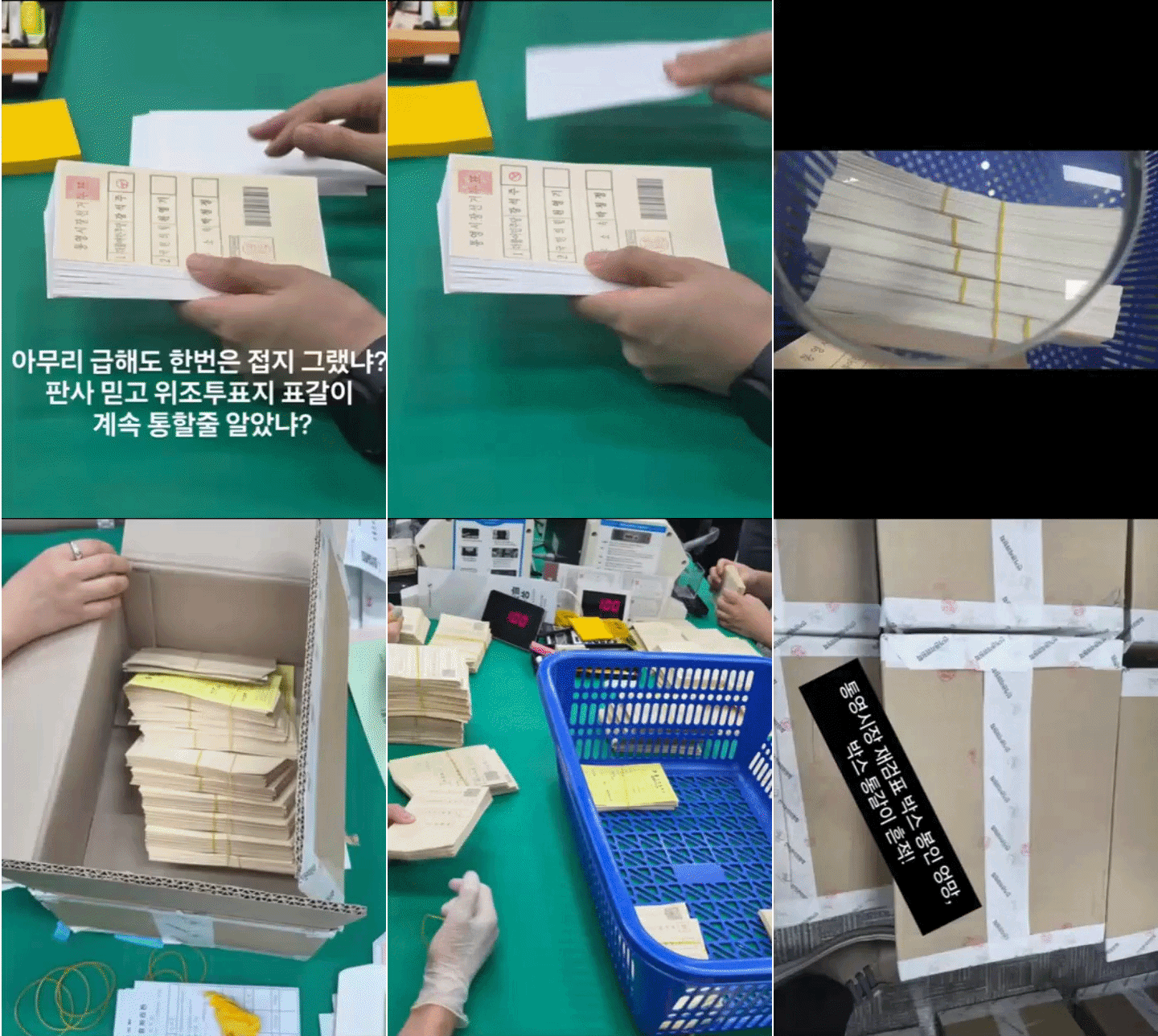 “Ignoring crisp ballots and damaged seals”… Tongyeong mayoral recount concludes with ‘no change in outcome,’ leaving suspicions and public outrage behind
Suspected counterfeit ballots discovered in Tongyeong [GIF from social media of Representative Hwang Kyo-ahn / Attorney Park Joo-hyun]During a recount of the Tongyeong mayoral election in South Gyeong
“Ignoring crisp ballots and damaged seals”… Tongyeong mayoral recount concludes with ‘no change in outcome,’ leaving suspicions and public outrage behind
Suspected counterfeit ballots discovered in Tongyeong [GIF from social media of Representative Hwang Kyo-ahn / Attorney Park Joo-hyun]During a recount of the Tongyeong mayoral election in South Gyeong
 President Yoon, regarding the first-instance ruling on the Public Official Election Act: “An excessive political verdict that distorts the facts… We will appeal immediately.”
The first-instance sentencing hearing for President Yoon Suk Yeol regarding violations of the Public Official Election Act is being broadcast live at Seoul Station on the 27th. [Photo=Yonhap News]Pres
President Yoon, regarding the first-instance ruling on the Public Official Election Act: “An excessive political verdict that distorts the facts… We will appeal immediately.”
The first-instance sentencing hearing for President Yoon Suk Yeol regarding violations of the Public Official Election Act is being broadcast live at Seoul Station on the 27th. [Photo=Yonhap News]Pres
 WSJ: "SK Hynix ADR Premium Is a Sign of AI Trading Overheat"
Advertisement for SK Hynix ADR listing in New York's Times Square [Reuters=Yonhap News file photo]The Wall Street Journal (WSJ) has pointed out that the price of SK Hynix’s American Depositary Recei
WSJ: "SK Hynix ADR Premium Is a Sign of AI Trading Overheat"
Advertisement for SK Hynix ADR listing in New York's Times Square [Reuters=Yonhap News file photo]The Wall Street Journal (WSJ) has pointed out that the price of SK Hynix’s American Depositary Recei
 'Godfather of Japanese Mystery Novels' Keigo Higashino Passes Away After Battle with Cancer at 68
Famous Japanese mystery novelist Keigo Higashino [AFP=Yonhap News]It has been belatedly reported that Keigo Higashino, the "godfather of Japanese mystery novels" and author of bestsellers such as "The
'Godfather of Japanese Mystery Novels' Keigo Higashino Passes Away After Battle with Cancer at 68
Famous Japanese mystery novelist Keigo Higashino [AFP=Yonhap News]It has been belatedly reported that Keigo Higashino, the "godfather of Japanese mystery novels" and author of bestsellers such as "The
 [Park Pil-kyu Security Column] To the Ignorant Trying to Clothe a Beast in Sheep's Clothing
Rep. Kim Byung-joo of the Democratic Party of Korea [Photo=Yonhap News]“The Air Force Academy doesn't teach you how to fly a plane!” “The Army, Navy, and Air Force academies are exactly the
[Park Pil-kyu Security Column] To the Ignorant Trying to Clothe a Beast in Sheep's Clothing
Rep. Kim Byung-joo of the Democratic Party of Korea [Photo=Yonhap News]“The Air Force Academy doesn't teach you how to fly a plane!” “The Army, Navy, and Air Force academies are exactly the
 [Issue Diagnosis] Two Effects of the Election Petition Review
 [Photo] Evidence of Election Fraud Flooding U.S. Media… Trump Had 2.7 Million Votes Stolen
 [Video] U.S. Semiquincentennial Air Show... 'Art in the Sky' streaks across New York
 [Editorial Cartoon] A Draconian Law That Undermines Freedom of Expression

 List
List