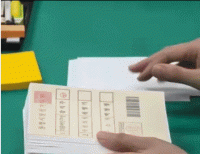
The 'Gwanghwamun Grand Rally to Inherit the Spirit of the April 19 Revolution' held in Gwanghwamun on April 18. Recently, there has been a re-evaluation of the April 19 Revolution and President Syngman Rhee. [Photo by Reporter Lim Yo-hee]
Interpreting the April 19 Revolution directly as a 'historical conviction of guilt against Syngman Rhee' misses the core of the event. The focus of the March 15, 1960 election was 'Vice President Yi Ki-poong'.
With candidate Jo Byeong-ok's death, the presidential election was solidified with Syngman Rhee, and the Liberal Party made a desperate move to install Yi Ki-poong as vice president. Syngman Rhee, who belatedly understood the situation, declared his resignation on April 26 and formally stepped down the following day.
Public Education Focused on 'Overthrowing Dictatorship' Rather Than 'Nation-Building'
In educational settings, for decades, Syngman Rhee has been referred to more often as a 'symbol of dictatorship' than as the 'founding president.' The student-oriented description on Uri History Net states, "Students and citizens joined forces to bring down Syngman Rhee's dictatorship," and other textbook-related materials summarize that the Liberal Party committed election fraud "to elect Syngman Rhee as president and Yi Ki-poong as vice president."
Within this framework, rather than his contributions to nation-building, national defense during the war, the ROK-US alliance, land reform, and the design of the anti-communist and free system, his solitary, authoritarian actions, which were arguably unavoidable for those very purposes, have been significantly highlighted. It's akin to impeaching him for his contributions to laying the foundation for a free democratic republic at the edge of Eurasia, surrounded by communism in the mid-20th century, and ensuring the nation's sustainability through the ROK-US alliance, citing his human limitations such as old age and the incompleteness due to the tumultuous early days of a new nation. This is neither historical interpretation nor basic courtesy towards a human being.
A Reaction to 'The Hundred Year War'… 'The War of Foundation' and 'New History National Movement'
'The Hundred Year War,' distributed on YouTube in 2012 by the Northeast Asian History Foundation, was content that exaggerated the unfairly defined narrative of Syngman Rhee over decades in an entertaining manner. In 2019, the Supreme Court made a ruling that broadly interpreted the scope of broadcast deliberation and freedom of expression.
While the production and dissemination of the video, filled with malicious personal attacks and ridicule, were themselves highly political acts, the lenient ruling effectively bolstered the trend of 'denying the legitimacy of Syngman Rhee and the Republic of Korea.'
Emerging from that reaction was director Kim Deok-young's documentary 'The War of Foundation.' The first part recorded 1.17 million viewers in 2024, topping the box office for all independent and art films that year. This signaled that the re-evaluation of Syngman Rhee had escalated beyond academic debate and discourse within certain factions into a public historical war.
'The War of Foundation 2: Freedom Fighter,' released in September last year, foregrounded an interpretation of the period from 1945 to 1950. If the first part was an effort to shed the misconceptions and false stigma attached to Syngman Rhee personally, the second part focuses on Jeju April 3. It meticulously investigates the truth of the April 3 incident, instigated by the Workers' Party of South Korea to prevent the establishment of the Republic of Korea, and the real perpetrators behind the tragedy that has been proclaimed as state violence for the past 30-odd years.
It is no coincidence that the 'New History National Movement' was launched at the Syngman Rhee Academy, reopening the front line of historical narrative. The fundamental recognition is that the turbulent realities of nation-building and industrialization cannot be explained solely within the dichotomous context of 'dictatorship versus democratization' when discussing Syngman Rhee and Park Chung-hee. The stance urges a greater focus on the 'achievements,' as these two presidents were not ideal figures of peacetime democracy but rather governed imperfectly and harshly to navigate the extraordinary periods of nation-building, war, and industrialization.
A Founding Father Not Deified
The core of the April 19 Revolution is that Syngman Rhee was not deified. It is proof that the nation he founded operated differently from Kim Il-sung's country. Dismissing Syngman Rhee's entire life due to the April 19 Revolution is neither history nor minimal courtesy towards a human being. He stepped down because he felt responsible, and because he was able to step down, the Republic of Korea became a different country from North Korea.
The values of the April 19 Revolution and Syngman Rhee's achievements never conflict. The April 19 Revolution is rather a 'medal' in that it proved the free democratic republic he founded was functioning, rather than being a stigma of failure for Syngman Rhee. Denying Syngman Rhee in a 'Grave Robbery'-style manner is an act of destroying the civilizational and national historical significance of the 1948 system, that is, the birth of the Republic of Korea, a free republic. To commemorate the April 19 Revolution, this point must be set right.
Yoon Suk-yeol's Rehabilitation of Syngman Rhee, Lee Jae-myung's Dualistic Use
The clear trend of re-evaluating Syngman Rhee in 2024 is not unrelated to President Yoon Suk-yeol's disposition. In January of that year, the Ministry of Patriots and Veterans Affairs selected Syngman Rhee as the 'Independence Activist of the Month,' and a few months later, the President stated about Syngman Rhee, "He planted the value of freedom on this land and founded the free Republic of Korea." Public discourse has changed.
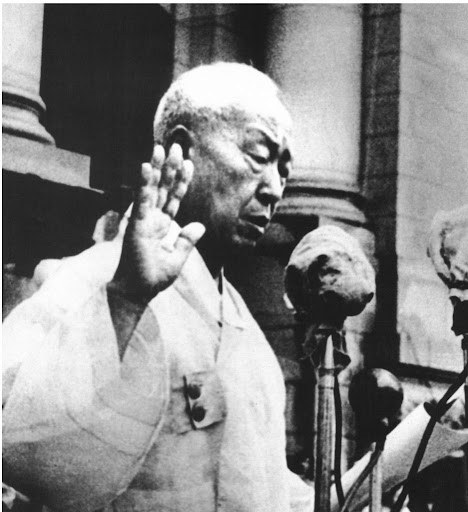 President Syngman Rhee
On the other hand, President Lee Jae-myung conveniently utilizes Syngman Rhee. He invoked March 15 and April 19 when accusing the 'emergency martial law of December 3, 2024' of "ambitions for eternal rule," and earlier, on February 25, he employed Syngman Rhee's land reform logic while defending a controversy over land sale orders. Comparing a major project for state-building in the early days of the republic, when farmers constituted the majority, to administrative enforcement in an era where per capita income exceeds $35,000 is a conceptual deception.
By strictly enforcing land sale orders for farmland not directly cultivated by those who submitted farming plans, he invoked a constitutional decision from the founding era. It is also an act of inflating peacetime administrative enforcement into a narrative of nation-building by borrowing the logic of the four characters 'gyeongjayujeon' (cultivation by the owner). With his statement of "respecting the North Korean system" in his March 1st commemorative address, he seems to have no interest in the legitimacy of Syngman Rhee's '1948 system.'
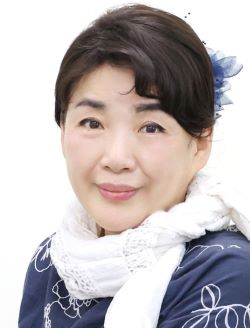
◆ Dr. Im Myung-shin
Doctor of Chinese Studies, Northeast Asian Researcher
Former Deputy Director of International Affairs, SKY Daily

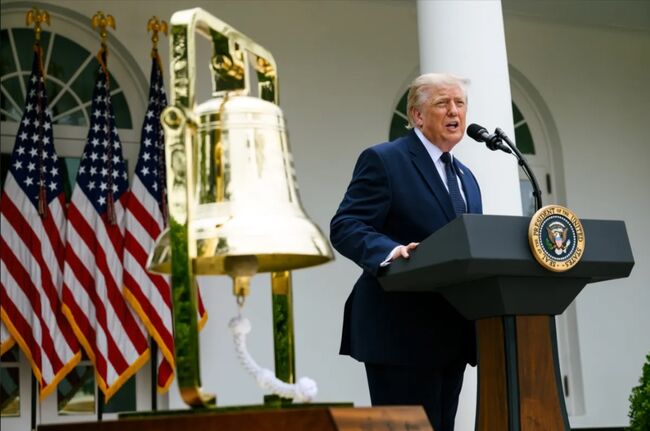 Trump pressures for rate cut again ahead of FOMC... "Should be the lowest in the world"
U.S. President Donald Trump. [Photo = The White House] U.S. President Donald Trump once again pressured the Federal Reserve, the U.S. central bank, to lower interest rates on the 27th (local time
Trump pressures for rate cut again ahead of FOMC... "Should be the lowest in the world"
U.S. President Donald Trump. [Photo = The White House] U.S. President Donald Trump once again pressured the Federal Reserve, the U.S. central bank, to lower interest rates on the 27th (local time
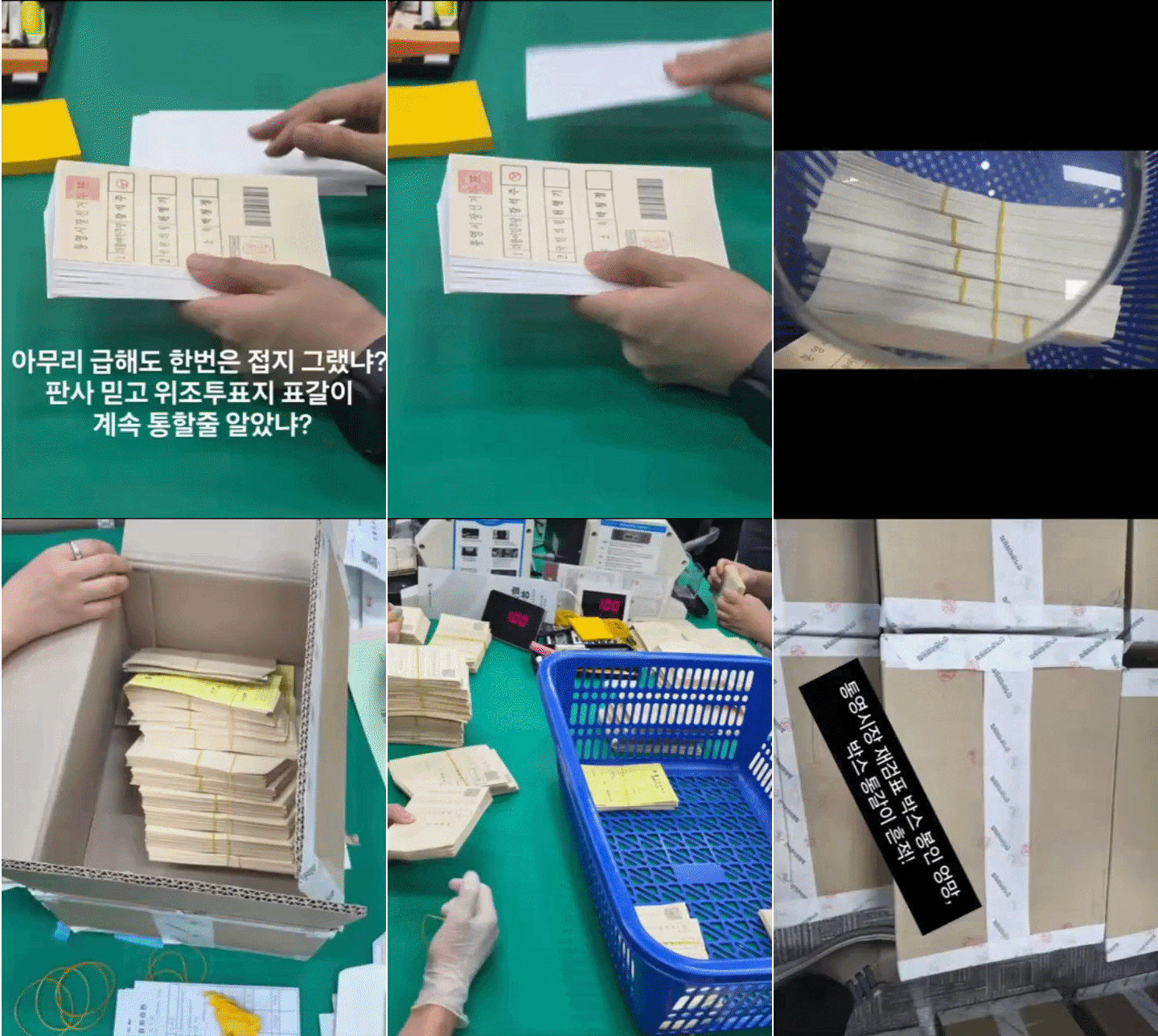 “Ignoring crisp ballots and damaged seals”… Tongyeong mayoral recount concludes with ‘no change in outcome,’ leaving suspicions and public outrage behind
Suspected counterfeit ballots discovered in Tongyeong [GIF from social media of Representative Hwang Kyo-ahn / Attorney Park Joo-hyun]During a recount of the Tongyeong mayoral election in South Gyeong
“Ignoring crisp ballots and damaged seals”… Tongyeong mayoral recount concludes with ‘no change in outcome,’ leaving suspicions and public outrage behind
Suspected counterfeit ballots discovered in Tongyeong [GIF from social media of Representative Hwang Kyo-ahn / Attorney Park Joo-hyun]During a recount of the Tongyeong mayoral election in South Gyeong
 President Yoon, regarding the first-instance ruling on the Public Official Election Act: “An excessive political verdict that distorts the facts… We will appeal immediately.”
The first-instance sentencing hearing for President Yoon Suk Yeol regarding violations of the Public Official Election Act is being broadcast live at Seoul Station on the 27th. [Photo=Yonhap News]Pres
President Yoon, regarding the first-instance ruling on the Public Official Election Act: “An excessive political verdict that distorts the facts… We will appeal immediately.”
The first-instance sentencing hearing for President Yoon Suk Yeol regarding violations of the Public Official Election Act is being broadcast live at Seoul Station on the 27th. [Photo=Yonhap News]Pres
 WSJ: "SK Hynix ADR Premium Is a Sign of AI Trading Overheat"
Advertisement for SK Hynix ADR listing in New York's Times Square [Reuters=Yonhap News file photo]The Wall Street Journal (WSJ) has pointed out that the price of SK Hynix’s American Depositary Recei
WSJ: "SK Hynix ADR Premium Is a Sign of AI Trading Overheat"
Advertisement for SK Hynix ADR listing in New York's Times Square [Reuters=Yonhap News file photo]The Wall Street Journal (WSJ) has pointed out that the price of SK Hynix’s American Depositary Recei
 'Godfather of Japanese Mystery Novels' Keigo Higashino Passes Away After Battle with Cancer at 68
Famous Japanese mystery novelist Keigo Higashino [AFP=Yonhap News]It has been belatedly reported that Keigo Higashino, the "godfather of Japanese mystery novels" and author of bestsellers such as "The
'Godfather of Japanese Mystery Novels' Keigo Higashino Passes Away After Battle with Cancer at 68
Famous Japanese mystery novelist Keigo Higashino [AFP=Yonhap News]It has been belatedly reported that Keigo Higashino, the "godfather of Japanese mystery novels" and author of bestsellers such as "The
 [Park Pil-kyu Security Column] To the Ignorant Trying to Clothe a Beast in Sheep's Clothing
Rep. Kim Byung-joo of the Democratic Party of Korea [Photo=Yonhap News]“The Air Force Academy doesn't teach you how to fly a plane!” “The Army, Navy, and Air Force academies are exactly the
[Park Pil-kyu Security Column] To the Ignorant Trying to Clothe a Beast in Sheep's Clothing
Rep. Kim Byung-joo of the Democratic Party of Korea [Photo=Yonhap News]“The Air Force Academy doesn't teach you how to fly a plane!” “The Army, Navy, and Air Force academies are exactly the
 [Issue Diagnosis] Two Effects of the Election Petition Review
 [Photo] Evidence of Election Fraud Flooding U.S. Media… Trump Had 2.7 Million Votes Stolen
 [Video] U.S. Semiquincentennial Air Show... 'Art in the Sky' streaks across New York
 [Editorial Cartoon] A Draconian Law That Undermines Freedom of Expression

 List
List