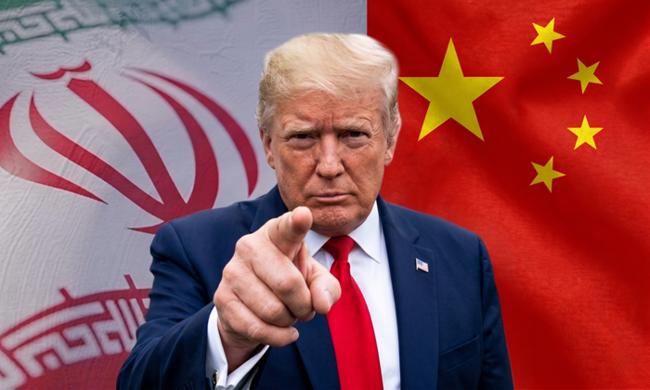
On the 25th, U.S. President Donald Trump blocked the departure of the second Islamabad negotiation team. His statement, "We have all the cards, and they have none," and "Call us if you have anything to say," can be seen as a declaration of the changing tide rather than diplomatic rhetoric.
Following the cancellation of the trip to Pakistan by U.S. Special Envoy for Middle East Steve Wittekopf and former White House Senior Advisor Jared Kushner, Iranian Foreign Minister Abbas Araghchi left Islamabad after meeting only with Pakistani officials. This indirect negotiation method, where Iranian and U.S. representatives sit in separate rooms and a mediator shuttles between them, has always been Iran's preferred approach.
Contact information has been exchanged, mediators are in place, and proposals have been sent back and forth. However, if U.S. representatives were to fly to Islamabad again, it would appear as if they were going to persuade Iran, giving the impression that Tehran holds the initiative in the negotiations. Trump effectively prevented such a scenario.
Pressuring, Yet Supporting, Iran's Negotiating Faction
This decision is interpreted as both pressure and paradoxical support for Iran's negotiating faction. While Minister Araghchi, Parliament Speaker Mohammad Bagher Ghalibaf, and President Hassan Rouhani have defended the need for negotiations, the Islamic Revolutionary Guard Corps (IRGC) has reportedly been criticizing them.
Iran International reported on the 21st that even the IRGC factions have split into at least two groups. One is the hardline faction led by the new IRGC Commander Ahmad Vahidi and Supreme National Security Council Secretary Mohammad Bagher Zolghadr, and the other is the pragmatic faction aligned with Ghalibaf, a former high-ranking IRGC official. Shadows of internal purges are already visible, with slogans like "Death to compromisers" and calls for the impeachment of Araghchi and the destabilization of Speaker Ghalibaf's position.
Trump's current message to Iran can be understood as: Surrender if you want to survive. The U.S. will not be an observer of Iran's internal power struggle. Respect the negotiating faction.
The Secret of the TUSCAHO… China, As Much in Pain as Iran
The TUSCAHO incident demonstrated that Iran's port and maritime blockade is not an empty threat. U.S. Central Command announced on the 19th that the U.S. destroyer USS Spruance intercepted the Iranian cargo ship TUSCAHO in the Arabian Sea as it was en route to Bandar Abbas. After the U.S. Navy issued repeated warnings for six hours, which were ignored by the TUSCAHO, it ordered the engine room evacuated, fired a 5-inch naval gun, and then deployed Marines to seize the vessel.
Reuters reported on the 20th that the TUSCAHO may have been carrying dual-use items that could be used for military purposes. The TUSCAHO, a vessel affiliated with the sanctioned Islamic Republic of Iran Shipping Lines (IRISL), had additional containers loaded near Port Klang, Malaysia, from the 11th to the 12th of this month, and had previously visited Taicang Port (March 25th) and Gaolan Port (March 29th-30th) in China.
Gaolan Port has been identified as a key transshipment point for solid rocket fuel raw materials. The Washington Post pointed out on the 7th of last month that the cargo loaded at Gaolan Port by IRISL vessels was likely perchlorate, a key precursor for solid rocket fuel. The United States is currently verifying the cargo of the TUSCAHO, and if sanctioned materials are found, pressure on Iran will intensify, and the justification for secondary sanctions on China will also grow.
The Loss of China's Low-Cost Crude and the Collapse of the 2046 Vision
China is the largest customer of Iranian crude oil. Major foreign media outlets, including Reuters, report that this accounts for about 90% of Iran's crude oil exports and about 13.6% of China's total crude oil purchases. While strategic reserves and alternative import sources may mitigate the initial shock, it will be difficult to withstand a prolonged blockade and secondary sanctions. A desperate Chinese President Xi Jinping held a phone call with Crown Prince Mohammed bin Salman of Saudi Arabia, a key U.S. ally in the Middle East, on the 20th, urging the free passage of vessels through the Strait of Hormuz, but it is unlikely to reverse the situation.
A more serious problem is the collapse of long-term strategic plans. According to a report by the U.S.-China Economic and Security Review Commission in March, China pledged investments of up to $400 billion (over 500 trillion won) under a 25-year cooperation agreement with Iran in 2021, but actual implementation has been limited due to U.S. sanctions. For China, this means the potential loss of a key hub for its westward Belt and Road Initiative, its influence in the Middle East, and its anti-U.S. energy strategy.
Hagseth's Blockade, Biesenthal's Financial Strangulation
On the 24th, U.S. Secretary of Defense Pete Hagseth reiterated at a briefing that the blockade of Iranian ports and vessels "will continue for as long as necessary." He stated that if Iran does not abandon its nuclear program in a "meaningful and verifiable way," its vulnerable economy will collapse under U.S. pressure, emphasizing that "time is not on their side." Chairman of the Joint Chiefs of Staff Dan Cain also clarified that the blockade applies to vessels originating from or destined for Iranian territory, and that not only the TUSCAHO but also other Iran-linked vessels have been intercepted.
The role of Secretary of the Treasury Scott Biesenthal is to cut off financial lifelines. On the 24th, the U.S. Department of the Treasury's Office of Foreign Assets Control (OFAC) sanctioned Hengli Petrochemical Dalian Refining, an independent Chinese refiner, and approximately 40 shipping companies and vessels associated with Iran's shadow fleet. Biesenthal declared that they are "applying financial strangulation to the Iranian regime" and made clear their intention to block the network of ships, brokers, and buyers that facilitate the export of Iranian oil to the global market. This is a devastating blow to both Iran and China.
Therefore, Trump's statement should be interpreted as follows: While not rejecting negotiations, he will not allow the talks to be used as a stalling tactic. In other words, regardless of whether they come to the negotiating table, oil exports will be blocked, and the shadow fleet will be tracked. Chinese refiners and banks will face the terror of secondary sanctions. The longer the delay, the more difficult the situation will become for Iran and China compared to the United States. "Call us!" is not an invitation to negotiate. It is a repeated ultimatum, a "recommendation to surrender" to Iran and a "closure of the back door" to China.

◆ Dr. Lim, Im-ryong
Ph.D. in Chinese Literature, Northeast Asia Researcher
Former Deputy Editor-in-Chief of International Affairs, Sky Daily

 Iranian Foreign Ministry: "Continuing Message Exchanges with the U.S. and Activities of Mediating Countries"
Esmaeil Baghaei, Spokesperson for the Iranian Ministry of Foreign Affairs [Xinhua, Yonhap News file photo]Esmaeil Baghaei, spokesperson for the Iranian Ministry of Foreign Affairs, stated on the 26th
Iranian Foreign Ministry: "Continuing Message Exchanges with the U.S. and Activities of Mediating Countries"
Esmaeil Baghaei, Spokesperson for the Iranian Ministry of Foreign Affairs [Xinhua, Yonhap News file photo]Esmaeil Baghaei, spokesperson for the Iranian Ministry of Foreign Affairs, stated on the 26th
 President Yoon: "Do You Think You Are Safe from the Special Counsel?"... Final Statement Video Released
President Yoon Suk Yeol rebuking the special prosecutor on the 24th. [Court video / @birds_justice X account subtitle GIF] A video of President Yoon Suk Yeol's closing statement at his trial rega
President Yoon: "Do You Think You Are Safe from the Special Counsel?"... Final Statement Video Released
President Yoon Suk Yeol rebuking the special prosecutor on the 24th. [Court video / @birds_justice X account subtitle GIF] A video of President Yoon Suk Yeol's closing statement at his trial rega
 President Yoon, regarding the first-instance ruling on the Public Official Election Act: “An excessive political verdict that distorts the facts… We will appeal immediately.”
The first-instance sentencing hearing for President Yoon Suk Yeol regarding violations of the Public Official Election Act is being broadcast live at Seoul Station on the 27th. [Photo=Yonhap News]Pres
President Yoon, regarding the first-instance ruling on the Public Official Election Act: “An excessive political verdict that distorts the facts… We will appeal immediately.”
The first-instance sentencing hearing for President Yoon Suk Yeol regarding violations of the Public Official Election Act is being broadcast live at Seoul Station on the 27th. [Photo=Yonhap News]Pres
 WSJ: "SK Hynix ADR Premium Is a Sign of AI Trading Overheat"
Advertisement for SK Hynix ADR listing in New York's Times Square [Reuters=Yonhap News file photo]The Wall Street Journal (WSJ) has pointed out that the price of SK Hynix’s American Depositary Recei
WSJ: "SK Hynix ADR Premium Is a Sign of AI Trading Overheat"
Advertisement for SK Hynix ADR listing in New York's Times Square [Reuters=Yonhap News file photo]The Wall Street Journal (WSJ) has pointed out that the price of SK Hynix’s American Depositary Recei
 'Godfather of Japanese Mystery Novels' Keigo Higashino Passes Away After Battle with Cancer at 68
Famous Japanese mystery novelist Keigo Higashino [AFP=Yonhap News]It has been belatedly reported that Keigo Higashino, the "godfather of Japanese mystery novels" and author of bestsellers such as "The
'Godfather of Japanese Mystery Novels' Keigo Higashino Passes Away After Battle with Cancer at 68
Famous Japanese mystery novelist Keigo Higashino [AFP=Yonhap News]It has been belatedly reported that Keigo Higashino, the "godfather of Japanese mystery novels" and author of bestsellers such as "The
 [Park Pil-kyu Security Column] To the Ignorant Trying to Clothe a Beast in Sheep's Clothing
Rep. Kim Byung-joo of the Democratic Party of Korea [Photo=Yonhap News]“The Air Force Academy doesn't teach you how to fly a plane!” “The Army, Navy, and Air Force academies are exactly the
[Park Pil-kyu Security Column] To the Ignorant Trying to Clothe a Beast in Sheep's Clothing
Rep. Kim Byung-joo of the Democratic Party of Korea [Photo=Yonhap News]“The Air Force Academy doesn't teach you how to fly a plane!” “The Army, Navy, and Air Force academies are exactly the
 [Issue Diagnosis] Two Effects of the Election Petition Review
 [Photo] Evidence of Election Fraud Flooding U.S. Media… Trump Had 2.7 Million Votes Stolen
 [Video] U.S. Semiquincentennial Air Show... 'Art in the Sky' streaks across New York
 [Editorial Cartoon] A Draconian Law That Undermines Freedom of Expression

 List
List










