 The Tongil Revolutionary Party incident brought related individuals to light all at once. During the investigation, magazines, pubs, and personal connections were all mentioned together.
It is difficult to view the period from 1964 to 1967 in isolation. Various events overlapped during the same time and at the same university districts. Anti-Japan-Korea Treaty demonstrations continued in the streets, and political discussions rapidly spread within university campuses.
What was visible were rallies, discussions, and magazines. However, as one follows the records, there was also a movement behind the scenes that bound people together and knitted them into a separate fabric. This is why it is difficult to explain Cheongmaek and the Revolutionary Front separately.
Cheongmaek was a magazine involving Kim Jil-rak and Lee Mun-gyu
Cheongmaek was a monthly magazine published in August 1964. It ceased publication with the June 1967 issue, leaving a total of 27 volumes. Its readers were university students and young intellectuals. Topics such as the Vietnam War, the Japan-Korea Agreement, and unification issues were continuously featured. It was common at the time for students on university campuses to pass this magazine around. Once an article was read, it was passed to another person, and thus, the same ideas were conveyed repeatedly. This is why it is difficult to view it as a mere hobby magazine.
The people who created the magazine also remain relatively clearly identified. The publisher was Kim Jin-hwan. Kim Jil-rak and Lee Mun-gyu were deeply involved in its actual operation and planning. Kim Jil-rak was a graduate of Seoul National University's College of Liberal Arts and Sciences with experience in journalism, and Lee Mun-gyu, also a graduate of Seoul National University's Political Science department, participated in the founding process. Later, in the 1968 Tongil Revolutionary Party incident, the names Kim Jong-tae, Kim Jil-rak, Shin Young-bok, and Lee Mun-gyu appear together. The overlap in individuals is noteworthy.
The space often mentioned alongside Cheongmaek is Haksa Pub. On the surface, it was just a bar. However, it was actually a place where university students and intellectuals gathered. People who read Cheongmaek and became interested met again there. The magazine spread ideas through writing, and the pub connected people. It was a form where writing and people interlocked.
Moving in parallel with this was the Revolutionary Front. Various documents describe it as an unofficial publication of the Tongil Revolutionary Party faction. It is known to have been created around 1967, and statements repeatedly indicate that it circulated only within the organization. If Cheongmaek was an open channel to the outside, the Revolutionary Front was a channel that circulated only internally.
Records of a secret meeting on March 15, 1964, have also been transmitted. Kim Jong-tae, Kim Jil-rak, Lee Mun-gyu, and Shin Young-bok were present, and they discussed how to structure the organization and how to disseminate writings. While it is difficult to ascertain the details as this information was compiled later, the explanation that preparations separate from public activities were being made from early 1964 is repeatedly found in various documents.
Cheongmaek was for official distribution, the Revolutionary Front was for underground distribution
When organized, the structure becomes visible. Cheongmaek was the exposed channel. The Revolutionary Front operated only internally. Cheongmaek spread through bookstores and readers, while the Revolutionary Front was circulated only within the organization. The problem lies in the fact that the same people were in charge of both paths simultaneously.
Initially, this method proved effective. It attracted interest through the magazine, and people met each other at Haksa Pub. Some of them moved to a deeper stage. A single person wrote, met people, and became involved in the organization. Roles were not divided but overlapped within one person.
This pattern did not change even as the Japan-Korea Agreement was about to be signed in 1965. Protests continued in the streets, and related articles were consistently published in Cheongmaek. Testimonies followed that debates escalated outside, while discussions about a separate organization continued inside.
As time passed, problems emerged. Public activities leave records. Who wrote the articles, where they were printed, and how funds came in are all accumulated. At Haksa Pub, who came and went, and who was close to whom, are revealed. Since unofficial organizations have few members, the same names are repeatedly mentioned. As these three aspects overlapped, the connections began to become apparent.
Gathering people through magazines and pubs, then operating a separate organization
Kim Jil-rak was at the center of this structure. He managed Cheongmaek and was indicted as a key figure in the Tongil Revolutionary Party incident. Kim Jong-tae is also mentioned as the figure who built the organization based on Cheongmaek and Haksa Pub. Lee Mun-gyu and Shin Young-bok also appear together in the same context. It became increasingly difficult to view public activities and the unofficial organization separately.
There was also conflict within the organization. Cheongmaek dealt with various topics for a wide readership. In contrast, the unofficial organization had limited membership and criteria. Opinions diverged on whom to admit and whom to exclude. Those who wanted to maintain public activities clashed with those who emphasized a deeper organization.
In June 1967, Cheongmaek closed. The following year, the Tongil Revolutionary Party incident broke out, and related individuals were exposed all at once. During the investigation, the magazine, the pub, and personal connections were all mentioned together. What seemed separate were explained as one entity.
The activities from 1964 to 1967 are remembered in one way. Externally, people were gathered through magazines and spaces, and internally, a separate organization was run. Both paths operated simultaneously. The same individuals moved between them, accumulating connections. As a result, the line completely separating public activities and the unofficial organization gradually disappeared.
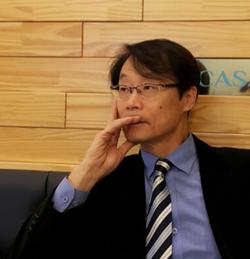
◆ Songsan
A poet and a researcher of history and philosophy. Former director of the Rhee Syngman Academy. Currently serves as a senior researcher at the Korean Modern and Contemporary History Research Society and the representative of the philosophy forum Lyceum. He has published four poetry collections, co-translated "Heroes of Hukou Ridge," and authored "Joseon Mythologized" and "Humanities on Tatami." He is currently actively engaged in research and practice of the liberal cultural movement. Songsan is a pen name.

 Iranian Foreign Ministry: "Continuing Message Exchanges with the U.S. and Activities of Mediating Countries"
Esmaeil Baghaei, Spokesperson for the Iranian Ministry of Foreign Affairs [Xinhua, Yonhap News file photo]Esmaeil Baghaei, spokesperson for the Iranian Ministry of Foreign Affairs, stated on the 26th
Iranian Foreign Ministry: "Continuing Message Exchanges with the U.S. and Activities of Mediating Countries"
Esmaeil Baghaei, Spokesperson for the Iranian Ministry of Foreign Affairs [Xinhua, Yonhap News file photo]Esmaeil Baghaei, spokesperson for the Iranian Ministry of Foreign Affairs, stated on the 26th
 President Yoon: "Do You Think You Are Safe from the Special Counsel?"... Final Statement Video Released
President Yoon Suk Yeol rebuking the special prosecutor on the 24th. [Court video / @birds_justice X account subtitle GIF] A video of President Yoon Suk Yeol's closing statement at his trial rega
President Yoon: "Do You Think You Are Safe from the Special Counsel?"... Final Statement Video Released
President Yoon Suk Yeol rebuking the special prosecutor on the 24th. [Court video / @birds_justice X account subtitle GIF] A video of President Yoon Suk Yeol's closing statement at his trial rega
 President Yoon, regarding the first-instance ruling on the Public Official Election Act: “An excessive political verdict that distorts the facts… We will appeal immediately.”
The first-instance sentencing hearing for President Yoon Suk Yeol regarding violations of the Public Official Election Act is being broadcast live at Seoul Station on the 27th. [Photo=Yonhap News]Pres
President Yoon, regarding the first-instance ruling on the Public Official Election Act: “An excessive political verdict that distorts the facts… We will appeal immediately.”
The first-instance sentencing hearing for President Yoon Suk Yeol regarding violations of the Public Official Election Act is being broadcast live at Seoul Station on the 27th. [Photo=Yonhap News]Pres
 WSJ: "SK Hynix ADR Premium Is a Sign of AI Trading Overheat"
Advertisement for SK Hynix ADR listing in New York's Times Square [Reuters=Yonhap News file photo]The Wall Street Journal (WSJ) has pointed out that the price of SK Hynix’s American Depositary Recei
WSJ: "SK Hynix ADR Premium Is a Sign of AI Trading Overheat"
Advertisement for SK Hynix ADR listing in New York's Times Square [Reuters=Yonhap News file photo]The Wall Street Journal (WSJ) has pointed out that the price of SK Hynix’s American Depositary Recei
 'Godfather of Japanese Mystery Novels' Keigo Higashino Passes Away After Battle with Cancer at 68
Famous Japanese mystery novelist Keigo Higashino [AFP=Yonhap News]It has been belatedly reported that Keigo Higashino, the "godfather of Japanese mystery novels" and author of bestsellers such as "The
'Godfather of Japanese Mystery Novels' Keigo Higashino Passes Away After Battle with Cancer at 68
Famous Japanese mystery novelist Keigo Higashino [AFP=Yonhap News]It has been belatedly reported that Keigo Higashino, the "godfather of Japanese mystery novels" and author of bestsellers such as "The
 [Park Pil-kyu Security Column] To the Ignorant Trying to Clothe a Beast in Sheep's Clothing
Rep. Kim Byung-joo of the Democratic Party of Korea [Photo=Yonhap News]“The Air Force Academy doesn't teach you how to fly a plane!” “The Army, Navy, and Air Force academies are exactly the
[Park Pil-kyu Security Column] To the Ignorant Trying to Clothe a Beast in Sheep's Clothing
Rep. Kim Byung-joo of the Democratic Party of Korea [Photo=Yonhap News]“The Air Force Academy doesn't teach you how to fly a plane!” “The Army, Navy, and Air Force academies are exactly the
 [Issue Diagnosis] Two Effects of the Election Petition Review
 [Photo] Evidence of Election Fraud Flooding U.S. Media… Trump Had 2.7 Million Votes Stolen
 [Video] U.S. Semiquincentennial Air Show... 'Art in the Sky' streaks across New York
 [Editorial Cartoon] A Draconian Law That Undermines Freedom of Expression

 List
List









