 A drawing imagined from the Athenian agora.
Mornings in Athens were always clamorous. Every single day, someone would give a speech in the agora. Those who advocated war, those who spoke of peace, voices denouncing Macedon, shouts to defend their pride. Words overflowed, and people wavered amidst them.
In the midst of it all, there was a person who always stood quietly. It was General Phocion. He didn't speak with grand gestures like others. He didn't explain at length. He rarely said the words people expected or wanted to hear. Instead, he spoke briefly and firmly.
“We cannot win this war now.”
That was the end of it. People were uncomfortable. Those words were not what the citizens of Athens wanted to hear. Athens had once been the leading city in the Greek world. They had pride. The glory of the past remained. Yet, this quiet general asked them to let go of all that and face reality.
In those days, figures like Demosthenes were in the agora. He moved people's hearts. He spoke with a strong voice. “We must fight Macedon.” People applauded. Their hearts burned. Anger became strength.
Phocion stood beside him. He remained silent until the crowd quieted down, then he would interject a single sentence.
“Can we win a fight against that army?”
The atmosphere quickly cooled. People turned away. They didn't want to hear that.
However, the battlefield does not lie. In 338 BCE, at the Battle of Chaeronea, Athens and its allies were defeated. The armies of Philip II and his son Alexander were strong. It was exactly as Phocion had said. Yet, he did not become a hero.
It is strange. Sometimes, those who are not wrong are not respected. Phocion was like that. He was elected general an astonishing 45 times. People knew his capabilities. They knew they could trust him with war. Yet, he was not loved. This was because he did not make people feel good.
He did not accumulate wealth. He did not expand his power. His home was modest, and his life was frugal. Therefore, his personal reputation was not bad. However, he was always at a disadvantage in the world of politics. Politics demands that one speak words people want to hear before speaking the truth.
Time passed. Alexander died. At that moment, suppressed emotions erupted. Athens once again sought to confront Macedon. The agora became heated again. Even then, Phocion did not change.
“Now is not the time.”
People could no longer endure it.
“Traitor.”
That single word began to spread. The person called general until yesterday became an enemy overnight. A trial was held, but the atmosphere was already decided. What meaning could a defense have in such a trial?
Eventually, a verdict was reached. Guilty. He received the hemlock. Phocion calmly raised the cup. Long ago, Socrates had done the same, drinking it quietly. Even at the end, he did not leave behind grand words. As always….
Athens became quiet again. And after some time, people began to think. Why did he have to die when he was not wrong?
This story is not from the distant past. It is being repeated as it is now. Within South Korea's conservative right, the space for voices like Phocion's is shrinking.
Phocion precisely pointed this out in Athens. "Under the current conditions, we cannot win." That statement hurt feelings. Therefore, he was marginalized.
The problems currently faced by the conservative right are not much different. When inconvenient truths are spoken, resistance arises from within. "Why do you see things so pessimistically?" "Don't crush morale."
What happens when these words are repeated? Those who speak the truth about reality increasingly shut their mouths. All that remains are slogans and conviction. And the result is revealed in a crushing election defeat.
Phocion was not wrong. There were simply few people ready to accept his words. What is needed now is not complex theories. It is the habit of looking at numbers, an attitude of considering conditions, and the courage to admit unfavorable facts.
If the conservative right cannot establish these standards, what happened in Athens will be repeated. Choosing words that are right over words that sound good. The difference lies in that one thing.
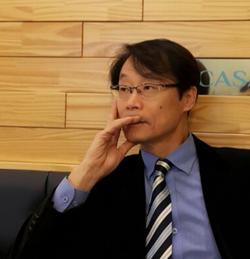
◆ Songsan
Poet and researcher of history and philosophy. Former director of the Rhee Syngman Institute. Currently serves as honorary advisor for the Korean Modern and Contemporary History Research Society and head of the philosophy forum Lyceum. He has published four poetry collections, co-translated "Heroes of Gallipoli," and authored "Joseon, the Nation Turned Myth" and "Humanities on the Tatami." He is actively engaged in research and practice of the liberal cultural movement. Songsan is a pen name.

 Iranian Foreign Ministry: "Continuing Message Exchanges with the U.S. and Activities of Mediating Countries"
Esmaeil Baghaei, Spokesperson for the Iranian Ministry of Foreign Affairs [Xinhua, Yonhap News file photo]Esmaeil Baghaei, spokesperson for the Iranian Ministry of Foreign Affairs, stated on the 26th
Iranian Foreign Ministry: "Continuing Message Exchanges with the U.S. and Activities of Mediating Countries"
Esmaeil Baghaei, Spokesperson for the Iranian Ministry of Foreign Affairs [Xinhua, Yonhap News file photo]Esmaeil Baghaei, spokesperson for the Iranian Ministry of Foreign Affairs, stated on the 26th
 President Yoon: "Do You Think You Are Safe from the Special Counsel?"... Final Statement Video Released
President Yoon Suk Yeol rebuking the special prosecutor on the 24th. [Court video / @birds_justice X account subtitle GIF] A video of President Yoon Suk Yeol's closing statement at his trial rega
President Yoon: "Do You Think You Are Safe from the Special Counsel?"... Final Statement Video Released
President Yoon Suk Yeol rebuking the special prosecutor on the 24th. [Court video / @birds_justice X account subtitle GIF] A video of President Yoon Suk Yeol's closing statement at his trial rega
 President Yoon, regarding the first-instance ruling on the Public Official Election Act: “An excessive political verdict that distorts the facts… We will appeal immediately.”
The first-instance sentencing hearing for President Yoon Suk Yeol regarding violations of the Public Official Election Act is being broadcast live at Seoul Station on the 27th. [Photo=Yonhap News]Pres
President Yoon, regarding the first-instance ruling on the Public Official Election Act: “An excessive political verdict that distorts the facts… We will appeal immediately.”
The first-instance sentencing hearing for President Yoon Suk Yeol regarding violations of the Public Official Election Act is being broadcast live at Seoul Station on the 27th. [Photo=Yonhap News]Pres
 WSJ: "SK Hynix ADR Premium Is a Sign of AI Trading Overheat"
Advertisement for SK Hynix ADR listing in New York's Times Square [Reuters=Yonhap News file photo]The Wall Street Journal (WSJ) has pointed out that the price of SK Hynix’s American Depositary Recei
WSJ: "SK Hynix ADR Premium Is a Sign of AI Trading Overheat"
Advertisement for SK Hynix ADR listing in New York's Times Square [Reuters=Yonhap News file photo]The Wall Street Journal (WSJ) has pointed out that the price of SK Hynix’s American Depositary Recei
 'Godfather of Japanese Mystery Novels' Keigo Higashino Passes Away After Battle with Cancer at 68
Famous Japanese mystery novelist Keigo Higashino [AFP=Yonhap News]It has been belatedly reported that Keigo Higashino, the "godfather of Japanese mystery novels" and author of bestsellers such as "The
'Godfather of Japanese Mystery Novels' Keigo Higashino Passes Away After Battle with Cancer at 68
Famous Japanese mystery novelist Keigo Higashino [AFP=Yonhap News]It has been belatedly reported that Keigo Higashino, the "godfather of Japanese mystery novels" and author of bestsellers such as "The
 [Park Pil-kyu Security Column] To the Ignorant Trying to Clothe a Beast in Sheep's Clothing
Rep. Kim Byung-joo of the Democratic Party of Korea [Photo=Yonhap News]“The Air Force Academy doesn't teach you how to fly a plane!” “The Army, Navy, and Air Force academies are exactly the
[Park Pil-kyu Security Column] To the Ignorant Trying to Clothe a Beast in Sheep's Clothing
Rep. Kim Byung-joo of the Democratic Party of Korea [Photo=Yonhap News]“The Air Force Academy doesn't teach you how to fly a plane!” “The Army, Navy, and Air Force academies are exactly the
 [Issue Diagnosis] Two Effects of the Election Petition Review
 [Photo] Evidence of Election Fraud Flooding U.S. Media… Trump Had 2.7 Million Votes Stolen
 [Video] U.S. Semiquincentennial Air Show... 'Art in the Sky' streaks across New York
 [Editorial Cartoon] A Draconian Law That Undermines Freedom of Expression

 List
List









