“The Funeral Oration of Pericles” (1853) by Philipp von Foltz. Pericles was a statesman who led the golden age of ancient Greek Athens. He is delivering a speech honoring the victims of the Peloponnesian War in front of citizens before the war with Sparta.
Athens: "Any citizen should be able to hold public office"
Athens selected public officials by lot, while Rome elected them. In 5th-century BC Athens, a significant number of public offices were filled by lot. A stone device called a kleroterion was used, where nameplates were inserted, and pebbles were dropped to determine the order. Many positions, including magistrates and jury members, were filled this way.
The reason for choosing this method was the belief that elections would repeatedly lead to the same individuals being selected. Those who were eloquent speakers, wealthy, or well-known had an advantage. If this trend continued, power would remain concentrated in the hands of a few. Athenian citizens were wary of this.
Therefore, they opted for rotation instead of competition. They believed that any citizen should be able to hold public office. Of course, they accepted the possibility of unprepared individuals taking on roles. However, they prevented specific individuals from holding office for extended periods. Politics was understood not as a profession, but as a public role that citizens took turns fulfilling.
Rome: "Running a state requires experience and judgment"
The Roman Republic took a different path.
Key public offices such as consul, praetor, and quaestor were all determined through elections. Voting took place in citizen assemblies, and candidates delivered speeches and engaged in activities to gain support.
This was based on a different assessment. They believed that running a state required experience and judgment. They felt that positions involving military command and law enforcement could not be assigned randomly. Therefore, career, reputation, and track record were important factors.
This system made it easier for a specific class to rise to prominence. Influential families like the patricians and individuals with political experience occupied the major positions. Plebeians gradually entered, but competition was fierce. Multiple individuals vied for the same positions, and political standing was determined by the outcomes.
These two traditions continue to this day.
Modern states operate primarily through elections. Presidents, members of parliament, and local government heads are all decided by votes. In this regard, they resemble Rome. Simultaneously, traces of Athens remain in systems like jury duty and citizen participation, where randomly selected citizens take on public roles.
South Korea also possesses elements of both.
Article 1 of the Constitution defines South Korea as a republic. Its actual operation also revolves around elections. Political power is constituted through the selection of representatives. Experience, policies, and reputation serve as important criteria. In this respect, South Korea is clearly closer to Rome.
However, education emphasizes a different aspect.
Schools often focus on explaining Athenian democracy. If one only encounters concepts like direct participation and assemblies, their criteria for politics might shift. While the actual system is election-centered, one might first recall the idea of participation, where anyone can immediately assume a role.
This is where the disconnect in South Korea arises.
Participation like Athens, Verification of Politicians like Rome
Explanations about why elections are necessary and what should be considered in the process of selecting representatives are deferred, while participation itself is prioritized. Conversely, the responsibilities that elected representatives should bear and how the separation of powers functions are not sufficiently taught.
If a republic is to be operated, education and understanding appropriate to it are necessary.
Elections are not mere popularity contests. They are a process of assessing whether individuals can be entrusted with policy judgment, administrative ability, and public responsibility. Power is constituted through this process. Simultaneously, power is decentralized and designed to check and balance itself.
Of course, the experience of Athens remains valuable as a reference. The attitude of guarding against the concentration of power in one place and the idea that citizens should take an interest in public matters are still important today.
As an outsider to politics, this is what I wish to leave for South Korea: Participation should be broadened like in Athens, but power should be entrusted to verified hands like in Rome. This balance must not be lost.
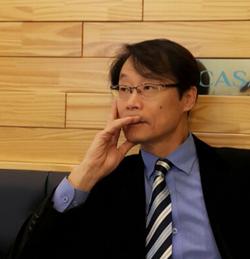
◆ Songsan
Poet and researcher of history and philosophy. Former director of the Rhee Syngman School. Currently serves as a senior researcher at the Society for the Study of Modern Korean History and as the representative of the philosophy forum Lyceum. He has published four collections of poetry, co-translated "Heroes of Hukogji," and authored "Joseon That Became Myth" and "Humanities on Tatami." He is actively engaged in research and practice of the liberal cultural movement. Songsan is a pen name.

 Iranian Foreign Ministry: "Continuing Message Exchanges with the U.S. and Activities of Mediating Countries"
Esmaeil Baghaei, Spokesperson for the Iranian Ministry of Foreign Affairs [Xinhua, Yonhap News file photo]Esmaeil Baghaei, spokesperson for the Iranian Ministry of Foreign Affairs, stated on the 26th
Iranian Foreign Ministry: "Continuing Message Exchanges with the U.S. and Activities of Mediating Countries"
Esmaeil Baghaei, Spokesperson for the Iranian Ministry of Foreign Affairs [Xinhua, Yonhap News file photo]Esmaeil Baghaei, spokesperson for the Iranian Ministry of Foreign Affairs, stated on the 26th
 President Yoon: "Do You Think You Are Safe from the Special Counsel?"... Final Statement Video Released
President Yoon Suk Yeol rebuking the special prosecutor on the 24th. [Court video / @birds_justice X account subtitle GIF] A video of President Yoon Suk Yeol's closing statement at his trial rega
President Yoon: "Do You Think You Are Safe from the Special Counsel?"... Final Statement Video Released
President Yoon Suk Yeol rebuking the special prosecutor on the 24th. [Court video / @birds_justice X account subtitle GIF] A video of President Yoon Suk Yeol's closing statement at his trial rega
 President Yoon, regarding the first-instance ruling on the Public Official Election Act: “An excessive political verdict that distorts the facts… We will appeal immediately.”
The first-instance sentencing hearing for President Yoon Suk Yeol regarding violations of the Public Official Election Act is being broadcast live at Seoul Station on the 27th. [Photo=Yonhap News]Pres
President Yoon, regarding the first-instance ruling on the Public Official Election Act: “An excessive political verdict that distorts the facts… We will appeal immediately.”
The first-instance sentencing hearing for President Yoon Suk Yeol regarding violations of the Public Official Election Act is being broadcast live at Seoul Station on the 27th. [Photo=Yonhap News]Pres
 WSJ: "SK Hynix ADR Premium Is a Sign of AI Trading Overheat"
Advertisement for SK Hynix ADR listing in New York's Times Square [Reuters=Yonhap News file photo]The Wall Street Journal (WSJ) has pointed out that the price of SK Hynix’s American Depositary Recei
WSJ: "SK Hynix ADR Premium Is a Sign of AI Trading Overheat"
Advertisement for SK Hynix ADR listing in New York's Times Square [Reuters=Yonhap News file photo]The Wall Street Journal (WSJ) has pointed out that the price of SK Hynix’s American Depositary Recei
 'Godfather of Japanese Mystery Novels' Keigo Higashino Passes Away After Battle with Cancer at 68
Famous Japanese mystery novelist Keigo Higashino [AFP=Yonhap News]It has been belatedly reported that Keigo Higashino, the "godfather of Japanese mystery novels" and author of bestsellers such as "The
'Godfather of Japanese Mystery Novels' Keigo Higashino Passes Away After Battle with Cancer at 68
Famous Japanese mystery novelist Keigo Higashino [AFP=Yonhap News]It has been belatedly reported that Keigo Higashino, the "godfather of Japanese mystery novels" and author of bestsellers such as "The
 [Park Pil-kyu Security Column] To the Ignorant Trying to Clothe a Beast in Sheep's Clothing
Rep. Kim Byung-joo of the Democratic Party of Korea [Photo=Yonhap News]“The Air Force Academy doesn't teach you how to fly a plane!” “The Army, Navy, and Air Force academies are exactly the
[Park Pil-kyu Security Column] To the Ignorant Trying to Clothe a Beast in Sheep's Clothing
Rep. Kim Byung-joo of the Democratic Party of Korea [Photo=Yonhap News]“The Air Force Academy doesn't teach you how to fly a plane!” “The Army, Navy, and Air Force academies are exactly the
 [Issue Diagnosis] Two Effects of the Election Petition Review
 [Photo] Evidence of Election Fraud Flooding U.S. Media… Trump Had 2.7 Million Votes Stolen
 [Video] U.S. Semiquincentennial Air Show... 'Art in the Sky' streaks across New York
 [Editorial Cartoon] A Draconian Law That Undermines Freedom of Expression

 List
List